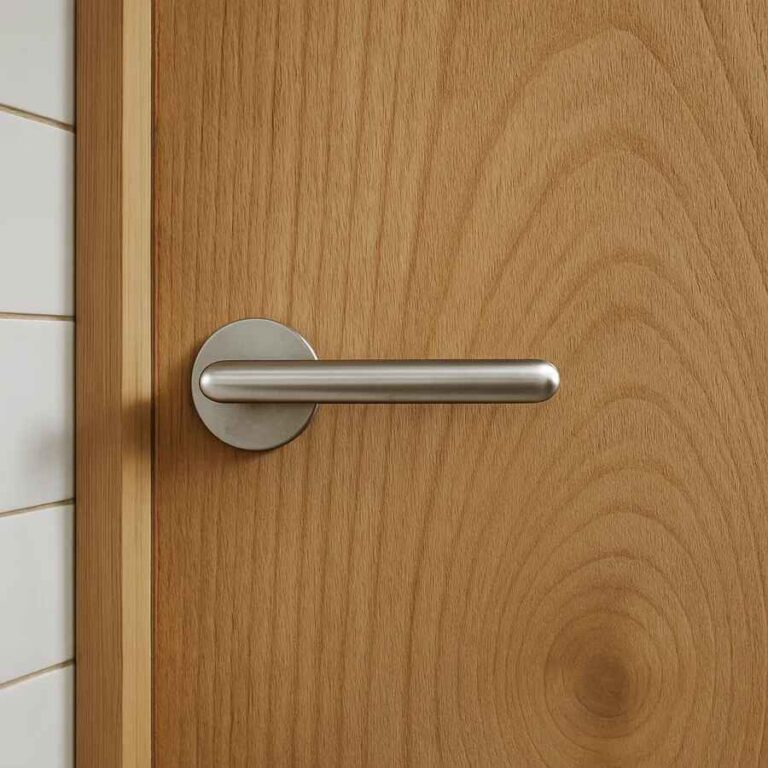
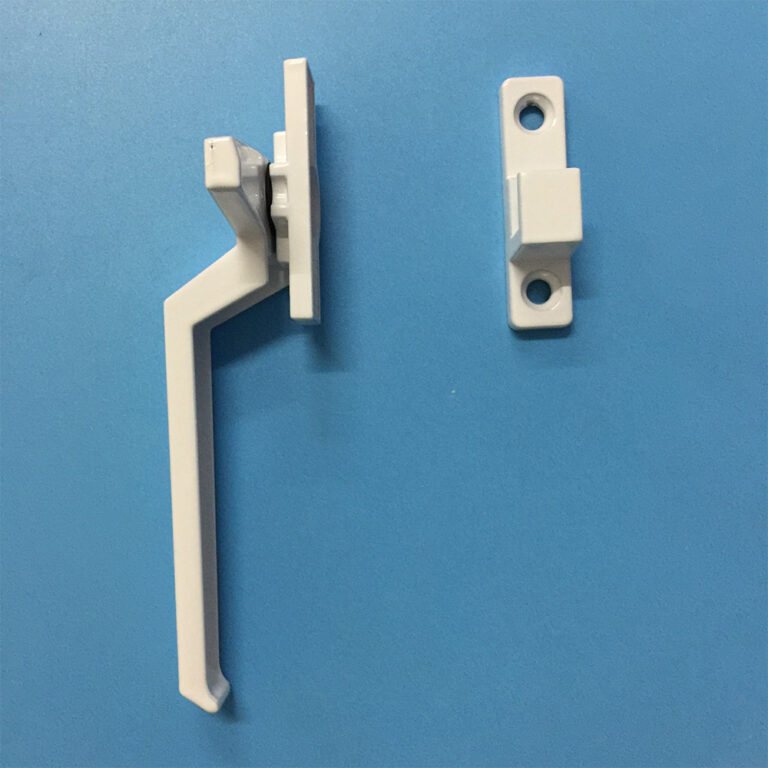
Looking for hardware solutions that meet European / American standards?
Use this guided inquiry modal to move from a generic quote form to a clearer technical conversation. Buyers can choose whether they need pricing, CAD / 3D files, or OEM / ODM support before sharing contact details.
Compatibility-first design across door / window systems
Repeatable production with clear inspection checkpoints
Documentation and change control for long-running programs
Responsive engineering support for fit and field feedback
A handle can have the right finish, lever length, screw cover, brand style, and price, yet still be completely useless when its rear drive geometry does not match the gearbox, espagnolette bar, profile cavity, or mounting pattern inside the sash.
So why do buyers still choose window handles from front-view photographs?
I think the industry has encouraged the mistake. Product listings spend pages discussing matte black coatings and minimalist styling, then reduce the actual operating interface to one blurry rear photograph. That is backwards. The finish sells the sample, but the interface determines whether the window works.
The practical answer is simple: choose a fork-drive window handle when the existing locking mechanism has a matching fork-operated input, and choose a square-spindle handle when the gearbox contains a square follower designed for the spindle’s section and length. These interfaces are not normally interchangeable without changing or adapting the mating hardware.
The Fast Answer: Fork Drive or Square Spindle?
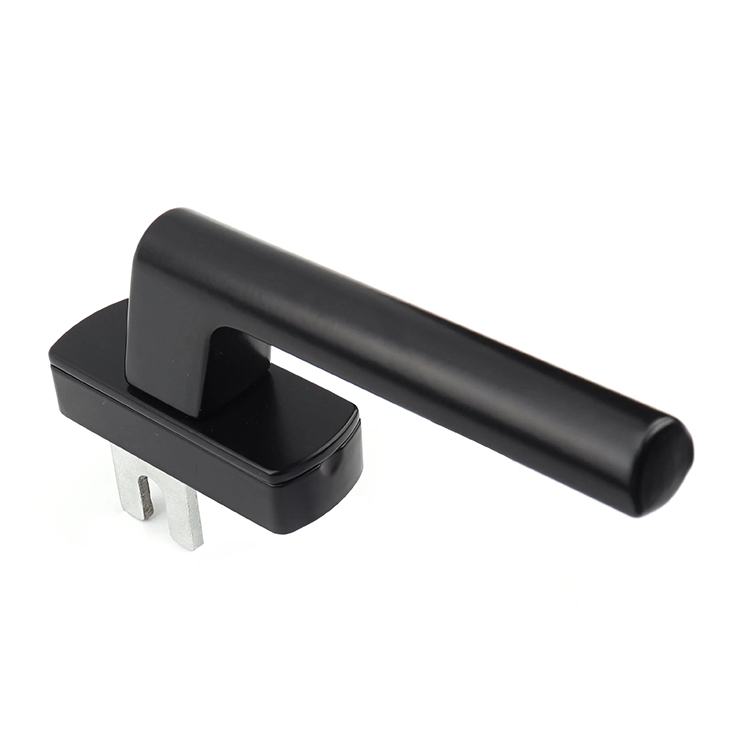
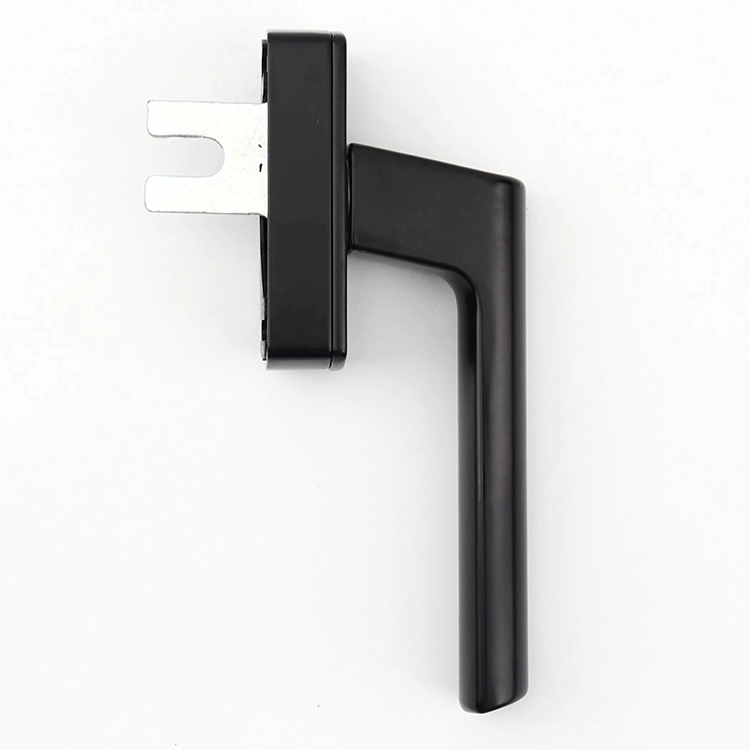
A fork-drive window handle transfers rotation through a projecting fork, blade, or application-specific drive component that engages directly with compatible locking gear. It is commonly associated with slim aluminum casement and tilt-turn systems where profile depth and hardware packaging leave little room for a conventional projecting square bar.
A square-spindle window handle transfers rotation through a square metal shaft inserted into a matching square follower in the lock or gearbox. Many espag window handles use this format, particularly on uPVC, timber, aluminum, tilt-turn, and multipoint casement systems.
The two handles may share the same lever shape. They may even share the same color and approximate base size. That proves nothing.
The interface must match.
For an immediate visual reference, compare CHIER’s broader window handle range organized by operating interface, including spindle-drive and projecting-drive designs. CHIER’s own sourcing guidance asks buyers to confirm opening type, base dimensions, fixing centers, interface, handing, and lever clearance rather than selecting from appearance alone.
Fork-Drive Window Handles: Compact, Specific, and Easy to Misidentify
How a fork-drive interface works
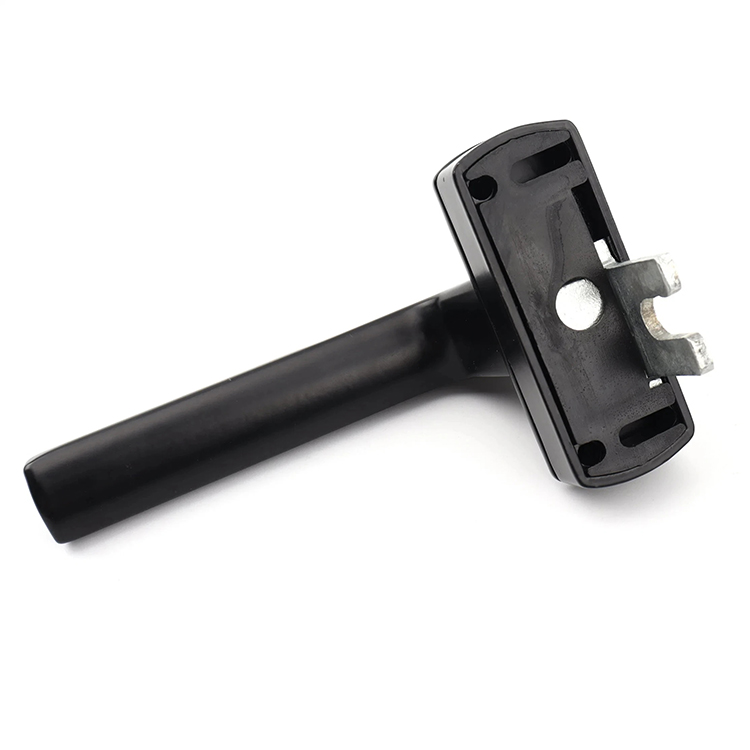
A fork-drive handle uses a projecting drive element that engages with a matching fork-driven espagnolette, slide, gear, or transmission component inside the window sash. Depending on the hardware family, that element may have two prongs, a rectangular blade, a slotted fork, or another proprietary geometry.
This matters because “fork drive” is a product family description, not a universal dimension.
ERA, for example, describes its Cadenza fork-drive range as hardware specifically intended for slimline aluminum casement windows using a fork-drive espagnolette locking system. The related locking hardware is offered with different slide sizes, bar lengths, and pin sizes, which shows why buyers cannot treat every aluminum fork handle as interchangeable. See ERA’s aluminum fork-drive handle specification for the application context.
That is the hard truth: a fork that enters the mechanism is not necessarily the right fork for the mechanism.
You still need to verify:
Fork width
Jaw or prong spacing
Fork thickness
Projection from the rear face
Engagement depth
Drive-pin relationship
Required rotation angle
Fixing-hole pattern
Handle handing
Profile and gasket clearance
Miss one measurement and the handle may mount but fail to drive the lock through its full travel.
That failure can be deceptive. The lever turns. The sash appears closed. Yet the cams, shootbolts, or locking points may only be partially engaged.
Would you approve that for production?
Fork drive is not automatically the same as blade drive
Manufacturers and replacement-hardware sellers sometimes use “fork,” “blade,” “tongue,” or “projecting drive” loosely. I do not recommend assuming those terms describe the same geometry.
CHIER’s curved lever blade-drive window handle is a useful example of why the actual rear interface matters more than the sales label. Its rectangular drive blade must be matched by width, projection, fixing centers, rotation, handing, and receiving mechanism inside the sash.
A blade may enter a slot. A fork may straddle a pin or engage a specialized slide. They can belong to the same broad projecting-drive category while remaining mechanically incompatible.
No guesswork here.
Where fork-drive handles usually make sense
Fork-drive window handles are often the better fit when:
The existing handle clearly has a forked or projecting rear drive
The window uses a slim aluminum profile
The espagnolette was designed around a low-profile fork interface
The original hardware family is known
Profile space does not support the required square-spindle projection
The replacement fork dimensions exactly match the old part or drawing
I would be especially cautious with older aluminum systems. Many were designed around a specific hardware platform, and the replacement market now contains visually similar handles with different fork dimensions, screw centers, and drive travel.
“Almost fits” is not a specification.
Square-Spindle Window Handles: More Standardized, Not Universal
How a square spindle operates an espag lock
A square-spindle handle has a square metal bar projecting from the rear of the base. When installed, that bar enters the square follower in an espagnolette gearbox. Turning the handle rotates the follower, which moves the internal locking strip, cams, mushroom rollers, hooks, or shootbolts.
This is the interface most buyers picture when discussing espag window handles.
The commonly encountered European configuration uses a 7 mm square spindle and 43 mm fixing centers. HOPPE notes that DIN 18267 defines dimensional examples including a 7 mm square spindle and 43 mm screw spacing, while DIN EN 13126-3 addresses performance classifications and testing rather than setting those dimensions itself. HOPPE’s window-handle standards summary also references durability, corrosion, security, and operating-cycle requirements.
A representative espagnolette from NiCo uses 20 mm or 22 mm backsets, a 7 mm square spindle drive, and 43 mm handle-fixing centers. That is common. It is not universal.
Some window systems use:
8 mm spindles
Different spindle lengths
Adjustable spindles
Fixed or sprung spindles
Offset gearboxes
Nonstandard screw centers
Two-sided spindle arrangements
Proprietary adapters or followers
So yes, the square-spindle category is more standardized than many fork-drive systems. But “square” alone is not enough information.
Spindle length causes more failures than spindle width
Most buyers remember to check whether the bar is square. Far fewer measure how far it must enter the gearbox.
A spindle that is too short may barely engage the follower. The window might operate during sample inspection, then round the follower or slip after repeated use. A spindle that is too long can bottom out, prevent the handle base from seating, preload the gearbox, or create stiff rotation.
I have a blunt rule for specification reviews: never approve a spindle using total bar length alone.
Measure the usable projection from the rear mounting face of the handle. Then compare that figure with:
The profile depth
The distance to the gearbox follower
The required insertion depth
Any packing plate or escutcheon thickness
The permitted end clearance
CHIER’s dual-sided square-spindle window lever handle illustrates the added checks required for paired handles: spindle section, usable length, profile thickness, mounting centers, orientation, clearance on both faces, and opening direction.
Fork-Drive vs Square-Spindle Handles: The Comparison That Matters
Selection Factor
Fork-Drive Window Handle
Square-Spindle Window Handle
Torque-transfer method
Fork, blade, tongue, or proprietary projecting drive
Square metal spindle entering a square gearbox follower
Common applications
Slim aluminum casement and specialized aluminum systems
uPVC, timber, aluminum, tilt-turn, casement, and multipoint espag systems
Standardization
Often hardware-family specific
More standardized, but dimensions still vary
Typical dimensions to verify
Fork width, spacing, thickness, projection, engagement and pin relationship
Spindle width across flats, projection length, fixing centers and backset
Common reference dimension
No single universal fork size
Often 7 mm square with 43 mm fixing centers
Replacement difficulty
Higher when the original system is unknown
Moderate when measurements and gearbox type are known
Handing risk
Frequently relevant
Inline models may be reversible; offset or paired models may be handed
Conversion potential
Usually requires matching gear or a purpose-designed adapter
Possible only when the lock follower and profile support the spindle
Main failure mode
Incorrect fork engagement or incomplete lock travel
Short engagement, bottoming out, loose follower fit or wrong spindle section
Best purchasing evidence
Original sample, rear photo, profile section and mating-lock drawing
Original sample, spindle measurement, screw centers, backset and gearbox data
The table exposes an uncomfortable point: window handle compatibility is a system decision, not a handle decision.
The handle, gearbox, locking bar, keepers, sash profile, fasteners, and operating clearance all influence the result. A technically correct handle connected to a misaligned lock will still feel poor. A technically correct lock attached through the wrong drive interface will not remain correct for long.
How to Identify Your Window Handle Spindle Type
Step 1: Remove the existing handle without forcing it
Put the handle in the normal open position if the mechanism allows it. Rotate or remove the screw cover, support the handle, and undo the fixing screws evenly.
Do not twist the handle away from the sash to “help” it release.
That can bend a fork, damage a blade, pull a square spindle sideways, or disturb the gearbox already sitting behind the profile.
Step 2: Inspect the rear interface
Look directly at the rear of the removed handle.
You probably have a square-spindle system when you see a square steel bar projecting from the center of the handle base.
You probably have a fork-drive or blade-drive system when you see two prongs, a slotted projection, a short rectangular tongue, or an application-specific plate that enters or surrounds part of the lock.
Still uncertain?
Photograph the rear of the handle and the opening in the sash. Include a steel rule or caliper in the image. A photograph without scale is evidence of shape, not evidence of size.
Step 3: Measure the interface, not just the base
For a square spindle, record:
Width across the flat faces
Usable projection from the handle base
Total spindle length where relevant
Fixing centers
Screw diameter and thread
Base width and height
Gearbox backset
Profile thickness
Required handle rotation
For a fork drive, record:
Overall fork width
Internal gap or jaw spacing
Prong thickness
Fork length
Rear projection
Pin diameter, when used
Relationship between the fork and fixing holes
Required lock travel
Handing and rotation direction
Use millimeters.
This is fenestration hardware, not furniture assembly. A 2 mm error can be a real error.
Step 4: Check the lock movement before ordering
With the handle removed, inspect the receiving mechanism without pushing tools into it. Confirm whether the lock follower, pin, slide, or drive plate is damaged, loose, corroded, or sitting off-center.
A replacement handle will not repair a broken gearbox.
And a stiff handle does not always mean the handle is defective. Gasket compression, sash drop, keeper misalignment, corroded lock bars, bent drive components, and over-tightened mounting screws can all increase operating force.
Compatibility Is Also a Safety and Accessibility Issue
Hardware buyers sometimes talk about interface errors as if the only consequence were an inconvenient return.
That view is too narrow.
In April 2026, the U.S. Consumer Product Safety Commission reported that an estimated 5,600 children aged 12 and under received emergency-department treatment in 2024 after falling from windows, with roughly one-third requiring hospitalization. The CPSC also reported at least 25 deaths among children aged 12 and under from window falls during 2021–2023. Its advice focuses on guards, stops, supervision, and keeping furniture away from windows, but reliable closing and understandable hardware remain part of responsible window-system design. Read the CPSC Window Safety Week data.
A handle alone does not prevent falls. Let us be clear.
But a mismatched interface that gives false locking feedback, fails to complete the lock stroke, or becomes unusually stiff can make safe operation less predictable.
Accessibility introduces another measurable requirement. Under the U.S. Department of Justice’s 2010 ADA Standards, scoped operable parts must work with one hand, without tight grasping, pinching, or twisting of the wrist, and require no more than 5 lbf, or 22.2 N, to activate. DOJ commentary specifically states that this requirement applies to the window latch or operating mechanism in covered accessible windows, not merely to the force needed to move the sash. See the 2010 ADA operable-parts standard.
That does not mean every residential window in every country falls under the ADA. It means professional buyers should stop pretending operating force is merely a comfort preference.
Which Window Handle Fits My Locking System?
Use the following decision path.
Choose a fork-drive window handle when:
Your removed handle has a matching fork or proprietary projecting drive
The locking mechanism is documented as fork driven
The window uses a compatible slim aluminum casement system
Fork dimensions and engagement match the existing gear
Fixing centers, rotation, handing, and clearance are confirmed
A physical sample or approved drawing verifies the fit
Choose a square-spindle window handle when:
The gearbox has a square follower
The spindle section matches the follower
The spindle projection provides adequate engagement without bottoming out
Fixing centers match the sash preparation
The handle base fits the profile
The lever clears the frame, reveal, screen, and adjacent sash
The lock completes its full travel without excessive force
Stop the order when:
The supplier cannot provide a rear-view drawing
The interface is described only as “standard”
The old handle is unavailable and no sash cross-section exists
Fork dimensions are missing
Spindle length is quoted without explaining the measurement reference
The supplier has not confirmed handing
The sample has not been fitted to the real profile and lock
I would reject the quote.
Cheap handles become expensive when installers have to drill new holes, shorten spindles by hand, modify forks, reopen completed frames, or explain to a customer why a “new” window no longer locks smoothly.
The OEM Buyer’s Specification Checklist
For new window programs, replacement projects, or private-label sourcing, send the supplier a complete interface pack rather than a product screenshot.
Include:
Window opening type
Frame and sash material
Profile cross-section
Existing handle sample or rear photograph
Lock or gearbox model
Fork, blade, or spindle dimensions
Fixing-hole centers
Base dimensions
Required lever rotation
Left-, right-, or non-handed configuration
Inside and outside clearance
Finish and color reference
Corrosion exposure
First-order quantity and annual forecast
Packaging, labeling, and spare-part requirements
For custom programs, CHIER’s OEM/ODM window handle development process covers drawings, profile geometry, mating hardware, interface review, sample development, revisions, BOM control, finishes, and packaging before production release.
And insist on a fitted first article. CHIER’s window-hardware quality control process identifies mounting centers, base dimensions, spindle or fork length, lock travel, handing, and gearbox interfaces as critical-to-quality characteristics that must be checked against drawings, samples, and mating components.
The sample should be installed on the real extrusion with the real lock.
Anything less is theater.
FAQs
What is the difference between a fork-drive and square-spindle window handle?
A fork-drive window handle uses a forked, bladed, or proprietary projecting component to engage matching locking gear, while a square-spindle handle uses a square metal shaft inserted into the gearbox follower. The two interfaces transfer the same user input—handle rotation—but require different receiving mechanisms and are not normally direct substitutes.
From the front, both window handle types may use nearly identical lever bodies. Identification therefore requires removing the handle and inspecting the rear connection, fixing pattern, projection, and mating lock.
How do I identify a window handle spindle type?
A window handle spindle type is identified by removing the existing handle and examining the component projecting from its rear: a square bar indicates a square-spindle system, while prongs, a fork, blade, tongue, or slotted plate indicate a projecting-drive system that must be matched to its specific lock geometry.
Measure the component with calipers, photograph it beside a scale, and record fixing centers, base dimensions, projection, rotation, handing, and profile clearance before searching for a replacement.
Are all espag window handles fitted with a 7 mm spindle?
Not all espag window handles use a 7 mm spindle, although 7 mm square bars with 43 mm fixing centers are widely used in European-style window hardware and appear in DIN 18267 dimensional conventions. Some timber, aluminum, Scandinavian, legacy, or proprietary systems use different sections, lengths, followers, adapters, and fixing arrangements.
The spindle must be measured across its flat faces, and its usable projection must be checked against the profile depth and gearbox engagement rather than assumed from the handle category.
Can I replace a fork-drive handle with a square-spindle handle?
A fork-drive handle can only be replaced with a square-spindle handle when the window’s gearbox, lock body, profile preparation, fixing pattern, and available depth are changed or purpose-designed to accept the square spindle. Simply installing a spindle handle over a fork-driven mechanism will not create a reliable mechanical connection.
In most repair projects, replacing the handle with the correct matching interface is safer, faster, and less expensive than attempting an undocumented conversion.
What measurements do I need when replacing an espag window handle?
The required replacement measurements include the interface type, spindle section or fork geometry, usable rear projection, fixing-hole centers, base width and height, profile depth, gearbox backset, lever rotation, handing, and surrounding clearance. These dimensions determine whether the handle mounts correctly, engages the lock fully, and operates without binding or collision.
For two-sided handles, also measure the full profile thickness and confirm how the paired levers connect, align, and rotate on each face of the sash.
What is the best window handle for an aluminum casement system?
The best aluminum casement window handle is the handle whose drive interface, fixing centers, base geometry, lever clearance, handing, material stack, finish, and operating travel have been verified against the exact aluminum profile and locking system. Fork-drive designs often suit slim profiles, but many aluminum systems also use square-spindle or proprietary inputs.
Do not choose by frame material alone. Aluminum describes the profile, not the gearbox interface hidden inside it.
Make the Interface Decision Before You Approve the Handle
Do not send a supplier a front photograph and ask, “Do you have something similar?”
Send the rear view. Send the profile section. Send the lock model. Add the fork dimensions or spindle section, fixing centers, projection, rotation, handing, finish, and annual volume.