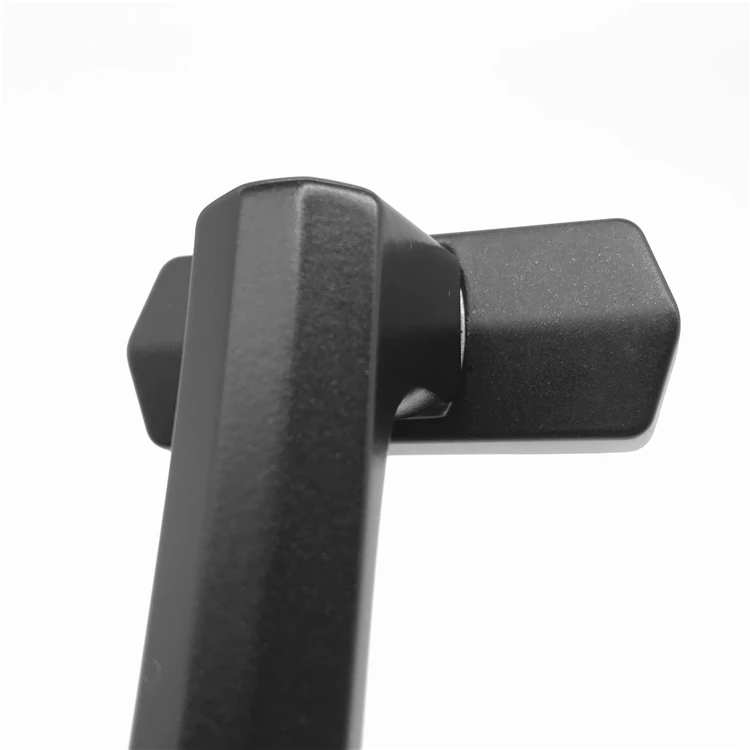
Looking for hardware solutions that meet European / American standards?
Use this guided inquiry modal to move from a generic quote form to a clearer technical conversation. Buyers can choose whether they need pricing, CAD / 3D files, or OEM / ODM support before sharing contact details.
Compatibility-first design across door / window systems
Repeatable production with clear inspection checkpoints
Documentation and change control for long-running programs
Responsive engineering support for fit and field feedback
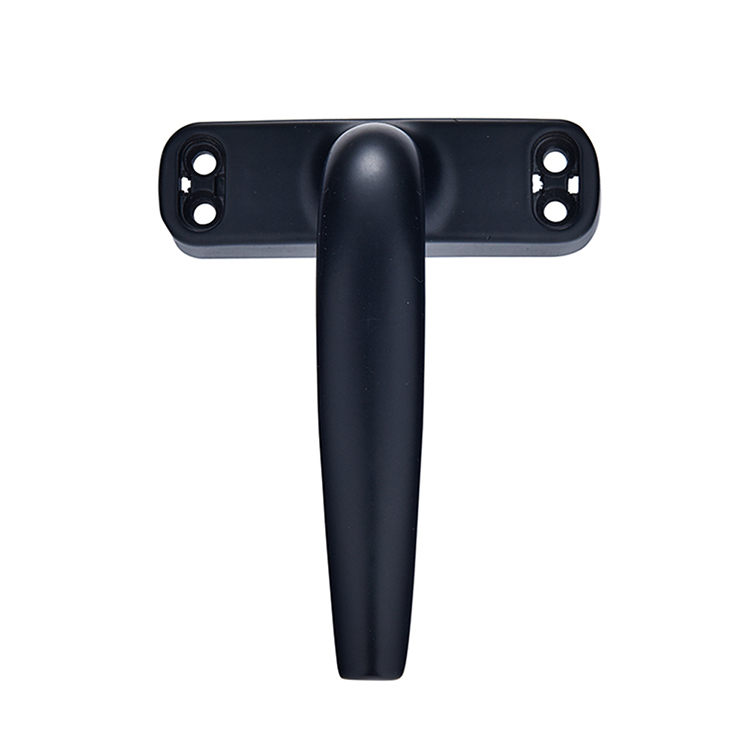
A replacement espag window handle can have the right colour, the right lever shape, and even the familiar oval backplate, yet still fail because its spindle is 10 mm too short, its offset is reversed, or its mounting screws collide with the gearbox body.
Why gamble?
My view is blunt: choosing a window handle by appearance is amateur procurement. The handle is not decorative trim with two screws attached. It is the control interface for a concealed mechanical system, and every meaningful dimension sits behind the backplate.
The good news is that matching one is not difficult. You need the old handle, a ruler or vernier caliper, a screwdriver, and about five minutes of disciplined measuring.
The Handle Is Only the Control Lever
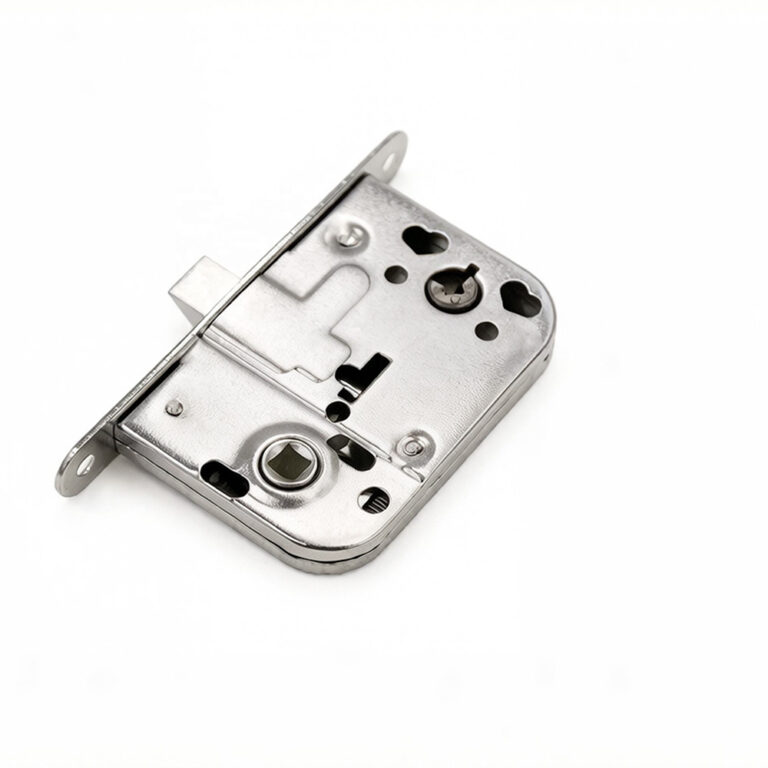
An espagnolette window lock uses a handle-driven gearbox to move locking hardware along the edge of the sash. Depending on the system, that hardware may include rollers, mushroom cams, rods, corner drives, or shoot bolts.
Turn the lever. The spindle rotates the gearbox. The gearbox moves the locking points.
Manufacturers such as MACO describe outward-opening espagnolette systems in which a 90-degree handle movement secures the sash at multiple points. That sounds simple, but the handle, spindle, gearbox input, locking strip, keeps, sash, and frame must all remain mechanically aligned. A correct handle cannot rescue a stripped gearbox or a sagging sash. MACO’s outward-opening window hardware overview explains the basic multi-point action.
This is also why I reject the phrase “it’s just a handle.” It is not.
Most modern replacement espag window handles for PVCu windows use a 7 mm square spindle and 43 mm screw centres. Those figures are common, not universal.
Yale’s model P-YWHLCK40N-WH, for example, specifies 43 mm between screw-hole centres and a 40 × 7 mm spindle. Its specification is representative of a widely used format, but it is not proof that every window follows that format. Yale’s PVCu inline handle data confirms those dimensions for that specific product.
Use this table before ordering anything:
Compatibility point
What to measure or identify
Common example
What goes wrong when mismatched
Drive type
Square spindle, fork, blade, or proprietary drive
7 mm square spindle
Handle cannot enter or turn the gearbox
Screw centres
Centre of upper screw to centre of lower screw
43 mm
Screws will not align with the existing holes
Spindle length
Backplate underside to spindle tip
30, 40, 43 or 55 mm
Too short will not engage; too long prevents flush fitting
Handle layout
Inline, offset, or cranked
Inline
Lever may hit the frame, glass bead, or reveal
Handing
Left, right, or reversible
Non-handed inline
Offset handle points or operates in the wrong direction
Backplate size
Width, length, depth, and boss position
Varies
Old marks remain visible or the plate fouls the profile
Rotation and stop
Operating angle and detent positions
90 degrees
Handle orientation will not match lock positions
That table is the job.
Everything else—finish, lever shape, key style, brand—is secondary until those seven checks pass.
1. Confirm That It Really Is an Espag Handle
Remove the existing handle and inspect the drive.
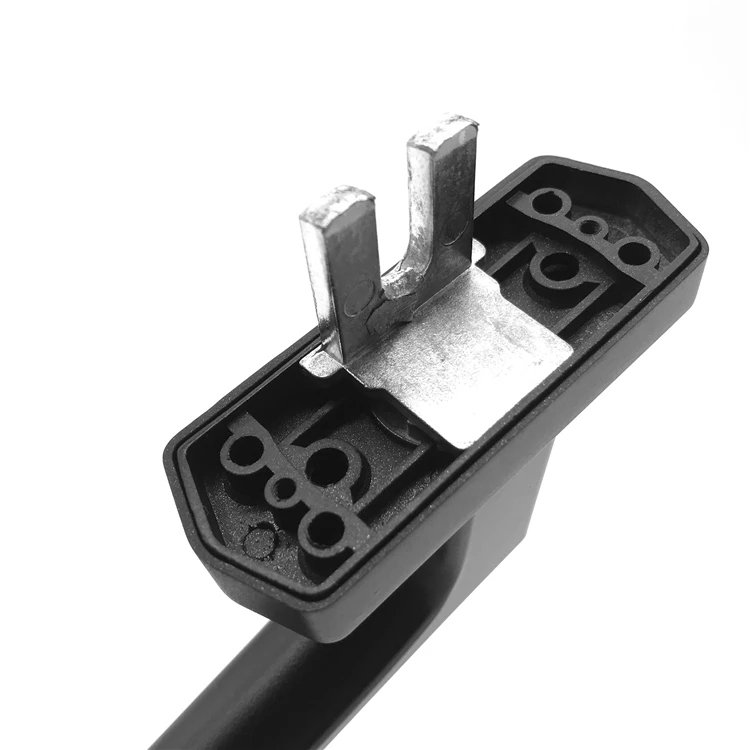
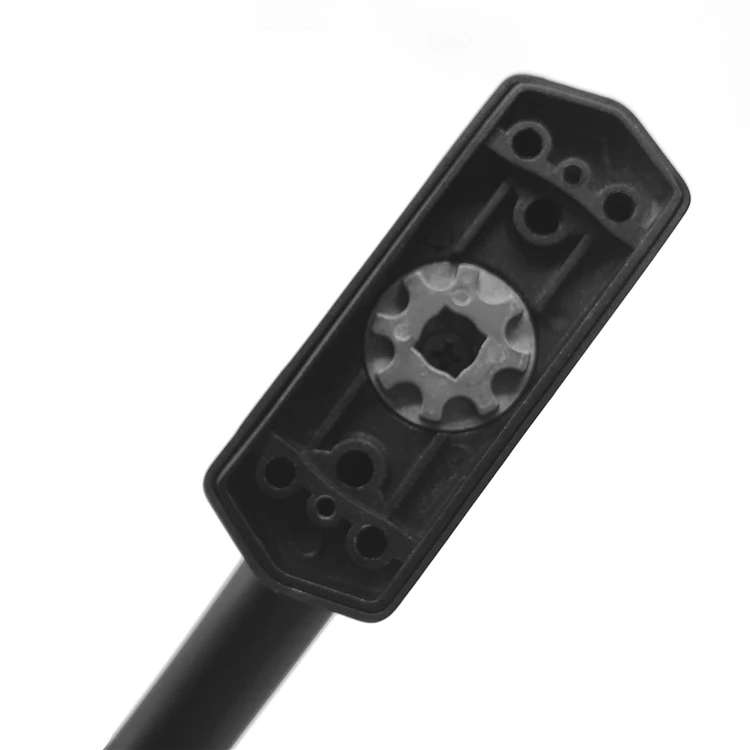
A standard espag handle normally has a square metal spindle projecting from the rear of the backplate. That spindle enters a square follower in the window lock gearbox.
But not every window lever uses a square spindle. Some aluminium systems use forks, blades, twin tabs, or product-specific drive pieces. A blade-drive handle cannot be replaced with a standard 7 mm spindle handle simply because the screw holes appear close.
Look first. Order second.
CHIER’s door and window handle range illustrates why the generic term “window handle” is too broad: casement, sliding, spindle-driven, blade-driven, handed, and profile-mounted products may look related while using different operating interfaces.
2. Measure the Screw Centres Correctly
Measure from the centre of one fixing screw to the centre of the other.
Do not measure from the outer edges of the screw heads. Screw heads vary. Centre-to-centre distance does not.
On many modern PVCu espag handles, the result will be 43 mm. If you measure approximately 42 mm or 44 mm with a flexible tape, check again using a steel rule or caliper before assuming you have an unusual lock.
Also inspect the screw diameter and length. A replacement handle may share the same centres while requiring different screw lengths because its backplate is thicker.
And never drive an overlong screw blindly into the profile. It can strike the gearbox, damage internal components, or distort the lock case.
3. Check the Square Spindle Size
Measure across one flat face of the square spindle, not diagonally from corner to corner.
A 7 mm square spindle is common on modern concealed espagnolette and shoot-bolt systems. Yale states that several of its replacement PVCu handles fit concealed espagnolette and shoot-bolt locks using a 7 mm spindle.
Still, measure it.
Some timber and aluminium hardware uses another spindle size or a completely different connection. Forcing the wrong spindle into the follower can round the gearbox input, split a weak casting, or leave enough play for the lever to droop.
Loose is bad. Forced is worse.
4. Measure the Window Handle Spindle Length
Measure from the flat underside of the handle backplate to the tip of the spindle.
Do not automatically copy the spindle’s total loose length after it has been removed from an interchangeable handle. What matters is the installed projection: the distance available to enter the gearbox once the backplate is seated against the window.
A spindle that is too short may catch the follower by only 2 or 3 mm. It might work during a bench test and then slip under real resistance.
A spindle that is too long produces a different failure. The backplate will not sit flush, the handle may wobble, or tightening the screws may force the spindle against the rear of the gearbox.
ERA’s Maxim Universal Multi-Spindle handle is a useful real-world example of why one length cannot cover every installation. It is supplied with 9 mm, 15 mm, 30 mm, 43 mm, and 55 mm pre-cut spindle options for PVCu, timber, and aluminium casement windows. ERA’s technical overview states that spindle depth changes with the frame profile and the location of the gearbox input.
That is the hard truth behind “universal”: the handle body may be universal because the package contains several non-universal spindle lengths.
5. Identify Inline, Offset, or Cranked Geometry
An inline espag window handle places the lever centrally over the spindle and usually works on either left- or right-opening windows.
An offset handle moves the lever to one side of the spindle. It creates clearance between the user’s hand and the frame, reveal, or glazing bead. Many offset handles are handed, so left and right models are not interchangeable.
A cranked handle bends or steps the lever away from the profile. This can solve a clearance problem that an inline lever cannot.
Do not judge handing from a product photo alone. Images may show the handle rotated, photographed from outside, or displayed without the window orientation.
Record the old handle in its closed position. Photograph it from inside the room. Then mark whether the lever sits to the left or right of the spindle centreline.
6. Check the Backplate and Fixing-Boss Clearance
Two handles can share 43 mm screw centres and a 7 mm spindle but still have different backplate widths, supporting lugs, boss diameters, or cover-plate depths.
This matters on narrow aluminium profiles. It also matters where the old handle sits close to a glazing bead or where the profile has a shaped recess.
Measure:
Overall backplate length
Overall backplate width
Backplate depth
Diameter and projection of rear locating lugs
Distance from the spindle centre to nearby obstructions
Available lever-swing clearance
Pretty handles fail here.
A wider backplate may cover old marks, which is useful. But it may also overlap the glazing bead or prevent the cover from rotating. A slimmer replacement may fit mechanically while exposing discoloured PVCu, unused holes, or damage left by the previous handle.
7. Confirm the Rotation and Lock Positions
Most espag systems operate through a 90-degree movement, but handle orientation and window function still need checking.
On a basic outward-opening casement window:
Lever down often means locked.
Lever horizontal often means open.
Tilt-and-turn systems may add another position, commonly with the lever pointing upward for tilt operation. Those systems should not be treated as ordinary two-position casement hardware.
Before fully tightening the screws, test the replacement with the sash open. Turn the handle slowly and confirm that the locking points move through their full travel without grinding, skipping, or stopping early.
How to Measure an Espag Window Handle Step by Step
Open the window before removing the handle whenever the mechanism still works. This prevents you from accidentally locking a closed sash with no usable handle attached.
Then follow this sequence:
Photograph the existing handle. Record its closed position, offset, colour, and any visible brand or product code.
Rotate or slide the screw cover. Most espag handles hide two fixing screws beneath a movable cover plate.
Support the handle while removing the screws. Do not let its weight hang from the spindle.
Pull the handle straight away from the profile. Avoid twisting the spindle inside the gearbox.
Measure the screw centres. Use centre-to-centre measurement.
Measure the spindle width. Check across the flat sides of the square.
Measure the spindle projection. Measure from the underside of the backplate to the tip.
Record inline or offset construction. For offset models, record the hand.
Measure the backplate. Include nearby frame and glazing-bead clearance.
Test the gearbox separately. With care, turn the square follower using the original handle spindle or a suitable tool. Do not use excessive force.
Keep the old screws until the replacement has been installed successfully. New screws are not automatically better screws.
Is the Handle Broken, or Is the Multipoint Lock Failing?
This is where people waste money.
They buy a replacement handle because the lever is stiff. The new handle becomes stiff too. Then they blame the new part.
Use the window-open test:
Symptom
Most likely area to inspect
Reason
Handle turns freely but locking points do not move
Gearbox or spindle engagement
The follower may be stripped or the spindle may be too short
Handle is stiff with the sash open
Gearbox, locking strip, corner drive, or damaged handle
Frame alignment is not causing the resistance
Handle is smooth open but stiff when closed
Keeps, sash alignment, hinge position, or gasket compression
Resistance appears only when locking points meet the frame
Handle droops but the lock operates
Handle spring cassette or worn handle body
The gearbox may still be functional
Handle will not sit flush after replacement
Spindle too long, rear lug interference, or wrong backplate
The handle is bottoming out before seating
Fixing screws align but lever hits the frame
Wrong offset, crank, or backplate geometry
Screw compatibility alone does not guarantee operational clearance
My rule is simple: if the lock is stiff while the window is open, stop forcing it.
Lubricant may reduce friction temporarily, but it will not repair broken teeth, a distorted faceplate, a detached drive rail, or a gearbox full of metal fragments. Using more leverage on the handle usually converts a repairable lock problem into a snapped handle and a locked-shut window.
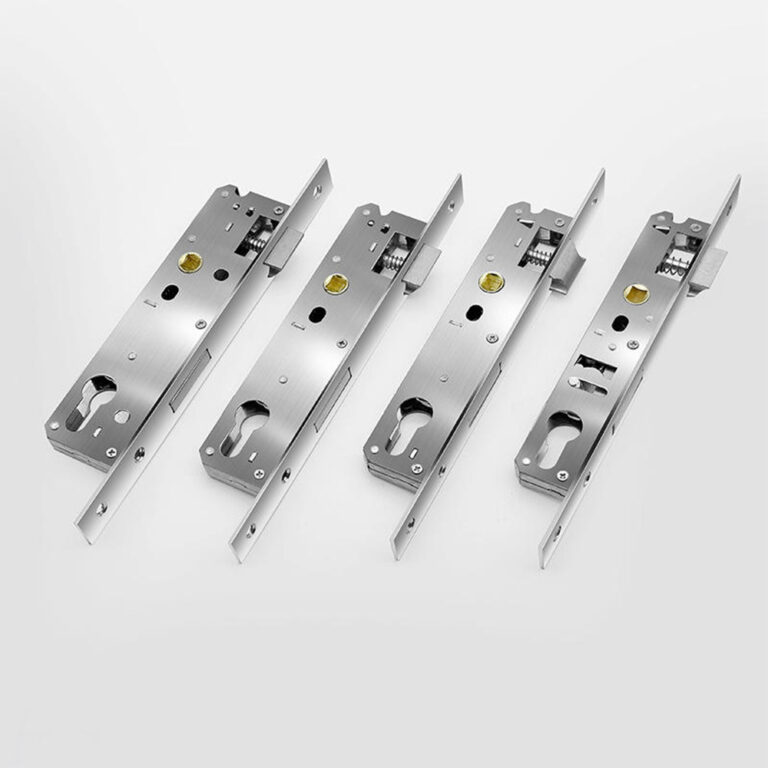
When specifying complete hardware rather than one replacement part, compare the handle with the locking strip, gearbox, sash geometry, and compression requirements. CHIER discusses this relationship in its article on multi-point locks in energy-efficient door and window systems.
What “Universal Replacement Handle” Really Means
“Universal” is one of the most abused words in window hardware.
A universal replacement espag handle usually means the product has been designed to cover several common installations through one or more adjustable features. Those may include:
A cut-to-length spindle
Several interchangeable spindle lengths
A reversible inline lever
Multiple fixing options
A backplate designed around common 43 mm centres
It does not mean the handle fits every window.
Yale sells replacement handles with 43 mm screw centres and a 40 mm spindle that can be cut down. ERA takes a different approach with five pre-cut spindle lengths. Both strategies address the same problem: profile depth varies.
This is good engineering. But it still cannot solve a blade-drive lock, an unusual fixing pattern, the wrong handed offset, inadequate lever clearance, or a damaged gearbox.
Read the dimensions. Ignore the headline.
Security and Safety: Do Not Confuse a Key with a Tested Window
A key-locking espag handle can stop the lever from being operated normally, but the presence of a key does not prove that the complete window has passed a security test.
The United Kingdom’s Approved Document Q addresses doors and easily accessible windows in new dwellings and states that they must resist physical attack through suitable construction and appropriate hardware. The requirement applies to the whole installed assembly, not to the handle in isolation. See the official Approved Document Q security guidance.
So a £10 locking handle fitted to a weak gearbox, poorly positioned keeps, removable glazing beads, or a flexible sash does not create a high-security window. It creates a weak window with a locked lever.
Safety needs the same honest distinction.
In its April 7, 2026 National Window Safety Week release, the U.S. Consumer Product Safety Commission reported that an estimated 5,600 children aged 12 and under received emergency-department treatment after falling from windows in 2024. About one in three required hospitalization, and the agency knew of at least 25 deaths between 2021 and 2023. The CPSC recommends dedicated window guards or stops and warns that insect screens do not prevent falls. Read the CPSC window-fall safety release.
A locking espag handle may help control ordinary operation. It is not automatically a child-fall prevention device, emergency egress solution, restrictor, or tested security system.
Words matter here.
Matching Handles for OEM, Distribution, and Repeat Orders
A one-off household repair can be matched from the old sample. A commercial hardware programme needs more discipline.
For distributor, fabricator, and OEM orders, prepare a compatibility sheet containing:
Window material: PVCu, aluminium, timber, or composite
Window type and opening direction
Profile drawing or cross-section
Handle fixing-centre dimensions
Drive type and spindle size
Required spindle projection
Gearbox make, model, and follower depth
Inline, offset, or cranked geometry
Left-hand, right-hand, or reversible operation
Backplate dimensions
Screw type and required length
Finish specification
Keying requirement
Cycle-test target
Corrosion-resistance requirement
Packaging, branding, and annual volume
Do not send only a photograph and ask a factory to “make the same.”
Photos hide depth. They hide tolerances. They hide the gearbox.
CHIER’s OEM door and window handles supplier page describes a more dependable process based on profile data, fixing dimensions, connection type, samples, drawings, finish requirements, and production review.
My opinion? Approve the interface before approving the finish.
A perfect matte-black coating on an incompatible handle is still scrap.
FAQs
How do I know if I have an espag window handle?
An espag window handle is a lever fitted with a square spindle that enters a concealed gearbox and turns rollers, mushrooms, shoot bolts, or rods at multiple points around the sash, usually through a 90-degree movement from closed to open.
Remove the two fixing screws and inspect the rear drive. A standard square spindle strongly suggests an espagnolette interface, although its size, projection, screw centres, and backplate still need measuring.
Are all espag window handles fitted on 43 mm screw centres?
No, not every espag window handle uses 43 mm screw centres in practice; 43 mm is common on modern PVCu replacement handles, but timber, aluminium, older systems, and proprietary hardware may use different centres, fixing patterns, spindle sizes, or blade-drive connections.
Always measure the old handle centre to centre. Do not rely on the window material, estimated age, or visual similarity.
How do I measure window handle spindle length?
Measure window handle spindle length from the underside of the handle backplate to the spindle tip, because that is the working projection that must reach the gearbox without bottoming out or leaving too little engagement to turn the lock reliably.
Where possible, compare this dimension with the original handle. Dry-fit the replacement before cutting an adjustable spindle, and shorten it in small increments.
Can I replace the handle without replacing the multipoint window lock?
Yes, an espag window handle can usually be replaced without changing the multipoint lock in most cases when the gearbox turns smoothly, the locking points move correctly, and the replacement matches the fixing centres, spindle size, spindle length, backplate clearance, and handing.
When the follower spins without moving the lock, the gearbox is stiff with the window open, or internal parts grind, replacing only the handle will probably not solve the fault.
Why is my replacement espag handle stiff?
A stiff espag handle is a symptom of resistance in the handle, gearbox, locking strip, keeps, sash alignment, or gasket compression, and the fastest diagnosis is to compare operation with the window open against operation with the sash fully closed.
Smooth operation while open usually points to alignment or compression at the frame. Stiffness in both positions points more strongly toward the handle or concealed lock mechanism.
Is a key-locking espag window handle more secure?
A locking espag handle is a handle with a key or button that blocks lever movement, but it does not automatically make the complete window resistant to forced entry because security depends on the lock, keeps, fasteners, glazing, frame, installation, and tested assembly.
Treat a locking handle as one component. For security-sensitive projects, evaluate the complete window against the applicable building requirements and test standards.
Send the Measurements, Not Just the Photo
Before purchasing a replacement espag window handle, record these five essentials: drive type, screw centres, spindle width, spindle length, and handle offset or handing.
For one window, compare those measurements with the product drawing.
For an OEM or distribution project, send the profile section, gearbox details, fixing pattern, finish requirement, expected order volume, and a physical sample where available. Ask for a compatibility review and approve a working sample before mass production.