Looking for hardware solutions that meet European / American standards?
Use this guided inquiry modal to move from a generic quote form to a clearer technical conversation. Buyers can choose whether they need pricing, CAD / 3D files, or OEM / ODM support before sharing contact details.
Compatibility-first design across door / window systems
Repeatable production with clear inspection checkpoints
Documentation and change control for long-running programs
Responsive engineering support for fit and field feedback
A polished handle, smooth gearbox, or perfectly coated hinge may have been hand-selected, reworked, inspected six times, and carried into the showroom by a sales manager who knows that the production line will never repeat that level of care without written controls.
So what are you really evaluating?
The best door and window hardware suppliers are not the companies with the brightest catalogs, the lowest quotations, or the fastest WhatsApp replies. They are the factories that can reproduce the same dimensions, materials, finish, operation, packaging, and documentation across thousands of units without quietly changing the process halfway through the order.
That distinction matters.
In April 2025, the U.S. Consumer Product Safety Commission announced the recall of approximately 200,000 Ashland casement window hinge tracks because a metal sliding arm could disengage and allow the sash to fall. The affected component reportedly sold for about $2. A two-dollar part created a six-figure recall population and an impact-injury hazard. Read the CPSC hinge-track recall notice.
That is the economics of fenestration hardware. Tiny component. Huge exposure.
The Lowest Quotation Often Hides the Most Expensive Supplier
I do not reject low prices automatically. China remains highly competitive in stamping, zinc and aluminum die casting, CNC machining, plastic injection molding, surface finishing, assembly, packaging, and custom tooling.
But I distrust unexplained prices.
When one quotation is 18% below every other bid, somebody should be able to explain the difference line by line. Perhaps the supplier owns its tooling and finishing line. Perhaps it has better material utilization. Perhaps another buyer is subsidizing the common platform.
Or perhaps the supplier changed the alloy, reduced coating thickness, removed an inspection step, shortened a spring, outsourced assembly, or priced the order below cost to secure the deposit.
Guess which explanation sales teams prefer?
Before comparing unit prices, normalize the commercial scope:
Material grade and material condition
Net component weight
Finish system and defined appearance limits
Coating or plating thickness
Included screws, keepers, spindle, keys, covers, and accessories
Packaging quantity and carton strength
Tooling, fixtures, gauges, and testing charges
Inspection level
Spare-parts allowance
Incoterm
Export documentation
Warranty responsibility
Applicable tariffs and duties
Replacement-part availability
For U.S. importers, do not assume that the supplier’s HS code is correct because it appears on an old commercial invoice. The USTR’s September 2024 Section 301 review retained and modified major China tariff actions after a lengthy review process. Duty exposure depends on the actual HTS classification, product construction, function, and country-of-origin facts.
I would make the importer confirm the proposed classification with a customs broker before approving the landed-cost comparison. A quotation that ignores a tariff is not cheaper. It is incomplete.
Table of Contents
Verify the Company Before You Inspect the Product
A factory evaluation starts with identity.
Not machinery.
Ask the supplier for its Chinese-language business license, registered Chinese name, Unified Social Credit Code, registered address, legal representative, business scope, invoice entity, export entity, and beneficiary bank account. These names should form a coherent chain.
Minor differences can have legitimate explanations. Major differences need evidence.
Factory, Trading Company, or Hybrid Operation?
Trading companies are not automatically bad. I would rather work with an honest, technically competent trading company than a disorganized factory pretending to control processes it barely understands.
The problem is concealment.
Ask these questions directly:
Which processes are completed at the registered factory?
Which processes are subcontracted?
Who owns the tooling?
Who purchases the raw material?
Who approves the finishing supplier?
Who signs the final inspection report?
Which legal entity receives payment?
Which legal entity appears on export documents?
Who is responsible for defective products?
Can the buyer audit subcontractors?
A supplier that coordinates die casting, machining, powder coating, plating, assembly, and export may be a useful manufacturing partner. But the buyer must know where each process occurs and who controls it.
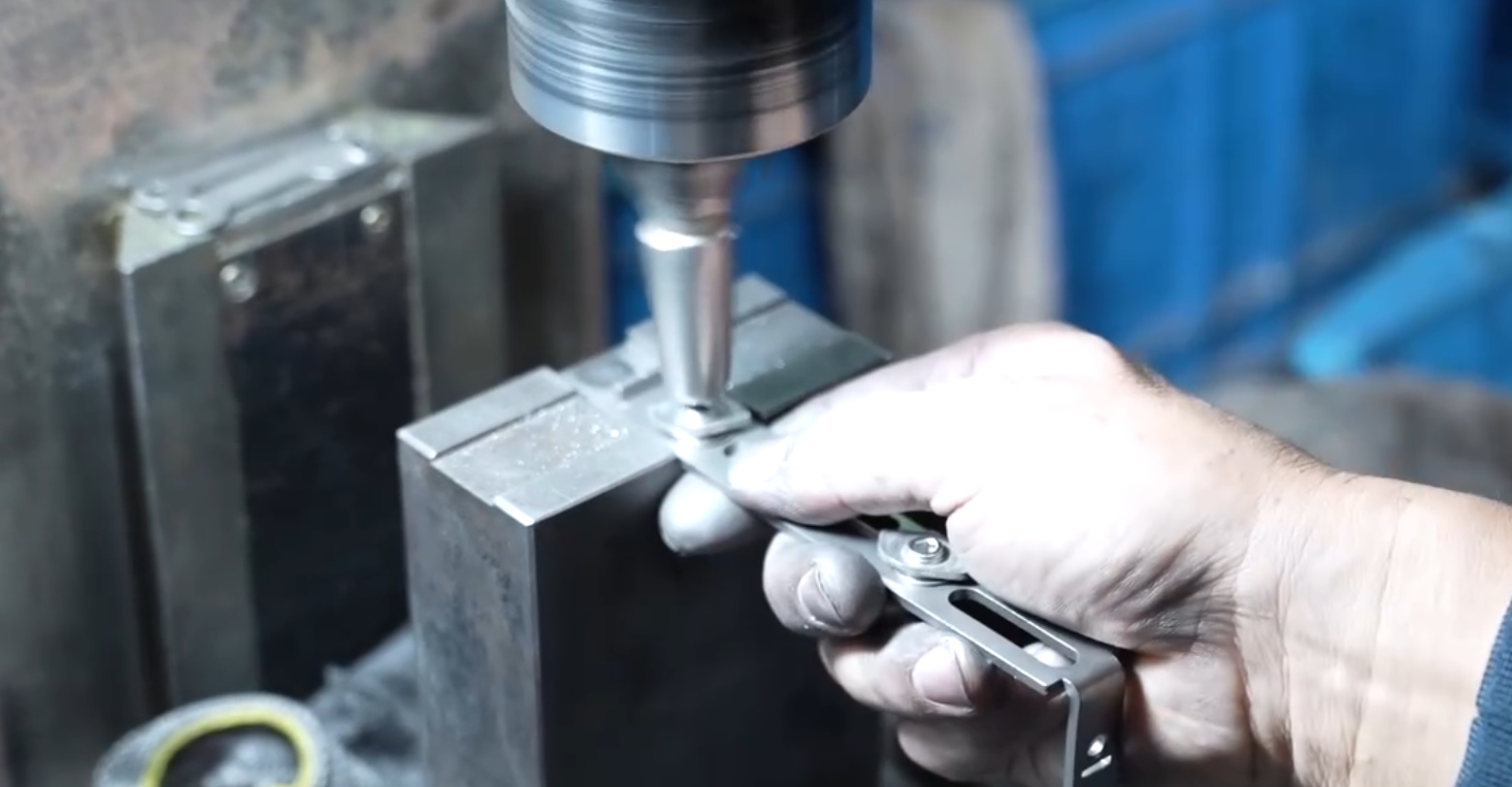
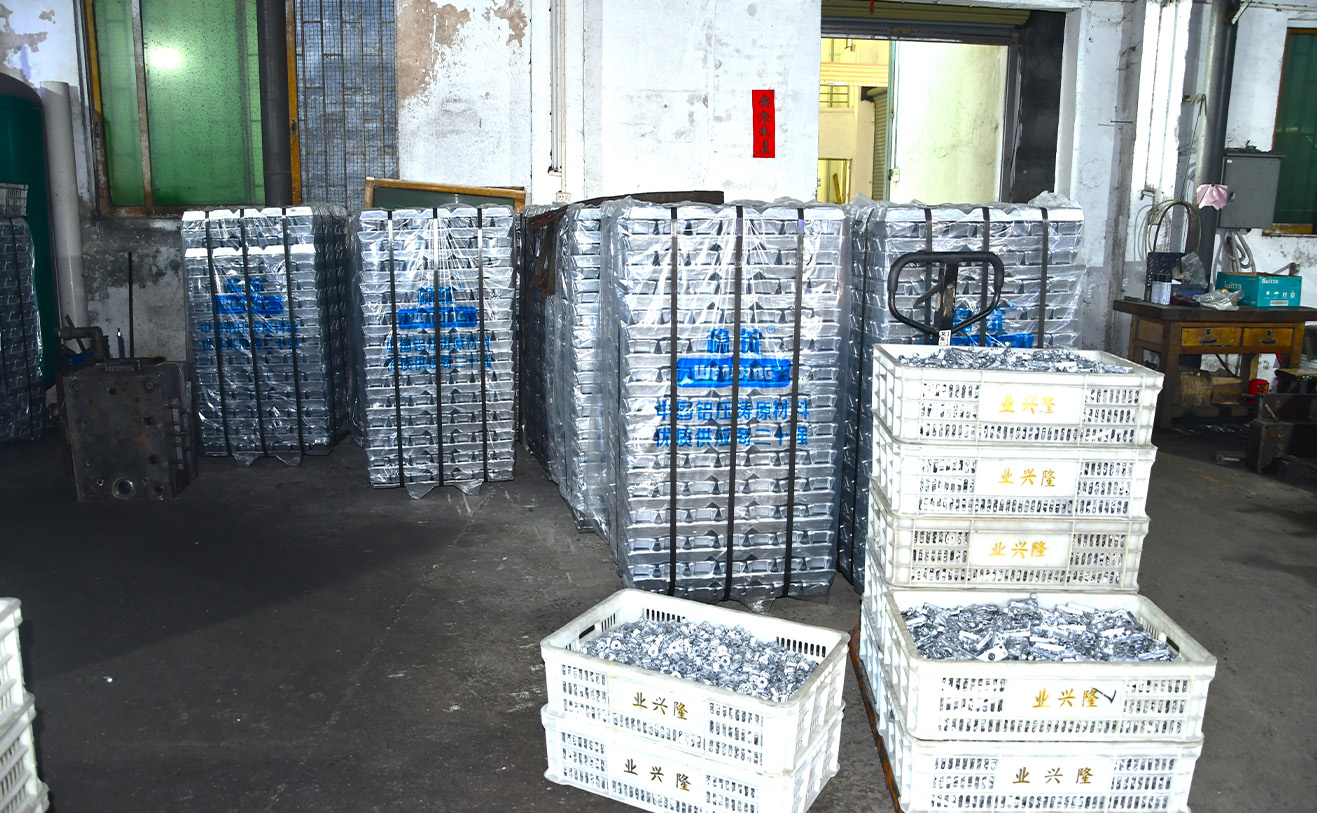
The Foshan Chier factory tour illustrates the process areas a serious audit should examine: incoming materials, stamping or machining, subassembly, surface finishing, final assembly, inspection, traceability, and export packaging.
Do not accept a tour that begins in the showroom, skips the warehouse, and ends beside a coffee machine.
Walk backward from finished goods to raw material. Check the labels. Check the dates. Check whether the work orders match the parts on the floor.
Treat Certificates as Leads, Not Conclusions
An ISO 9001 certificate is useful, but buyers often give it magical powers it does not possess.
According to the ISO description of ISO 9001, the standard addresses quality management systems. It does not certify that every handle, hinge, latch, lock, or gearbox meets your drawing.
Verify:
The certificate holder’s exact legal name
The factory address
The certification scope
The issuing certification body
The certificate status
The expiration date
Whether the audited site is the site making your order
Then inspect whether the quality system is alive.
Are nonconforming parts physically segregated? Are gauges calibrated? Are old drawings removed from workstations? Are corrective actions closed with evidence? Can an operator explain the current revision without calling the sales department?
Paper is patient. Production is not.
Follow the Hardware Through the Entire Factory
A generic supplier audit checklist is not enough. Door and window hardware has specific failure modes, and the audit should follow those risks.
A handle does not fail like a friction stay. A multipoint lock does not fail like a crescent latch. A powder-coated cover does not fail like a loaded hinge pin.
That is why buyers should review the complete door and window hardware range as separate process families rather than treating every metal component as the same manufacturing job.
Incoming Material Control
Ask how the supplier verifies stainless steel, carbon steel, aluminum alloy, zinc alloy, engineering plastics, springs, lubricants, fasteners, and coating materials.
The answer “our supplier guarantees it” is not verification.
Depending on the component and risk, evidence may include:
Material certificates
Supplier batch numbers
Positive material identification or XRF screening
Hardness testing
Coating-material certificates
Resin identification
Incoming dimensional inspection
Spring-wire specifications
Restricted-substance declarations
Approved supplier records
For coastal hardware, the difference between 304 and 316 stainless steel may affect exposure performance, but the grade printed on a purchase order means little when mixed fasteners, carbon-steel springs, incompatible plated components, or unsealed cut edges remain in the assembly.
Every RFQ should identify critical-to-quality dimensions.
For door and window hardware, these may include:
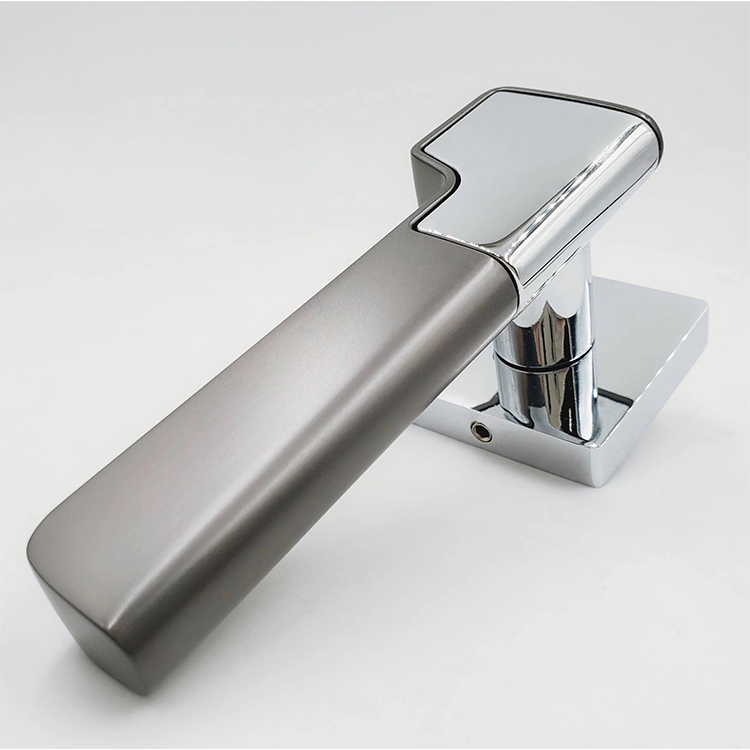
Handle spindle size and projection
Fixing-hole centers
Backset
Lock center distance
Faceplate width and thickness
Hook or bolt projection
Keeper location
Gearbox travel
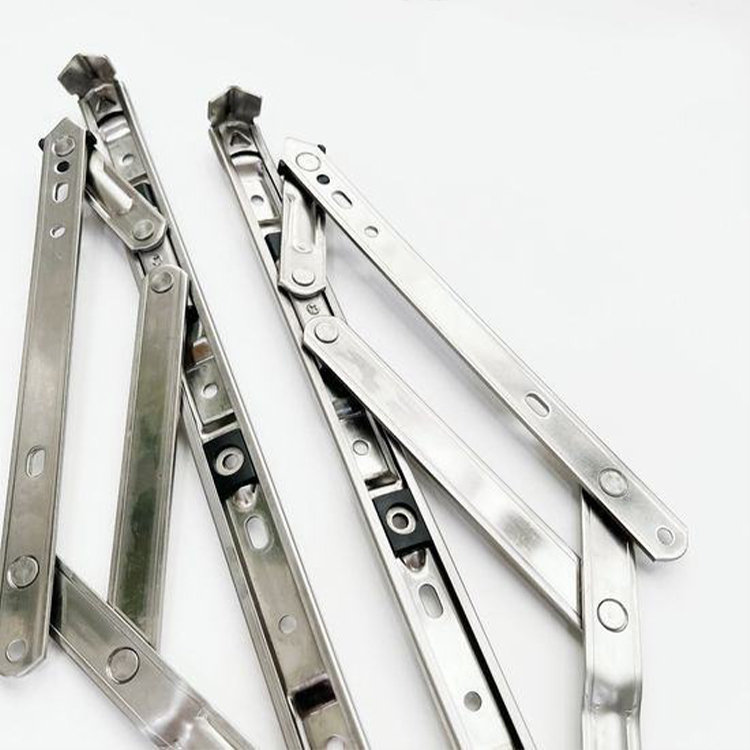
Hinge arm geometry
Pivot position
Fastener thread
Track width
Slider clearance
Assembly torque
Operating force
Ask the factory to show how each CTQ dimension is measured, how often it is checked, which gauge is used, who owns the gauge, and what happens when the result falls outside the limit.
And inspect the fixture.
A worn fixture can repeatedly approve a wrong part. A digital caliper does not solve that problem.
For stable mass production, I prefer a documented first-article report, an approved golden sample, a measurement method, and capability evidence for high-risk dimensions. A process capability index such as Cpk 1.33 may be a sensible starting expectation for stable measurable characteristics, but it should never be copied blindly into every specification.
Some dimensions are better controlled with functional gauges. Some require assembly testing. Some are too low-volume for meaningful capability analysis.
Use engineering judgment.
Surface Finishing Is Often the Hidden Factory
Powder coating, electrophoresis, anodizing, zinc plating, nickel plating, PVD, and wet painting are frequently subcontracted.
That is not automatically a weakness. Uncontrolled subcontracting is.
Find out:
Which finishing company is approved
Whether the buyer can audit it
How pretreatment is controlled
How coating thickness is measured
How color is approved
Whether gloss limits are specified
Whether adhesion is tested
How racks and contact marks are positioned
How salt-spray samples are prepared
Whether reworked parts are mixed into normal production
How each finished batch is identified
I also recommend defining an agreed color instrument, measurement geometry, gloss range, master panel, and ΔE*ab tolerance where appearance consistency matters. “Matte black” is not a measurable specification.
It is a future argument.
Use a Supplier Audit Scorecard With Knockout Rules
A weighted score helps procurement teams compare Chinese door and window hardware manufacturers without turning every judgment into a debate. But scoring alone is dangerous.
A supplier should not pass with excellent pricing while failing legal identity, safety testing, or change control.
Use both points and knockout rules.
Evaluation Area
Weight
Evidence to Review
Knockout Example
Legal identity and ownership
10
Business license, registered address, bank entity, export entity
Payment requested to an unrelated personal account
Engineering and application fit
15
Drawings, DFM review, tolerance analysis, system compatibility
Supplier cannot identify CTQ dimensions
Manufacturing process control
20
Work instructions, fixtures, control plans, in-process records
No control over a load-bearing process
Testing and validation
15
Test plans, raw data, sample identification, laboratory scope
Report covers another model or another factory
Traceability and change control
15
Batch codes, revision records, approved supplier list
Materials may be changed without buyer approval
Capacity and delivery control
10
Production records, machine loading, bottleneck analysis
Repeated defects are closed with “operator training” only
Total
100
I would normally require at least 75 points, no knockout failure, and a written action plan for weak areas before mass production.
But do not worship the number.
An 82-point supplier with transparent weaknesses may be safer than a 94-point supplier whose records look suspiciously perfect. Real factories have problems. Good factories can show how they find, contain, investigate, and prevent those problems.
That is the difference.
Test the Exact Hardware, Not the Supplier’s Favorite Sample
The test report must connect to the purchased product.
Check the model number, drawing revision, materials, finish, test date, sample quantity, test method, failure criteria, laboratory, and applicant name. A valid-looking report for a similar product is not evidence for your order.
For independent testing, review whether the laboratory is accredited to the applicable method. ISO/IEC 17025 addresses laboratory competence, impartiality, and consistent operation, but buyers must still check whether the relevant test method appears within the laboratory’s accredited scope.
Match the Standard to the Product and Market
Possible references may include:
EN 13126 series for specified window and door-height window hardware
EN 1670 for building-hardware corrosion resistance
ASTM B117 for operating salt-spray apparatus
Applicable egress, security, child-safety, fire-door, accessibility, or building-code provisions
Buyer-specific cycle, torque, load, abuse, and environmental tests
Do not write “ASTM B117 compliant” and stop there.
The ASTM B117 scope explains that the practice establishes the salt-spray apparatus, procedure, and conditions; it does not prescribe a universal exposure period or automatically predict natural-environment performance.
That matters. A supplier advertising “500 hours salt spray” has not told you the substrate, finish system, scribe method, acceptance criteria, red-rust limit, white-corrosion limit, sample orientation, edge protection, or what the result means in service.
Hours are not a specification by themselves.
For assembly-sensitive products, review Chier’s fenestration hardware compliance guidance before approving isolated components. The handle, gearbox, locking points, keepers, hinge geometry, sash weight, profile tolerances, fasteners, and installation method can affect the finished opening.
Recent Recalls Show Why Batch Traceability Matters
In February 2026, CPSC announced a recall covering approximately 91,000 Andersen window opening control devices. The agency reported eight cases of devices breaking, detaching, or malfunctioning. The affected units had been sold as individual kits or factory-installed accessories from October 2015 through December 2025. See the official Andersen recall details.
Notice the time span.
Ten years of sales can turn one component issue into a large identification, communication, repair, and field-service exercise. Without date codes, part numbers, revision records, customer shipment records, and controlled product changes, a business may be unable to isolate the affected population.
Then everybody gets included.
Your purchase order should prohibit unapproved changes to:
Material grade
Material supplier
Component weight
Heat treatment
Spring specification
Lubricant
Tooling
Tolerance
Subcontractor
Coating chemistry
Coating thickness
Assembly method
Inspection method
Packaging
Production location
No written approval, no change.
That single rule is more valuable than another glossy certificate.
Approve the Supplier in Stages
I would not move directly from catalog sample to container order.
Use gates.
Gate 1: Technical RFQ Review
Provide drawings, opening type, profile information, sash or panel weight, target market, expected annual volume, finish, packaging, applicable standards, use environment, and known field risks.
The OEM/ODM door and window hardware program provides a useful structure: requirements review, DFM, prototype samples, verification, pilot production, mass production, and controlled revisions.
Gate 2: Reference Samples
Inspect dimensions, materials, finish, operation, assembly, fasteners, labeling, and packaging. Cut or disassemble samples where necessary.
Pretty surfaces hide many sins.
Gate 3: First-Article Approval
Approve a documented sample linked to:
Drawing revision
Bill of materials
Finish specification
Inspection report
Test results
Packaging specification
Date and signature
Photographic record
Seal and retain duplicate samples when practical.
Gate 4: Pilot Production
Run a limited production batch before full volume. Depending on tooling economics and order size, that might be 300, 500, or 1,000 pieces rather than a full container.
Inspect the pilot as production, not as another sample exercise.
Gate 5: During-Production Inspection
Inspect when approximately 20%–40% of the order has been produced. That leaves time for containment and correction before every unit carries the same defect.
Review live records, line conditions, CTQ dimensions, assembly operation, finish batches, packaging materials, and production quantity.
Gate 6: Final Random Inspection
A practical starting inspection plan might use zero tolerance for defined critical defects, AQL 1.0 for major defects, and AQL 2.5 for minor defects, but the correct plan depends on product risk, order history, contractual requirements, and the cost of failure.
A child-safety restrictor should not be treated like a cosmetic cover.
Gate 7: Post-Shipment Performance Review
Track:
Incoming defect rate
Installation issues
Return rate
Warranty claims
Finish complaints
Missing-parts incidents
Packaging damage
Corrective-action response time
Replacement-part lead time
Lot-to-lot variation
Supplier evaluation does not end when the balance payment leaves your bank.
That is when the evidence begins.
The broader door and window accessories buying guide explains why handles, hinges, locks, gearboxes, rollers, keepers, fasteners, and seals should be evaluated as one operating chain rather than unrelated catalog items.
Red Flags I Would Not Ignore
Some warning signs deserve immediate escalation:
The company refuses to provide its Chinese business license.
The bank beneficiary is unrelated to the contracting entity.
The factory address differs across certificates, invoices, and test reports.
Every process is allegedly completed in-house, but no subcontractor records exist.
Test reports contain a different model number.
Reports use cropped pages or missing accreditation marks.
The showroom sample has no batch identification.
Operators use drawings without revision numbers.
Rejected products are stored beside approved products.
Measuring tools have no calibration status.
Inspection records contain identical handwriting and identical values across many days.
Material substitutions are described as “industry standard.”
The factory will not show the warehouse or tool room.
Capacity claims are based on machine speed rather than actual output.
Corrective actions always blame workers.
The supplier promises every certificate before seeing the specification.
The quotation is dramatically cheaper but technically vague.
One red flag may have an explanation.
Five red flags are the explanation.
FAQs
What makes a reliable Chinese door and window hardware supplier?
A reliable Chinese door and window hardware supplier is a legally verifiable manufacturer or controlled sourcing partner that can repeatedly produce the specified hardware, document materials and process controls, pass application-specific tests, trace each batch, manage engineering changes, and complete corrective action after shipment without hiding behind polished samples or generic certificates.
Reliability should be measured through production records, technical competence, verified test evidence, batch consistency, delivery performance, and the supplier’s response when something goes wrong.
How should buyers audit window hardware suppliers in China?
A supplier audit is a structured verification of the legal entity, factory processes, equipment, subcontractors, quality controls, testing capability, capacity, traceability, and commercial systems used to make and ship the exact product family being purchased, rather than a guided tour of clean machines and a conference-room presentation.
Follow the material from receiving through processing, finishing, assembly, inspection, storage, and packaging. Compare what employees do with what the written procedure claims.
What documents should an OEM door and window hardware factory provide?
The minimum document pack should identify the legal company, product drawing and revision, approved material specifications, control plan, inspection criteria, test method, accredited laboratory where required, batch code, packaging specification, change-control rule, corrective-action process, tooling ownership, warranty terms, and the named party responsible for export and payment.
High-risk projects may also require material certificates, dimensional reports, process capability data, corrosion-test results, cycle-test records, restricted-substance declarations, and component-level traceability.
Is ISO 9001 enough to approve a Chinese hardware manufacturer?
ISO 9001 certification is evidence that a supplier has implemented a quality management framework, but it is not proof that a specific hinge, lock, handle, coating, gearbox, or production batch meets your drawing, performance target, corrosion requirement, legal obligation, or field-life expectation.
Verify the certificate, then audit the actual processes. Product approval still requires drawings, inspections, testing, traceability, and evidence that production matches the approved sample.
How should buyers approve samples from door hardware manufacturers in China?
Sample approval is a staged process in which buyers compare reference samples, drawing dimensions, finish limits, functional results, packaging, and test evidence before approving a documented golden sample, then confirm the same controls again through first-article inspection and a limited pilot production run.
Never approve a sample based only on appearance. Link it to a drawing revision, material specification, test record, inspection report, packaging standard, and signed approval date.
How can buyers prevent suppliers from changing materials after approval?
Material substitution prevention is a contractual and operational control requiring the supplier to obtain written buyer approval before changing materials, sources, tooling, processes, finishes, subcontractors, production locations, inspection methods, or packaging, with batch records and incoming inspections used to verify continued conformity after approval.
Add the requirement to the purchase contract, drawing, control plan, and supplier manual. Then verify it through receiving tests, factory audits, batch traceability, and periodic comparison against the approved golden sample.
Your Next Step: Audit the Evidence Before You Approve the Order
Stop asking only, “What is your best price?”
Send the supplier a real technical package. Ask for the Chinese business license, process map, subcontractor list, control plan, drawing review, material evidence, relevant test reports, batch-traceability example, change-control procedure, and corrective-action case.