Looking for hardware solutions that meet European / American standards?
Use this guided inquiry modal to move from a generic quote form to a clearer technical conversation. Buyers can choose whether they need pricing, CAD / 3D files, or OEM / ODM support before sharing contact details.
Compatibility-first design across door / window systems
Repeatable production with clear inspection checkpoints
Documentation and change control for long-running programs
Responsive engineering support for fit and field feedback
They ask for a handle, lock, hinge, or latch by name, attach two photographs, mention an estimated quantity, and expect suppliers to produce comparable prices. What comes back is not a fair comparison. It is four different interpretations of an incomplete request.
Price comes last.
A proper hardware RFQ must first freeze the application, component interfaces, dimensions, materials, finishes, performance targets, testing standards, packaging, inspection rules, annual demand, and quotation format so each supplier prices the same product and accepts the same obligations.
Otherwise, what exactly are you comparing?
The U.S. General Services Administration describes an RFQ as a solicitation used to obtain pricing for clearly defined products or services. “Clearly defined” is doing a lot of work in that sentence. A photograph and the words “high-quality stainless-steel lock” do not meet that test. GSA’s RFQ guidance supports using RFQs when the requirement is already specific enough for suppliers to price consistently.
My position is blunt: if suppliers are still choosing the geometry, material grade, duty level, or test target, you do not have a finished RFQ. You have an early-stage product inquiry.
A Hardware RFQ Is a Control Document, Not a Shopping List
A hardware RFQ should control what can change between the first quotation, the approved sample, and mass production.
That includes far more than unit price:
What is being supplied?
What system will it operate in?
Which dimensions cannot change?
Which standards apply?
What evidence must accompany the quote?
What substitutions are prohibited?
Who owns the tooling?
What happens if the approved material or sub-supplier changes?
Which version of the drawing governs production?
There is also a legal point buyers routinely misunderstand. Under FAR 13.004, a quotation in U.S. federal simplified acquisition is not itself an offer; the government’s resulting order is the offer, and a contract forms when the supplier accepts it. Commercial contracting rules vary, but the lesson travels well: your RFQ, supplier quote, purchase order, drawings, and acceptance terms must clearly show which document controls when details conflict.
Do not leave that hierarchy buried in email.
State it.
For example:
In the event of a conflict, the signed purchase agreement takes priority, followed by the approved drawing revision, technical specification, approved golden sample, purchase order, and supplier quotation.
That one sentence can prevent weeks of selective memory.
Define the Door, Window, Cabinet, or Access System First
Hardware does not operate in isolation. A hinge carries a moving load. A handle transmits human force. A latch depends on keeper alignment. A lock relies on a compatible spindle, cylinder, strike, profile cavity, fastener pattern, and operating clearance.
So begin the door hardware RFQ with system context.
Indoor, outdoor, coastal, industrial, hygienic, or high-humidity exposure
Door or sash material: aluminum, PVC-U, timber, steel, stainless steel, or composite
Profile drawings and cross-sections
Panel dimensions and weight
Opening direction and handing
Expected opening frequency
Gasket compression or sealing load
Security and accessibility requirements
Temperature and chemical exposure
Fire, smoke, emergency-egress, or forced-entry obligations
Target countries and jurisdictions
This is where many buyers should attach a complete hardware schedule or BOM rather than pricing loose parts. CHIER’s guide on building a complete hardware BOM for an aluminum door or window system is a useful internal reference because the handle, gearbox, rods, keepers, hinges, fasteners, and accessories must be reviewed as one operating chain.
And do not write “standard aluminum profile.”
There is no universal standard cavity, screw purchase, backset, keeper location, or spindle position. Attach a dimensioned PDF plus STEP, DWG, or DXF files where available. CHIER’s OEM and ODM hardware support specifically separates generic pricing inquiries from projects requiring drawings, 3D files, sampling, fitment validation, and change control.
Drawings beat adjectives.
A supplier can interpret “heavy duty,” “premium,” “modern,” or “corrosion resistant” in almost any way it wants, but it cannot honestly reinterpret a 43.0 ± 0.2 mm fixing pitch, 7 mm spindle, 25 mm backset, or 2.5 mm minimum leaf thickness.
Why give ambiguity room to breathe?
The RFQ Specifications Checklist Buyers Should Use
The following hardware RFQ template covers the fields I would expect before treating competing quotations as comparable.
Written approval for material, drawing, process, tooling, or sub-supplier changes
Protects repeat-order consistency
Supplier may use “equivalent materials”
Quote format
Mandatory cost breakdown and exception schedule
Exposes hidden assumptions
Supplier sends only a total price
The exception schedule matters more than buyers think. Require every supplier to list deviations from the RFQ in one place.
Silence should mean compliance.
What to Specify for Handles
A handle specification should identify how the user interacts with it and how it interfaces with the mechanism behind it.
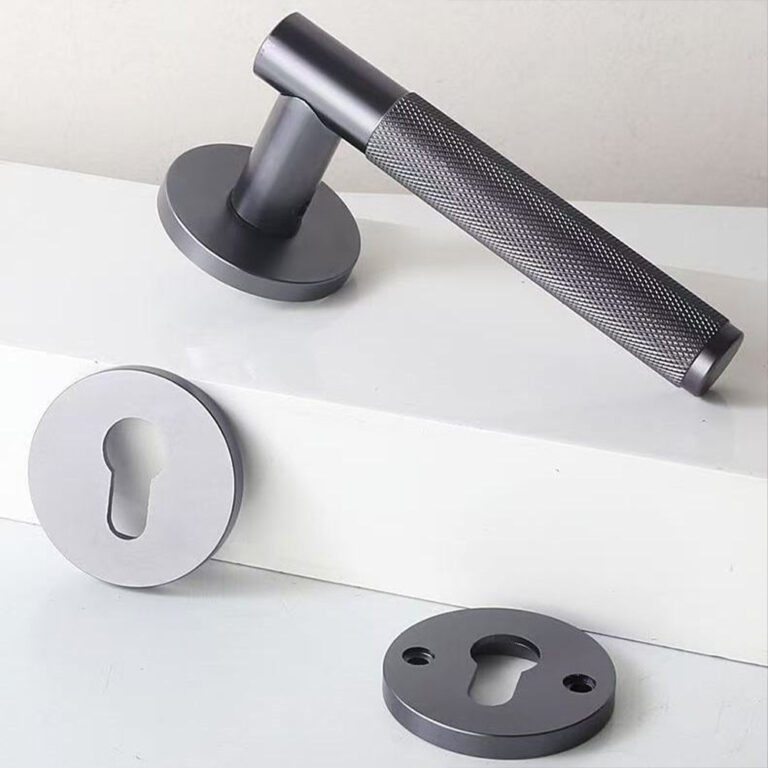
For lever, pull, sliding, flush, casement, and locking handles, state:
Handle type and operating motion
Overall length, projection, grip clearance, and lever length
Baseplate or rose dimensions
Fixing centers, screw direction, and thread
Spindle profile, size, material, and insertion depth
Rotation angle and stop position
Left-hand, right-hand, or reversible configuration
Spring-return requirements
Locking cylinder, keying, push button, or thumb-turn details
Maximum operating torque or force
Finish and color tolerance
Logo, marking, packaging, and private-label requirements
The product context matters. CHIER’s OEM door and window handles include casement, sliding, lever, pull, lockable, and flush configurations, with fitment, mounting, spindle design, finish matching, and repeat-order consistency treated as separate specification decisions.
Accessibility cannot be handled with the sentence “ADA compliant.” The U.S. Access Board’s door hardware guidance says applicable hardware must allow one-hand operation, avoid tight grasping, pinching, or wrist twisting, operate with no more than 5 lbf, and generally sit 34 to 48 inches above the floor. Put the relevant operating-force and geometry requirements directly into the RFQ.
For European programs, identify the correct product route. BS EN 1906:2012 covers lever handles and knob furniture operating latches, while BS EN 13126-3:2023 addresses handles for defined window and door-height-window hardware, including durability, strength, security, and functionality. Do not cite whichever standard happens to appear on a supplier’s old certificate.
What to Specify for Locks
“Multipoint lock, high security” is not a specification.
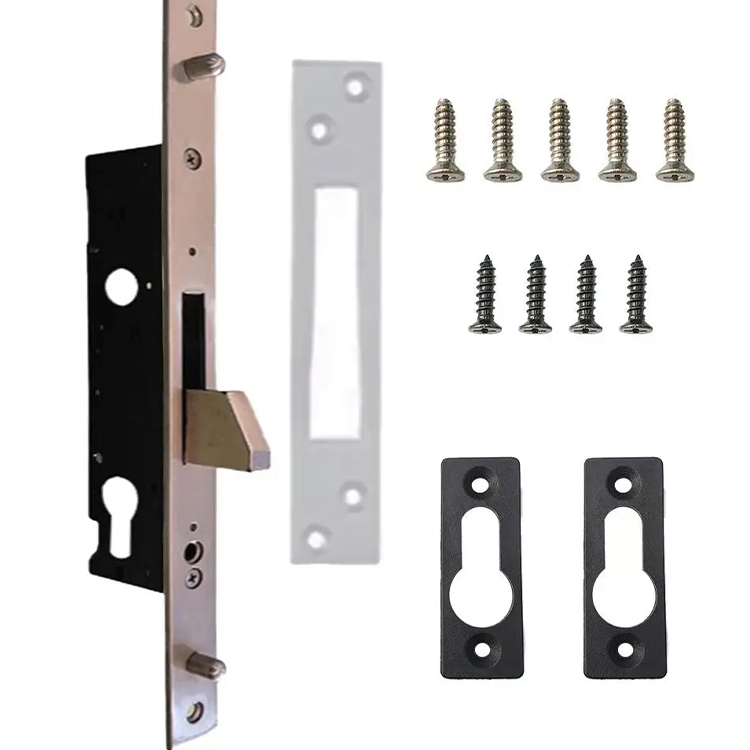
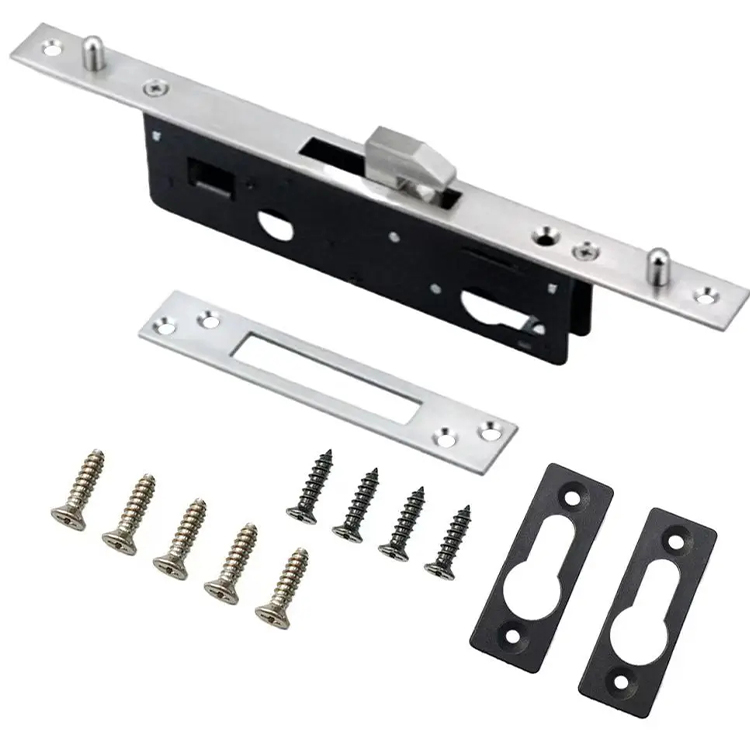
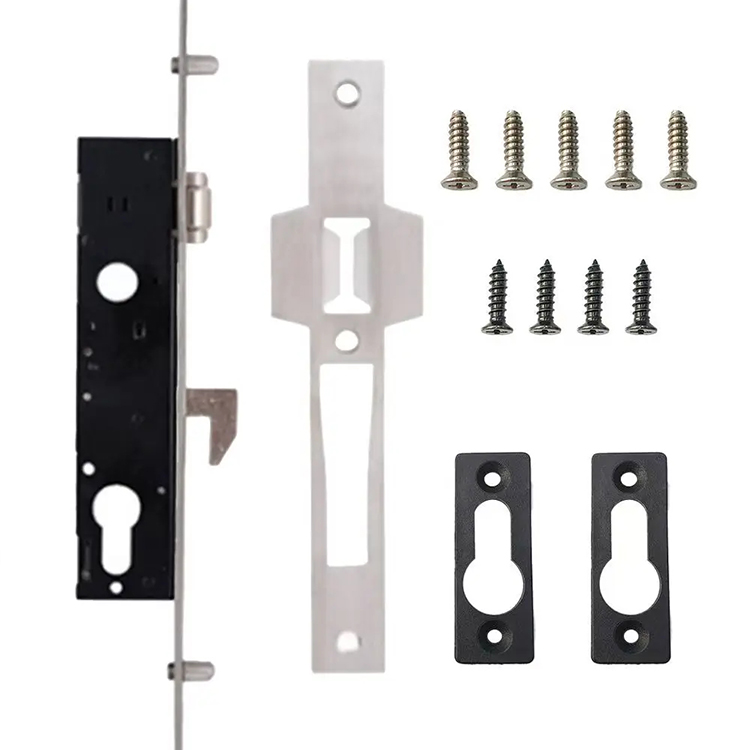
For single-point, multipoint, mortise, sliding, sash, cabinet, or access hardware locks, provide:
Lock type and operating sequence
Backset and center distance
Faceplate length, width, thickness, and shape
Case dimensions and profile-cavity limits
Latch projection and deadbolt throw
Number and type of locking points
Hook, mushroom, roller, shoot-bolt, or deadbolt geometry
Distance between locking points
Handle lift, key turn, motor, or thumb-turn operation
Cylinder format and cam requirements
Spindle size and follower position
Strike or keeper drawings
Required adjustment range
Security, torque, side-load, and cycle targets
Fail-secure, fail-safe, egress, or access-control logic
Corrosion and lubrication requirements
A multipoint system needs more than a lock body. The RFQ should name rods, extensions, guides, corner drives, keeps, strikes, cylinders, fasteners, and mating handles. Buyers can use CHIER’s multipoint door lock range alongside its engineering guide on designing a reliable multipoint lock system to identify the interfaces a catalog description normally misses.
For a U.S. architectural application, ANSI/BHMA A156.2-2022 provides a useful reality check. Its public summary states that Grade 1 locks must complete one million operating cycles with a 10-pound axial load, and it includes aggressive security testing such as 1,200 in-lbf locked-lever torque. Those are measurable requirements. “Durable” is not.
For relevant European mechanical locks, BS EN 12209:2024 is the current release identified by BSI. Your RFQ should still state the required classification and product scope rather than merely demanding “EN 12209.”
What to Specify for Hinges
The hinge carries the consequences of every bad assumption made elsewhere.
Specify:
Hinge type: butt, concealed, continuous, spring, friction, pivot, non-mortise, or specialty
Door or sash dimensions and actual mass
Center of gravity where unusual loads exist
Number of hinges per opening
Leaf height, width, and thickness
Knuckle and pin dimensions
Bearing type
Hole count, fixing pattern, countersink, and screw specification
Mortise depth
Opening angle
Handing
Adjustment range
Fire, smoke, security, or non-removable-pin requirements
Radial and axial load expectations
Cycle target
Finish, substrate, and corrosion exposure
CHIER’s door hinge range tells buyers to compare leaf dimensions, thickness, fixing pattern, mortise requirement, pin configuration, handing, opening direction, and target door weight. That is a far better RFQ structure than sending a sample and asking for “the same hinge.”
ANSI/BHMA A156.1-2025 gives the numbers teeth. Its public summary states that a Grade 1 hinge must pass 2.5 million opening-and-closing cycles on a door of specified weight. It also ties metal gauge to hinge size, weight class, and grade; one example is 0.190 ± 0.005 inch material for a heavy-weight, 5-inch Grade 1 hinge.
Samples can lie.
A lightly loaded sample door may swing beautifully even when the production hinge has inadequate leaf thickness, weak screw purchase, the wrong bearing construction, or no margin for gasket force and installation error.
What happens after 100,000 cycles?
What to Specify for Latches
Latches are routinely treated as simple parts because they are small. That is lazy thinking.
For sash latches, paddle latches, slide bolts, touch latches, rotary latches, flush bolts, and panel-retention devices, define:
Latch type and operating direction
Body and keeper dimensions
Fixing pattern
Latch travel and engagement depth
Keeper location and adjustment
Required closing force
Pull-out, shear, side-load, and impact requirements
Spring force
Slam resistance
Misalignment tolerance
Locked and unlocked indication
Keying or padlock provision
Emergency-release requirements
Cycle target
Material and finish for every moving part
CHIER’s door and window latch range separates installation type, fixing dimensions, operating direction, latch travel, keeper position, and available clearance. Those fields belong in the RFQ because changing any one of them can turn a functioning latch into a callback.
Do not specify the latch without the keeper.
That is half a system.
Demand Test Evidence, Not Certificate Theater
The RFQ should tell suppliers exactly what evidence must be submitted with the quotation, sample, and production lot.
Request:
Full test report, not only the cover page
Test standard and edition
Product model and drawing revision tested
Grade or classification achieved
Laboratory name and accreditation
Test date
Sample dimensions and material
Finish and pretreatment used
Test fixture or assembly configuration
Cycle count, load, torque, operating force, and failure criteria
Photographs before and after testing
Deviations, repairs, lubrication, or fastener retightening during testing
Confirmation that the quoted product matches the tested configuration
Corrosion evidence deserves special suspicion. ASTM B117 defines the salt-spray apparatus and operating environment, but ASTM explicitly says the practice does not prescribe the specimen, exposure period, or interpretation of results. It also warns that standalone salt-spray results do not reliably predict natural-environment performance. Therefore, “ASTM B117 tested” means almost nothing unless the RFQ states the substrate, coating system, exposure hours, scribe condition, acceptance criteria, and post-test evaluation.
I do not accept “stainless steel” either.
State 304, 316, 420, or another specific grade. State whether the pin, spring, spindle, screw, insert, and body use the same material. A 316 faceplate wrapped around a carbon-steel spring is not a 316 lock in any meaningful engineering sense.
Two Recall Files Every Hardware Buyer Should Read
Real failures strip away sales language.
On December 21, 2023, the U.S. Consumer Product Safety Commission announced the recall of approximately 12,000 Pella Architect Series casement windows because the sash could detach from the frame and fall. The public remedy was repair, and users were told to keep affected windows closed and locked while awaiting corrective action. Read the Pella recall notice.
Then, on January 16, 2025, CPSC announced a Polaris recall covering about 4,200 Ranger ROVs and 393 accessory doors. The reported defect was brutally specific: the door handle could stick, allowing the door to open unexpectedly while the vehicle was moving and creating ejection or crash risks. Read the Polaris recall notice.
These are different products, but the procurement lesson is the same: small hardware defects can become system-level safety events.
An RFQ cannot guarantee perfection. It can, however, force the supplier and buyer to define geometry, load, operating force, cycle life, assembly conditions, evidence, traceability, and change controls before thousands of units enter the field.
That is the point.
Commercial Terms That Stop Quote Games
Technical detail without commercial detail still produces misleading quotations.
Require suppliers to separate:
Unit price by quantity tier
Mold, die, fixture, gauge, and cutting-tool costs
Prototype and pre-production sample charges
Testing and certification costs
Packaging costs
Labeling and barcode costs
Spare-part costs
Freight assumptions
Duties and taxes
Bank or payment fees
Engineering-change charges
State the applicable Incoterms 2020 rule and named place. “FOB” by itself is incomplete. Use language such as “FOB Yantian, Incoterms 2020” or “DAP Rotterdam warehouse, Incoterms 2020.”
Also state:
MOQ by SKU and finish
Economic order quantity
Production lead time after deposit and sample approval
Tooling lead time
Sample lead time
Quote validity
Payment schedule
Currency
Capacity per month
Peak-season constraints
Warranty remedy
Replacement-freight responsibility
Late-delivery terms
Ownership of drawings and tooling
Confidentiality and intellectual-property terms
And insist on change control.
The supplier must not change the alloy, spring source, fastener plating, coating powder, pretreatment, subcontractor, tooling, process route, packaging material, or inspection method without written approval.
Equivalent is not identical.
A Copy-Paste Hardware RFQ Template
Use the following structure for a door hardware RFQ, industrial hardware RFQ, or access hardware RFQ:
1. RFQ Administration
RFQ number:
Project or product family:
Issue date:
Quote deadline:
Buyer contact:
RFQ revision:
Required quote validity:
Target award date:
2. Application
Product application:
Door, window, panel, or enclosure type:
Frame or profile material:
Panel dimensions:
Panel weight:
Opening direction:
Handing:
Indoor or outdoor exposure:
Temperature range:
Coastal, chemical, or high-humidity exposure:
Expected operations per day:
Target service life:
Destination markets:
3. Component Schedule
Item number:
Component type:
Description:
Drawing number and revision:
Quantity per assembly:
Trial-order quantity:
Estimated annual volume:
Required spare-part percentage:
4. Technical Requirements
Overall dimensions and tolerances:
Mounting pattern:
Backset and centers:
Spindle or shaft details:
Latch or bolt travel:
Keeper geometry:
Adjustment range:
Material by component:
Fastener specification:
Finish system:
Color and gloss target:
Operating-force limit:
Static-load requirement:
Cycle requirement:
Security requirement:
Corrosion requirement:
Applicable standard and classification:
5. Documents Required With Quote
Dimensioned drawing:
Material declaration:
Finish specification:
Test-report index:
Full applicable test reports:
Certificate and scope:
Process flow:
Preliminary control plan:
Packaging proposal:
Capacity statement:
Exception and deviation schedule:
6. Sample and Approval Process
Prototype quantity:
Sample delivery date:
Sample charge:
Fitment-test requirements:
Functional-test requirements:
Appearance approval:
Golden-sample retention:
Pilot-run quantity:
Production authorization process:
7. Quality Requirements
Inspection standard:
Sampling level and AQL:
Critical, major, and minor defect definitions:
Dimensional inspection report:
Material verification:
Coating-thickness report:
Functional testing frequency:
Lot traceability:
Date or batch coding:
Nonconformance response time:
Corrective-action format:
8. Commercial Quotation
Unit price by volume tier:
MOQ:
Tooling cost:
Tool ownership:
Sample cost:
Testing cost:
Packaging cost:
Incoterms 2020 rule and named place:
Lead time:
Payment terms:
Warranty:
Quote validity:
Currency:
9. Supplier Declaration
All deviations have been disclosed:
No unapproved substitutions will be made:
Quoted product matches the listed drawing revision:
Material and finish sources will remain controlled:
Changes require written buyer approval:
Supplier name, title, signature, and date:
How to Compare Hardware Suppliers Without Fooling Yourself
Do not score suppliers on unit price alone. A cheaper quote may exclude tooling maintenance, testing, packaging, inspection, replacement freight, or mating components.
I prefer a weighted comparison:
Evaluation Area
Suggested Weight
Technical compliance and fit
25%
Test evidence and documentation
15%
Quality controls and traceability
15%
Total landed cost
15%
Sample performance
10%
Production capacity and lead time
10%
Change control and engineering support
5%
Warranty and corrective-action response
5%
A supplier that scores 95% on price and 40% on fit is not cheap.
It is delayed cost.
Require a line-by-line compliance matrix with only four permitted responses:
Comply
Comply with clarification
Alternative proposed
Cannot comply
Then require an explanation and cost impact for every answer other than “Comply.”
No blank cells.
FAQs
What should be included in a hardware RFQ?
A hardware RFQ is a structured buying document that defines the exact application, dimensions, materials, finishes, performance targets, compliance evidence, quantities, packaging, delivery terms, quality controls, and quotation format required for handles, locks, hinges, and latches so every supplier prices the same technical scope.
It should also attach controlled drawings, profile sections, component schedules, test requirements, sample-approval rules, tooling terms, inspection criteria, and a mandatory deviation list. Without those items, quoted prices will reflect different assumptions rather than genuine supplier competitiveness.
How do I write an RFQ for handles, locks, hinges, and latches?
To write an RFQ for hardware, begin with the door or window system and operating conditions, then specify each component’s geometry, interfaces, load, cycle life, material, finish, testing, documentation, annual volume, sample process, and commercial terms before asking suppliers to quote.
Separate requirements by component, but show how the components interact. A handle must match its spindle and gearbox, a hinge must carry the real panel weight, and a latch or lock must engage a dimensioned keeper under the expected alignment and gasket loads.
What drawings should be attached to a door hardware RFQ?
A door hardware RFQ should include dimensioned component drawings, door or window profile cross-sections, assembly drawings, fixing-hole locations, keeper and strike geometry, spindle or cylinder interfaces, available clearances, handing, opening direction, and controlled CAD files that identify the governing revision and all critical tolerances.
Photographs can provide visual context, but they should never replace drawings. For replacement hardware, include measurements from several production units because worn samples, field modifications, and supplier-to-supplier variations can distort the dimensions of a single reference part.
How should buyers compare quotations from hardware suppliers?
Hardware quotations should be compared through a compliance matrix that scores technical fit, test evidence, quality control, traceability, sample results, capacity, lead time, total landed cost, change management, and warranty response, while separating every tooling, testing, packaging, freight, and certification charge.
Reject comparisons based on unit price when suppliers have quoted different materials, coating systems, component sets, test grades, packaging, or Incoterms. Normalize the scope first. Then compare cost.
What tests should an RFQ require for handles, locks, hinges, and latches?
A hardware RFQ should require product-specific cycle, operating-force, torque, static-load, side-load, impact, security, corrosion, coating-adhesion, finish, and assembly-fit tests, with named standards, grades, configurations, sample sizes, acceptance limits, laboratory details, and full reports tied to the quoted drawing revision.
The correct test plan depends on the application. A residential cabinet latch, commercial entrance hinge, coastal sliding-door lock, and accessible lever handle do not share the same loads or compliance route. Ask suppliers to identify gaps, but do not let them quietly define the acceptance standard after quoting.
Send an RFQ Suppliers Can Actually Price
Before sending your next RFQ, remove every word a supplier could interpret creatively.
Replace “heavy duty” with a load.
Replace “long life” with a cycle count.
Replace “corrosion resistant” with a material, coating system, test duration, and acceptance criterion.
Replace “same as sample” with a controlled drawing.
Then send the completed package to qualified manufacturers and require a signed compliance matrix, cost breakdown, test-report index, production lead time, and deviation schedule.
For a technical quotation covering handles, locks, hinges, latches, or complete door and window hardware sets, submit your drawings, target standards, annual quantities, finishes, and packaging needs through CHIER’s OEM hardware quotation and development channel.