Looking for hardware solutions that meet European / American standards?
Use this guided inquiry modal to move from a generic quote form to a clearer technical conversation. Buyers can choose whether they need pricing, CAD / 3D files, or OEM / ODM support before sharing contact details.
Compatibility-first design across door / window systems
Repeatable production with clear inspection checkpoints
Documentation and change control for long-running programs
Responsive engineering support for fit and field feedback
In coastal doors and windows, the failure usually starts long before the hinge looks ugly: chloride ions from NaCl settle into seams, screw heads, pin barrels, drainage gaps, and scratched coating edges, then moisture turns a tiny defect into a recurring electrochemical attack that no showroom sample can honestly reveal.
So why do we still let suppliers sell “anti rust hinges” with a finish name and no exposure data?
I’ll say the quiet part plainly: most hinge corrosion claims are under-specified. “Stainless steel” is not a magic spell. “Powder coated” is not a maintenance plan. “Marine grade” is not proof unless the supplier can tell you what alloy, what fastener, what coating thickness, what salt spray protocol, what cycle-test result, and what real coastal exposure assumption the hinge was built around.
The FHWA corrosion cost report estimated direct U.S. corrosion costs at $276 billion per year, equal to 3.1% of 1998 U.S. GDP, after examining 26 industrial sectors. That number is old, yes. But the lesson is not old: corrosion is a management failure before it becomes a metal failure.
And the defense sector knows this better than anyone. The U.S. Government Accountability Office reported that corrosion cost the Department of Defense $20.6 billion in fiscal year 2016, while also affecting readiness, safety, facilities, and capital assets. That is not about hinges, obviously. But it proves the same hard truth at a larger scale: if you do not design for corrosion early, you pay for it later.
For coastal buildings, that “later” is usually a stiff casement window, a sagging door leaf, a rust-stained sill, a callback from a hotel operator, or a developer asking why the hardware failed before the warranty period ended.
Table of Contents
What Actually Causes Door and Window Hinge Corrosion Near the Ocean
Salt air corrosion on door hardware is mainly caused by chloride-rich deposits, repeated wet-dry cycling, poor drainage, dissimilar-metal contact, coating damage, trapped moisture, and low-grade fasteners. In other words, the hinge is attacked by chemistry, geometry, installation, and procurement decisions at the same time.
Here is the part I wish more buyers understood: corrosion does not need a dramatic leak. A coastal apartment balcony door can face mist, humidity, wind-driven rain, cleaning chemicals, and trapped condensation without ever looking “wet” during inspection.
That is enough.
The U.S. Department of Energy says heat gain and heat loss through windows account for 25%–30% of residential heating and cooling energy use. Most people read that as a glass-performance issue. I read it differently: if corroded hinges stop a sash from compressing evenly against the seal, the window’s rated performance becomes a paper promise.
This is why I would never treat hinges as isolated hardware. They belong in the same system conversation as door and window handles, lock points, keepers, weatherstripping, screw bite, sash weight, and user force. A hinge that corrodes does not merely look bad. It changes alignment. Then the lock gets blamed. Then the seal gets blamed. Then the installer gets blamed. Everyone argues. The chloride keeps working.
The corrosion chain I look for first
The fastest failures usually come from one of these patterns:
304 stainless used too close to salt exposure without cleaning, passivation evidence, or realistic maintenance intervals.
Carbon-steel screws paired with stainless hinge bodies, creating a weak hidden part inside a stronger visible part.
Powder coating over poor pretreatment, where one scratch becomes a corrosion tunnel.
Galvanic contact between aluminum, stainless, zinc alloy, and carbon steel without isolation washers, compatible fasteners, or drainage.
Hinge knuckles and friction stays that trap salt slurry, especially on outward-opening windows.
No corrosion test requirement in the RFQ, which is industry code for “we will find out after installation.”
But the ugliest failures are not always material failures. Sometimes the material is decent and the installation is trash.
That is why I would read hinge corrosion together with how hinge installation errors cause door and window hardware failure. Wrong hinge position, poor screw engagement, and frame distortion can increase friction and wear; once coating is scratched or the pin line starts binding, salt does the rest.
Material Choices: Stainless, Coated Steel, Aluminum, and the “Marine Grade” Trap
Let’s be blunt. If a hinge supplier says “stainless” but cannot name the grade, I stop listening.
For coastal areas, the common discussion usually starts with SUS304, 316 stainless steel, zinc alloy, aluminum alloy, plated carbon steel, and coated steel. Each can work in the right place. Each can fail fast in the wrong place.
A 2017 study in the Oriental Journal of Chemistry compared 304L and 316 stainless steels in acid chloride solution and found that 316 stainless steel performed better, with molybdenum strongly influencing corrosion resistance and passivation behavior. The same study noted visible micro/macro-pits and severe deterioration on 304L under tested conditions.
Does that mean every coastal hinge must be 316? No. That is lazy thinking.
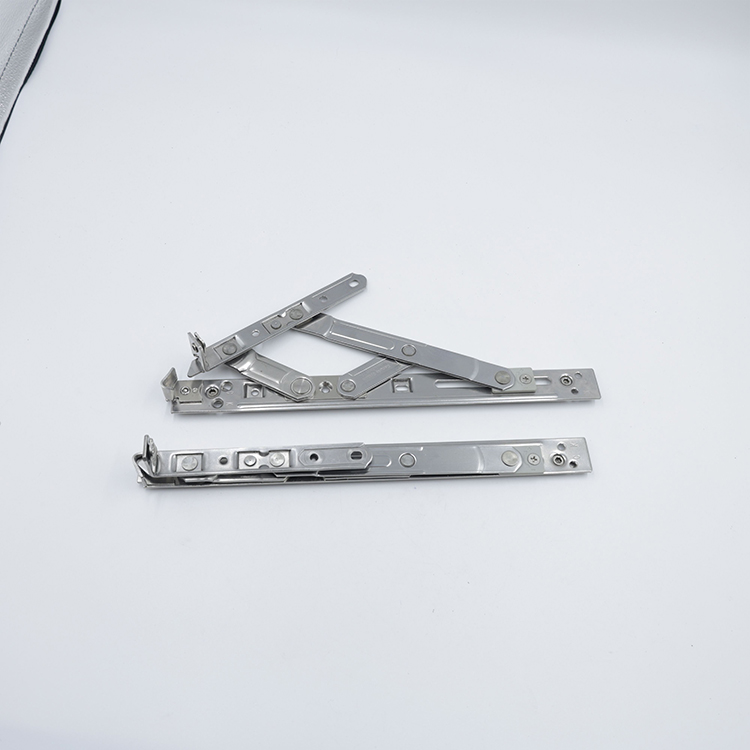
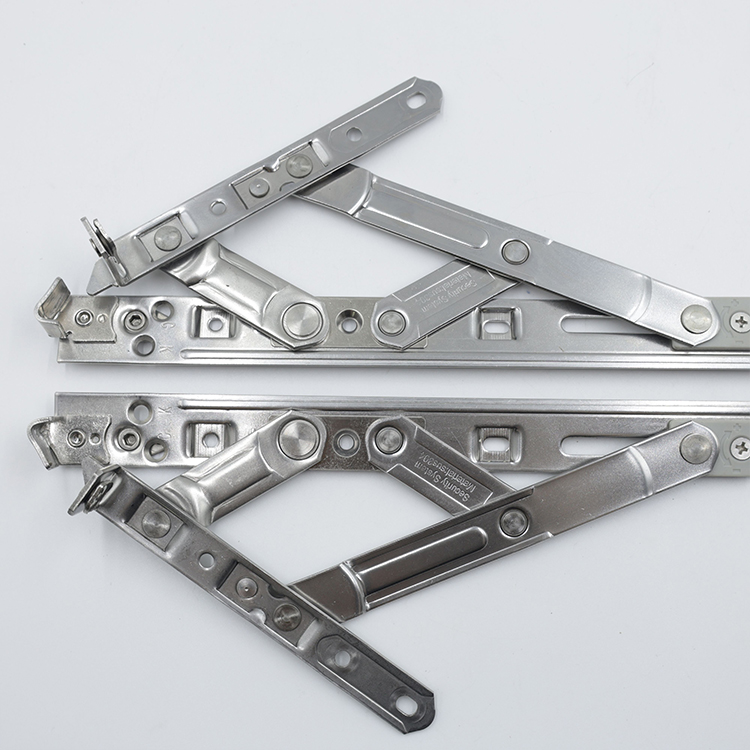
For a sheltered inland-facing window in a coastal city, a well-made SUS304 stainless friction stay with proper fasteners, drainage, cleaning access, and quality control may be a rational commercial choice. Fschier’s SUS304 stainless window friction stay slot hinge is positioned for corrosion-resistant window movement and OEM/ODM bulk use, which makes it relevant when buyers need a controlled, repeatable hardware package rather than anonymous loose hinges.
But for oceanfront hotels, marina-facing doors, pool-adjacent openings, or buildings hit by direct salt spray? I would push harder. Ask about 316, duplex stainless, upgraded coating systems, isolation details, and maintenance instructions. Not because those words sound premium. Because chloride does not care about your brochure.
Coastal hinge material comparison
Hinge / Hardware Option
Best Use Case
Coastal Risk
What I Would Demand Before Approval
SUS304 stainless steel hinge
Sheltered coastal windows, humid climates, general B2B window hardware
Can pit or tea-stain under chloride exposure if neglected
Testing Claims: Salt Spray Is Useful, But It Is Not a Crystal Ball
I like salt spray testing. I distrust salt spray marketing.
ASTM says ASTM B117 provides a controlled corrosive environment for relative corrosion resistance information, but it also warns that prediction of natural-environment performance has seldom correlated with salt spray results when used as stand-alone data. That warning should be printed on every cheap “passed 500 hours” claim I see.
A hinge can survive a chamber and still fail on a building because the building adds movement, load, installation stress, cleaning residues, UV exposure, dust, trapped water, and user abuse. Laboratory fog is not a balcony in Miami, Sanya, Dubai, Okinawa, or the Gold Coast.
So what should buyers ask for?
Ask for the test stack. Not a slogan.
The evidence package I would request
For corrosion resistant hinges in coastal areas, I would ask the supplier for:
Material grade: SUS304, 316, 316L, duplex, aluminum alloy, or coated steel.
Traceability: batch record, inspection report, and change-control process.
This is where Fschier’s hinge service life testing guide fits naturally into the corrosion discussion. Service life is not only “how many times does it open?” For coastal hardware, service life means opening, closing, carrying load, resisting salt, holding adjustment, protecting seals, and still feeling acceptable after real exposure.
Prevention Starts Before Installation
The cheapest way to prevent hinge rust in coastal areas is not wiping rust after it appears. It is specifying the hinge correctly before the purchase order is signed.
I would start with the door and window hinges category and define exposure first: sheltered, semi-exposed, direct rain, oceanfront, pool-adjacent, industrial-marine, or high-rise coastal. Those are not the same project. They should not receive the same hinge package.
Then I would force the hinge decision through four filters.
1. Match the alloy to the exposure
SUS304 can be acceptable for many humid and sheltered coastal applications, but it needs realistic maintenance and compatible fasteners. For aggressive salt exposure, 316 or upgraded corrosion-resistant systems deserve serious consideration. For lower-cost hardware, coated steel may still work, but only if pretreatment, edge protection, and fastener quality are controlled.
The wrong move is buying “stainless-looking” hardware.
That is how you get a beautiful sample and an ugly building.
2. Stop mixing metals casually
A stainless hinge with cheap screws is a procurement joke. A coated hinge with scratched screw heads is a future stain. A stainless component touching aluminum in a wet crevice can create galvanic risk if the design ignores isolation and drainage.
Every metal interface needs a reason.
3. Design water out of the hinge zone
Coastal hinge corrosion loves trapped moisture. Hinges should avoid cup-like geometries where saltwater sits, especially around knuckles, screw pockets, friction channels, and frame rebates. Drainage holes, slope, air gaps, and cleaning access are not small details. They are corrosion controls.
This is also why door and window accessories should be specified as a system. A hinge can be corrosion resistant, but if a seal traps water behind it or a keeper forces misalignment, the hinge still gets abused.
4. Maintain before rust becomes evidence
In coastal zones, I would rather see boring maintenance than dramatic replacement. Freshwater rinsing, non-abrasive cleaning, compatible lubricant, screw inspection, and early tea-stain removal can extend performance dramatically.
But here is the unpopular opinion: if a supplier sells coastal hinges without a maintenance note, they are leaving the installer to guess. That is not professional.
The Field Inspection Checklist I Actually Trust
Do not inspect only the hinge face.
Look at the pin line, screw heads, underside of leaves, knuckle seams, sash alignment, gasket compression, keeper engagement, and the first rust stain below the hinge. Rust travels downward with water. The stain often tells you where the hidden corrosion started.
For older projects, I would also compare hinge condition with lock performance. Fschier’s guide on matching window locks for older windows makes a point I agree with: locks often get blamed when hinge sag, frame shift, or sash misalignment is the real problem.
Here is my practical inspection order:
Open and close the door or window slowly.
Listen for scraping, clicking, uneven drag, or metal-on-metal noise.
Check whether the sash or door drops during movement.
Inspect screw heads for red rust, white corrosion, stripped recesses, or coating cracks.
Look for tea staining around stainless parts.
Check whether water can drain away from the hinge.
Compare hinge corrosion with nearby handles, locks, and fasteners.
Record the building face: seaward, leeward, shaded, exposed, pool-facing, or road-salt-facing.
Photograph batch marks or supplier marks.
Decide whether the issue is material, coating, installation, drainage, maintenance, or all of them.
Most teams skip steps 6 through 10.
That is where the truth lives.
Best Practice Specification for Coastal Door and Window Hinges
If I were writing an RFQ for coastal corrosion resistant hinges today, I would not ask for “best hinges for coastal homes.” That phrase is too soft. I would write the exposure and proof requirements into the buying document.
Use language like this:
“Door and window hinges shall be suitable for coastal atmospheric exposure with chloride contamination from airborne salt. Supplier must declare hinge body material, pin material, fastener grade, surface finish, coating or passivation process, salt spray test method, cycle-test target, load rating, maintenance instructions, and batch traceability.”
That sentence filters out weak suppliers fast.
For a professional buyer, I would also add a sample approval stage: one visual sample, one dimensional sample, one installed mock-up, and one tested sample. Do not approve coastal hinge hardware from a catalog image alone.
FAQs
How do you prevent hinge rust in coastal areas?
You prevent hinge rust in coastal areas by specifying corrosion resistant hinges with suitable alloy grades, compatible fasteners, controlled coatings, proper drainage, realistic salt exposure testing, and scheduled freshwater cleaning before chloride deposits can attack pins, screws, knuckles, and coating edges. The prevention plan must start before installation, not after staining appears.
In plain terms: choose better metal, stop trapping water, avoid mixed-metal mistakes, clean the hardware, and demand test evidence. I would not rely on paint color, “stainless” wording, or a vague marine label.
Are stainless steel hinges enough for coastal homes?
Stainless steel hinges can be enough for coastal homes when the grade, fasteners, finish, exposure level, drainage, and maintenance plan match the actual salt-air conditions. SUS304 may work in sheltered coastal use, while harsher oceanfront or marine-adjacent projects often justify 316 stainless steel or upgraded corrosion-control systems.
The lazy answer is “use stainless.” The better answer is “which stainless, with which screws, under which exposure, and with what maintenance?”
What are the best hinges for coastal homes?
The best hinges for coastal homes are corrosion resistant hinges matched to the opening type, sash or door weight, salt exposure, cleaning access, fastener package, and required service life. In many projects, that means stainless steel hinges, marine grade door hinges, or well-tested coated systems with documented corrosion resistance.
I would rather buy a well-documented SUS304 or 316 hinge from a serious supplier than a mystery “marine” hinge with no alloy certificate, no screw data, and no salt spray report.
How often should coastal door and window hinges be cleaned?
Coastal door and window hinges should be cleaned often enough to remove salt deposits before they form persistent chloride-rich moisture films, usually more frequently on ocean-facing, pool-facing, high-humidity, or wind-driven-rain elevations. A practical maintenance plan uses freshwater rinsing, soft cloth cleaning, visual inspection, and compatible lubricant at defined intervals.
For harsh sites, monthly visual checks are not excessive. For sheltered sites, quarterly inspection may be enough. The building face matters more than the address.
Can WD-40 or oil stop hinge corrosion near the ocean?
WD-40 or light oil may temporarily displace moisture and reduce squeaking, but it should not be treated as a complete corrosion prevention system for coastal hinges. Long-term prevention depends on alloy selection, coating quality, drainage, compatible fasteners, cleaning, and lubricants approved for the hinge material and operating environment.
Some lubricants attract dust or attack surrounding finishes. I would ask the hinge supplier what lubricant they approve before spraying anything into a friction stay, concealed hinge, or coated hardware assembly.
Your Next Steps for Coastal Hardware That Survives
Do not buy coastal hinges from adjectives.
Buy them from evidence.
Start with the exposure category, then demand material grade, fastener compatibility, coating or passivation details, salt spray method, cycle-test data, and maintenance instructions. If you are sourcing for a project, distribution program, or OEM window and door line, review the relevant door and window hinges and ask for a hinge package that matches your real coastal conditions, not a generic sample-board promise.
Send the supplier your frame profile, sash or door weight, opening type, target market, annual volume, finish requirement, and coastal exposure level. Then ask one uncomfortable question:
“Show me why this hinge will still work after salt, load, movement, and time have all had their turn.”