Looking for hardware solutions that meet European / American standards?
Use this guided inquiry modal to move from a generic quote form to a clearer technical conversation. Buyers can choose whether they need pricing, CAD / 3D files, or OEM / ODM support before sharing contact details.
Compatibility-first design across door / window systems
Repeatable production with clear inspection checkpoints
Documentation and change control for long-running programs
Responsive engineering support for fit and field feedback
I have seen hinges feel perfect in a showroom, pass a lazy hand-operated open-close check, then start grinding, dropping, or walking out of alignment after the first serious batch hits a heavy sash, an imperfect frame, coastal air, and an installer who is already behind schedule. Why do we still pretend “smooth operation” is the same as service life?
A real Hinge Service Life Test is not a beauty contest. It is a controlled abuse program that measures whether a door or window hinge can survive repeated movement, working load, frame tolerance, corrosion exposure, fastener stress, and post-test function without creating a safety or warranty problem.
That matters because hardware failures do not stay small. In April 2025, the U.S. Consumer Product Safety Commission announced that about 200,000 Ashland 10-inch and 14-inch two-bar casement window hinge tracks were recalled because the metal sliding arm could disengage from the hinge track and cause the window sash to fall; the affected part numbers included 2003558, 2003559, 2004271, and 2004272CPSC recall notice.
And this was not some abstract lab concern. The CPSC also reported a 2023 recall involving about 12,000 Pella Architect Series casement windows, where the sash could detach from the frame and fall Pella CPSC recall.
So when I hear a supplier say, “Our hinge passed 50,000 cycles,” my first question is not congratulations. My first question is: under what load, on what frame, at what opening angle, after what corrosion exposure, and with what failure criteria?
Table of Contents
What a Real Hinge Service Life Test Must Prove
A proper hinge service life test proves that the hinge still carries load, moves predictably, holds alignment, resists wear, and remains safe after repeated opening and closing cycles under realistic installation conditions. The test should include cycle count, sash or door mass, opening angle, operating force, fastener retention, corrosion exposure, and final inspection.
That sounds basic. It is not.
Too many buyers run a door hinge durability test as if the hinge lives alone on a bench. It does not. A hinge lives inside a system: sash weight, frame stiffness, screw bite, weatherstrip compression, locking-point pull-in, handle torque, gasket drag, installation tolerance, and user abuse.
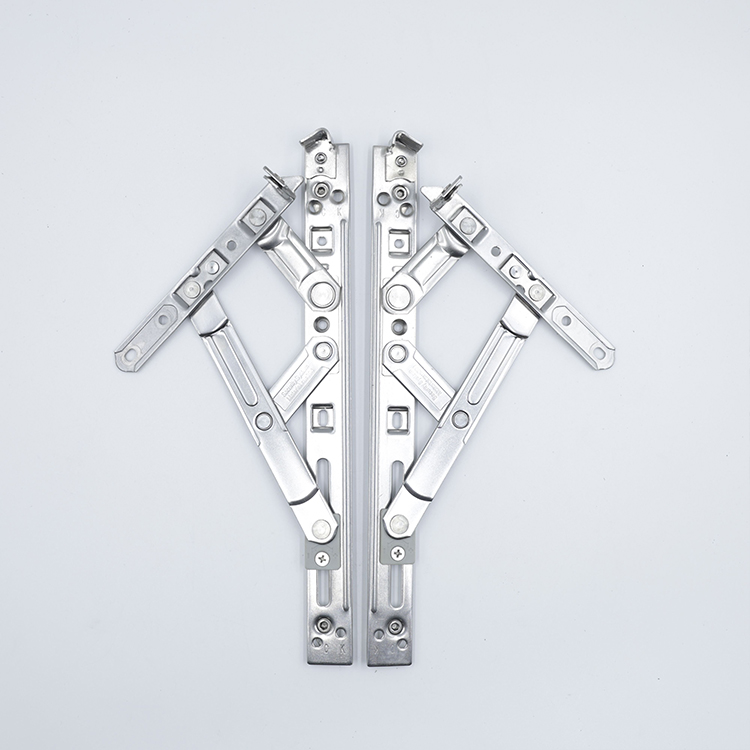
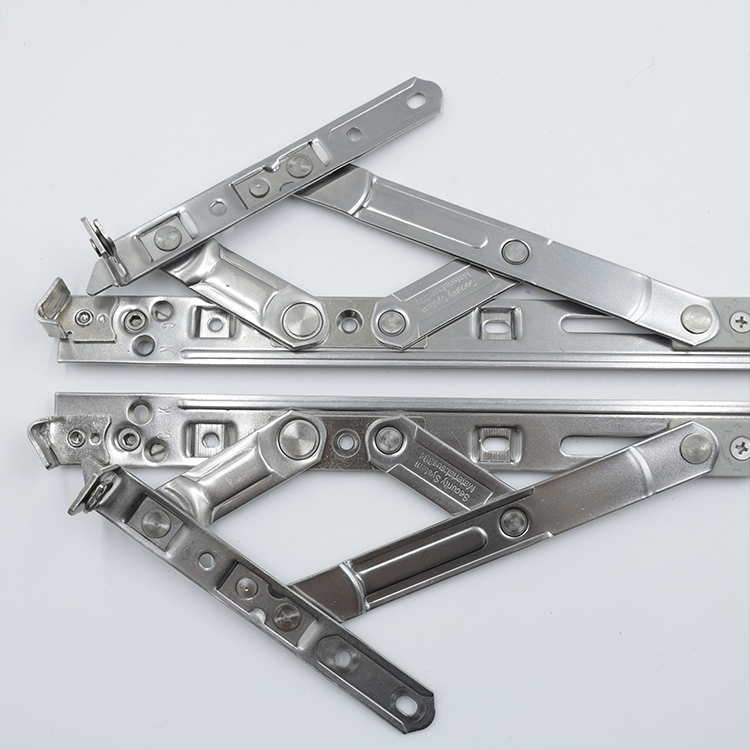
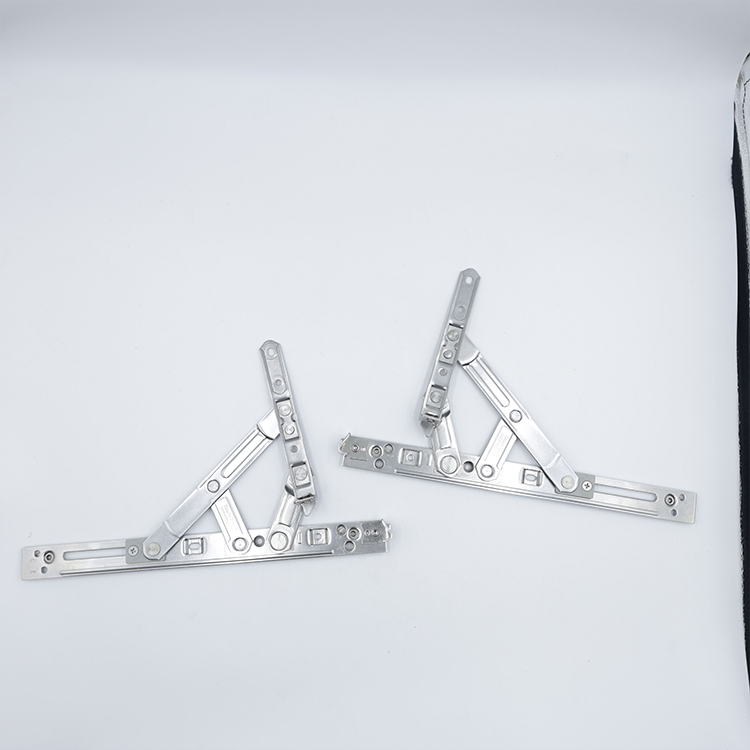
This is why I like connecting hinge selection to actual product architecture, not isolated part shopping. If you are sourcing friction hinges, start with the actual Door and Window Hinges category, then match the hinge to sash size, frame profile, opening angle, and project market. If the window is a casement system, a product like a SUS304 stainless window friction stay slot hinge should not be judged only by finish and price. Judge it by fit, motion, corrosion behavior, and repeatability.
BSI lists BS EN 1935:2002 as the standard for building hardware single-axis hinges, with descriptors including hinges, hinged windows, hinged doors, endurance testing, loading, corrosion protection, and shear testing BSI Knowledge. For window stay hinges, BS EN 13126-6:2018 covers variable geometry stay hinges, including durability, performance testing, mechanical testing, windows, hinged windows, test equipment, and security systems in buildings BSI Knowledge.
But here is my controversial view: standards are the floor. They are not your product strategy. If you are shipping to coastal buildings, high-rise façades, rental housing, schools, hotels, or public buildings, your test plan should be harsher than your sales sheet.
The Test Rig Is Where Marketing Claims Go to Die
A serious hinge opening and closing cycle test starts with a repeatable rig. Not a worker pushing a sash by hand. Not a loose prototype clamped to whatever frame is nearby. A rig.
The fixture should reproduce the real installation geometry: hinge position, screw pattern, sash or door mass, frame material, gasket pressure, locking condition, and opening arc. For casement windows, I want the opening angle controlled. For doors, I want the test door mass defined. For friction stays, I want both movement and hold-open behavior tracked.
Here is the bare-minimum test logic I would accept from a supplier before approving bulk production:
Test Layer
What to Measure
Why It Matters
What I Would Reject
Cycle durability
10,000 / 25,000 / 50,000 / 100,000 / 200,000 cycles depending on use case
Shows fatigue, wear, pin looseness, and sliding-arm stability
“Passed cycles” with no load, no angle, no fixture data
Load-bearing test
Rated sash or door mass plus overload margin
Proves hinge can carry real installed weight
Testing a light sample while selling for heavy profiles
Operating force
Opening force, closing force, friction drift
Reveals binding, gasket conflict, and wear
No pre/post-force comparison
Alignment check
Sash drop, gap change, hinge play, screw movement
Shows whether the assembly still seals and locks
Only checking whether it still moves
Corrosion exposure
Salt spray or exposure class based on market
Exposes coating weakness and stainless grade issues
Nice finish sample with no corrosion report
Post-test safety
Cracks, arm disengagement, pin migration, fastener pull-out
Finds failures that could become recalls
“No visible break” without dimensional inspection
Small parts win.
The hinge is usually cheap compared with the window or door system, but it can quietly decide air leakage, closing feel, locking alignment, egress behavior, field service cost, and whether a distributor wants to reorder from you again.
That is why I would pair hinge testing with the broader door and window accessories buying guide instead of treating hinges as a line-item purchase. Accessories are not decoration. They are the operating chain.
Door Hinges and Window Hinges Do Not Fail the Same Way
A door hinge durability test and a window hinge life cycle test should not share the same lazy checklist.
Door hinges usually fight gravity, swing frequency, impact abuse, closer force, latch misalignment, fire-door requirements, and user violence. Window hinges fight sash weight, wind load, corrosion, friction drift, weatherseal compression, restrictor interaction, and sometimes egress requirements.
That difference matters. A heavy commercial door can punish the knuckle, pin, bearing surface, screw retention, and leaf deformation. A casement window can punish the track, arm rivets, friction shoe, stainless grade, slider wear, and sash alignment. Same word: hinge. Different battlefield.
For window assemblies, I would also read hinge testing beside window hardware compliance for egress and PAS 24, because a hinge that survives cycles but blocks practical escape is not a good hinge. It is just a durable problem.
My Practical Hinge Fatigue Testing Protocol
If I were auditing a supplier, I would not begin with their catalog. I would begin with their test records.
First, define the product family. Is it a butt hinge, concealed hinge, friction stay, two-bar casement hinge, pivot hinge, or heavy-duty door hinge? Then define the exact configuration: material, finish, screw size, handedness, opening angle, sash or door mass, and frame profile.
Second, set the duty class. Residential bedroom window? Light. Hotel balcony door? Higher. Coastal casement window? Much higher. Public corridor door? Stop pretending it is residential.
Third, run the hinge fatigue testing in phases:
Phase 1: Baseline Inspection
Record part number, batch number, material grade, coating or finish, hinge dimensions, screw hole condition, pin or rivet condition, and initial operating force. For stainless components, I want the declared grade, such as SUS304, and I want it tied to incoming material records, not just a brochure line.
Phase 2: Installed Load Setup
Mount the hinge on the intended frame or a verified equivalent fixture. Add the rated sash or door mass. Do not test naked hardware and call it real-world evidence.
Phase 3: Cycle Testing
Run repeated opening and closing cycles at a controlled speed and angle. Track force drift, noise, heat, visible wear, fastener loosening, sash drop, and friction behavior at intervals such as 5,000, 10,000, 25,000, 50,000, 100,000, and 200,000 cycles, depending on the target market.
Phase 4: Abuse and Overload
Run overload checks after cycling. This is where weak hinge geometry often confesses. I have watched parts pass motion cycles and then fail the moment overload or misalignment enters the room.
Phase 5: Corrosion and Retest
For coastal, humid, or export markets, corrosion exposure should be followed by functional retesting. A hinge that looks fine before salt exposure but binds afterward is not field-ready.
Phase 6: Final Failure Review
Do not only write “pass” or “fail.” Photograph wear points, measure play, check screw movement, document cracks, inspect rivets, record sash drop, and compare pre-test versus post-test operating force.
For OEM or private-label programs, this evidence belongs in the RFQ discussion. Chier’s OEM/ODM hardware manufacturing process correctly points buyers toward drawing review, DFM, verification checks, inspection records, traceability, and change control. That is the language I want to see before a purchase order.
The Ugly Failure Modes Buyers Miss
Most bad hinge programs do not fail because nobody tested anything. They fail because the wrong thing was tested.
The sample was perfect. The mass-production batch was different. The test frame was rigid, but the field frame flexed. The screw engagement was ideal in the lab, but the installer hit a reinforcement gap. The hinge passed cycles dry, then corroded near the coast. The operating force looked fine before the gasket was added. The sash stayed up, but the lock no longer aligned.
This is why I dislike vague claims like “best hinge durability test method.” There is no single best method. There is only a fit-for-risk method.
For premium door and window brands, I would request the following documents before approval:
Cycle test report with fixture description
Load-bearing report with sash or door mass
Pre-test and post-test operating force data
Corrosion test evidence for the target environment
Dimensional inspection report for critical-to-quality features
Batch traceability and material confirmation
Failure photos, not just pass/fail language
Packaging and labeling controls for repeat orders
And yes, I would ask for CAD or technical files early through a supplier’s download and documentation center when the project involves profile fit, screw pattern compatibility, and long-running SKU control.
A Better Way to Define Pass or Fail
The weakest hinge test reports I see use one sentence: “No failure after X cycles.”
That is not enough.
A good door and window hinge testing report should define failure before the test starts. Otherwise, the supplier gets to move the goalposts after the hinge limps across the finish line.
Use practical failure criteria like these:
Failure Criterion
Pass Standard
Fail Condition
Motion
Opens and closes through full intended angle
Binding, seizure, grinding, or unstable movement
Load support
Sash or door remains within allowed drop tolerance
Excessive sag, deformation, or screw pull-out
Safety
No arm disengagement, pin migration, cracking, or part separation
Any condition that could detach or drop the sash/door
Locking alignment
Lock, latch, or keeper still engages correctly
Misalignment that prevents secure closure
Operating force
Force remains within agreed range
Force increase that causes poor user experience or egress concern
Corrosion
No harmful corrosion affecting function
Red rust, binding, finish breakdown, or weakened moving joint
Appearance
Finish acceptable for product class
Flaking, blistering, staining, or visible coating failure
Here is the uncomfortable rule: if your test does not include the failure definition, the number of cycles is almost useless.
Why Hinge Service Life Data Now Matters More
Product safety data is not getting simpler. The CPSC explains that its NEISS system has operated for more than 45 years, using a nationally representative hospital sample to estimate product-related injuries in the United States CPSC NEISS.Reuters reported in 2025 that changes to broader NEISS injury data collection could reduce program data collection by 20% to 65%, while product-related injury data would continue Reuters.
My read: buyers should not wait for public injury data, recalls, or warranty claims to tell them their hinge program is weak. Build your own evidence. Keep your own test files. Demand batch-level proof. The professional buyer who owns the data wins the argument when something goes wrong.
FAQs
What is a hinge service life test?
A hinge service life test is a controlled durability assessment that measures whether a door or window hinge can keep operating safely after repeated opening and closing under realistic load, angle, frame, friction, corrosion, and fastening conditions. It should prove not only movement, but alignment, load support, operating force, and post-test safety.
In plain language, it answers one brutal question: will this hinge still behave after real users, real installers, and real weather get involved?
How do you test the service life of door and window hinges?
You test the service life of door and window hinges by mounting the hinge in a realistic fixture, applying the correct sash or door mass, running repeated open-close cycles, measuring force and alignment changes, then inspecting for wear, corrosion, looseness, deformation, fastener failure, and unsafe part separation. The test must define pass/fail limits before cycling starts.
For serious sourcing, I would never accept a cycle number without the fixture setup, load data, test interval records, and final inspection photos.
What is the difference between a door hinge durability test and a window hinge life cycle test?
A door hinge durability test focuses mainly on swing frequency, door mass, impact, closer force, knuckle wear, pin movement, screw retention, and latch alignment, while a window hinge life cycle test focuses more on sash support, track stability, friction drift, corrosion, wind-related stress, opening angle, and locking or egress behavior. The two tests overlap, but they are not interchangeable.
That is where many catalogs mislead buyers. One neat “tested” claim cannot cover every door and window condition.
What cycle count should a hinge pass?
A hinge cycle count should match the application risk, with light residential use often needing lower cycle targets and commercial, public, coastal, heavy sash, or severe-duty applications needing much higher durability evidence such as 50,000, 100,000, or 200,000-cycle programs where appropriate. The number only matters when load, geometry, and failure criteria are clearly stated.
I care less about the biggest number in the brochure and more about whether the test matches the real installation.
What is the best hinge durability test method?
The best hinge durability test method is the one that reproduces the actual installed system: hinge type, frame profile, sash or door weight, screw engagement, opening angle, gasket pressure, corrosion exposure, and user movement pattern. It should combine cycle testing, load-bearing checks, operating-force measurement, corrosion review, and post-test failure analysis.
A generic bench test is useful for screening. It is not enough for final approval.
Your Next Steps
Do not approve hinges because the sample feels smooth.
Ask for the evidence package: cycle test setup, load rating, operating-force drift, corrosion data, critical dimensions, material records, batch traceability, and post-test photos. Then compare that evidence against the exact window or door system you are building.
If you are sourcing for a brand, distributor, fabricator, or OEM project, start with the hinge category, confirm the real application load, and send the supplier your frame profile, sash or door mass, opening angle, target market, and compliance expectations. A good hinge service life test starts before the lab machine moves.