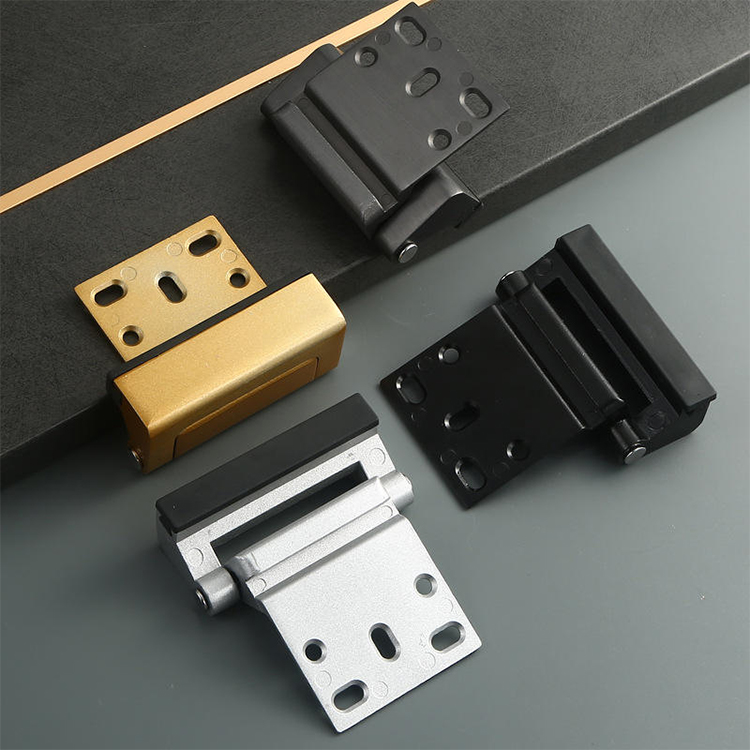
Looking for hardware solutions that meet European / American standards?
Use this guided inquiry modal to move from a generic quote form to a clearer technical conversation. Buyers can choose whether they need pricing, CAD / 3D files, or OEM / ODM support before sharing contact details.
Compatibility-first design across door / window systems
Repeatable production with clear inspection checkpoints
Documentation and change control for long-running programs
Responsive engineering support for fit and field feedback
I keep seeing buyers treat window hardware compliance like a box-ticking exercise, when the ugly truth is that a clean catalog, a smooth sales call, and a pretty matte-black finish do not prove that a handle, hinge, restrictor, lock, or sash fastener will survive code review, customs scrutiny, corrosion exposure, warranty claims, and real human use once it is fitted into a live opening. Why are so many teams still buying theater instead of evidence?
My view is blunt: in 2026, “window hardware compliance” is not a parts question first. It is a system question first. The EU’s revised Construction Products Regulation, Regulation (EU) 2024/3110, is now in force; the European Commission has tied the new regime to digital product passports, wider sustainability data, and a scope that explicitly reaches key parts, while EN 14351-1 still frames how windows and external pedestrian doorsets are assessed and declared during the transition. That means isolated hardware claims are getting less persuasive, not more. The Council’s adoption note and the European Commission’s January 2025 implementation update make the policy direction obvious, while ift Rosenheim’s 2025 breakdown of EN 14351-1’s future under CPR 2024/3110 shows where windows and doors are headed next.
The four shifts rewriting window hardware compliance in 2026
Here is the table I would hand to any procurement lead before the next RFQ.
2026 trend
What it really means
Why buyers get burned
What I would demand
EU CPR 2024/3110 pressure
Compliance is moving toward fuller digital, environmental, and key-part evidence
Buyers still accept vague CE language without asking what was actually tested
DoPC/DoP path, product-family scope, hardware configuration, corrosion and durability reports
CE/UKCA split staying messy
Great Britain still accepts CE for construction products, but paperwork logic still matters
Teams assume “UKCA only” or “CE only” without checking destination and approval body
Destination map, conformity route, body used, label artwork, declarations
Recall risk hitting premium brands
Brand reputation does not stop field failures
Buyers trust brand names more than hinge geometry, sash weight, or assembly limits
Recall history review, load path check, life-cycle evidence, size limits
Metals and traceability becoming compliance-adjacent
Tariffs, forced-labor scrutiny, and aluminum pricing now hit hardware cost and sourcing decisions
Teams treat trade risk as finance’s problem, then blame suppliers later
HTS review, origin map, metal spec, plating stack, alternate source plan
Brussels moved the goalposts, and a lot of buyers have not noticed
Three words again. Read the scope.
Under the revised CPR, the EU is pushing toward a more traceable and more digital construction-products regime, and the legal text now reaches not only construction products but also “key parts of products,” which matters because hardware buyers have spent years hiding inside a comfortable fiction that compliance belongs only to the finished frame and never to the part stack that makes the frame work. Did anyone honestly think Brussels was going to leave that loophole untouched?
The part many buyers miss is this: EN 14351-1 does not describe a fantasy world where windows are assessed without their related hardware. Intertek’s standard summary is very plain about it. The standard covers windows and external pedestrian doorsets complete with related hardware, weatherstripping, and the relevant assemblies. So when a supplier says “the handle is CE compliant” without explaining the tested window set, the declared configuration, the corrosion class, the sash format, and the operating behavior, I start assuming the paperwork is thinner than the pitch deck. Intertek’s EN 14351-1 page is worth reading just for that reality check.
That is why I would push readers from this article into Fschier’s existing window hardware compliance guide and then into its broader door and window hardware manufacturing platform. The site already frames compliance as a systems issue tied to handles, hinges, latches, and locksets, not as a decorative shopping exercise. That is the right instinct.
Great Britain refused the simple story people wanted
This part annoys buyers.
A lot of sourcing teams still talk as if the UK market became a neat UKCA-only world and everyone else moved on. That is not what the official guidance says. GOV.UK states that CE marking for construction products continues to be available for products placed on the market in Great Britain, while the UK mark can also be used if the conformity route goes through a UK approved body. That is not a clean break. It is a paperwork fork. The current GOV.UK guidance says it plainly.
And the harder truth? Voluntary third-party certification is getting treated less like a marketing extra and more like a buying filter. The UK government-backed February 2026 report on third-party certification says manufacturers use these schemes to evidence regulatory compliance, secure warranty approvals, manage reputational risk, and reassure specifiers, while also warning about weak or misleading certification claims across the sector. That is a polite government way of saying the market has tolerated too much fluff. The February 2026 report is one of the more revealing reads in this space.
So no, I would not ask a supplier only, “Do you have UKCA?” I would ask: which market, which conformity body, which declaration, which surveillance path, and what happens if the same SKU has to serve both GB and EU channels?
Recalls are killing the premium-brand fantasy
Brand names fail too.
The best real-world case study here is not obscure at all. In December 2023, the U.S. Consumer Product Safety Commission published a recall for Pella Architect Series venting wood and aluminum-clad casement windows because the sash could detach from the frame and fall. The recall covered about 12,000 units, with affected products sold from January 2021 through July 2023 for roughly $700 to $10,000 per window. One reported detachment was enough to put the issue in the open. Read the CPSC recall alert and tell me again that “premium” is a substitute for geometry, hinge logic, or tested limits.
This is why I get impatient when buyers obsess over finishes before they confirm opening size, sash weight, hardware location, corrosion class, and operating sequence. A modern aluminum casement window spindle handle might be perfectly fine. A sliding window sash lock flush pull might be perfectly fine. But perfectly fine parts inside a badly specified or badly validated opening still produce failure. Why pretend otherwise?
Metal traceability has moved from the finance department to the compliance file
This one is less glamorous.
Reuters reported in January 2026 that U.S. aluminium buyers were paying a 68% premium over the London Metal Exchange price for physical metal, and Reuters also reported in March 2025 that the Trump administration extended steel and aluminum tariffs to 289 downstream product groups worth about $147.3 billion. That is not just macro noise for economists. It hits window hardware buyers through handle bodies, hinge arms, lock cases, fasteners, rollers, keepers, and plating decisions. Reuters on the aluminum premium and Reuters on the expanded metals tariffs are both worth bookmarking.
And then there is forced-labor enforcement. Reuters reported in February 2026 that shipments stopped under UFLPA totaled $187.7 million in 2025, down from $1.78 billion in 2024, while the Department of Homeland Security had moved to target additional goods such as steel and copper. Again, not a pure window-hardware story on paper, but absolutely a supply-chain compliance story in practice if your bill of materials relies on traced metal inputs and cross-border sourcing. That Reuters report should make any global buyer tighten origin checks.
My opinion here is strong. By 2026, if you separate metallurgy, tariff exposure, and traceability from window hardware compliance, you are already behind.
Where specifications still go bad
Specs still fail in boring ways.
I see the same pattern over and over: the buyer asks for EN 14351-1 compliance, maybe throws in PAS 24, maybe wants CE marking for window hardware, then buys as if the whole story lives inside a single part number. It does not. The right way to think is stack by stack: substrate, alloy, grade, coating, salt resistance, friction behavior, cycle count, screw chemistry, sash load, and fitted geometry. A coastal job may push you toward SUS304 or SUS316 logic and much tighter corrosion discipline, which is exactly why Fschier’s climate-ready multi-point locks for cold and coastal projects belongs in this article’s internal-link trail.
North America adds another layer. NFRC window certification matters because the National Fenestration Rating Council is the third-party certification body for window, door, and skylight energy performance, and its commercial program says many jurisdictions require NFRC-certified performance ratings and label certificates for code compliance. But NFRC does not rescue bad hardware fit, weak hinge selection, or lazy lockset engineering. Energy proof is not hardware proof. NFRC’s commercial guidance and NFRC’s overview page say exactly where that line sits.
So when someone asks me for the best window hardware standards for global buyers, I do not give them a magic acronym and move on. I ask which market, which opening type, which hazard, which exposure class, which performance route, and which paperwork path. Anything less is lazy buying dressed up as strategy.
FAQs
What is window hardware compliance?
Window hardware compliance is the documented condition in which handles, hinges, restrictors, locks, latches, stays, coatings, fasteners, and operating geometry satisfy the legal, performance, labeling, and test expectations of the destination market while allowing the finished window assembly to operate safely, durably, and as declared. In practical terms, I would not sign off on “window hardware compliance” without seeing how the part works inside the tested or declared assembly, not just how it looks on a stand-alone data sheet.
Does CE marking for window hardware mean the part is approved everywhere?
CE marking for window hardware does not mean a single stand-alone part is automatically approved everywhere, because EU construction compliance typically follows the relevant product route for the construction product or assembly, while market-specific rules, intended use, and project-level evidence still decide what is acceptable in practice. That is the part too many sales teams blur. EN 14351-1 talks about windows and doorsets with related hardware, not a magical floating handle that proves everything by itself.
How do global buyers ensure window hardware compliance for export?
Global buyers ensure window hardware compliance for export by matching each SKU to the destination market’s conformity route, requesting the declaration path, test reports, corrosion and durability evidence, origin and metal traceability, installation logic, and the exact assembly configuration in which the hardware was validated or declared. I would add one more thing: ask for the substitution rule. If a supplier swaps alloy, finish, spindle size, friction arm geometry, or fastener chemistry without telling you, your “compliance” can evaporate very fast.
Is UKCA marking still mandatory for windows and doors sold in Great Britain?
UKCA marking is not the only route for construction products sold in Great Britain, because current GOV.UK guidance says CE marking continues to be available for construction products in the GB market, while the UK mark can also be used where the conformity route uses a UK approved body. That is why buyers need destination-specific paperwork mapping, not recycled Brexit talking points.
Where does NFRC window certification fit into a hardware buying decision?
NFRC window certification fits into a hardware buying decision as an energy-performance and code-compliance reference for windows, doors, and skylights, especially in North American projects, but it does not replace hardware validation on load path, corrosion, opening control, lock engagement, or assembly-specific operating behavior. I use NFRC as one layer, not the whole argument. If a supplier waves an NFRC label and ignores hinge limits, I assume the meeting is about to waste my time.
Your next move before the next purchase order
Stop buying adjectives.
If I were screening suppliers for 2026, I would start with six requests and I would not apologize for any of them: the declaration route, the tested or declared assembly scope, the metal and coating stack, the corrosion target, the change-control rule, and the destination-market paperwork map. Then I would push that conversation through Fschier’s own internal chain: the OEM door and window hardware platform, the window hardware compliance guide, and the 2026 sourcing strategy article.
And one more thing. Send drawings. Send profile details. Send annual volume. Send target market. Send finish requirements. Send EN, PAS, or NFRC scope. The buyers who do that will look disciplined in 2026. The ones who keep asking only for the cheapest handle will look exactly like what they are.