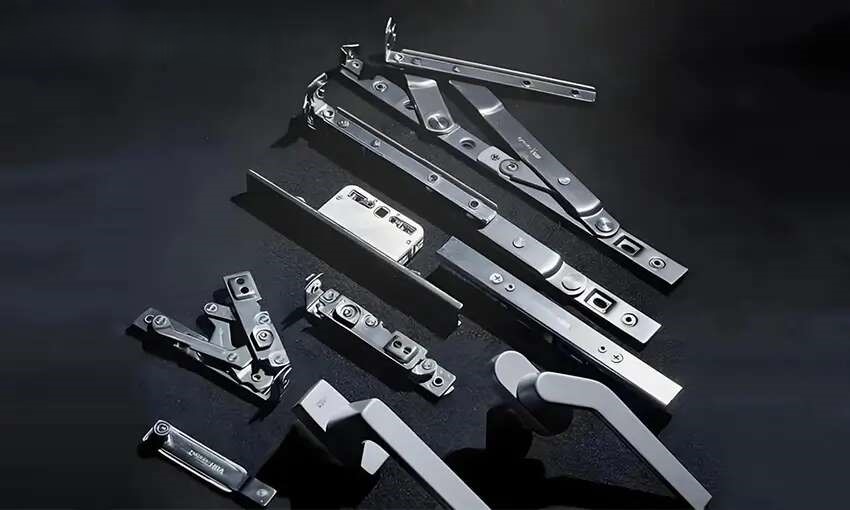
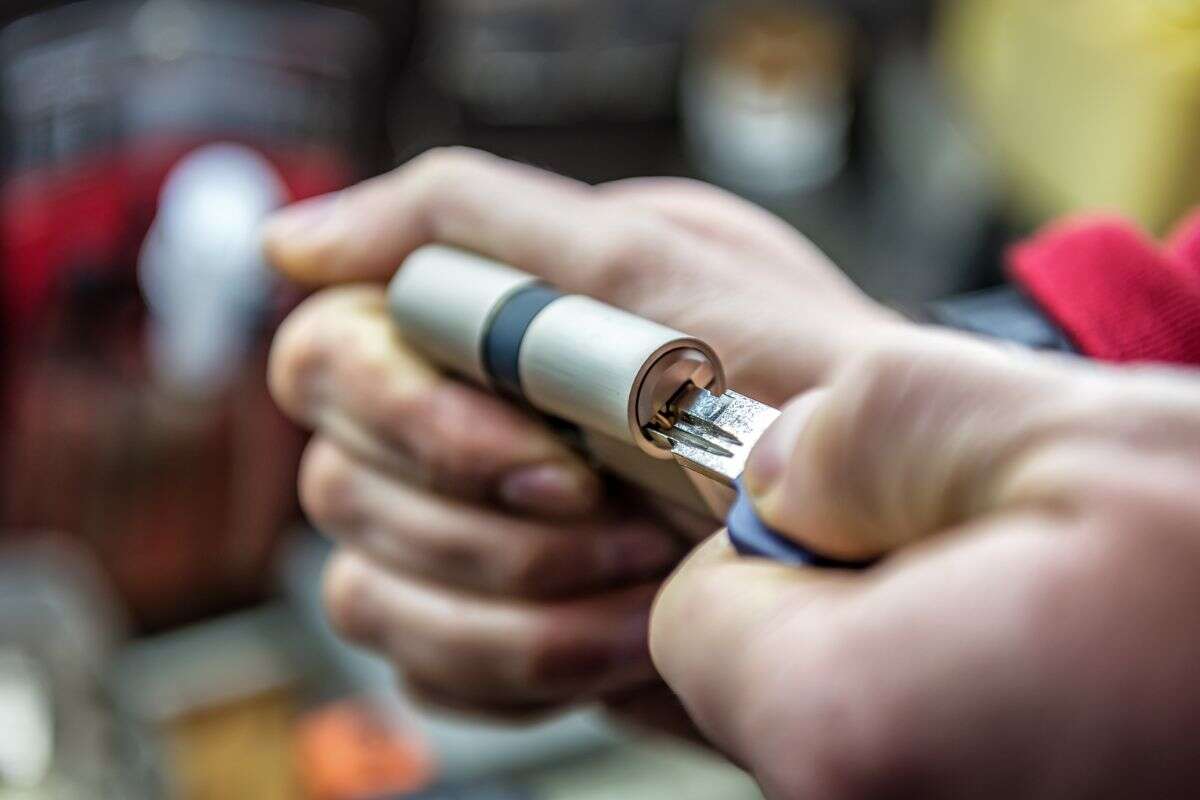
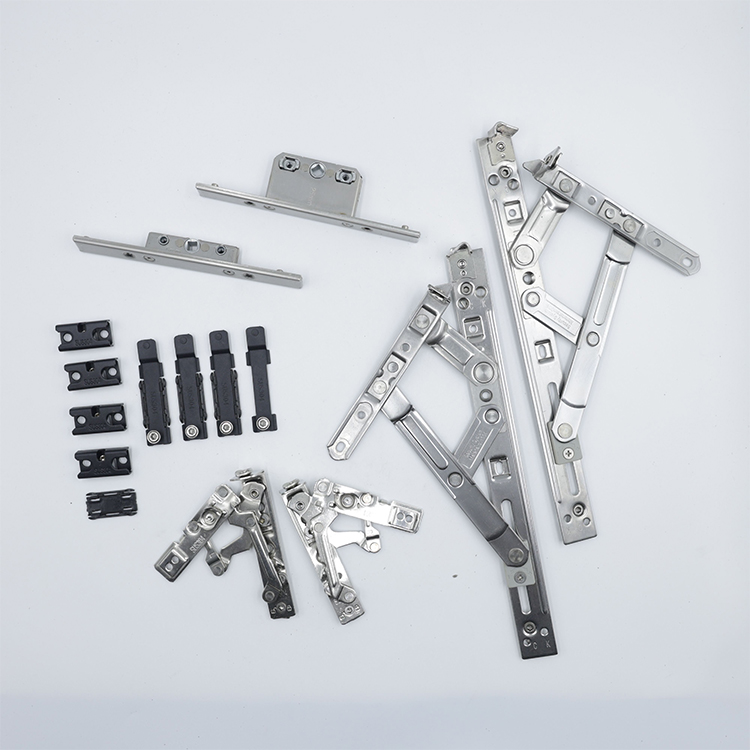
Looking for hardware solutions that meet European / American standards?
Use this guided inquiry modal to move from a generic quote form to a clearer technical conversation. Buyers can choose whether they need pricing, CAD / 3D files, or OEM / ODM support before sharing contact details.
Compatibility-first design across door / window systems
Repeatable production with clear inspection checkpoints
Documentation and change control for long-running programs
Responsive engineering support for fit and field feedback
Most teams guess. I have sat in too many supplier calls where somebody flashes a CE logo, mutters “UL pending,” waves a lab PDF from eighteen months ago, and expects that to settle the matter, even though the BOM changed, the enclosure changed, the firmware changed, and nobody in the room can explain whether the product is entering the US as an RF device, a workplace electrical product, or a plain mechanical assembly. Does that sound familiar or uncomfortably specific?
Here is my hard truth: hardware testing standards are not a paperwork hobby. They are a market-access filter, a liability filter, and, if you get lazy, an expensive lesson delivered by customs, Amazon delistings, CPSC recalls, or an EU authority asking why your technical file reads like a sales brochure. The official rulebooks are plain enough: the US route for radio hardware runs through FCC equipment authorization, workplace electrical safety often runs through OSHA-recognized labs under the NRTL program, and the EU route runs through CE marking under the applicable legislation, often including the EMC Directive 2014/30/EU and the Low Voltage Directive 2014/35/EU. Why do so many companies still talk as if one sticker solves all that?
This matters. The biggest compliance mistake I see is treating “US and EU approval” like a single project line item, when the legal triggers, responsible parties, technical standards, and evidence packs are different enough that one sloppy assumption can blow up six months of launch planning. Why pretend the paths are interchangeable when the regulators plainly do not?
The US path is split on purpose
In the US, I separate the question fast: does the product emit or use RF, and does it sit inside a category that needs recognized product safety certification for the workplace or a specific sales channel? The FCC says RF devices must be properly authorized before they are marketed or imported, and the rules distinguish between procedures such as Certification and Supplier’s Declaration of Conformity under 47 CFR Part 2, including 47 CFR § 2.906. OSHA, meanwhile, recognizes multiple NRTLs, not just UL, for product categories covered by OSHA electrical standards. So when somebody says “we just need UL,” I usually hear “we have not mapped the actual regulatory path yet.” Isn’t that the real translation?
The EU path is broader, but less forgiving of bluffing
In the EU, CE marking is not a medal handed out by Brussels. It is the manufacturer’s declaration that the product complies with the applicable EU legislation, and the Commission is explicit that CE marking is compulsory only for products covered by the relevant directives and must not be slapped onto products outside that scope. For electrical and electronic equipment, the usual starting points are the EMC Directive 2014/30/EU and, for certain voltage ranges, the Low Voltage Directive 2014/35/EU. The myth that “CE means Europe approved us” is not just wrong. It is lazy.
I would explain the split to a buyer like this. The table is my shorthand, not consultant wallpaper.
Issue
US route
EU route
What I ask before I trust it
Market-entry trigger
FCC authorization for RF devices before marketing or import; OSHA/NRTL path for covered electrical product categories
CE marking only where EU legislation requires it
Which law actually applies to this exact SKU?
Main proof owner
Responsible party, grantee, importer, lab, and sometimes TCB depending on route
Manufacturer or authorized representative carrying the technical file
Who owns the file when customs or surveillance asks?
Common myth
“UL equals US compliance”
“CE means officially approved by Europe”
Show me the exact route, not the logo
Technical focus
RF emissions, authorization procedure, labeling, import conditions, product safety standard as applicable
Invalid CE claim, weak technical file, market surveillance action
What changed since the test sample?
That comparison is built directly from FCC, OSHA, and European Commission guidance, and it is the baseline I would use before discussing schedule, quote, or tooling. Anything softer than this is storytelling.
The three lies vendors hope you never challenge
“Our CE mark covers everything”
No, it does not. CE is product-law specific, standard-specific, and file-specific, and the Commission says outright that not all products require CE marking and that the mark must not be used on products outside the applicable rules. I have seen suppliers use “CE” the way children use glitter: throw it everywhere and hope nobody checks what it actually sticks to. Why would you let that slide?
“UL is the law in America”
Also no. UL is one major player, but OSHA’s own program shows the US recognizes multiple Nationally Recognized Testing Laboratories, each with a defined scope, and employers rely on products approved by those NRTLs where OSHA standards require testing and certification. In plain English, the legal question is not “Do you have UL?” It is “What standard applies, what listing path applies, and is the mark from an appropriate recognized lab?” That is a much less comfortable conversation, which is exactly why I like asking it.
“The test report passed, so production is safe”
That line should make you suspicious on contact. A passed report only means the tested configuration passed under the stated conditions; it does not magically bless later substitutions in shielding, plating thickness, cable routing, adapter sourcing, enclosure resin, fastener chemistry, or operator geometry. This is why I would pair this article with Fschier’s OEM/ODM window hardware partnerships that scale and the global hardware sourcing strategy, because the site’s strongest existing idea is the right one: compliance without change control is theater. Have we not all seen that movie enough times? (Foshan Chier)
Case files that should make you less trusting
Brand names fail. In December 2023, the U.S. Consumer Product Safety Commission published a recall for Pella Architect Series venting wood and aluminum-clad casement windows because the sash could detach from the frame and fall; the recall covered about 12,000 units in the US, plus units in Canada and Mexico. That is not an abstract compliance lecture. That is what happens when field performance and real assembly behavior matter more than brochure confidence. Read the CPSC recall alert and then tell me testing discipline is optional.
The enforcement trend is getting rougher, not softer. Reuters reported in February 2025 that a U.S. appeals court rejected Hikvision’s effort to overturn the FCC’s 2022 ban on new equipment approvals, which is exactly the sort of legal precedent compliance teams ignore until they realize the agency is willing to defend its gatekeeping in court. That matters because it tells every exporter a blunt truth: equipment authorization is not a decorative checkpoint. It is the checkpoint. The Reuters report on the Hikvision decision is worth reading with a cold face and a calculator.
The lab side got uglier too. Reuters reported in May 2025 that the FCC voted to bar Chinese laboratories deemed security risks from testing electronics for the US market, and the piece noted that roughly 75% of testing for electronic devices used in the US was taking place in Chinese labs at the time. Pair that with the European Commission’s April 2025 Safety Gate release showing 4,137 alerts in 2024, the highest number since the system launched in 2003, and the message is hard to miss: authorities are not relaxing, they are sharpening. Why would any serious manufacturer still build a market-entry plan on “we’ll sort compliance after launch”? See Reuters on the FCC lab crackdown and the Commission’s Safety Gate 2024 release.
The workflow I would actually use before the first PO
First, classify the hardware honestly
Three words here. Name the thing. Is it passive mechanical hardware, mains-powered electrical hardware, or radio-enabled hardware with Wi-Fi, Bluetooth, Zigbee, LTE, or some other transmitter? I start there because the testing path for a zinc-alloy handle, a 24 VDC powered access device, and a 2.4 GHz smart lock is not remotely the same, and pretending otherwise is how teams end up with the wrong lab scope and the wrong quote.
Second, map the law before the lab
This is where adults separate from optimists. For the US, I map FCC authorization, import conditions, labeling, and whether a recognized safety listing route is needed for the intended channel. For the EU, I map the directives, the harmonised standards, the declaration, the labeling, and the technical file. Only after that do I ask for turnaround time or sample count. Isn’t it amazing how many people reverse that order and then blame the lab?
Third, freeze the tested configuration
I do not trust “equivalent material” language unless somebody defines equivalence in writing. Freeze the PCB revision, antenna, shielding, enclosure resin, gasket stack, zinc alloy grade, AISI 304 versus 316 choice, coating thickness, screw spec, power adapter, and firmware build. Then build change control around that frozen truth. If you want the mechanical-hardware version of this discipline, Fschier’s hardware compliance guide for aluminum windows and doors and window hardware corrosion prevention guide are useful because they keep hammering the same uncomfortable point: the assembly matters, and the environment matters more than the sample board.
Fourth, separate pre-compliance from formal approval
I like pre-compliance testing because it saves embarrassment, not because it replaces formal market-access work. Pre-scans, pilot corrosion runs, torque-life checks, hinge-cycle trials, salt-spray comparisons, and fitment validation can kill bad ideas early. But they are not a substitute for the required authorization or declaration path. The smartest site path on fschier.com is already built around that sequence, which is why I would also route readers to what global buyers look for in a hardware partner after the compliance section; supplier discipline decides whether testing survives contact with production. How could it not?
FAQs
What are hardware testing standards?
Hardware testing standards are the legal and technical rules that define how a product must be evaluated for safety, electromagnetic behavior, durability, labeling, documentation, and market access before it is sold, imported, installed, or used in a given jurisdiction. In practice, that means you must match the product category to the correct law, standard, lab route, and evidence pack instead of relying on a generic “tested” claim.
What is the difference between CE marking and FCC equipment authorization?
CE marking is the manufacturer’s declaration that a product complies with the applicable EU legislation and conformity assessment route, while FCC equipment authorization is a US regulatory approval framework for RF devices that must be completed before those devices are marketed or imported. The short version is brutal: CE is not an FCC equivalent, and FCC authorization is not a European passport.
Is UL certification mandatory in the United States?
UL certification is not a universal legal requirement for every product sold in the United States, because OSHA recognizes multiple Nationally Recognized Testing Laboratories and the required certification path depends on the product category, applicable standard, workplace use, and sales channel. The industry says “get UL” out of habit. I would rather hear, “we matched the product to the right NRTL scope and standard.”
How do I comply with hardware testing standards in the US and EU?
Complying with hardware testing standards in the US and EU means classifying the exact product, identifying the applicable laws and standards for each market, freezing the tested configuration, generating the required lab evidence and technical file, and controlling every post-test change that could affect conformity. That is the honest answer. The lazy answer is “book a lab and hope,” and I have never seen that age well.