Looking for hardware solutions that meet European / American standards?
Use this guided inquiry modal to move from a generic quote form to a clearer technical conversation. Buyers can choose whether they need pricing, CAD / 3D files, or OEM / ODM support before sharing contact details.
Compatibility-first design across door / window systems
Repeatable production with clear inspection checkpoints
Documentation and change control for long-running programs
Responsive engineering support for fit and field feedback
A sliding door double hook lock converts a small movement at the thumb turn, flush handle, key cylinder, or push control into two mechanical engagements, giving the closed panel more resistance to separation than a basic latch can usually provide.
But does “double hook” automatically mean twice the security?
No. That is marketing arithmetic, not engineering.
The lock body, keeper, aluminum profile, fasteners, panel overlap, hook throw, and installation accuracy operate as one assembly. A strong hook installed against a thin, poorly reinforced strike area is still a weak system. I would reject any supplier presentation that discusses hook strength while avoiding keeper construction and profile geometry.
That bluntness is justified. The FBI’s 2024 national crime summary estimated 5,986,400 property crime offenses, although property crime fell 8.1% and burglary fell 8.6% from 2023. Among data from 15,060 agencies, forcible entry remained the most commonly reported burglary entry method.
A sliding door lock is not a complete security strategy. It is, however, one part that should be tested as seriously as the door itself.
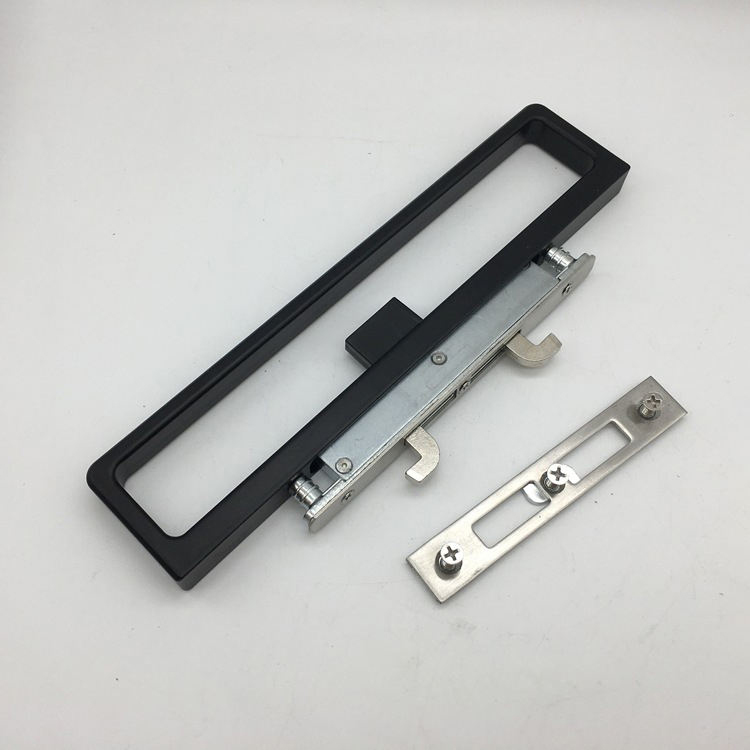
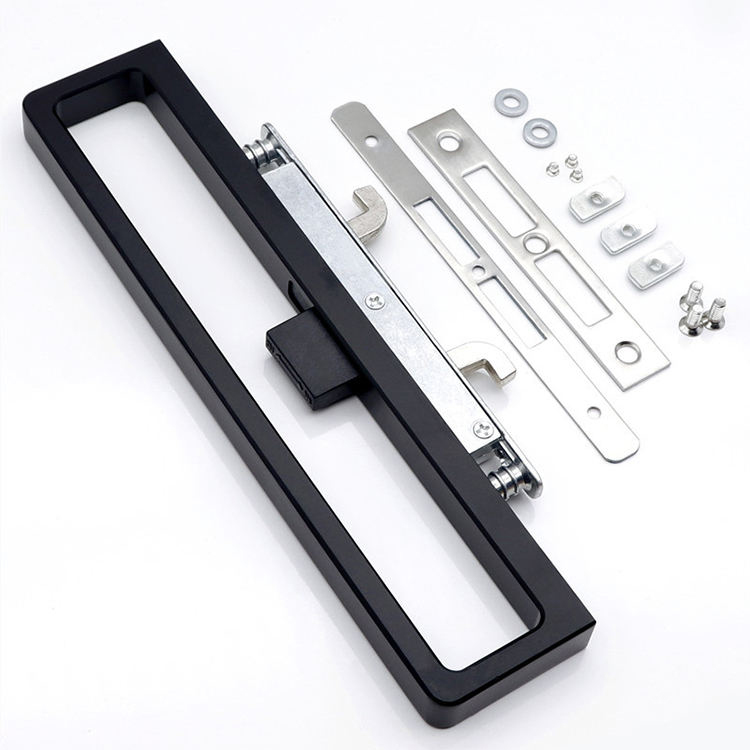
A straight latch normally enters an opening and blocks lateral movement. A hook rotates or translates behind part of the keeper, creating mechanical capture. With two hooks, the mechanism produces two capture surfaces instead of one.
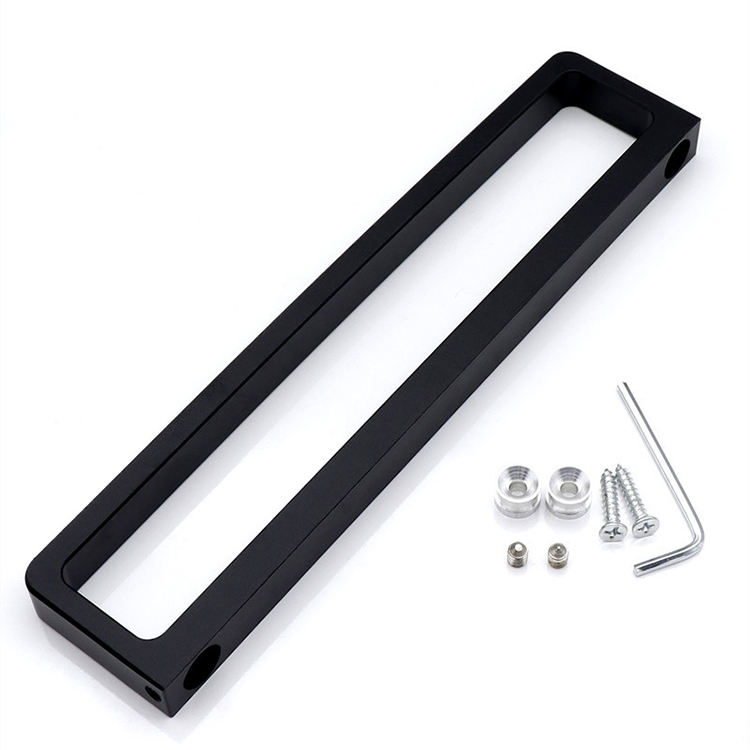
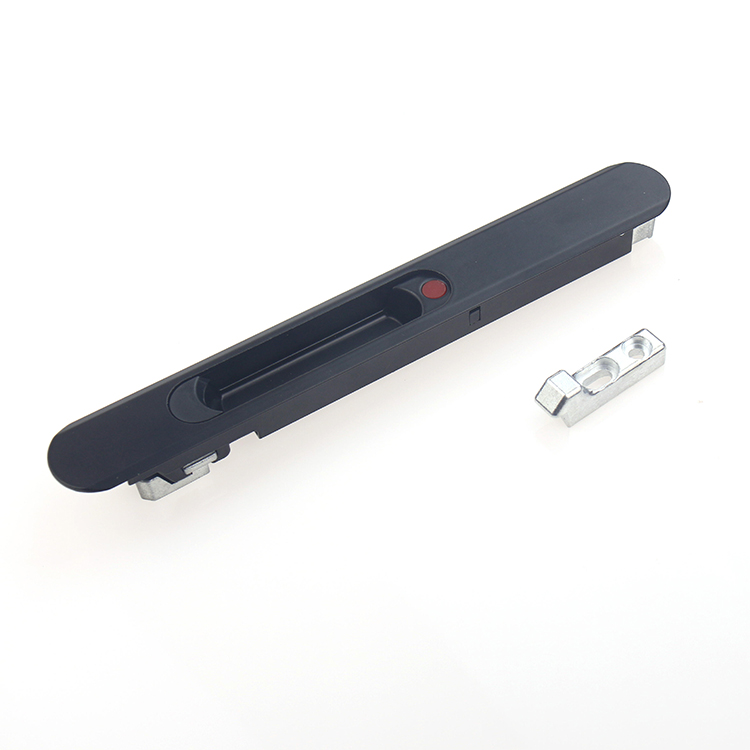
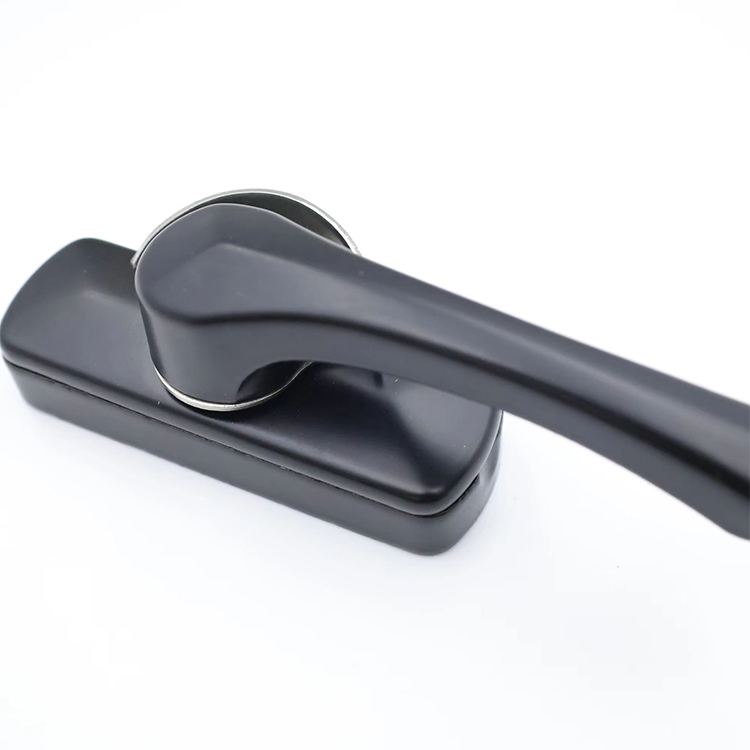
The ultra-narrow sliding door double hook lock shown by Chier uses a recessed configuration intended for slim aluminum door and window profiles. This type of compact structure makes sense where an exposed lever would interrupt the panel line or collide with an adjacent sliding panel.
Still, buyers should distinguish three designs that are often grouped together:
A compact lock body containing two closely spaced hooks
A lock body driving two vertically separated hooks
A true multi-point system driving remote locking points through rods, faceplates, or transmission components
Those are not mechanically identical. Two hooks inside one short lockcase do not necessarily create the same load distribution as locking points positioned farther apart along the door stile.
Table of Contents
Inside the Sliding Door Lock Mechanism
A double hook mortise lock normally contains several interacting parts. Names and geometry vary by manufacturer, but the functional chain is broadly consistent.
Actuator or Flush Control
The user operates the lock through a thumb turn, recessed lever, push slider, key cylinder, or integrated flush handle. That control transfers force into the internal mechanism.
For narrow sliding systems, the actuator must remain compact without becoming awkward. A tiny control that requires fingertip pinching may look clean in a product photograph and still perform badly in everyday use.
The U.S. Department of Justice’s 2010 ADA Standards for Accessible Design require covered operable parts to work with one hand without tight grasping, pinching, or wrist twisting. The activation-force limit is 5 lbf, equivalent to 22.2 N. For sliding and folding doors, the specified opening force is also 5 lbf, excluding the separate force required to disengage latches or other holding devices.
So the mechanism cannot merely “work.” It has to work with controlled, repeatable effort.
Cam, Gear, or Transmission Slider
The actuator turns or moves a cam. That cam transfers motion to the hook carriers, gear segments, or stamped transmission plates inside the lockcase.
This is where cheap locks often expose themselves. Excessive clearance produces a loose control and incomplete hook travel. Insufficient clearance creates friction, especially after coating buildup, contamination, fastener distortion, or minor profile misalignment.
Smooth in hand samples. Rough in production.
That pattern usually points to tolerance control rather than an exotic material problem.
Twin Hook Bolts
The hooks extend, rotate, or swing into the keeper. Their geometry determines several important behaviors:
Effective hook throw
Contact area behind the keeper
Resistance to panel separation
Clearance during closing
Sensitivity to vertical misalignment
Risk of incomplete engagement
Hook thickness alone tells me very little. I want the complete geometry, material specification, heat-treatment status where applicable, and evidence from an assembled-door test.
Lockcase and Faceplate
The lockcase contains the moving components. The faceplate locates the assembly on the edge of the panel and transfers some operating loads into the profile.
Slimness helps installation in narrow aluminum stiles, but every millimeter removed from the body reduces space for gears, bearings, reinforcement, fasteners, and hook movement. Compact engineering involves trade-offs. Anyone claiming otherwise is selling adjectives.
Buyers comparing mechanisms should review the wider lock boxes and gearboxes range rather than approving a lock solely from its outer handle shape.
Keeper or Strike
Alignment decides everything.
The keeper must capture both hooks at the intended depth while avoiding metal-to-metal interference during closing, because even a well-machined lock will feel defective when the strike position, panel overlap, profile deflection, and installation slots are treated as unrelated dimensions.
What happens when installers miss the strike line by 1 or 2 mm?
Usually, the user applies more force. The control becomes stiff. One hook may engage before the other. Components begin wearing at the wrong contact points. Eventually, the lock is blamed for a system-level error.
The keeper is not an accessory. It is half the lock.
Double Hook, Single Hook, or Multi-Point Lock?
The right choice depends on panel size, profile construction, security expectations, budget, and the number of locations that must be controlled.
Standard residential sliding panels and smaller doors
Double hook lock
Two hooks in one compact or extended mechanism
Two engagement surfaces and improved stability
Highly dependent on keeper alignment and profile strength
Aluminum patio doors, balcony doors, office partitions, slim-frame systems
Multi-point sliding lock
Central gearbox plus remote hooks, bolts, or rollers
Distributes locking along a larger section of the panel
Higher cost, more interfaces, more installation control required
Large doors, premium systems, taller panels, higher performance targets
A double hook narrow sliding door flush lock is usually the sensible middle option: more positive engagement than a basic sash latch, without the component count of a full multi-point system.
But larger is not always better. A full multi-point system can become an expensive source of field complaints when rods are poorly aligned or the door profile lacks dimensional stability.
The better question is not, “How many hooks can we add?”
It is, “How many properly supported locking points does this assembly need?”
Where Double Hook Sliding Door Locks Make Sense
Aluminum Patio and Balcony Doors
This is one of the most natural applications. A recessed lock preserves panel clearance while twin hooks engage a keeper on the meeting stile or frame.
For exterior use, the procurement specification should identify:
Base material of the lock body
Hook material
Keeper material
Fastener material
Surface-treatment system
Stainless steel grade, where stainless steel is specified
Corrosion-test method and required exposure
Drainage and contamination conditions around the lock pocket
“Stainless steel” is not a complete specification. Neither is “salt-spray tested.” Ask for the grade, test method, exposure duration, acceptance criteria, and photographs of the evaluated parts.
For projects needing a more conventional latch configuration, a stainless steel sliding door latch lock may be easier to integrate than a twin-hook flush assembly.
Slim-Frame Sliding Doors
Ultra-narrow profiles leave little room for deep lockcases or projecting handles. A compact double hook structure can preserve the sightline while providing positive engagement.
The trade-off is installation sensitivity.
Before tooling or ordering, the supplier should receive a profile section showing the complete internal cavity—not merely the visible stile width. Screw bosses, thermal breaks, reinforcement walls, glazing pockets, and adjacent hardware can all conflict with the lock body.
Office Partitions and Interior Glass Systems
Flush locks work well where panels slide past one another and exposed hardware would create interference.
Security expectations should remain realistic. A compact partition lock may provide privacy and controlled access without meeting the forced-entry resistance expected from an exterior security door.
Those are different jobs.
Sliding Windows
A scaled double hook or flush lock can suit selected aluminum sliding windows, particularly where the buyer wants more positive capture than a simple crescent latch.
However, the lock must be evaluated with the actual sash and keeper. Window profiles deform differently from door stiles, and screw pull-out can control failure long before the metal hook reaches its own load limit.
Cabinets and Furniture Panels
Small double hook mechanisms may be used on cabinets or interior storage panels, but door hardware should not be automatically resized for furniture. Operating travel, panel material, edge distance, and mounting method change significantly.
Where I Would Not Specify One Without Further Review
Required Workplace Exit Routes
This is the application where casual product selection becomes dangerous.
Under OSHA regulation 29 CFR 1910.36, a side-hinged door must connect a room to an exit route. Exit-route doors also generally cannot be arranged so employees need keys, tools, or special knowledge to open them from inside.
That rule has produced real enforcement action. An OSHA violation record states that, on or about April 22, 2013, employees had to pass through a sliding door into a maintenance shop to reach an exterior exit door. The employer was cited because a side-hinged door was not used to connect the room to the exit route.
So no, a smooth double hook lock does not make every sliding door appropriate for emergency egress.
The authority having jurisdiction, applicable building code, fire requirements, occupancy type, and exit-route rules must be checked before specifying the opening.
Doors With Weak or Damaged Profiles
Double hooks cannot repair a weak stile.
If the keeper pulls out with two screws and a thin unsupported wall, adding a stronger lock body may only move the failure point. Inspect reinforcement, screw engagement, edge distance, and keeper support first.
Panels With Poor Roller or Track Control
A door that drops, lifts, racks, or wanders laterally will not maintain keeper alignment. The lock then becomes an improvised alignment device, which it was not designed to be.
Rollers, anti-lift features, track condition, panel squareness, and lock engagement must be reviewed as one system.
The Hard Numbers Buyers Should Put Into the Specification
Vague requirements create vague quality.
“Durable,” “heavy duty,” and “high security” cannot be inspected at final assembly. Numeric requirements can.
At minimum, the technical package should identify:
Specification field
What the buyer should define
Lockcase envelope
Maximum length, width, depth, and permissible profile interference
Faceplate
Length, width, thickness, hole pattern, edge radius, and finish
Backset
Reference point and dimensional tolerance
Hook spacing
Center-to-center distance and allowed variation
Hook throw
Minimum fully engaged travel
Keeper engagement
Required capture depth and installation adjustment range
Operating force
Maximum unlocking and locking force under defined alignment conditions
Cycle target
Exact requirement, whether 50,000, 100,000, or another validated project value
Corrosion target
Test method, exposure duration, evaluation method, and permitted red rust or coating damage
Static loading
Load direction, fixture, duration, displacement limit, and failure definition
Panel conditions
Profile drawing, wall thickness, reinforcement, panel mass, and roller arrangement
Inspection
CTQ dimensions, gauges, sampling plan, traceability, and approved revision
Packaging
Protective film, individual separation, carton quantity, labels, and spare-part policy
The old NIST security report made an observation that buyers still ignore: locks must be judged for security, durability, and safety, not one category in isolation. It discussed static and dynamic testing of bolts, cylinders, strikes, doors, hinges, and frames.
Likely causes include keeper misalignment, unequal hook travel, lockcase distortion, transmission clearance, or panel sag.
Mark both hook contact surfaces, operate the lock slowly, and inspect actual capture. Do not solve the problem by grinding the keeper until the door “sort of” closes.
The Flush Control Feels Loose
Possible causes include excessive cam clearance, actuator wear, loose fasteners, an undersized spindle, or accumulated tolerance across several stamped parts.
A loose control may still lock today. It also hides incomplete hook travel.
The Lock Becomes Stiff After Installation
First check alignment and fastener torque. Installers sometimes distort narrow lockcases by overtightening screws or pulling the faceplate against an uneven profile cutout.
The lock may operate perfectly outside the door and bind once installed. That is valuable evidence.
The Keeper Screws Loosen
This is usually a joint-design problem involving inadequate screw engagement, unsuitable fasteners, thin profile walls, repeated impact, or poor hole preparation.
Thread-locking compound is not a substitute for proper joint design.
Corrosion Appears at Mixed-Metal Interfaces
The specification should consider the complete combination of lockcase, hooks, faceplate, keeper, screws, and surrounding aluminum—not just the visible component advertised as stainless steel.
Request testing on production-equivalent assemblies, with the same finishes and fasteners intended for shipment.
How to Evaluate a Sliding Door Lock Supplier
I would ask for the following before approving mass production:
A dimensioned 2D drawing with revision control
A 3D STEP file for interference review
A section drawing showing fully retracted and fully engaged hooks
Keeper drawings and adjustment limits
Material and finish specifications for each major component
Operating-force data from aligned and tolerance-limit samples
Cycle-test results with the test fixture described
Corrosion-test results with acceptance criteria
Static-load or assembled-door test data appropriate to the project
Inspection records for hook throw, hook spacing, faceplate position, and actuator travel
Packaging validation for finish protection
Written change-control procedures
And I would ask one uncomfortable question:
“Will production units be measured against the approved sample, or against an approved drawing and control plan?”
A sample is not a specification. It is one data point.
Chier’s OEM and ODM door hardware program describes a workflow covering requirements, DFM review, sampling, verification, pilot production, mass production, traceability, and change control. That is the right sequence for custom sliding door hardware, provided every claimed control is backed by project-specific documentation.
FAQs
What is a sliding door double hook lock?
A sliding door double hook lock is a compact mortise or flush-mounted mechanism that drives two hook-shaped bolts into a matched keeper, creating two interlocking contact points that resist panel separation better than a basic straight latch when the frame, strike, fasteners, and installation tolerances are correctly engineered.
The two hooks may be closely spaced inside one lockcase or positioned farther apart, depending on the design. Buyers should verify hook spacing, throw, keeper geometry, profile reinforcement, and complete assembled-door performance rather than judging the mechanism from the number of hooks alone.
How does a double hook sliding door lock work?
A double hook sliding door lock works by converting movement from a thumb turn, flush lever, key cylinder, or push control into synchronized hook rotation or translation, causing both hooks to enter and capture the keeper before the actuator reaches its locked position.
When the user unlocks the door, the transmission retracts both hooks into the lockcase so the panel can slide. Binding, incomplete engagement, or unequal hook movement normally indicates alignment, tolerance, deformation, wear, or internal transmission problems.
Is a double hook lock the best lock for sliding doors?
The best sliding door lock is the lock whose body dimensions, hook throw, keeper geometry, operating force, corrosion specification, security target, and service-life test match the actual door profile; a double hook design is often a strong choice, but it is not automatically superior in every assembly.
Small interior panels may need only a basic latch. Large exterior doors may need distributed multi-point engagement. Required exits may need a completely different door and hardware arrangement under applicable safety rules.
Where are double hook mortise locks normally used?
Double hook mortise locks are commonly suited to aluminum sliding doors, balcony and patio panels, office partitions, slim-frame systems, and selected sliding windows, provided the opening is not being used in a way that conflicts with accessibility, fire, emergency-egress, or local building-code requirements.
Exterior projects also require review of corrosion exposure, drainage, panel lifting, roller condition, profile reinforcement, and keeper attachment. Interior privacy applications usually have different performance targets from perimeter security doors.
What information is needed for an OEM double hook lock quotation?
A professional double hook lock specification should define the profile cavity, faceplate size, backset, hook spacing, hook throw, keeper dimensions, panel overlap, actuator type, cylinder option, material grade, finish, operating-force limit, cycle-test target, corrosion-test target, packaging, inspection method, and approved drawing revision.
The supplier should also receive extrusion drawings, expected annual volume, target market, panel mass, application photographs, installation constraints, and any required compliance documents. Without those inputs, a fast quotation may be little more than a guess.
Turn the Lock Into an Engineered Door System
Do not purchase a sliding door double hook lock as an isolated metal part.
Send the supplier your extrusion section, panel arrangement, keeper location, target market, operating-force limit, cycle requirement, corrosion requirement, finish standard, and expected order volume. Request a matched lock-and-keeper proposal, approved drawings, production-equivalent samples, and documented verification before releasing a bulk order.
Use Chier’s OEM/ODM engineering process to submit your door profile and application requirements. Ask for a fitment review, double hook lock recommendation, keeper design, test plan, and quotation based on the actual assembly—not a generic catalog selection.