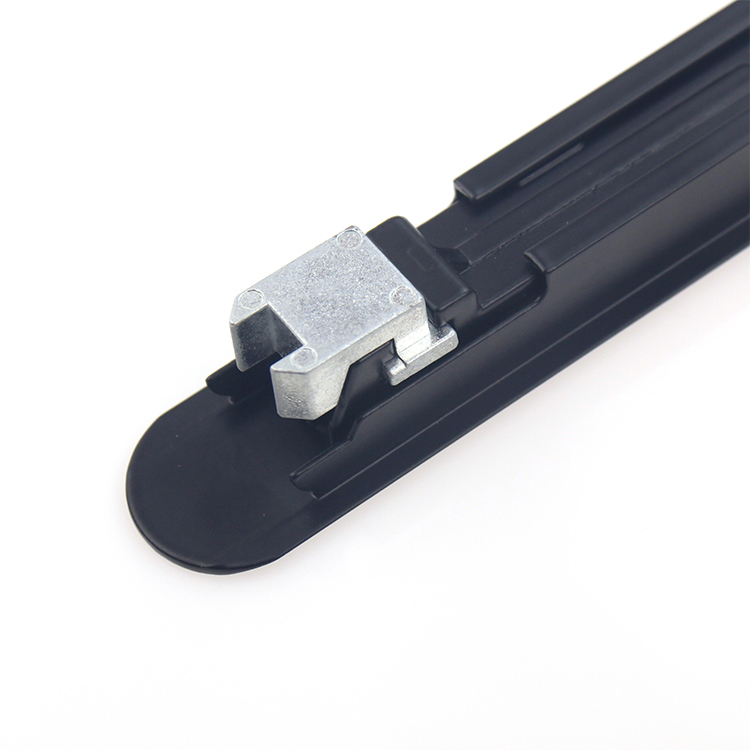
Looking for hardware solutions that meet European / American standards?
Use this guided inquiry modal to move from a generic quote form to a clearer technical conversation. Buyers can choose whether they need pricing, CAD / 3D files, or OEM / ODM support before sharing contact details.
Compatibility-first design across door / window systems
Repeatable production with clear inspection checkpoints
Documentation and change control for long-running programs
Responsive engineering support for fit and field feedback
A window latch may occupy less space than a credit card, yet its geometry determines whether a sash closes consistently, whether the weather seal receives enough compression, whether users can recognize the locked position, and whether the assembly still works after thousands of opening cycles.
So why does the industry still buy latches from photographs?
I think the answer is uncomfortable: appearance is easy to approve, while keeper height, cam throw, screw engagement, sash movement, spring fatigue, and emergency-release behavior require actual engineering work.
The phrase window latch types also creates confusion. Sliding, casement, spring, and cam do not describe four equal categories. “Sliding” and “casement” describe window movement. “Spring” and “cam” describe mechanical action. A sliding window can use a spring latch or a cam latch. A casement window can use a cam, handle-operated gearbox, or multi-point locking system.
That distinction is the starting point.
What a Window Latch Actually Does
A window latch is a mechanical device that retains, secures, compresses, or controls an operable sash by engaging a keeper, strike, track, frame member, or locking bar.
That definition is deliberately broad.
Some window locks and latches merely stop a panel from sliding. Others pull two meeting rails together. Some engage automatically. Others require a deliberate 90-degree or 180-degree turn. A few are designed mainly for access control, while purpose-built opening-control devices address fall prevention.
These are different jobs.
Foshan Chier’s guide to crescent locks versus general window latches makes the same distinction: a crescent lock is one rotating cam-style mechanism within a much larger hardware category. It should not be treated as a universal answer for every sash.
My rule is simple: describe the movement first, the required function second, and the mechanism third.
Not the finish.
Window Latch Types at a Glance
Latch type
Basic action
Common applications
Main advantage
Common failure
Sliding window latch
Retains one sliding panel against a frame, stile, or second sash
Horizontal sliders, vertical sash windows, aluminum sliding systems
Compact and easy to operate
Shallow engagement, panel lift-out, loose screws
Casement window latch
Draws a hinged sash toward the frame or activates locking points
Side-hung, top-hung, awning, hopper, projected windows
Better gasket compression and perimeter control
Uneven pull-in, hinge sag, gearbox mismatch
Spring latch
A spring-loaded bolt, hook, pawl, or catch engages automatically
A curved rotating cam sweeps into an opposing keeper
Single-hung, double-hung, some horizontal sliders
Compact meeting-rail closure
False locking caused by poor rail alignment
Multi-point lock
One handle activates several locking points
Tall casements, tilt-turn systems, high-performance windows
Distributed seal compression
Rod, gearbox, striker, or installation mismatch
The table looks neat. Reality is not.
Two latches with identical screw centers can behave completely differently because their keeper heights differ by 1–3 mm, their cams follow different arcs, or their bodies require different clearance behind the visible face.
A matching footprint is not proof of compatibility.
Sliding Window Latches: Retention Is Only Half the Job
Sliding window latches control a sash that moves along a track, either horizontally or vertically. The latch normally engages at a meeting stile, meeting rail, jamb, or track.
Simple enough?
Not really, because sliding windows fail in more than one direction. A latch may block horizontal movement while doing nothing to prevent the sash from being lifted out of its track. It may also close successfully while leaving weak keeper engagement or inadequate weatherstrip compression.
Common Sliding Window Latch Designs
Crescent and Sweep Locks
A crescent or sweep lock uses a rotating curved cam to engage a keeper on the opposing sash. It is common on single-hung, double-hung, and some horizontal sliding windows.
The cam can provide limited pull-in as it rotates. That is useful when meeting rails need to be brought together, but only when the keeper height, sash overlap, and cam path are correct.
Forced operation is a warning.
When users must push the sash with one hand and wrench the latch with the other, the hardware is usually compensating for misalignment, distorted rails, excessive gasket compression, roller wear, or a poorly positioned keeper.
Flush Sliding Latches
Flush latches sit close to or inside the sash surface. They are useful where projecting hardware would interfere with blinds, insect screens, curtains, packaging, or adjacent panels.
Slim aluminum profiles often benefit from this approach. But shallow hardware cavities create their own problems: reduced screw depth, smaller springs, thinner walls, and limited clearance for hooks or moving bolts.
Low profile does not mean low risk.
Track Locks and Stops
Track-mounted locks clamp or block the sliding path. They are common in retrofit work because installation can be fast and does not always require matching an existing keeper.
I regard them as secondary devices unless the complete application proves otherwise. A track stop may limit travel, but it does not automatically pull the sash tight, prevent lift-out, strengthen the glazing, or meet a tested security requirement.
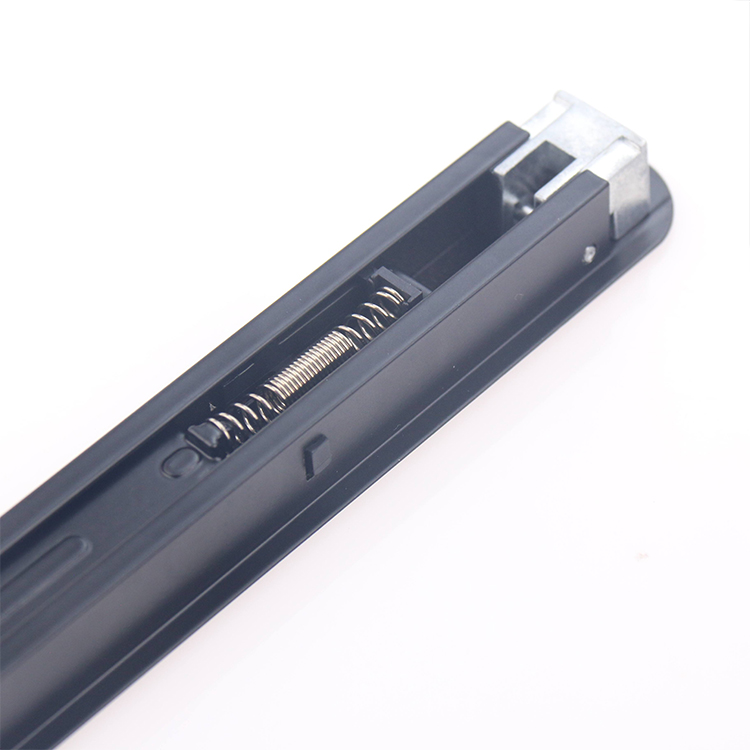
Spring-Loaded Sliding Latches
A spring-loaded sliding latch engages automatically when the sash reaches its closed position. This is useful for frequently operated windows or service openings where users may forget to turn a manual cam.
Convenience has a price.
The spring chamber can collect dust, coating debris, moisture, and cleaning residue. In coastal areas, chloride exposure from sodium chloride, NaCl, can accelerate corrosion when the spring, body, rivet, and fastener use poorly matched metals.
For product selection, the crescent locks and window latches range provides a more useful starting point than treating every sliding mechanism as the same product family.
What Is the Best Window Latch for Sliding Windows?
The best window latch for sliding windows depends on six questions:
Does the sash need simple retention or mechanical pull-in?
Can the panel be lifted from the track after it is latched?
Is the keeper fixed into reinforced material or thin profile skin?
Will blinds or screens conflict with a projecting lever?
How frequently will users operate the window?
Is the objective closure, access control, forced-entry resistance, or opening limitation?
No single latch answers all six.
For older windows, do not order from a photograph alone. Measure the screw centers, keeper height, engagement depth, sash overlap, track condition, and frame alignment. The site’s guide to matching replacement window locks for older windows explains why even a 1–3 mm mismatch can produce binding or false engagement.
Casement Window Latches: Compression Changes the Specification
Casement windows swing on hinges instead of travelling along a straight track. That changes the load path.
A side-hung casement normally needs its free edge drawn toward the frame so the gasket compresses evenly. Taller units may need locking points at several heights. Awning and hopper windows introduce different hinge positions, gravity loads, and water-management concerns.
This is why a standard sliding-window sweep lock is often a bad answer for a casement sash.
Single-Point Casement Latches
A compact casement vent may use a single lever, cam, hook, or over-center latch. This can work where the sash is small, stiff, well aligned, and adequately sealed by one locking location.
But one point of engagement concentrates force.
On a tall sash, the area near the latch may compress properly while the upper or lower corner remains proud. The handle can feel locked even though the perimeter seal is uneven.
That is false confidence.
Handle-Operated Casement Locks
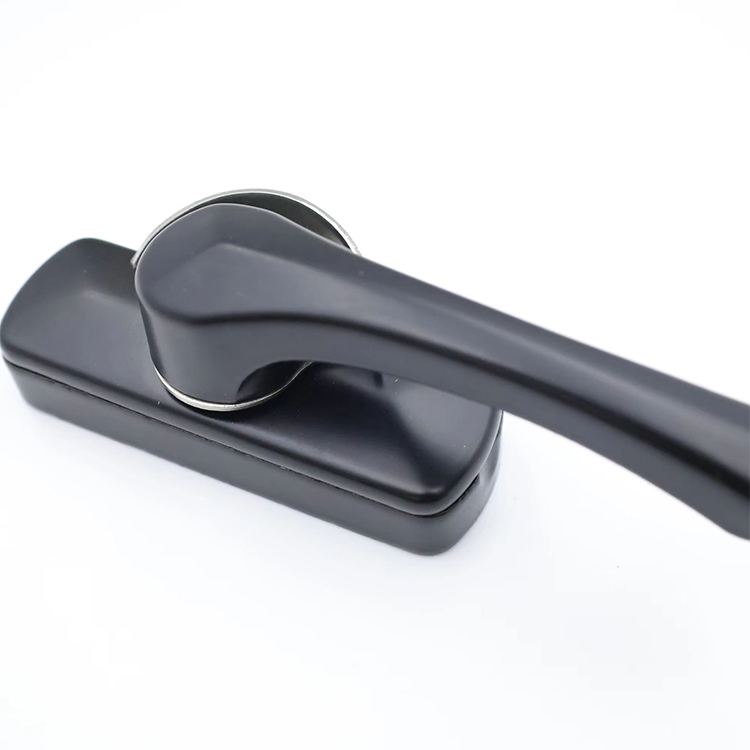
Many casement systems combine the user handle with a spindle, fork, gearbox, or drive mechanism. Turning the handle moves a locking component into one or more keepers.
These systems demand dimensional discipline:
Spindle size and insertion depth
Fork geometry
Handle fixing centers
Gearbox interface
Locking-point travel
Keeper position
Hinge condition
Gasket compression
Left-hand or right-hand operation
The casement window handle selection guide is worth reviewing before approving a handle by color or silhouette. Casement hardware must be matched to the operating system, not merely to the visible profile.
Multi-Point Casement Locking
A multi-point mechanism uses one handle to activate several locking locations along the sash edge. It is a sensible option for tall windows, high wind exposure, demanding air-infiltration targets, and gasket systems requiring distributed compression.
More locking points do not automatically create a better window.
Extra points add rods, rollers, mushrooms, hooks, gearboxes, strikers, tolerances, and installation steps. When one part is incorrectly positioned, the operating force rises. Installers then adjust the keepers until the handle moves, sometimes sacrificing seal pressure or engagement depth in the process.
The mechanism must be tested as a complete window assembly.
Spring Window Latches: Fast, Convenient, and Easy to Under-Specify
A spring window latch uses stored mechanical force to move a bolt, hook, pawl, tongue, or catch toward its engaged position.
The user may press a button, pull a lever, slide a release, or simply close the sash until the latch snaps into the strike.
Click. Done.
That quick action is why spring latches work well in frequently used openings, but the same automatic engagement can hide shallow strike contact, spring fatigue, or a bolt that has stopped travelling through its full designed distance.
Common Spring Arrangements
A latch may use a compression spring behind a sliding bolt, a torsion spring around a pivot, a leaf spring acting on a catch, or a spring-loaded button controlling a hook.
Each arrangement creates different failure points.
Compression springs can bind inside contaminated chambers. Torsion springs can lose force or fracture at bends. Leaf springs can take a permanent set. Small spring components can corrode before the visible latch body shows obvious damage.
And this is where cheap specifications usually collapse.
A buyer specifies “black zinc-alloy spring latch,” but says nothing about the spring alloy, rivet material, spring-pocket coating, drainage, cycle requirement, or acceptable residual engagement after testing. The visible body passes inspection. The hidden mechanism carries the risk.
Foshan Chier’s analysis of corrosion and defective window-hardware finishes correctly warns that coating claims should be evaluated on the real assembled part, especially around spring chambers, rivets, edges, screws, and mixed-metal interfaces.
When I Would Choose a Spring Latch
I would consider a spring latch when:
The window is opened and closed frequently.
Automatic engagement reduces user error.
Rapid one-handed operation matters.
The strike can be positioned accurately.
The mechanism is protected from heavy contamination.
The spring material and corrosion system are documented.
The user can clearly verify whether engagement occurred.
I would reject it when the supplier offers only a front-view photograph and the phrase “high-quality spring.”
That phrase proves nothing.
Cam Window Latches: Geometry Does the Work
A cam latch uses a rotating component whose changing radius, hook, or eccentric profile moves into engagement with a keeper.
As the cam turns, it can block movement and draw the sash inward. The amount of pull depends on the cam path, keeper position, contact angle, friction, and available lever torque.
This is mechanical advantage in a small package.
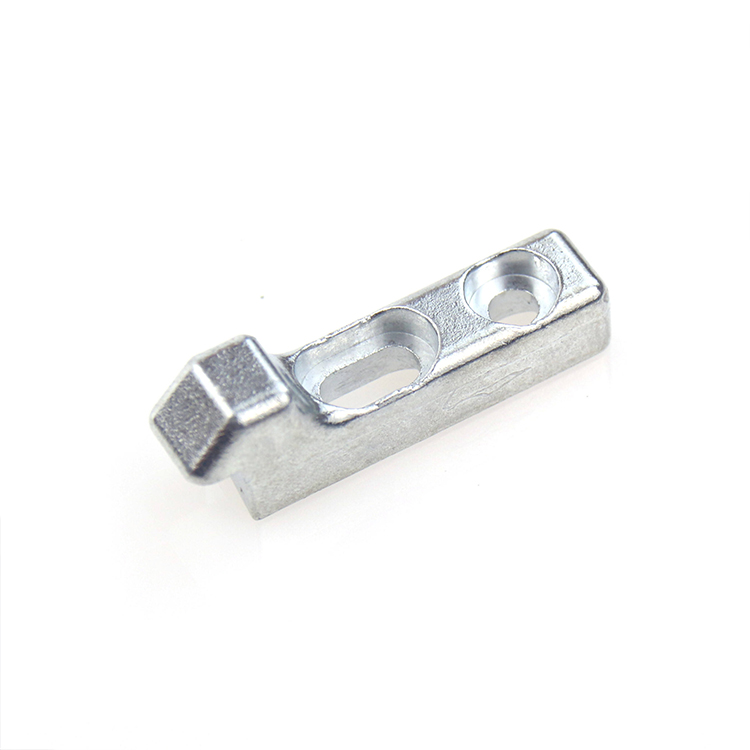
Cam Throw and Keeper Height
Cam throw describes how far the engaging part travels or reaches during rotation. Keeper height establishes the plane the cam must enter.
These two dimensions must agree.
A cam that passes above the keeper does not lock. A cam that strikes too low binds. A cam that barely touches may create a convincing handle position without meaningful engagement. And an over-aggressive cam can lift, twist, or distort a lightweight sash.
Measure the installed relationship, not just the loose parts.
Cam Latches Versus Crescent Locks
A crescent lock is a recognizable type of rotating cam latch, usually featuring a curved sweep that enters a keeper on an opposing sash.
But not every cam latch is a crescent lock.
Industrial quarter-turn cams, hook cams, eccentric compression cams, and compact vent fasteners may all rotate into engagement while using different body shapes and operating sequences.
Catalog language is inconsistent. Mechanism drawings are more reliable.
Where Cam Latches Work Best
Cam latches make sense when the application needs:
A visible locked and unlocked position
Compact rotational operation
Limited sash pull-in
A matched keeper relationship
Simple manual engagement
Low component count
They are less convincing when the sash needs distributed perimeter compression, automatic latching, very low projection, or controlled opening at a ventilation gap.
Use the mechanism for the job it actually performs.
The Hard Truth About Safety, Security, and Egress
Closure is not security. Security is not fall prevention. Fall prevention is not emergency escape.
Mixing those terms creates bad specifications and dangerous marketing.
A normal window latch may keep a fully closed sash shut during ordinary use. That does not mean it controls a partially open ventilation gap, withstands forced entry, protects a child from falling, or allows rapid emergency operation.
Government Data Makes the Risk Hard to Ignore
The U.S. Consumer Product Safety Commission’s April 7, 2026 safety release reported that an estimated 5,600 children aged 12 and under received emergency-department treatment in 2024 after window falls. About one in three required hospitalization. CPSC also identified at least 25 deaths from 2021 through 2023, with 80% occurring between May and October.
Screens are not guards.
CPSC recommends window guards and stops that restrict windows to openings of no more than four inches, approximately 102 mm. A standard sash latch should not be advertised as a fall-prevention device merely because it can keep a fully closed window locked.
New York City Provides a 50-Year Field Case Study
In April 2026, NYC Health marked 50 years of the city’s window-safety program. The city requires approved guards or limiting devices in covered buildings, generally preventing windows from opening more than 4.5 inches where a child aged 10 or younger resides, except at designated emergency exits.
The enforcement data is revealing.
Between July 1, 2024, and June 30, 2025, New York City’s housing agency received 2,663 window-guard complaints and issued more than 7,045 violations. In 2025, four window falls were reported: two involved improperly installed fall-prevention devices, and two involved missing devices. None was fatal.
The message is blunt: owning a safety device is not the same as installing and maintaining it correctly.
A Legal Case Shows Why Fasteners Matter
In Haleemeh M. S. v. MRMS Realty Corp., a child fell from a fourth-floor window where a legally required guard was not securely attached. The opinion records a jury allocation of 70% fault to the property company and 30% to the child’s father, alongside awards totaling $3 million for pain, suffering, and future medical expenses.
The hardware details were not decorative.
The court discussed approved guards, tamper-resistant screws, minimum #10 screw sizing, and sufficient penetration into wood or secure fastening into metal frames. The case became a dispute about inspection, reinstallation, notice, fasteners, and maintenance.
Tiny screws. Massive exposure.
Window hardware suppliers, property managers, architects, and installers should take the lesson seriously: the latch or guard body cannot compensate for an undefined substrate and casual fixing method.
For projects involving emergency escape, controlled openings, or tested market requirements, review the site’s guide to window hardware compliance, egress codes, and PAS 24 before turning a security decision into an escape hazard.
How to Choose a Window Latch Without Guessing
I use a function-first sequence.
1. Identify the Window Movement
Record whether the sash is horizontal sliding, vertical hung, side-hung casement, awning, hopper, tilt-turn, projected, or fixed with an operable vent.
Do not write “standard window.”
It is not a technical description.
2. Define the Actual Job
State whether the hardware must provide:
Basic retention
Sash pull-in
Gasket compression
Automatic engagement
Key-controlled access
Opening limitation
Forced-entry resistance
Emergency release
A combination of defined functions
The word “secure” is too vague.
3. Measure the Interface
Record dimensions in millimetres, including:
Screw-center distance
Body footprint
Keeper footprint
Keeper height
Cam or hook throw
Sash overlap
Back clearance
Profile wall thickness
Screw-boss position
Spindle dimensions
Handing
Maximum projection
A photograph can support these measurements. It cannot replace them.
4. Inspect the Complete Window
Check roller wear, hinge sag, track damage, frame twist, sash bow, weatherstrip condition, gasket compression, drainage paths, and the strength of the fixing substrate.
Do not ask new hardware to repair a distorted window.
5. Specify Materials and Exposure
Identify whether the installation is interior, exterior, coastal, industrial, humid, frequently cleaned, or exposed to condensation.
Then specify the material system.
An aluminum or zinc-alloy body may be appropriate in one application. 304 or 316 stainless steel may make more sense for springs, screws, or high-exposure parts. But mixed metals must be reviewed together because galvanic contact, trapped moisture, and damaged coatings can defeat an impressive material label.
6. Demand Performance Evidence
Ask for drawings, material declarations, cycle-test conditions, corrosion-test methods, fastener guidance, installation instructions, inspection criteria, and traceable samples.
“Passed salt spray” is incomplete.
How many hours? Which standard? Was the test performed on a flat coupon or the assembled latch? What counted as failure? Were cut edges, rivets, springs, and screws included?
Without those answers, the number is brochure decoration.
7. Test at Tolerance Extremes
Do not test only the perfect showroom sample.
Install the latch on windows representing minimum and maximum profile tolerances, keeper positions, gasket loads, and sash alignment. Cycle the mechanism, expose it to the expected environment, and inspect residual engagement.
Unit 5 must behave like unit 5,000.
Procurement Red Flags I Would Reject
“It Fits All Windows”
No, it does not.
A universal repair latch may cover several footprints, but every extra slot, shim, adapter, and adjustable keeper transfers precision from the factory to the installer.
“The Holes Match”
Matching screw centers do not prove keeper engagement, cam clearance, correct pull-in, or adequate substrate strength.
“Keyed Means High Security”
A key controls operation. It does not strengthen thin screws, weak frames, removable glazing, shallow keepers, or lift-out-prone sliding panels.
“Stainless Steel”
Which grade? Which component?
A supplier may describe the product as stainless because two visible screws use stainless steel while the hidden spring, rivet, or cam uses plated carbon steel.
“Child-Safe Latch”
Stop the approval meeting.
Ask for the exact function, test standard, opening limit, release method, fixing requirement, labeling, installation instructions, and egress conditions. If the supplier cannot answer, the claim is marketing, not evidence.
FAQs
What are the different types of window latches?
The main window latch types include sliding-window locks, casement fasteners, spring-loaded catches, rotating cam latches, crescent or sweep locks, flush sash locks, keyed latches, track stops, and multi-point mechanisms, each designed around a particular sash movement, keeper relationship, operating sequence, compression requirement, access-control need, or safety function.
The categories overlap. A sliding window may use a spring latch, cam latch, crescent lock, flush lock, or track device. Identify the sash movement before selecting the mechanism.
What is the best window latch for sliding windows?
The best window latch for sliding windows is a mechanism matched to the sash profile, keeper position, panel movement, lift-out risk, screw substrate, operating frequency, projection limit, weather-seal requirement, and security target, rather than whichever crescent lock, track stop, or spring catch happens to share the existing screw-hole spacing.
Use a cam or crescent lock when controlled meeting-stile engagement is needed. Consider a flush or spring latch where low projection and fast repetitive operation matter more.
Are sliding and casement window latches interchangeable?
Sliding and casement window latches are generally not interchangeable because sliding hardware controls movement along a track or meeting rail, while casement hardware must manage a hinged sash moving toward the frame, often requiring greater pull-in, distributed gasket compression, different keeper geometry, and coordination with handles, hinges, gearboxes, or multi-point locking rods.
A small casement vent may use a compact cam, but that does not make ordinary sliding-window hardware appropriate for a full-size casement sash.
How do I choose a window latch?
Choose a window latch by identifying the window movement, defining whether the hardware must retain, compress, restrict, lock, or release the sash, measuring the body and keeper interfaces, checking the frame and sash condition, classifying environmental exposure, confirming egress requirements, and testing the complete assembly across realistic manufacturing tolerances.
Start with drawings and measurements. Finish, color, and handle shape should come after mechanical compatibility and safety review.
What is the difference between a spring latch and a cam latch?
A spring latch uses stored spring force to move a bolt, hook, pawl, or catch automatically toward engagement, while a cam latch depends on deliberate rotation of an eccentric, curved, or hooked component into a keeper, often providing clearer visual feedback and a controlled amount of sash pull-in or compression.
Spring mechanisms favor speed and automatic closure. Cam mechanisms favor manual control, defined rotational position, and matched keeper geometry.
Can ordinary window latches prevent children from falling?
Ordinary window latches do not automatically qualify as child-fall prevention devices because they usually secure a fully closed sash rather than control a safe ventilation opening, resist child manipulation, meet defined load and installation requirements, preserve emergency escape, or carry the testing and labeling associated with purpose-built guards and opening-control systems.
A standard latch can support a broader safety plan, but it should not replace an approved guard, opening limiter, correct installation, adult supervision, furniture placement, and an egress review.
Your Next Step: Specify the Window Before Ordering the Latch
Do not send a supplier one photograph and ask for “the same latch.”
Send the window type, profile drawing, sash movement, screw centers, keeper height, engagement depth, wall thickness, back clearance, handing, exposure class, required finish, operating frequency, security objective, safety function, target market, annual volume, and test expectations.
Then request a matched drawing and working samples.
For OEM, replacement, or wholesale projects, review the available crescent locks and window latches and submit the real profile information before approving tooling or production.
The final rule is simple: buy the mechanism that fits the window, not the latch that photographs best.