Looking for hardware solutions that meet European / American standards?
Use this guided inquiry modal to move from a generic quote form to a clearer technical conversation. Buyers can choose whether they need pricing, CAD / 3D files, or OEM / ODM support before sharing contact details.
Compatibility-first design across door / window systems
Repeatable production with clear inspection checkpoints
Documentation and change control for long-running programs
Responsive engineering support for fit and field feedback
A uPVC door handle that suddenly becomes difficult to lift is not a diagnosis. It is a symptom.
That distinction matters.
A locksmith may call it a failed gearbox. A door installer may blame the hinges. A homeowner may spray lubricant into every visible opening and hope for the best. All three can be wrong because a multipoint locking system combines the handle, spindle, gearbox, faceplate, hooks, rollers, bolts, keeps, hinges, frame, panel and weather seals into one mechanical chain.
One part moves. Everything reacts.
My position is blunt: replacing a gearbox before comparing open-door and closed-door operation is expensive guesswork. Sometimes the gearbox really has failed. But if the handle operates normally with the door open and becomes stiff only after the door enters the frame, the lock is already telling you where to look.
So why ignore it?
The Fastest Test: Operate the Handle With the Door Open
Test it open.
With the door fully open, slowly lift the handle through its normal travel while watching the hooks, rollers, mushroom cams or shoot bolts along the faceplate. Do not slam the handle upward. Do not use an extension bar. And do not force it past a hard stop.
The result immediately separates two broad fault groups.
The handle moves smoothly when the door is open
If the handle lifts normally while the door is open but becomes difficult when the door is closed, the gearbox can at least transmit movement without resistance from the frame.
The likely causes are:
Door sag or hinge movement
Misaligned keeps or strike plates
Excessive gasket compression
A bowed or twisted frame
A locking point contacting the edge of a keeper
Seasonal expansion or contraction
Loose frame fixings
A door panel that has dropped out of square
CHIER’s guide to how multipoint door locks, gearboxes and keepers work makes the same mechanical distinction: a lock that works open but jams closed is usually encountering resistance at the frame-side components, not solely inside the gearbox.
This is the most useful diagnostic split in the entire process.
The handle remains stiff when the door is open
If the handle is still hard to lift with the door open, frame alignment is no longer the leading suspect. Check the handle, spindle and multipoint mechanism.
Possible causes include:
A damaged spindle follower inside the gearbox
A bent or incorrectly sized spindle
Handle fixing screws clamping the gearbox case
A seized hook, roller or shoot bolt
Debris inside the faceplate mechanism
A broken return spring
Stripped or fractured gearbox components
Incorrectly synchronized extension strips
A distorted faceplate rubbing against the door profile
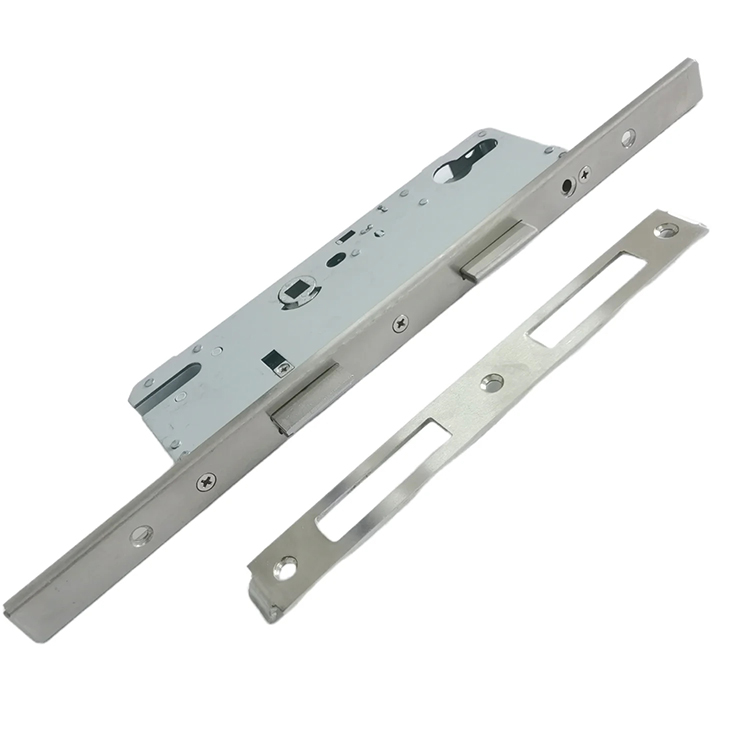
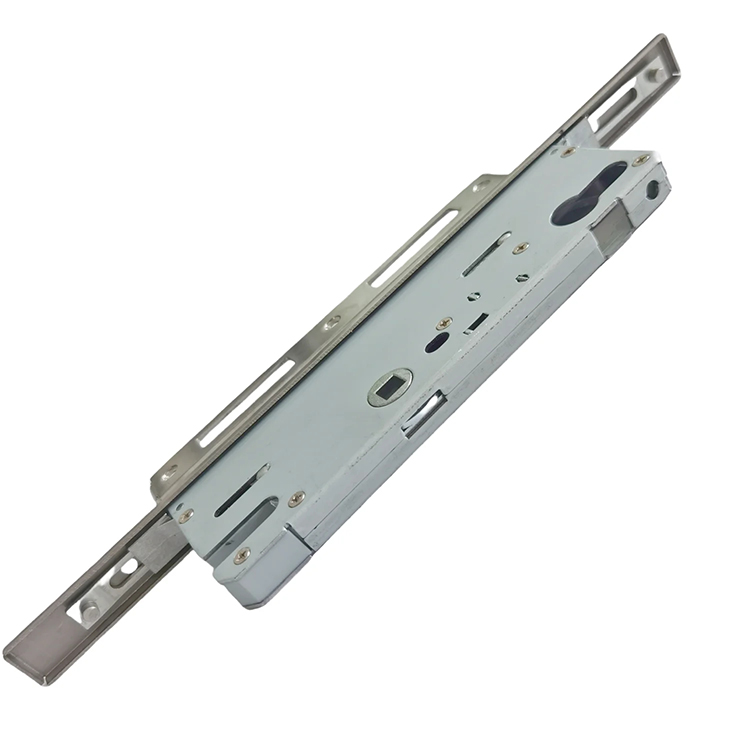
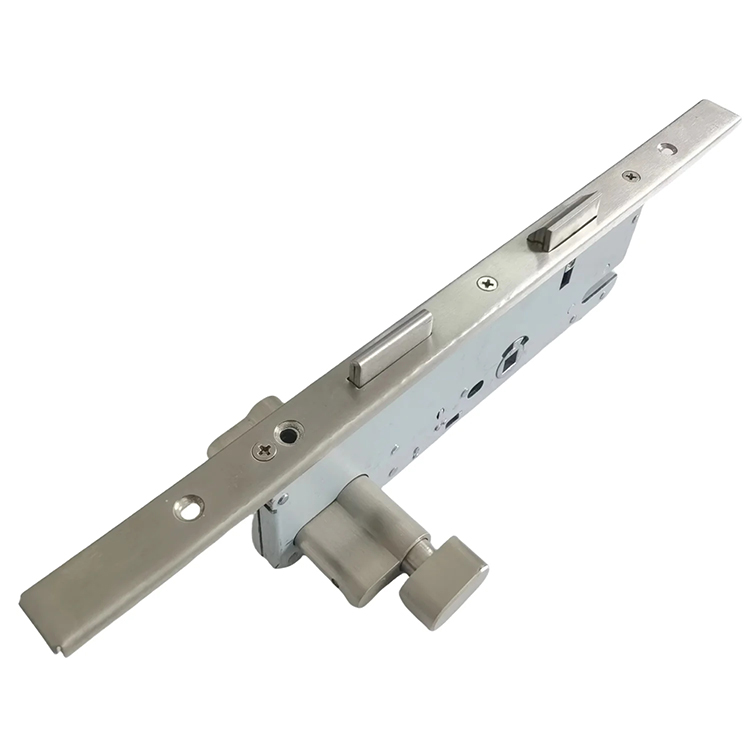
A genuine multipoint door lock is not just a long metal strip. Its central gearbox converts rotational handle movement into linear travel along the faceplate, sending several locking points into their matching keeps. If one linked component binds, the user feels the accumulated resistance at the lever.
That is why “the handle feels stiff” tells us very little by itself.
Door Sag Leaves Evidence—Look for It
A sagging uPVC door does not always look visibly crooked. A movement of only a few millimetres can place several locking points against the upper or lower edges of their keeps.
Small shift. Big resistance.
Yale’s Lockmaster AutoEngage installation guide calls for an even reveal and a consistent 3–5 mm air gap between the lock faceplate and keep components. It also directs installers to align the keep apertures with the corresponding latches and adjust hinges when the lock-side gap becomes too narrow.
That 3–5 mm figure is product-specific rather than a universal rule for every door system, but it proves the wider point: multipoint hardware depends on controlled clearance. A gearbox cannot compensate forever for a dropped sash, twisted frame or keeper that sits several millimetres out of position.
Check the reveal around the door
Close the door without locking it and inspect the visible gap between the sash and frame.
Look for:
A tight gap at the upper lock-side corner
A wider gap near the lower lock-side corner
The door rubbing on the threshold
A latch sitting below its keeper opening
Uneven compression of the weather seal
Fresh scrape marks on the faceplate or keeps
The top of a dropped door commonly moves toward the lock-side frame while the lower lock-side corner moves downward. The exact pattern depends on the hinge type, panel construction, glazing pack and frame condition.
Do not judge from one corner. Compare all four.
Apply light lifting pressure
With the door nearly closed, support the handle-side edge and lift it very slightly while another person tests the handle.
If the handle becomes noticeably easier to raise, you have strong evidence of door sag, hinge movement or panel misalignment. You have not proven that every lock component is healthy, but you have shown that changing the sash position changes the operating force.
That matters.
But do not hang your body weight from the handle. The handle is an input lever, not a lifting point, and excessive force can damage the spindle, fixing points or gearbox follower.
For replacement or specification work, compare the existing hinge geometry with correctly rated door hinges for the panel weight and opening configuration. Hinge selection must account for leaf dimensions, fixing pattern, handing, opening direction and door weight—not appearance alone.
Use a removable contact marker
Apply a small amount of dry-erase marker, removable chalk or low-tack tape to the edges of the hooks, rollers or bolts. Close the door gently, attempt one controlled handle lift, then reopen it.
Transfer marks reveal where contact occurs.
If every locking point shows contact on the same relative edge, suspect overall door movement before adjusting each keeper independently. Moving six keeps to follow one sagging sash is not a repair. It is a temporary accommodation for a structural alignment fault.
I see that as one of the worst habits in field servicing: technicians adjust every receiver until the handle moves, collect payment and leave the overloaded gearbox to fail later.
Door Sag and Gearbox Failure Produce Different Patterns
The following table is the practical comparison I would use before authorizing parts replacement.
Symptom
More Likely Cause
Confirmation Test
Sensible Next Action
Handle is smooth open but stiff closed
Door sag, keeper misalignment or gasket pressure
Compare open and closed operation
Inspect reveals, hinges and contact points
Handle is stiff in both positions
Gearbox, spindle or linked mechanism fault
Disconnect frame engagement by opening door
Inspect handle, spindle and mechanism travel
Lifting the sash makes the handle easier
Door sag or hinge movement
Support the lock-side edge gently
Correct hinge or sash alignment
Handle stops at exactly the same angle open and closed
Internal obstruction or damaged gearbox
Observe locking-point travel
Stop forcing and inspect mechanism
Handle feels floppy or turns without moving the locking points
Broken spindle, follower or gearbox
Watch faceplate components during operation
Remove handle for non-destructive inspection
Key turns open but binds when closed
Incomplete handle travel or keeper interference
Test key after open-door handle lift
Correct alignment before replacing cylinder
One hook or bolt strikes its keep
Local keeper or faceplate alignment fault
Use removable contact marker
Adjust the affected interface
Several locking points strike on the same edge
Whole-door sag, bow or twist
Compare marks along full door height
Correct the door position first
Fault changes with hot or cold weather
Thermal movement or seal compression
Compare operation across temperature changes
Restore clearance; inspect frame and gasket
Grinding or clicking occurs with the door open
Internal wear or fractured mechanism
Operate slowly without frame resistance
Stop use and inspect gearbox assembly
The hard truth is that both faults can exist simultaneously.
A sagging door can overload the gearbox for months. The user applies more force each day. Internal cams, followers or gear teeth then wear until the gearbox eventually becomes stiff even with the door open.
At that stage, replacing the gearbox alone treats the final damage but leaves the original load condition untouched.
Loose fixing screws can allow the handle plate to shift. Overtightened screws can distort or clamp the gearbox case on some assemblies. A spindle that is too short may engage only part of the follower. A bent spindle can bind as it rotates.
Remove only the handle furniture when it is safe to do so and the door is open. Then check:
Whether the spindle is straight
Whether it fully enters both handles and the gearbox
Whether the handle return spring works
Whether the lever moves freely off the door
Whether screw centres and backplate dimensions match
Whether the spindle section matches the follower
Many European-style lever-operated systems use an 8 mm square spindle, but that is not universal. Measure the existing component rather than ordering from a photograph.
2. Watch every locking point
Operate the handle slowly with the door open.
Every hook, roller and bolt should move through a repeatable path. One component moving late, stopping early or failing to retract can create a hard-to-lift handle even when the central gearbox remains partly functional.
Listen closely.
A clean mechanism should not produce sharp clicks, grinding or irregular jumps. A sound at one height along the door may indicate a local obstruction, bent connecting strip or damaged remote locking point rather than a central gearbox fault.
3. Test the key separately
Determine what the key actually controls.
Depending on the design, the cylinder cam may:
Throw a central deadbolt
Block the gearbox after the handle is lifted
Retract the latch
Drive the full multipoint mechanism
Perform several actions in sequence
A Euro cylinder that turns normally with the door open but binds when closed often points back to incomplete locking-point engagement. Replacing the cylinder will not correct a hook that is sitting against the edge of its keep.
And forcing the key is worse. A snapped key adds another repair without solving the first fault.
4. Inspect the keeps before moving them
Look for polished edges, chipped coatings, metal filings, bent tabs and elongated screw holes.
These marks are mechanical records.
One polished edge suggests a local conflict. Matching marks on the top and bottom keeps suggest sash movement. A keeper that has gradually shifted may leave a visible outline of its original position.
Do not loosen every keep at once. Mark their current locations first so you can reverse an unsuccessful adjustment.
5. Lubricate only after alignment checks
Lubrication reduces friction. It does not straighten a dropped door.
Yale recommends lubricating moving lock components with a non-acidic mineral oil at least twice per year and notes that adjustment may still be required for satisfactory operation. Its installation material also identifies incorrect keep adjustment and narrow lock-side gaps as causes of stiff operation.
Use the lubricant specified by the lock manufacturer. Do not flood the gearbox or cylinder with an unknown aerosol, heavy grease or acidic cleaner. Some products collect grit, attack plastics or interfere with factory-applied lubricants.
Spray-and-pray is not maintenance.
When the Gearbox Really Is the Problem
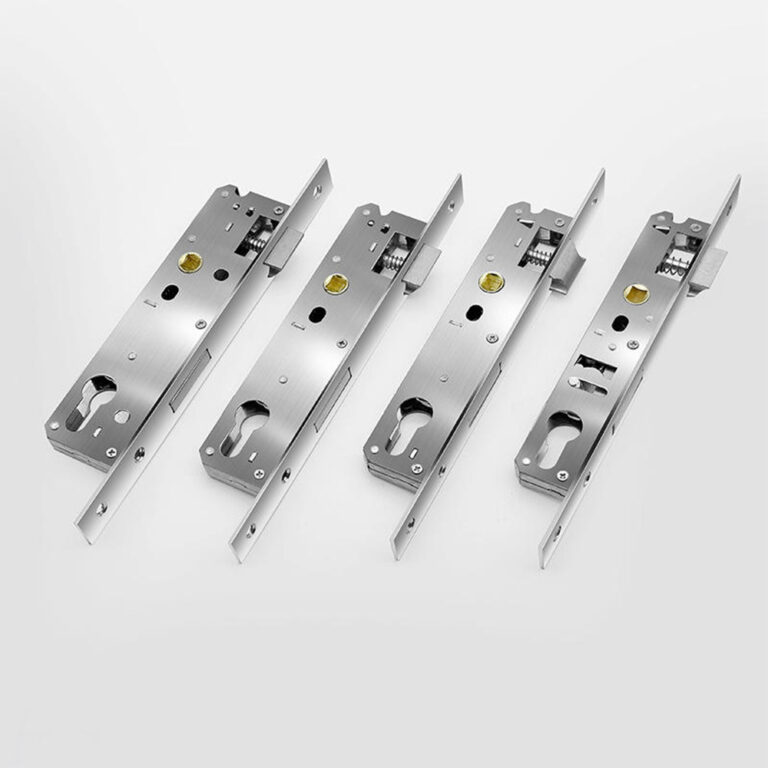
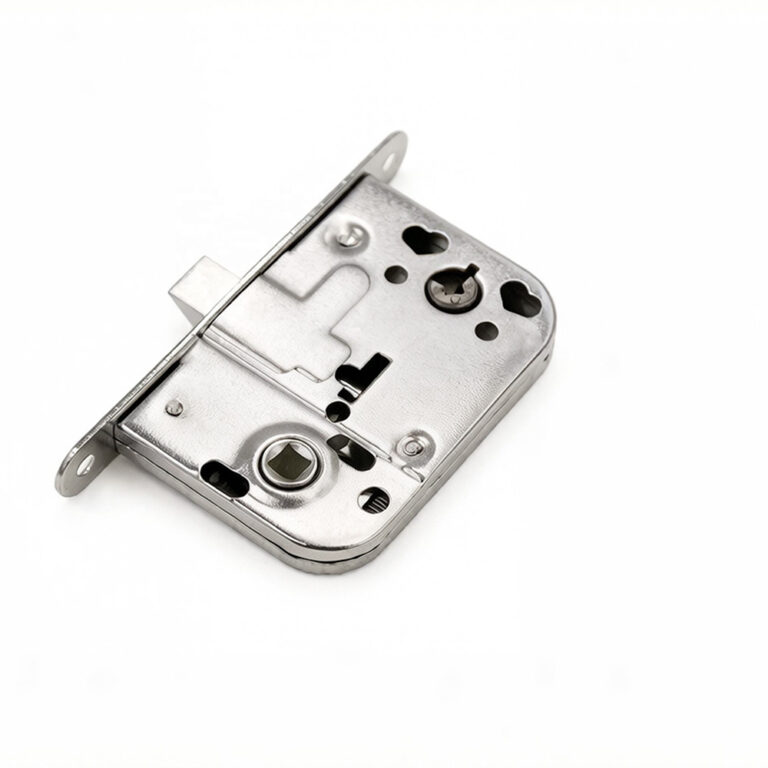
A multipoint lock gearbox is the central transmission case behind the handle and cylinder area. It contains some combination of the spindle follower, cams, springs, gears, latch and deadbolt.
Gearbox failure becomes the stronger diagnosis when:
The handle is stiff with the door open
The mechanism stops at a repeatable point
The handle moves without operating the locking strip
The lever no longer returns
The follower has excessive play
The gearbox produces grinding or cracking sounds
Remote locking points remain still despite spindle movement
The mechanism jams after the handle furniture is removed
Visible alignment changes do not affect the operating force
Still, “gearbox failure” does not automatically mean “order something that looks similar.”
Common identification measurements include:
Backset
Handle-to-cylinder centre distance, often called PZ
Faceplate width and thickness
Spindle follower size
Case height and depth
Latch and deadbolt position
Locking-point type
Distance from the gearbox datum to each hook, roller or bolt
Overall faceplate length
Extension-strip connection geometry
Common catalogue combinations such as a 35 mm or 45 mm backset, 92 mm PZ, 16 mm faceplate and 8 mm spindle are examples, not universal standards.
For model identification, use current multipoint lock drawings, specifications and CAD resources rather than relying on handle appearance. CHIER’s download centre specifically advises buyers to confirm the product model, application, profile, mounting centres, spindle configuration and interface revision before machining or procurement.
The Cost of Guessing Wrong
Misdiagnosis is not free.
The Master Locksmiths Association’s consumer guidance indicates that correcting uPVC door alignment may start around £80, while replacing a failed gearbox associated with a loose or floppy handle may cost roughly £145–£280 including labour, depending on the lock make and site conditions. These are guidance figures, not fixed quotations, and regional charges can differ.
That price gap explains why the open-door test matters.
But cost is only half the issue. A door that cannot complete its locking travel may appear closed while one or more hooks or bolts remain disengaged.
The UK government’s Approved Document Q security guidance states that doors and windows should resist physical attack through both robust construction and appropriate hardware. A high-rated lock cannot provide its intended performance if misalignment prevents it from engaging correctly.
Recent crime data provides context. The Office for National Statistics estimated approximately 327,000 domestic burglary incidents in England and Wales during the year ending December 2025, a 22% reduction from about 422,000 in the previous survey period. The long-term trend improved, but 327,000 incidents is not a reason to accept a door that only partly locks.
Security hardware must work mechanically before its labels mean anything.
Stop Testing When Force Becomes the Test
Do not continue operating a hard-to-lift handle until something breaks.
Stop and seek professional inspection when:
The door is stuck closed
The handle produces cracking sounds
The key begins to twist or deform
The door is part of a fire or emergency escape route
The handle spins without controlling the latch
A hook or bolt remains projected while the door is open
Hinge fixings are loose in the frame
The door panel or glass appears unstable
The lock has already failed more than once
Correct replacement identification is uncertain
Do not attempt destructive entry or drill the gearbox while the door is closed. An incorrect intervention can damage the sash, frame, reinforcement, cylinder and keeps, turning a replaceable component fault into a complete doorset replacement.
For recurring field failures, my recommendation is to document the system before ordering parts: photograph the faceplate markings, measure the backset and PZ, record locking-point positions, map contact marks and note whether the fault occurs open, closed or both.
Evidence first.
For manufacturers, distributors and system companies, CHIER’s OEM and ODM hardware development process supports review of profile sections, mating components, drawings, critical dimensions, samples and known field failures before a replacement or production revision is approved.
FAQs
Why won’t my uPVC door handle lift?
A uPVC door handle that will not lift is usually being restricted by door sag, misaligned keeps, excessive seal compression, a seized locking point, a damaged spindle or internal multipoint gearbox failure; comparing the handle operation with the door open and closed is the fastest way to separate frame-related resistance from a mechanism fault.
If it works normally while open, inspect the hinges, door gaps and keeps. If it stays stiff while open, inspect the handle, spindle, gearbox and linked locking points.
How can I tell whether the door has dropped?
A dropped uPVC door is a sash that has moved out of its intended position relative to the frame, usually producing uneven gaps, threshold rubbing, a low latch position and multiple locking points contacting the same edges of their keeps; gently supporting the handle-side edge may temporarily improve operation and confirm an alignment-related load.
Use removable contact marks and compare the reveal at the top, bottom, hinge side and lock side before adjusting any individual keeper.
What is the open-door test for a multipoint lock?
The open-door test is a non-destructive diagnostic comparison in which the handle and locking mechanism are operated while the door is fully open, removing resistance from frame-mounted keeps; smooth open-door movement points toward alignment or compression, while continued stiffness points toward the handle, spindle, gearbox, faceplate or linked locking components.
The test is highly useful but not absolute because long-term misalignment can eventually damage the gearbox as well.
What is a multipoint lock gearbox failure?
A multipoint lock gearbox failure is an internal breakdown of the central transmission that converts handle or cylinder rotation into movement of the latch, hooks, rollers, bolts or connecting strips; typical evidence includes stiffness with the door open, grinding, incomplete travel, a floppy handle, excessive follower play or locking points that no longer move.
Replacement parts must match the backset, PZ, spindle follower, faceplate and locking-strip connection geometry.
Can I fix a stiff uPVC door handle myself?
A safe DIY response to a stiff uPVC door handle is limited to inspecting gaps, checking visible screws, comparing open and closed operation, identifying contact marks and applying only manufacturer-approved lubricant; hinge correction, gearbox removal, locked-door opening and modifications to fire or emergency doors should be handled by a competent door technician or locksmith.
Stop immediately if the handle cracks, the key bends, a locking point remains projected or the door cannot provide safe exit.
Should I replace the gearbox or adjust the door first?
Door alignment should be corrected before replacing the gearbox whenever the handle moves normally with the door open, becomes stiff only when closed, improves when the sash is supported or shows matching contact marks across several keeps; gearbox replacement becomes more justified when resistance, grinding or lost motion remains after all frame engagement has been removed.
A gearbox damaged by prolonged misalignment may require both repairs, not a choice between them.
Diagnose the System Before Buying the Part
Start with one comparison: door open versus door closed.
Then inspect the reveal, support the sash lightly, mark the locking-point contact areas and observe the full faceplate movement. These steps cost almost nothing, yet they eliminate the most common false diagnosis: replacing a gearbox when the door is actually sagging.
And if the gearbox has failed, measure it properly.
Door manufacturers, hardware brands, importers and distributors can send CHIER the profile section, lock measurements, photos or failure details for compatibility review, technical-file support or a controlled replacement and OEM/ODM discussion. Do not approve a part because the faceplate looks close. Approve it because the dimensions, movement and application match.