Looking for hardware solutions that meet European / American standards?
Use this guided inquiry modal to move from a generic quote form to a clearer technical conversation. Buyers can choose whether they need pricing, CAD / 3D files, or OEM / ODM support before sharing contact details.
Compatibility-first design across door / window systems
Repeatable production with clear inspection checkpoints
Documentation and change control for long-running programs
Responsive engineering support for fit and field feedback
A window handle can be sold as “child-safe,” “locking,” or “restricted” while the actual safety outcome still depends on the sash geometry, opening sequence, gearbox, restrictor, spindle engagement, emergency-egress requirement and, most importantly, what a child can physically make the complete window do.
So what are we really buying?
That question matters because child window falls are not a theoretical edge case. On April 7, 2026, the U.S. Consumer Product Safety Commission reported that an estimated 5,600 children aged 12 and under were treated in emergency departments after window falls in 2024, with roughly one in three requiring hospitalization. CPSC also identified at least 25 deaths between 2021 and 2023, and 80% of those fatalities occurred between May and October.
My view is simple: child resistant window handles should be specified as part of a safety system, not bought as decorative handles with an extra button or key.
That distinction separates serious hardware engineering from catalogue language.
What “Child Resistant” Should Actually Mean on a Window
A child resistant window handle is a control device designed to make an unsafe window-opening action harder or impossible for a young child while preserving the intended operation for an authorized user. Depending on the system, it may lock all handle movement, require an extra release action, or permit ventilation while preventing full opening.
But the handle is only one layer.
ASTM International’s current ASTM F2090-25 standard covers window fall-prevention devices used on operable windows, including window opening control devices (WOCDs), fall-prevention screens and window guards. Its scope specifically addresses accidental falls by children five years old and younger, including windows that may also serve emergency escape or rescue functions.
That is far more meaningful than a supplier writing “child safety handle” in a catalogue.
CPSC guidance also tells consumers to install window guards or stops, limit openings to approximately 4 inches, keep furniture away from windows and never trust ordinary insect screens as fall protection.
The implication for hardware buyers is uncomfortable but important: a locking handle does not automatically equal a compliant window fall-prevention device.
Key-Locking, Push-Button and Tilt-First Handles Compared
These three designs solve different problems.
Handle Type
User Action
Child-Resistance Logic
Ventilation Possible While Restricted?
Main Strength
Main Weakness
Key-locking handle
Unlock cylinder with a key before operating
Removes ordinary handle access from unauthorized users
Depends on locking position and window system
Strong, obvious access control
Safety depends on key management and locking discipline
Push-button handle
Press button while rotating handle
Requires an additional deliberate action
Usually yes, depending on mechanism
Convenient; no loose key
A simple button may be learnable or reachable by an older child
Tilt-first handle
Normal operation reaches tilt mode; key is required for full turn opening
Makes restricted ventilation the default opening state
Yes
Excellent logic for tilt-and-turn applications
Requires compatible tilt-first gearing, not merely a special lever
There is no universal winner.
And that is exactly where many purchasing specifications go wrong.
Key-Locking Window Handles: Simple Control, Human Weakness
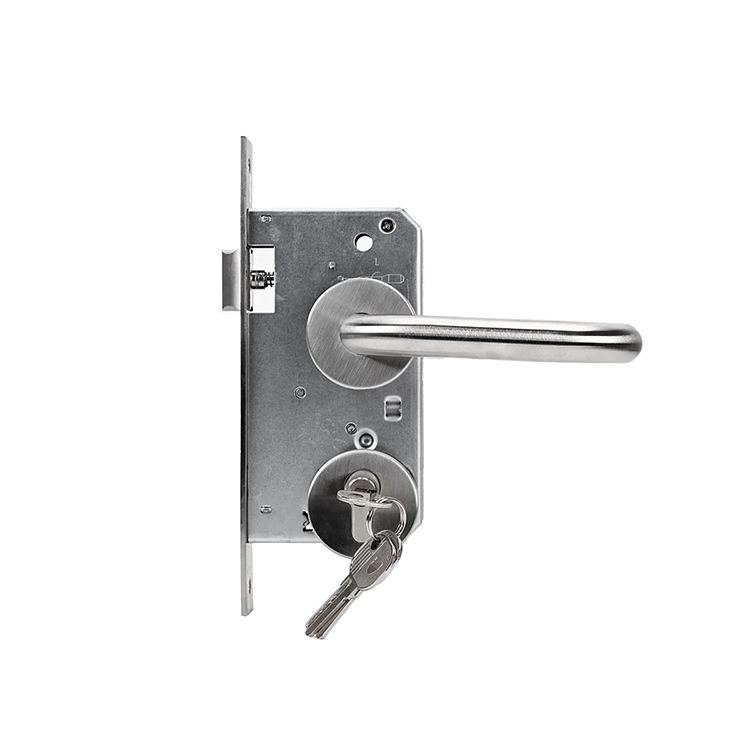
A key locking window handle places a small cylinder in or near the lever. Once locked, the lever is prevented from reaching one or more operating positions until somebody uses the key.
Mechanically, this is easy to understand.
Operationally, it is not.
The first question is: what exactly does the key lock?
Some handles lock only in the fully closed position. Others can secure the handle while the sash is tilted. Some specialized systems block full opening but preserve ventilation. A purchasing specification that merely says “lockable handle with key” leaves all of this undefined.
Then comes the human problem.
Keys disappear.
Keys get left in cylinders. Facilities staff make unofficial duplicates. Parents stop locking handles because repeatedly finding the key becomes irritating. A beautifully engineered safety function can therefore be defeated by ordinary behavior.
That does not make key-locking handles bad. Quite the opposite. They are often the strongest option where adults need deliberate control over full window opening.
But I would reject any RFQ that says only:
Locking handle, child safe, white.
It says almost nothing.
A useful specification should define:
Which handle positions can be locked
Whether the key is removable in locked and unlocked states
Whether one master key operates multiple windows
Spindle dimensions and engagement depth
Fixing centers
Maximum operating torque
Required cylinder resistance
Required durability testing
Egress implications
Required opening restriction elsewhere in the window assembly
For uPVC and espagnolette systems, spindle fit deserves special attention. CHIER’s window handle spindle-length guide explains why a spindle that is only slightly too short or too long can cause incomplete engagement, binding or a handle base that will not seat correctly.
A lockable handle with poor spindle engagement is not an upgrade.
It is a defect with a key.
Push-Button Window Handles: Convenient, but Don’t Confuse Friction With Safety
A push button window handle adds another action before the handle can rotate. The user presses or holds a button while operating the lever.
That additional action can stop casual operation and may also provide anti-manipulation benefits.
Roto, for example, lists push-button variants alongside lockable and TiltFirst versions in its Roto Line and Roto Samba window-handle ranges; its technical material describes the button as enabling window operation only while pressed.
Convenient? Absolutely.
Automatically child-proof? No.
Children learn mechanisms.
If the button is large, exposed, within easy reach and can be pressed with the same hand that moves the lever, an older or particularly observant child may eventually reproduce the action. A push button is therefore better understood as an operation inhibitor unless the complete product has been tested and approved for a specific child-safety function.
Some higher-control designs require two-handed operation or more deliberate release geometry. FSB, for example, markets window handles with push-to-unlock mechanisms that require additional operation and positions them for child-safety and public-building applications.
The hard truth?
Convenience and resistance pull in opposite directions.
The easier a safety mechanism is for every adult to operate without thinking, the more carefully I would examine whether a child can reproduce the same movement.
Tilt-First Window Handles Change the Logic of the Window
Tilt-first is different.
Instead of taking a conventional tilt-and-turn window and merely adding a lock, a tilt-first window handle changes which opening mode the user reaches first.
A standard tilt-and-turn sequence commonly allows different handle positions to select closed, full inward turn and top tilt. Tilt-first systems deliberately prioritize the smaller ventilation opening and restrict access to the full turn position.
Roto’s NX TiltFirst technology provides a useful real-world example. With the handle locked, the sash can still move into its tilted ventilation position; progressing into full turn mode requires a key. Once returned, the safety function is reactivated.
That is smarter than simply telling occupants, “Remember not to open it fully.”
Good hardware should remove the dangerous choice from ordinary use.
Why Tilt-First Works Well for Child Safety
The attraction is behavioral.
A user wants ventilation. They move the handle. The window tilts.
No key hunt.
No reason to defeat the safety system.
Full opening remains available for cleaning, maintenance or other controlled situations, but it requires a deliberate override.
Roto describes its TiltFirst arrangement as allowing ordinary users approximately 90° of handle travel to reach tilt mode, while movement toward the 180° turn position requires unlocking. A compatible TiltFirst handle must also be paired with the appropriate TiltFirst hardware; changing the lever alone does not create the function.
That last sentence matters enormously.
The handle cannot invent gearing.
A supplier who offers a “tilt-first handle” without asking what gearing sits inside the sash should make a professional buyer nervous.
The Haringey Case Shows What Happens When Tilt-and-Turn Hardware Fails
This case should be compulsory reading for anyone specifying child safety window hardware.
In 2019, a toddler died after falling from a tilt-and-turn window in a high-rise property managed by Homes for Haringey. The Local Government Association’s subsequent case study records that the window had a mechanical fault allowing tilt and turn functions to interact improperly. Furniture, including a settee just under 900 mm high, also provided access to the window.
The mechanism had already been reported.
Operatives closed the window pending repair, but they did not leave it physically incapable of being opened.
In 2020, the Coroner concluded that the fatal accident would not have occurred had the faulty window been rendered unopenable until a permanent repair was completed. Homes for Haringey subsequently changed its practices so windows with dangerous faults are disabled, secured or boarded until repaired.
That is not a subtle lesson.
A faulty child-resistant mechanism cannot be treated like a loose kitchen-cabinet hinge.
And maintenance counts. The Building Research Establishment investigation cited in the case found that lack of maintenance, particularly lubrication, may have prevented the sash from correctly re-engaging with the restrictor.
If a supposedly safe handle sticks, droops or requires force, do not normalize it. CHIER’s diagnostic guide to wobbling, sticking and loose window handles explains how misalignment, worn followers, gearbox resistance and fixing problems can appear at the handle even when the real fault sits elsewhere.
Opening Limits Matter More Than Marketing Language
One number appears repeatedly in serious window-safety guidance: roughly 100 mm or 4 inches.
The U.S. CPSC advises limiting window openings to 4 inches or less in child-safety applications.
The UK’s Health and Safety Executive states that, where vulnerable people face a fall risk, windows large enough for someone to fall through should generally be restricted to 100 mm or less, and restrictors should require a special tool or key to disengage. HSE also warns that easily overridden “restricted hinges” may be inappropriate where a vulnerable person can defeat them.
Those two regulatory traditions are not identical.
But the engineering principle is.
Control the aperture.
A key-locking handle that still allows a dangerously large opening may solve the wrong problem. A push button may add friction without establishing a safe opening limit. A tilt-first design may offer excellent everyday protection, but its actual ventilation gap and full system behavior still need verification.
What should a buyer ask?
Not “Is this handle child-safe?”
Ask:
“With the complete window assembled, locked and operated exactly as intended, what is the maximum accessible opening, how is full opening released, and what test evidence proves the claim?”
That question changes the conversation quickly.
New York City Is the Case Study Hardware Buyers Should Know
Regulation can sound abstract until fifty years of data sits behind it.
New York City introduced its window-guard requirement in 1976. According to the NYC Health Department, hundreds of children were falling from windows each year before the rule, and 24 children died in 1976 alone. Window falls dropped by more than 50% within three years of implementation. In 2025, the city recorded only four reported falls among children aged 10 and younger, with no fatalities.
Another NYC housing bulletin puts the longer trend even more sharply: 217 falls in 1976 versus nine in 2024.
Hardware intervention works.
But only when correctly installed.
In 2024, three of New York City’s nine reported child window falls involved improperly installed fall-prevention devices, while another involved an improperly installed air-conditioning unit.
That should kill another industry myth: buying the right component is only half the job.
Installation is part of the product.
New York City’s rules were updated from January 1, 2026, including provisions for newer window types and fall-prevention technology. Required emergency escape and rescue windows may use devices compliant with ASTM F2090-21 or a successor standard rather than ordinary fixed guards.
For specifiers, this is the point where “child safety” collides with fire escape.
You need both.
How I Would Specify Child Resistant Window Handles for a Real Project
Start with the window, not the handle.
First identify the opening type: outward casement, inward casement, tilt-and-turn, sliding, hung or another configuration. Then identify the actual locking architecture: direct cam, espagnolette, multipoint gearbox, fork drive, spindle drive or independent latch.
A key-locking espag handle may be appropriate where adults want a conventional operating sequence but need to prevent unauthorized opening.
Specify:
Locking positions
Key-removal logic
7 mm spindle only if confirmed by the actual gearbox
Exact exposed spindle length
Fixing centers
Handle projection
Gearbox compatibility
Opening limiter or WOCD requirement
Emergency-egress requirement
Durability and corrosion class
Scenario B: School or Childcare Tilt-and-Turn Window
I would strongly favor a properly engineered tilt-first concept over a standard turn-first window with a warning sticker.
Why?
Because normal ventilation remains available without giving ordinary users access to full opening.
Specify:
Tilt-before-turn operation
Key-controlled full turn
Maximum tilt aperture
Compatible tilt-first stay and striker
Incorrect-operation protection
Detent positions
Key management
Maintenance intervals
Safety restrictor interaction
Emergency opening procedure
Scenario C: Low-Risk Window Where Key Management Is Impractical
A push-button handle may make sense when access control is desirable but staff cannot reasonably manage keys.
Still, test the actual human factors.
Can the button and lever be operated simultaneously with one hand? How much force is required? Can a child see and imitate the action? Does the button release every position or only certain modes?
Do not approve it from a photo.
For OEM and bulk programs, CHIER’s window-handle product and compatibility resources can be used to request model-specific dimensions, drawings, spindle information and available test documentation before sampling.
The Testing Questions Buyers Usually Forget
Security people ask about forced entry.
Designers ask about finish.
Purchasing asks about unit price.
I want to know what happens after 10,000 operations, a slightly dropped sash, dirty hardware and a missing key.
EN 13126-3:2023, which covers requirements and test methods for window and door-height window handles, uses durability classes that include 5,000, 10,000 and 20,000 operating cycles. CHIER’s EN 13126-3 window handle classification guide breaks down how those classifications should be read.
But cycle testing alone is not child-safety certification.
That distinction matters.
A handle can survive thousands of cycles and still use the wrong safety logic for the building. It can resist corrosion and still permit too large an opening. It can lock perfectly and still violate an emergency-egress requirement.
So I would demand evidence across four separate questions:
Durability: Will the handle and mechanism continue working?
Security: Can the locked system resist intended manipulation or attack?
Fall prevention: Does the complete assembly limit unsafe opening as required?
Egress: Can occupants escape where building rules require it?
Different tests answer different questions.
Never let a supplier use one certificate to answer all four.
Best Child Safe Window Handles: Which Option Wins?
There is no single best child safe window handle for every window.
For a normal casement, a correctly specified key-locking handle plus an appropriate opening-control device can be a strong arrangement.
For facilities that need simple operation without key control, a carefully engineered push-button mechanism may be preferable.
For compatible tilt-and-turn systems, however, tilt-first is often the most intelligent operating philosophy because safe ventilation becomes the default behavior while full opening requires deliberate authorization.
That is the option I find most convincing from a human-factors standpoint.
But compatibility decides everything.
Tilt-first hardware installed on the wrong gearing is not tilt-first safety. A key cylinder that occupants leave permanently unlocked is not access control. A push button that a child can easily operate is not meaningful resistance.
Hardware cannot rescue a bad specification.
FAQs
How do child resistant window handles work?
Child resistant window handles work by adding a mechanical barrier between ordinary handle movement and a potentially unsafe window-opening position, typically through a key cylinder, push-button release or restricted tilt-first sequence; however, effective fall prevention still depends on the complete window assembly, opening limit, compatible gearing, installation and applicable safety requirements.
A key-locking model may block handle rotation completely or prevent access to a specific position. A push-button model requires an extra action before movement. A tilt-first model allows controlled ventilation while reserving full turn opening for someone with a key.
None should be evaluated in isolation.
Are locking window handles enough to stop a child falling from a window?
Locking window handles are not automatically sufficient to prevent child window falls because a handle controls operation while effective fall prevention depends on the maximum opening, window type, restrictors or WOCDs, installation condition, emergency-egress requirements and whether the locking function remains engaged during real-world use.
CPSC recommends guards or opening stops and advises limiting openings to approximately four inches where appropriate.
Think system, not lever.
Are push button window handles child safe?
Push button window handles can provide child resistance by requiring an additional deliberate action before the lever operates, but the safety level depends on button geometry, required force, operating sequence, installation height, the child’s ability to imitate the movement and whether the complete product has been tested for its claimed safety function.
A button is not magic.
For some applications it offers a good compromise between accessibility and restricted operation. For higher-risk windows, a key-controlled or tilt-first design may provide stronger control.
What is a tilt first window handle?
A tilt first window handle is part of a tilt-and-turn system configured so normal handle operation reaches the restricted tilt ventilation position before full inward opening, while access to the full turn position is typically blocked until an authorized user operates a key or other release mechanism.
Roto NX TiltFirst is a current commercial example: the locked system permits tilt ventilation but requires a key for full opening.
The handle must be paired with compatible hardware.
Are key locking window handles suitable for uPVC windows?
Key locking window handles can be suitable for uPVC windows when the handle’s spindle, fixing centers, rotation, gearbox interface, projection and locking function match the installed hardware, but uPVC frame material alone does not identify which handle or safety mechanism is compatible with the window.
Many modern uPVC casements use espagnolette handles, often associated with square spindles, while older windows may use cockspur designs and tilt-and-turn windows use more complex multi-position gearing.
Measure first.
Should child resistant windows still have restrictors?
Child resistant windows may still require a separate restrictor, window opening control device or guard because a locking handle and an opening-limiting device perform different jobs, and the correct arrangement depends on window geometry, fall height, occupant risk, local regulations, emergency-egress rules and the tested behavior of the complete assembly.
HSE guidance for vulnerable users calls for openings of 100 mm or less in relevant circumstances, while CPSC commonly cites approximately 4 inches.
What should buyers check before ordering child safety window handles in bulk?
Bulk buyers should verify opening type, handle interface, spindle dimensions, fixing centers, locking sequence, release method, restricted opening size, gearbox compatibility, durability classification, corrosion resistance, emergency-egress implications, test evidence, key management and installation requirements before approving any child safety window handle for mass production.
And sample the full assembly.
A polished handle moving freely on a salesperson’s desk proves very little about how it will behave against a production sash, gasket, gearbox and keeper after months of use.
Specify the Safety Function Before You Request the Price
Do not send a supplier a photograph and ask for “the same child-safe handle.”
Send the window type.
Send the profile drawing. Send spindle dimensions, fixing centers, gearbox details, required opening sequence, maximum permitted aperture, finish, operating-cycle target and the standard or regulation the finished assembly must satisfy.
Then ask for evidence.
If your project involves key locking window handles, push button window handles, tilt first window handles or custom child-resistant window hardware, use CHIER’s product documentation resources to compare interfaces and request model-specific drawings, specifications and available test information before approving production. Review CHIER window-hardware documentation and compatibility resources
A few millimeters of opening, one wrong handle position or one misunderstood safety claim can separate controlled ventilation from an uncontrolled fall hazard.