Looking for hardware solutions that meet European / American standards?
Use this guided inquiry modal to move from a generic quote form to a clearer technical conversation. Buyers can choose whether they need pricing, CAD / 3D files, or OEM / ODM support before sharing contact details.
Compatibility-first design across door / window systems
Repeatable production with clear inspection checkpoints
Documentation and change control for long-running programs
Responsive engineering support for fit and field feedback
That’s the familiar argument for a multipoint door lock. And it’s incomplete.
A properly engineered multipoint locking system can restrain a door at several positions, reduce localized movement along the opening edge, and help maintain more consistent pressure against weatherstripping, but those advantages depend on something manufacturers rarely put on the front of the packaging: the door and frame must actually support the mechanism.
What happens when they don’t?
You get more components, more alignment problems, and potentially higher repair bills.
The bottom line: Multipoint locks generally offer better distributed door-edge restraint and greater potential for weather sealing, while single-point locks offer simpler installation, lower initial cost, and easier servicing. Neither design guarantees superior security without proper installation and verified performance.
I would choose a multipoint system for a tall, weather-exposed entrance door when the complete assembly has been properly engineered. For an ordinary, structurally sound door with a limited budget, I would seriously consider a high-quality single-point deadbolt.
The distinction isn’t about which lock looks more impressive.
It’s about what the door actually needs.
Multipoint Lock vs Single-Point Lock: What Changes Mechanically?
A single-point door lock secures the door at one primary location, usually through a deadbolt or mortise locking mechanism near handle height.
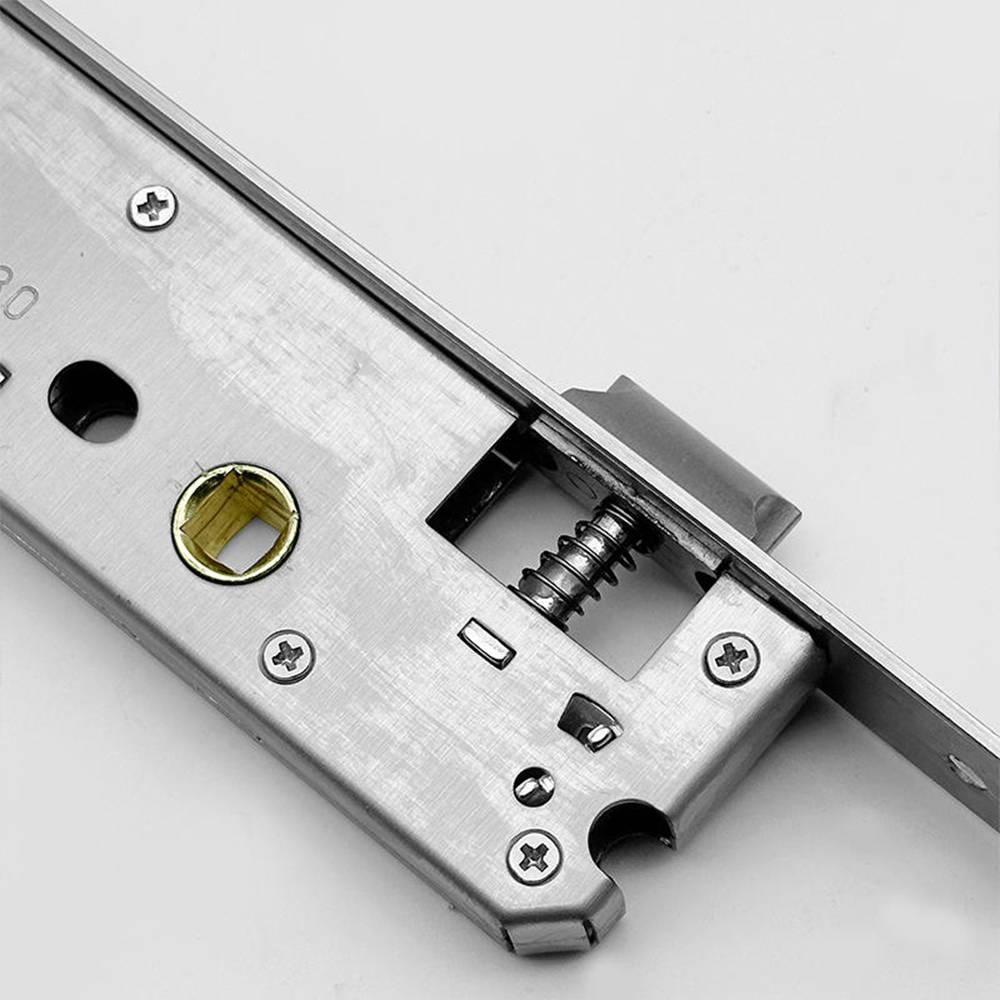
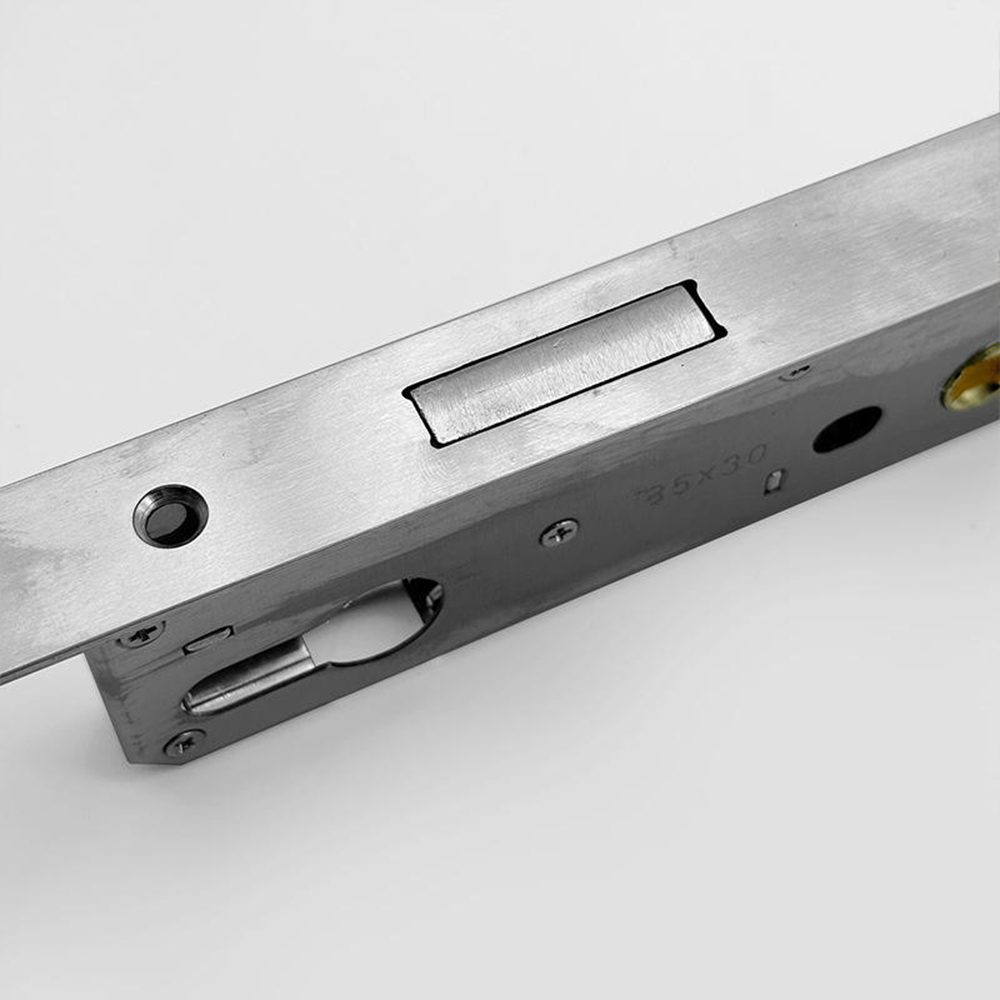
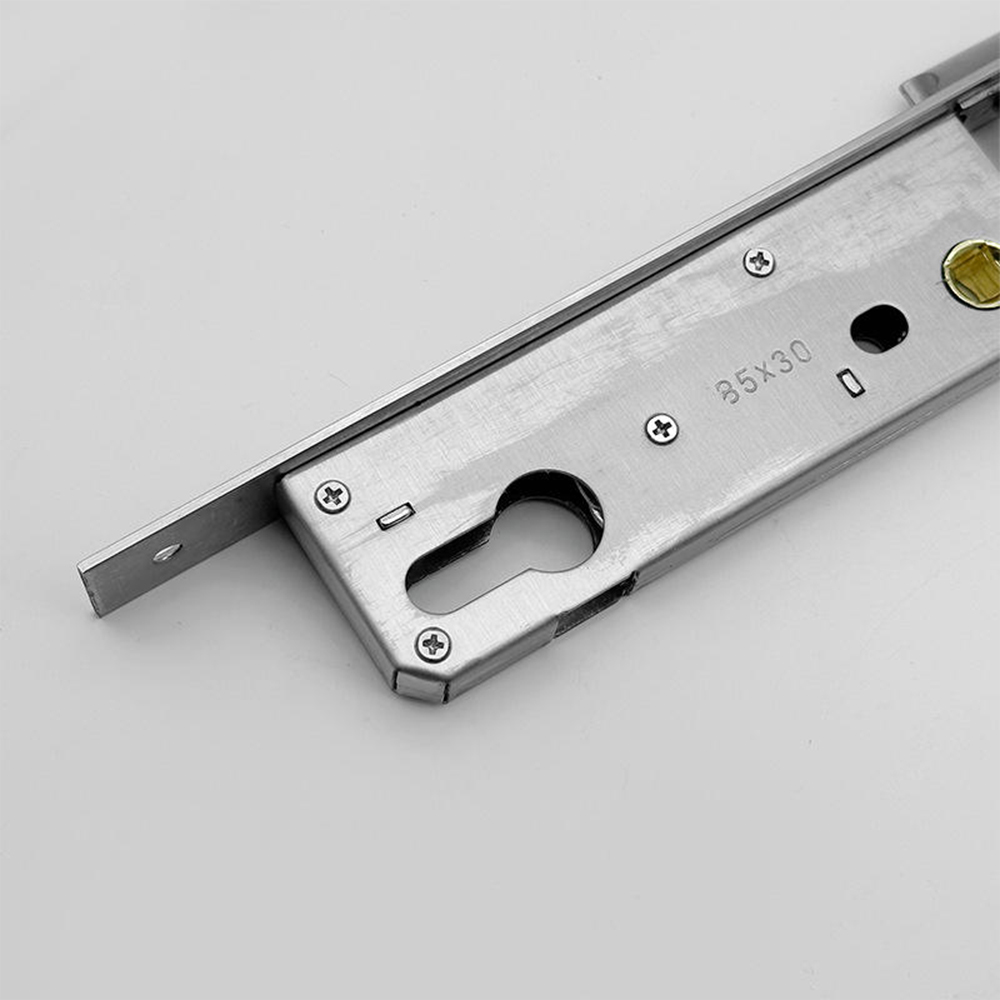
A multipoint door lock connects several locking positions to a central operating mechanism. Hooks, straight bolts, rollers, or shootbolts engage corresponding frame-mounted keepers when the lock operates.
In a typical 3 point door locking system, engagement occurs near the top, middle, and bottom of the door.
One mechanism. Several connections.
The arrangement can distribute restraint along the door edge, although not every engagement component performs the same function. Hooks are commonly used for positive mechanical retention; adjustable rollers may contribute more directly to gasket compression.
Relies more heavily on localized lock and strike reinforcement
Cylinder security
Depends on cylinder specification
Depends on cylinder or deadbolt specification
Weatherseal compression
Can improve compression consistency along the door edge
Less direct control away from the central lock
Installation
Requires accurate keeper positioning and alignment
Generally simpler
Maintenance
More linked components and adjustment points
Fewer mechanical components
Replacement compatibility
Often model- and manufacturer-specific
Common lock types generally easier to replace
Initial cost
Usually higher
Usually lower
Best application
Tall, exposed, or engineered entrance systems
Standard doors prioritizing simplicity and cost
The table highlights an important distinction: mechanical complexity can create benefits, but complexity also creates obligations.
A three-point lock that binds during normal operation is not an engineering upgrade.
It’s a service problem.
Security: Are Multipoint Door Locks Actually Safer?
Why Additional Locking Points Can Matter
Consider an attempted forced entry involving pressure applied near the upper section of a door.
With a single-point deadbolt, the primary locking connection remains near the center. The remaining resistance comes from door stiffness, hinge support, frame strength, and how the assembly distributes the applied force.
A multipoint system can introduce additional frame connections above and below that central position.
That may reduce localized separation between the door leaf and frame, especially where hook bolts engage properly reinforced keepers.
But there’s a catch.
Three locking points do not equal three times the security.
A weak cylinder can compromise an otherwise substantial mechanism. Poorly anchored keepers can defeat the advantage of multiple bolts. And a flexible door frame can undermine the performance of either system.
I would never specify a lock based solely on the number of locking points.
What the 2025 ANSI/BHMA Standard Actually Establishes
That is more useful than a manufacturer’s unsupported claim that a locking strip is heavy-duty.
The standard also recognizes that laboratory performance and real-world operation can differ because of installation conditions, door construction, maintenance, and environmental exposure.
This is the issue I would challenge during procurement.
If a supplier claims its multipoint lock is more secure, what independent test evidence supports the specific product and configuration?
Not the general product family.
Not a visually similar model.
The exact mechanism being supplied.
Real-World Evidence: Florida Approval FL14075-R5
Florida provides an instructive example of how security-related hardware approvals should be interpreted.
On September 11, 2025, the Florida Building Code product approval system approved the Securitech Trident TEL-100/200 multipoint lock, under approval FL14075-R5.
The official Florida product approval record identifies the approved component as impact resistant, suitable for use in the High-Velocity Hurricane Zone, and associated with a design-pressure rating of +100/-100 psf within its stated approval conditions.
Those are specific, verifiable performance claims.
They are not evidence that every three-point lock has equivalent capabilities.
The approval applies to a defined product and its approved installation conditions. It should not be generalized to other multipoint mechanisms or interpreted as an unrestricted water-infiltration certification.
My takeaway is simple: credible hardware specifications identify the test method, approved model, and installation limits.
Marketing adjectives don’t.
The Overlooked Security Risk: A Door That Isn’t Fully Locked
Another practical example comes from Hampshire and Isle of Wight Constabulary.
Among its recommendations was a specific reminder for residents using uPVC multipoint doors: lift the handle and lock the door with the key.
The notice did not establish that multipoint-lock misuse caused those burglaries.
Nevertheless, it illustrates an important operational distinction.
On some lift-to-lock mechanisms, closing the door only engages the latch. The additional locking points must be activated separately.
Other multipoint designs lock automatically.
The installation instructions matter, and users need to understand the mechanism they actually have.
A sophisticated lock that is never properly engaged cannot deliver its intended protection.
Weather Sealing: Where Multipoint Locks Have a Meaningful Advantage
Security tends to dominate the sales conversation.
Weather sealing deserves equal attention.
When a door closes, the weatherstripping must make sufficient contact with the surrounding frame to control unwanted air movement.
On some doors, a single central locking point provides adequate restraint.
On others, particularly taller panels exposed to wind or dimensional movement, the upper and lower corners may not maintain the same gasket contact.
A multipoint system can help by restraining the door at several positions.
Why Gasket Compression Matters
Imagine a tall exterior door using an EPDM perimeter seal.
If the door leaf bows slightly away from the frame, the central deadbolt may remain fully engaged while the upper section develops a small gap.
The lock is functioning.
The seal isn’t.
A correctly designed multipoint locking system can reduce this problem by engaging the frame at additional positions. Adjustable cams or other pull-in features may help maintain the intended gasket compression.
However, these mechanisms have limits.
A multipoint lock cannot repair a warped frame, compensate for badly positioned hinges, or restore a hardened weatherseal.
Excessive compression can also increase operating force and gearbox loading.
This is why the best multipoint lock weather sealing results come from coordinated door, frame, gasket, and hardware design.
Its broader air-sealing guidance states that weatherstripping and caulking can reduce unwanted air movement and often deliver relatively quick returns on investment.
That evidence supports the importance of controlling leakage.
It does not establish that installing a multipoint lock alone will reduce energy bills by any particular percentage.
I would ask manufacturers to demonstrate actual air-leakage and water-penetration performance on the complete doorset.
A credible sealing claim needs measured results, not a photograph of three extended bolts.
For aluminum, uPVC, and timber applications, gasket behavior must also be considered alongside material-specific geometry. CHIER’s guide to multipoint lock compatibility across different door materials explains why the same locking mechanism cannot automatically be transferred between door systems.
Multipoint Door Lock Cost: What Will You Really Pay?
Single-point locks usually cost less to purchase and fit.
They generally require less complex door preparation and fewer coordinated frame components.
Multipoint systems introduce additional hardware, including a central gearbox, extended faceplate, connecting mechanisms, locking points, and multiple keepers.
These figures are UK service-market estimates, not factory quotations or a direct comparison between complete single-point and multipoint lock installations.
A euro cylinder can also be part of a multipoint system.
That distinction matters when comparing costs.
What the figures demonstrate is the financial difference between replacing an individual component and replacing a full mechanism.
Why the Cheapest Quotation Can Become Expensive
For a door manufacturer, I would evaluate cost in four stages.
First, the hardware purchase: gearbox, locking strip, keepers, cylinder, handles, and accessories.
Second, the installation: machining, fixing, fitting, and adjustment.
Third, quality control: checking full engagement, operating force, and door alignment.
Compare total installed and serviced cost, not merely the unit price on a supplier quotation.
How to Choose the Best Door Lock for Your Application
There is no universal winner.
I would choose based on the actual engineering requirements, not the manufacturer’s preferred sales story.
When a Multipoint Door Lock Makes Sense
A multipoint locking system becomes attractive when the door is tall, exposed, or specifically designed to benefit from distributed edge restraint.
It is also worth considering when consistent gasket compression is an important design objective or when a tested complete doorset requires a particular multipoint arrangement.
The condition is that compatibility and performance must be verified.
For buyers reviewing available mechanisms, CHIER’s multipoint door lock product range provides a starting point for comparing locking configurations.
When a Single-Point Lock Is the Better Purchase
I would lean toward a single-point lock when the door is conventional, structurally stable, and does not require additional edge restraint to meet its performance requirements.
Straightforward installation and widespread repair support are meaningful advantages.
A high-quality deadbolt installed in a reinforced door and frame can be a better investment than an unverified multipoint mechanism fitted into an incompatible profile.
Five Questions I Would Ask Before Ordering
Security: What test evidence supports the exact lock or complete doorset configuration?
Sealing: Is there measured air- and water-infiltration performance for the assembled door?
Compatibility: Do the backset, PZ centers, faceplate, gearbox, and keeper positions match the door profile?
Operation: Can users engage and release the lock reliably under normal installation and operating conditions?