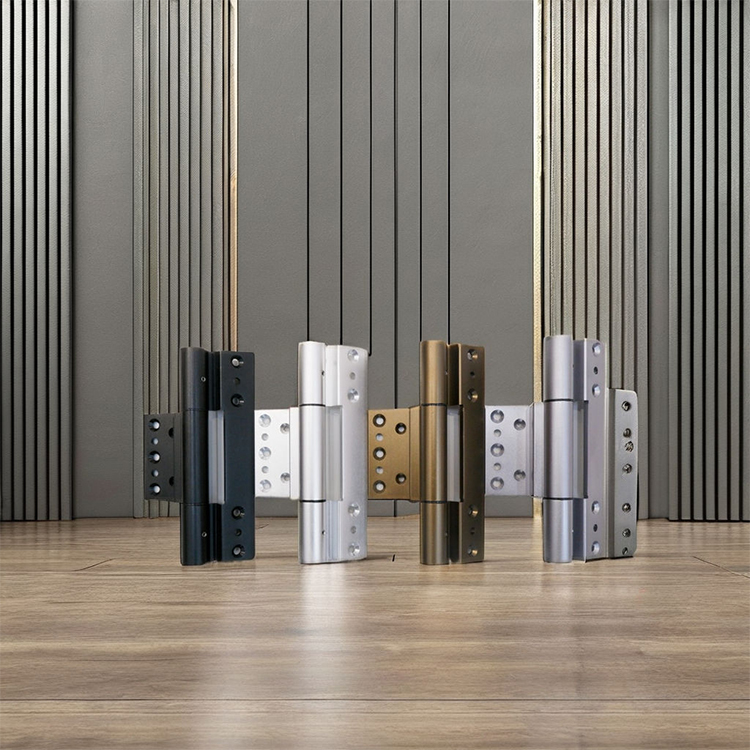
Looking for hardware solutions that meet European / American standards?
Use this guided inquiry modal to move from a generic quote form to a clearer technical conversation. Buyers can choose whether they need pricing, CAD / 3D files, or OEM / ODM support before sharing contact details.
Compatibility-first design across door / window systems
Repeatable production with clear inspection checkpoints
Documentation and change control for long-running programs
Responsive engineering support for fit and field feedback
I have seen purchasers say for ten minutes over manage finish, container printing, and a two-cent washer, after that accept an obscure joint pin material line that quietly chooses whether the finished door or window still relocates effectively after 20,000 cycles, one salted summer, and 3 hostile cleansing crews.
Why does the tiniest rotating component get the least regard?
The hard truth is straightforward: pivot pin material affects service life because the pin is the wear axis, corrosion path, load carrier, and placement witness simultaneously. When the pin is incorrect, the joint does not normally take off. It gets stiff. After that loud. After that sloppy. After that the installer blames the structure, the distributor blames the manufacturing facility, and completion individual simply states the “equipment really feels economical.”
That is why serious purchasers need to treat door and window pivots as crafted hardware, not directory filler. A hinge pin is not just a cylinder. It is a relocating bearing surface area under load, exposed to oxygen, water, salt, dust, cleansers, hand stress, sash weight, and occasionally plain abuse.
The larger deterioration problem is not fictional either. An U.S. corrosion-cost study organized by the Bureau of Transportation Stats approximated direct deterioration costs at $276 billion, or about 3.1% of united state GDP in the reference year. That is not a hinge fact, clearly. But it is the proper mental framework: deterioration is a balance-sheet occasion, not a cosmetic inconvenience.
And aeronautics provides the exact same warning in harsher language. The FAA’s corrosion support calls piano-type hinges “prime places for rust” since steel pins and light weight aluminum pivot tangs produce different steel get in touch with, while dust, salt, and wetness gather in the hinge line. Check out the FAA AIR CONDITIONER 43-4B deterioration support and inform me that hinge pins are small parts.
They are not.
Table of Contents
What Joint Pin Material In Fact Controls
Wear Resistance Is Not Just Hardness
A lot of buyers ask, “Is it stainless?”
That is a careless question. Much better questions seem like this: What quality? What firmness? What surface finish? What mating product? What lube? What expected cycle count? What corrosion examination? What takes place after the plating is scratched?
Hinge pin wear resistance depends upon several things interacting:
Pin firmness and core stamina
Surface roughness at the revolving contact area
Compatibility between pin and hinge leaf product
Lubrication retention
Lots per bearing area
Dirt and grit invasion
Deterioration items that act like abrasive powder
Rust is not passive. It is a grinding substance that the hinge creates itself.
An inexpensive layered carbon steel pin can look acceptable on the first day. Once the plating is harmed at the knuckle, hole side, or sliding get in touch with point, the subjected steel starts oxidizing. The pin surface roughens. The hinge starts to bind. More force is needed to run the sash or door. Even more force raises wear. Put on opens up clearance. Clearance adjustments placement. After that the lock, gasket, and deal with beginning spending for the joint pin decision.
Stainless-steel joint pins are popular for a reason. AISI 304/ SUS304 stainless-steel contains chromium and nickel, forming a passive oxide movie that offers far better climatic corrosion resistance than bare or inadequately layered carbon steel.
However stainless is not magic.
SUS304 can still match in chloride-heavy atmospheres. Salt air, swimming pool ambiences, de-icing residue, and rough cleansers can assault it. If the hinge design develops gaps, traps water, or sets the pin with a poor breeding steel, “stainless” becomes a marketing word with rust discolorations around it.
For seaside or chloride exposure, 316 stainless-steel often is entitled to the discussion since it has molybdenum, generally around 2– 3% Mo, which improves resistance to chloride matching. The expense is higher. Good. The field cost of callbacks is higher also.
Chier’s guide on avoiding corrosion in windows and door joints for seaside locations gets this right: you can not specify rust resistant joint pins by ambiance. You require the alloy grade, the fastener suit, the water drainage problem, and the proof behind the claim.
Legal and Safety And Security Records Already Know This
Right here is where the market obtains unpleasant. Regulatory authorities have actually currently treated joint pin deterioration as a safety and security problem in other fields.
In 2004, a Federal Aviation Management correction for ADVERTISEMENT 2004-19-10 kept in mind that specific Boeing 737 models called for recurring inspections for deterioration and cracking of horizontal stabilizer pivot hinge pins, with replacement if essential. That is not door equipment, however the physics does not respect market classification.
A 2020 FAA rule on Weatherly aircraft was even more direct: corrosion matching contributed to exhaustion breaking in wing joint brackets, and the policy needed repetitive examinations of wing hinge braces, pins, and spar structure. It approximated 50 work-hours at $85/hour, or $4,250 per evaluation cycle, for in-depth examination with the wing eliminated. The substitute setting up expense was listed at $10,500 if all components were located with corrosion.
No, a window joint is not an aircraft part. However the lesson transfers: when a turning lots point combines corrosion, exhaustion, close tolerance, and evaluation difficulty, the material choice comes to be a service-life decision.
Hinge Pin Product Comparison: What I Would Certainly Authorize, Question, or Turn down
Hinge Pin Product
Normal Use Instance
Service-Life Stamina
Failure Danger
My Blunt Authorization Sight
SUS304/ AISI 304 stainless-steel
General outside windows, damp buildings, mid-to-high top quality door and window hinges
Good corrosion resistance, practical cost, strong schedule
Pitting or tea discoloration under chloride direct exposure; galling if badly finished
Accept for regular outside and damp usage if grade certificate, cycle examination, and bolt suit are confirmed
Stainless-steel Hinge Pins Are Not Always the Winner
Stainless success numerous arguments. Not all.
For a lot of exterior home window systems, stainless-steel hinge pins make sense because rust resistance and look matter. In humid property, industrial, and light commercial usage, SUS304 typically lands in the rational middle: offered, workable, corrosion resistant, and not ridiculously expensive. Chier’s SUS304 stainless home window rubbing remain port joint is a good example of how material, motion control, and OEM/ODM repeatability need to stay in one product conversation.
But I obtain dubious when stainless is sold as a cure-all.
Stainless versus stainless can gall. Stainless in a wet gap can stain. Stainless combined delicately with aluminum can produce galvanic frustrations if drainage and seclusion are neglected. NASA takes that kind of thing seriously in aerospace hardware: NASA-STD-6012A sets corrosion-protection requirements for space trip equipment and points engineers toward control plans, verification, and material-process paperwork.
That is the professional behavior I desire in windows and door hardware too. Not aerospace documentation for every hinge. Yet the exact same reasoning: specify the atmosphere, verify the product, regulate the procedure, record the modification.
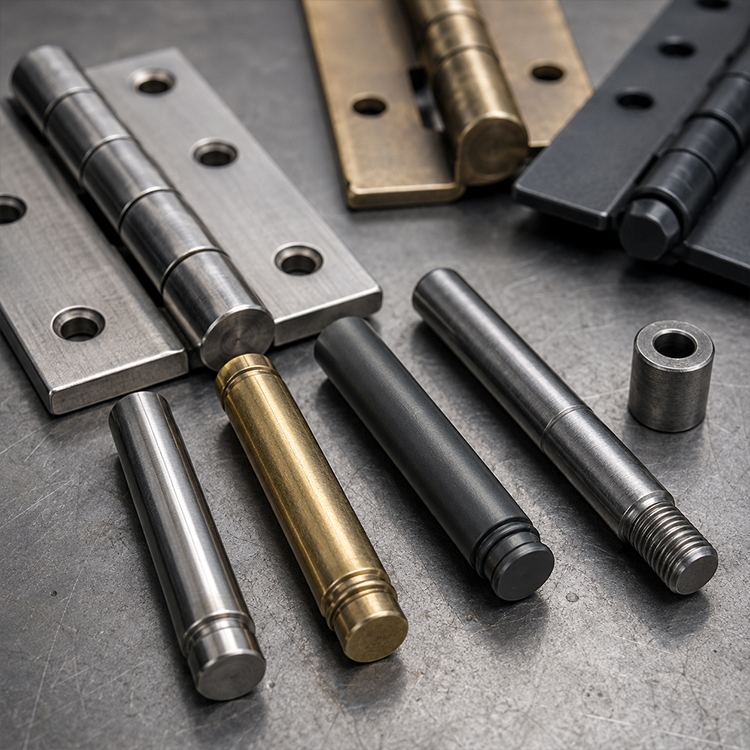
Brass vs stainless-steel joint pins is an additional area where customers oversimplify. Brass can be valuable in lighter-duty, interior, ornamental, or low-friction applications. It machines easily and does not red-rust like carbon steel. But brass is softer. In heavy doors, high-cycle accessibility panels, large sashes, or commercial hinge applications, brass can use, ovalize, or flaw faster than an appropriately chosen steel or stainless pin.
So when a person asks for the best product for hinge pins, I normally answer with a question: ideal for what failing mode?
The Service-Life Mathematics Buyers Maintain Staying Clear Of
Service life is not a sales brochure number.
A hinge that makes it through 20,000 cycles in a clean laboratory may fail early in a seaside resort hallway if salt, cleaning chemicals, and sand go into the knuckle. A joint that survives salt spray might still fall short in the area if the pin is also soft and the sash weight is wrong. A beautiful stainless pin can still be spoiled by bad setup that lots one knuckle tougher than the others.
This is where commercial hinge pin products different actual providers from quote machines.
I desire 4 sort of evidence prior to trusting a hinge pin material:
1. Product Proof
Request alloy grade confirmation, not just “stainless.” For SUS304, SS316, 17-4 PH, carbon steel, brass, or bronze, the vendor should have the ability to supply chemical structure evidence. If the manufacturing facility can not describe Cr, Ni, Mo, carbon material, plating thickness, or warmth treatment, I do not deal with the sample as proof. I treat it as cinema.
2. Use and Cycle Evidence
Cycle testing must match the real load and geometry. A little example hinge work on a pleasant examination gear does not prove a huge sash hinge will make it through real usage.
For export purchasers, Chier’s fenestration hardware compliance section is the interior page I would attach here due to the fact that joint life span have to be gone over with testing, examination records, and standards awareness, not obscure “premium quality” claims.
3. Corrosion Evidence
Salt spray screening such as ASTM B117 or ISO 9227 can be helpful, but I do not worship it. Salt spray is a screening device. It does not completely recreate UV direct exposure, drying cycles, caught dirt, building debris, cleaning up chemicals, or field misuse.
Still, I prefer to see a controlled test than a sales guarantee.
For corrosion immune hinge pins, ask for:
Examination duration and typical made use of
Before-and-after images
Red rust, white corrosion, tea discoloration, and matching notes
Whether the sample was a manufacturing component or a sleek showpiece
Whether scrapes, openings, knuckles, and reduced edges were assessed
Whether the breeding screws and hinge leaves used the same material family members
4. Production Control
One authorized example suggests almost nothing if the assembly line can drift.
I desire incoming material evaluation, batch traceability, solidity checks, surface area coating control, plating/coating process control where appropriate, final examination records, and alter notifications before alloy alternatives. Chier’s OEM/ODM equipment production abilities page is relevant right here since long-running windows and door equipment programs live or pass away on repeatable manufacturing and paperwork.
One batch can pass. Ten batches expose the factory.
The Area Failures I Count On Greater Than Sales Cases
I rely on scrapes.
I rely on corrosion at the pin end. I trust black dirt around the knuckle. I trust a joint that opens efficiently at 8 a.m. yet screeches after the sunlight heats the frame. I trust installers that say the first example felt good yet the third delivery really felt tighter.
Those signals tell you what the brochure hides.
Typical hinge pin product failure patterns include:
Red corrosion bleeding from layered carbon steel pins after coating damages
Stainless tea staining near coastal structures
Pin wear creating door sag or sash decline
Brass pin deformation under load
Galling in between improperly ended up stainless parts
Galvanic rust when stainless pins satisfy aluminum leaves without isolation or water drainage
Abrasive wear triggered by dust, salt, and rust products
Pin movement when fit, retention, or tolerance control is weak
The ugly component? Most of these failures get misdiagnosed.
A stiff deal with might start as a hinge pin problem. A poor gasket seal might begin as hinge wear. A lockcase problem may begin as sash decrease brought on by pin clearance development. That is why the very best equipment teams link hinges, locks, deals with, frameworks, and devices as a system as opposed to getting each component like a different decoration. Chier’s worldwide hardware sourcing technique content makes sense in this context because spread low-price sourcing is just how covert compatibility problems enter the job.
Just how I Would Certainly Define Joint Pin Product in an RFQ
Here is the RFQ language I would certainly use if I respected life span:
“Supplier should determine hinge pin material by quality, provide chemical structure proof, verify firmness or heat-treatment problem where suitable, state surface area finish or finish procedure, define mating hinge-leaf product, give corrosion examination information for desired exposure, offer cycle examination results under specified tons, and alert buyer before any material or procedure replacement.”
That paragraph will certainly scare off weak distributors.
Good.
You do not need the least expensive joint pin. You need the least expensive joint pin that makes it through the setting, load, cycle matter, installation reality, and inspection plan. Those are various numbers.
For normal interior hardware, layered carbon steel might be great. For humid external windows, SUS304 stainless-steel joint pins might be the functional selection. For straight coastal exposure, SS316 is worthy of a tough appearance. For high-load commercial hinges, set steel or precipitation-hardened stainless may be worth the expense. For decorative interior hinges, brass might be acceptable.
Yet if the product line states only “metal pin,” “stainless pin,” or “silver pin,” I would certainly stop the approval process.
That is not a spec. That is a future excuse.
Frequently asked questions
What is the very best joint pin product for long service life?
The very best hinge pin material is the alloy that matches the load, environment, mating fallen leave material, lubrication strategy, and expected cycle count, not merely one of the most expensive metal; for many outside home window systems SUS304 is convenient, while straight chloride exposure often presses the decision toward SS316 or specialized solidified stainless. After that, the information matter: surface finish, solidity, water drainage, bolt compatibility, and production control can alter the result greater than purchasers intend to confess.
Exactly how does hinge pin product influence resilience?
Hinge pin material impacts durability by managing wear resistance, deterioration habits, lots assistance, rubbing security, and long-term alignment at the joint’s turning axis, where small surface area damages can grow into binding, sagging, noise, seal loss, and lock imbalance across hundreds of running cycles. In plain terms, the pin determines whether the hinge maintains relocating cleanly or gradually consumes itself.
Are stainless steel hinge pins constantly much better than brass?
Stainless-steel hinge pins are normally much better for outside, moist, high-cycle, and higher-load door or window equipment, while brass pins can still operate in lighter indoor or ornamental applications where loads are modest and corrosion needs are lower. Brass is much easier to equipment and withstands red rust, but it is softer and can put on or flaw faster under genuine mechanical tons.
What creates joint pin wear resistance to drop?
Joint pin wear resistance goes down when the pin surface area becomes harsh, rusty, under-lubricated, overloaded, polluted with grit, inadequately matched to the hinge leaf material, or manufactured with the wrong hardness, covering thickness, surface area finish, or alloy quality for the real solution environment. The failure often starts undetectably, then shows up as looseness, squeaking, drag, or uneven closing.
Just how usually should commercial hinge pins be inspected?
Industrial pivot pin evaluation regularity is the planned period for examining wear, corrosion, pin movement, lubrication condition, and joint alignment based on danger, cycle count, lots, atmosphere, and safety impact rather than a fixed global schedule guideline. High-use, exterior, seaside, chemical, or safety-related hinges require much shorter assessment intervals than protected, low-cycle indoor hardware.
Your Next Step: Quit Buying the Pin Blind
If you are sourcing windows and door joints, do not approve the hinge pin product from a catalog picture, a surface sample, or words “stainless.”
Ask for the quality. Ask for the test. Request the mating material. Request the cycle information. Ask what adjustments between example and automation. Ask whether the very same pin will be used in every shipment after prices stress begins.
And if your job needs deterioration immune hinge pins, stainless-steel hinge pins, or a complete joint program with repeatable OEM/ODM controls, start the discussion with a material and service-life need, not a target cost alone.
Send out the drawing. Send the direct exposure problem. Send out the expected cycle count. Then make the vendor verify the hinge pin can survive the job.