Looking for hardware solutions that meet European / American standards?
Use this guided inquiry modal to move from a generic quote form to a clearer technical conversation. Buyers can choose whether they need pricing, CAD / 3D files, or OEM / ODM support before sharing contact details.
Compatibility-first design across door / window systems
Repeatable production with clear inspection checkpoints
Documentation and change control for long-running programs
Responsive engineering support for fit and field feedback
The Lock Is Not the Trim. It Is the Pressure System.
Locks get ignored.
That is the first mistake I see in door and window specifications: buyers obsess over glass thickness, U-factor, thermal breaks, powder coating, and handle color, then treat the locking system like a late-stage accessory that only needs to “feel solid” in the showroom. Why?
Here is the uncomfortable truth: Multi-Point Locks do not make a bad door good, but they can expose whether the whole door system was engineered seriously. A single latch pulls at one point. A multi-point locking system pulls at several points. That difference matters for air tightness, forced-entry resistance, gasket life, and user confidence.
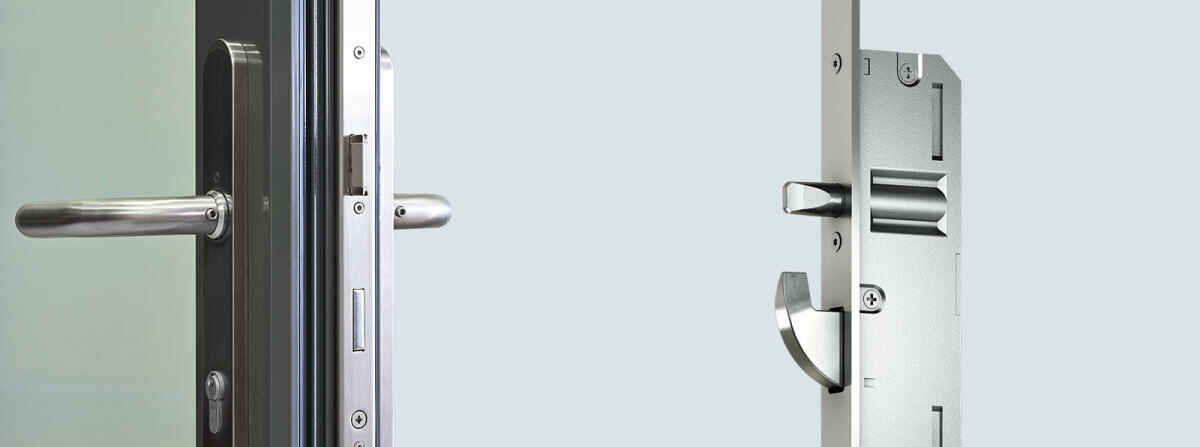
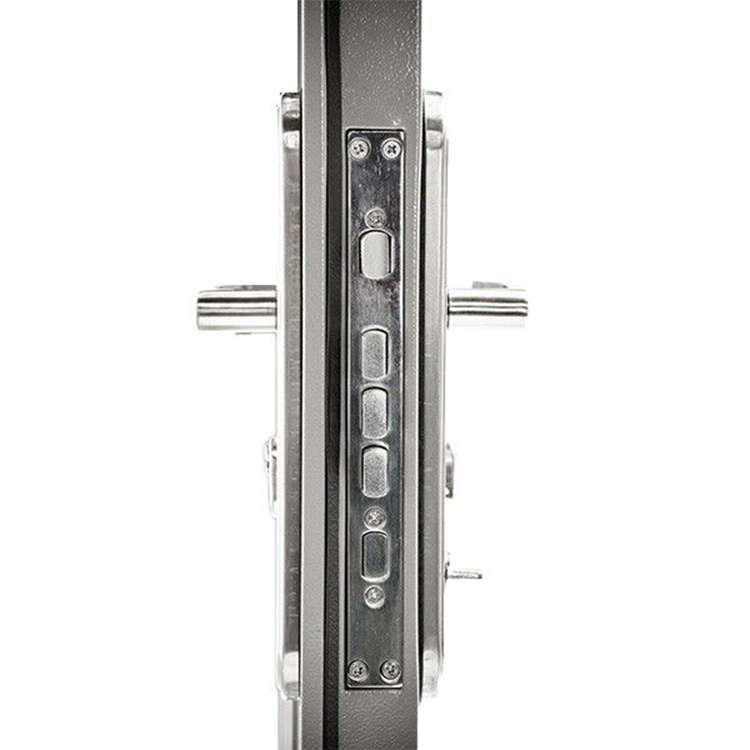
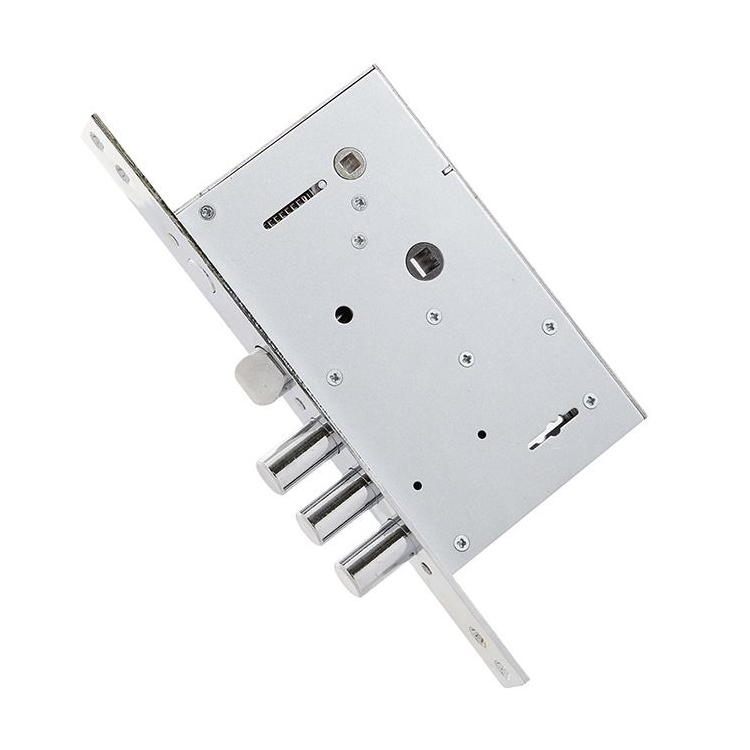
A multipoint door lock is really a pressure-management device. The hooks, rollers, mushroom cams, shoot bolts, gearbox, faceplate, keepers, and handle torque all work together to pull the door leaf or window sash into the frame. If that compression is uneven, the gasket leaks. If the keepers are weak, the door pries open. If the gearbox is cheap, the user gets friction, noise, and false locking.
The U.S. Department of Energy says air leakage through and around windows, doors, and skylights is one of the ways these products gain and lose heat, and it defines air leakage as movement around the product under pressure difference in its energy performance ratings guidance. That one line should make hardware buyers nervous. It means the lock is part of the energy story, not just the security story.
And no, more points do not automatically mean better performance.
A sloppy 5-point lock can lose to a disciplined 3-point locking system if the 3-point system has better keeper alignment, stronger screws, smoother gearbox travel, and more consistent gasket compression. I would rather buy boring proof than flashy point count.
Why Air Tightness Fails at the Door Edge
The air leak usually has a shape.
It is not always a giant visible gap; more often, it is a thin path at the latch side, the top corner, the threshold, or the meeting stile where the gasket is barely kissed instead of compressed. That is why air tight door locks are not about “locking harder.” They are about closing evenly.
The U.S. Department of Energy’s air sealing guidance tells homeowners and contractors to caulk and weatherstrip leaking doors and windows, test home air tightness, and replace weak exterior door bottoms and thresholds. That is good advice. But I’ll add the part that hardware catalogs avoid: if the door panel is tall, flexible, exposed to wind, or paired with compression seals, weatherstripping alone may not fix poor pull-in force.
The gasket can only work if the sash meets it.
A multi-point locking system helps by distributing pull-in force across the height of the door or sash. Instead of asking one latch to control a 2,100 mm door edge, a 3-point locking system can pull at the top, center, and bottom. On taller exterior doors, aluminum profiles, terrace doors, and high-performance window systems, that difference shows up as less corner leakage, less rattle, and fewer “the door feels drafty” complaints.
This is where energy-efficient door and window hardware becomes more than a sales phrase. The lock, hinge, gasket, frame, threshold, and keeper are one assembly. Treat them separately and you are basically inviting callbacks.
Table of Contents
Security: The Hard Truth About Multi-Point Lock Security
Burglars do not read brochures.
They test weak edges, soft frames, loose strikes, exposed cylinders, rotten screws, bad alignment, and users who think the handle lift means “locked” when the key or cylinder never fully secured the system. That is why multi-point lock security depends on the whole assembly, not just the lock strip.
The FBI’s 2024 national crime release reported data on more than 14 million criminal offenses from agencies covering 95.6% of the U.S. population through UCR reporting, according to the FBI 2024 Reported Crimes in the Nation statistics. I am not using that number to scare people into buying hardware. I am using it to say this: physical security still matters, and entry points still deserve adult-level engineering.
Security standards say the same thing in a drier voice. ASTM F476-23 covers swinging door assemblies and includes components such as the hinge, lock, door, strike, and jamb. That is the right mindset. A lock is not secure in isolation. It is secure only when the frame and fixing strategy can hold the load.
The UK’s Approved Document Q also points in the same direction: doors and windows in new dwellings must resist unauthorized access and be both sufficiently robust and fitted with appropriate hardware. Again, not “nice handle.” Appropriate hardware.
So when someone asks me for the best multi-point locks for security, I do not start with the catalog. I start with the attack path.
Can the hooks stay engaged under pry load? Are the keepers reinforced? Is the cylinder protected against snapping, drilling, and manipulation? Are screws biting into structure or just thin profile walls? Does the user clearly know when the system is fully locked? If not, the system is theater.
The Comparison Nobody Puts in the Sales Brochure
Here is the plain version.
System Type
Air Tightness Behavior
Security Behavior
Where It Works
Where It Fails
Single-point latch
Pulls mainly at the center; top and bottom corners may relax
Force concentrates around one strike
Interior doors, low-risk openings, small panels
Tall exterior doors, windy sites, warped slabs
3-point locking system
Pulls top, middle, and bottom into the gasket
Better pry resistance when keepers and frame are reinforced
Bad app design, weak mechanical lock body, unclear lock state
The table is not polite because the market is not honest enough.
A multi-point locking system is better only when the profile, gearbox, locking points, keepers, gasket stack, hinges, screws, coating, and user operation are all designed together. That is why I would send an OEM buyer to review multi-point lock systems engineering resources before approving a lock body from a sample case.
The Energy Claim Needs Numbers, Not Poetry
Energy claims attract nonsense.
The cleanest public number is from ENERGY STAR: homeowners can save an average of 15% on heating and cooling costs, or 11% on total energy costs, by air sealing and adding insulation in specified areas, according to ENERGY STAR’s seal and insulate guidance. That does not mean a lock alone creates a 15% saving. Anyone saying that should be asked to show test data.
But it does mean air leakage is financially real.
NIST’s NISTIR 7238 study on commercial building envelope air tightness modeled three nonresidential buildings in five U.S. cities and found predicted annual heating and energy cost savings from improved air tightness ranging from 2% to 36%, according to the NIST publication. That range is wide because climate, baseline leakage, building type, and exposure matter.
Another federal research paper hosted by OSTI reported that air leakage represents about 4 quadrillion Btu annually in the U.S. and, in its demonstration, automated air sealing reduced air leakage by about 52%, according to the Oak Ridge National Laboratory air sealing study. Again, this is not a lock test. But it proves the bigger point: leakage is measurable, expensive, and worth controlling.
That is why the phrase “energy efficient door locking system” should not be marketing fluff. It should mean the lock supports measured closure performance by helping the door or sash maintain gasket contact over cycles, temperature swings, and normal abuse.
For buyers working with aluminum systems, aluminum fenestration multi-point lock systems deserve special attention because slim profiles, thermal breaks, narrow hardware cavities, and exposed climate conditions leave less room for lazy engineering.
What I Would Demand Before Approving a Multipoint Door Lock
I would ask for drawings first.
Not the glamour render. Not the showroom photo. I mean the faceplate length, backset, PZ center, gearbox material, follower size, locking-point throw, keeper adjustment range, screw size, corrosion finish, cycle-test target, operating torque, and tolerance stack.
Then I would ask the supplier one ugly question: what happens when the installer is 2 mm off?
That question separates serious manufacturers from catalog traders. Real doors move. Aluminum expands. Timber cups. Gaskets age. Powder coat thickness varies. Hinges sag. Users slam doors. Children lift handles halfway. Coastal salt eats weak plating. Cold weather stiffens seals.
A serious lock must survive that world.
For OEM and project buyers, door and window hardware design should be reviewed as a system category, not as isolated SKUs. The handle affects torque. The hinge affects alignment. The lock box affects durability. The gasket affects operating force. The keeper affects both sealing and security.
And here is my bias: I prefer adjustable keepers, clear lock-state feedback, corrosion-resistant materials such as 304 or 316 stainless steel where exposure demands it, PA66 or POM components only where load and temperature allow, and coatings proven beyond pretty salt-spray claims. In coastal work, I get suspicious below 240 hours neutral salt spray unless the application is mild. In premium export programs, I want the test route written down before the first container ships.
The User Is Part of the Locking System
People misuse hardware.
They lift the handle halfway. They pull before turning the key. They lock while the sash is not seated. They ignore resistance because the building is noisy, the hallway is dark, or they are holding groceries. Then the brand blames “installation.”
Sometimes that is true. Often, it is lazy design.
A multi-point lock that depends on perfect user behavior is not premium. It is fragile. The better approach is explained well in misuse-tolerant multi point lock design: clear feedback, forgiving sequencing, low-force operation, and hardware that does not let users believe the system is secure when one or more points failed to engage.
This is especially important for senior housing, schools, hotels, rental apartments, hospitals, and coastal villas where doors see thousands of cycles from people who did not attend the installer’s training session.
If your best lock requires a lecture, it is not the best lock.
Air Tight Door Locks Are Really Gasket-Control Devices
The phrase “air tight door locks” sounds odd, but the intent is valid.
The lock itself does not insulate. It does not lower U-factor like better glazing. It does not replace EPDM, TPE, silicone, foam, a thermal break, or a proper threshold. What it does is enforce contact pressure. That pressure lets the gasket do its job.
A keeper should not merely “catch” the hook or roller. It should guide engagement, tolerate small installation drift, and maintain pull-in without shaving hardware or overloading the handle.
Gearbox Strength
A gearbox with weak internals turns a multi-point lock into an expensive complaint generator. Look for cycle-test evidence, smooth travel, and realistic torque data.
Gasket Compression
Too little compression leaks. Too much compression creates hard operation, warped panels, latch bounce, and users who stop locking the door properly.
Cylinder Protection
Security dies fast when the cylinder is exposed. Multi-point engagement does not help much if the attacker can snap, drill, or manipulate the cylinder quickly.
Installation Discipline
A good lock installed badly becomes a bad lock. The frame must be square, the keepers must align, and the screws must bite into real structure.
FAQs
What are multi-point locks?
Multi-point locks are door or window locking systems that use one handle, cylinder, or gearbox action to engage several locking points along the frame, spreading pull-in force so the leaf or sash compresses the gasket more evenly while resisting forced movement better than a single latch. They are used in exterior doors, aluminum fenestration, terrace doors, casement windows, and high-performance building envelopes.
How do multi-point locks improve air tightness?
Multi-point locks improve air tightness by pulling the door or sash into the gasket at several points, which reduces uneven seal contact at the top, middle, bottom, and lock-side corners where wind pressure, bowing, installer error, and gasket aging often create measurable leakage paths. They do not replace weatherstripping; they help weatherstripping stay compressed.
Are multi-point locks more secure than single-point locks?
Multi-point locks are usually more secure than single-point locks when the frame, keepers, screws, cylinder, hinges, and user operation are engineered as one tested assembly, because pry force is distributed across several engagement zones rather than concentrated at one strike. A poor multi-point lock, however, can still fail through weak keepers, bad alignment, or cylinder attack.
What is a 3-point locking system?
A 3-point locking system is a multipoint door lock arrangement that typically secures the opening at the top, center, and bottom through one operating action, giving better edge control and gasket compression than a single latch while avoiding some friction and complexity of higher-point systems. It is often a practical choice for exterior residential and light commercial doors.
What are the best multi-point locks for security?
The best multi-point locks for security are the systems matched to the exact door profile, frame reinforcement, keeper design, cylinder protection, corrosion exposure, egress requirement, cycle demand, and installation tolerance of the project, not simply the locks with the highest point count. For real projects, ask for test evidence, drawings, torque data, and failure-mode details.
Final Thoughts: Stop Buying Locks Like Decorative Hardware
Here is my position.
If air tightness and security both matter, the lock must be specified early, tested as part of the assembly, and judged by compression behavior, forced-entry resistance, corrosion survival, cycle life, and user clarity. Not by point count. Not by handle shine. Not by a supplier saying “high security” with no numbers behind it.
So do this before your next door or window program moves to production: audit the whole opening, list the leakage and attack paths, verify the gasket compression strategy, check the keeper reinforcement, demand drawings, and compare the lock against real standards such as ASTM F476-23, ANSI/BHMA A156.36-2020, UL 437 where cylinder security applies, and PAS 24 where the market requires it.
Then talk to a hardware partner that can discuss the system, not just the SKU.
For OEM buyers, door brands, and project specifiers, start with Chier’s multi-point lock systems engineering and connect the lock decision to air sealing, frame design, user behavior, and security testing before approving the final hardware package.