Looking for hardware solutions that meet European / American standards?
Use this guided inquiry modal to move from a generic quote form to a clearer technical conversation. Buyers can choose whether they need pricing, CAD / 3D files, or OEM / ODM support before sharing contact details.
Compatibility-first design across door / window systems
Repeatable production with clear inspection checkpoints
Documentation and change control for long-running programs
Responsive engineering support for fit and field feedback
I have seen too many aluminum window handles approved because the sample looked clean on a conference table, while nobody asked what alloy was used, what pretreatment happened before coating, whether the spindle was stainless steel or plated carbon steel, or how the handle would behave after three summers of UV, salt air, sweaty hands, cleaning chemicals, and sash misalignment. Why are we still pretending “aluminum” is a complete material specification?
Here is the hard truth: aluminum window handles are not just handles. They are the visible control point for the whole window system. They carry torque, signal lock status, fight corrosion, survive repeated cycling, and influence whether a user actually closes the window correctly.
The U.S. Consumer Product Safety Commission reported that an estimated 5,600 children aged 12 and under were treated in emergency departments in 2024 after falling from a window, with about one in three hospitalized, according to its 2026 Window Safety Week release. No, a handle alone does not solve window safety. But a sloppy handle that gives poor lock feedback, weak engagement, or confusing operation is part of the problem.
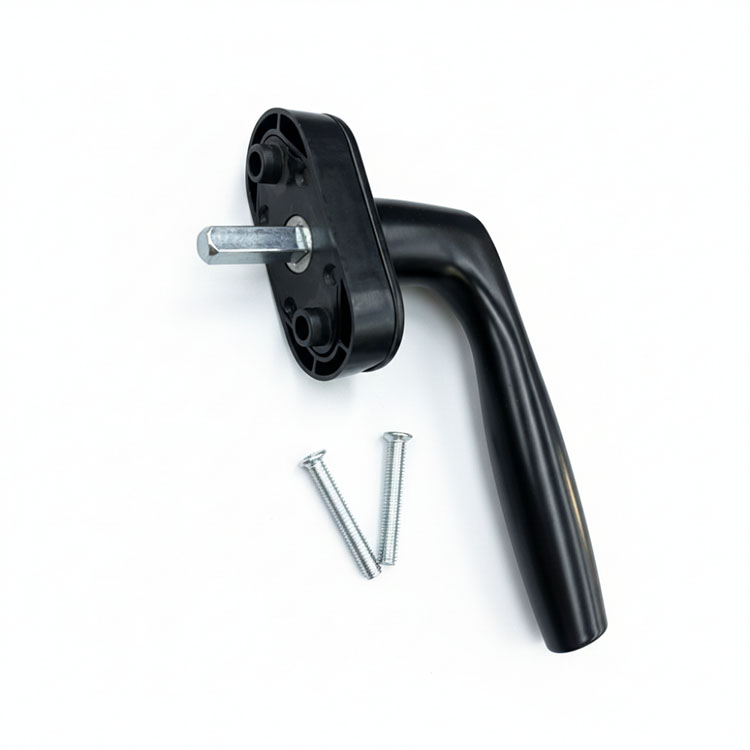
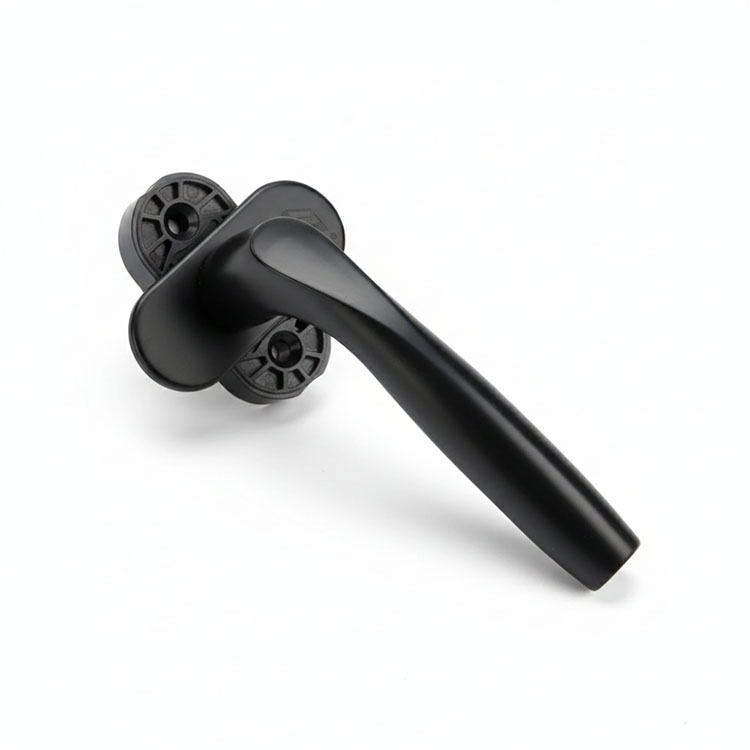
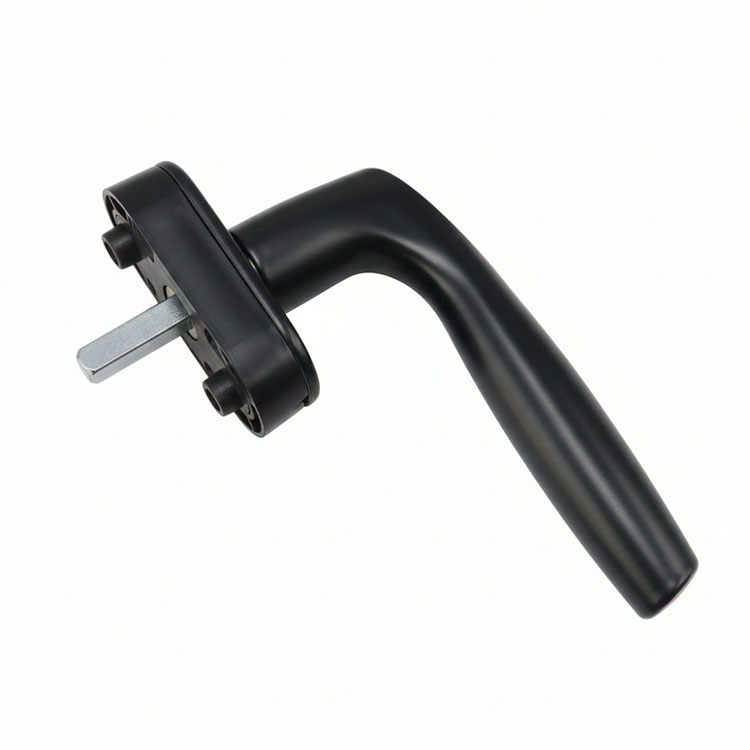
If you are sourcing from a serious OEM channel, start by comparing the actual aluminum window handle product range instead of judging one isolated photo. A handle material decision only makes sense when it is tied to opening type, spindle system, lock logic, finish grade, climate exposure, and annual volume.
Table of Contents
Aluminum Alloy Is Not One Material
“Aluminum alloy” sounds precise. It is not.
The material conversation should start with the difference between extruded aluminum, die-cast aluminum, machined aluminum, and hybrid assemblies using stainless steel, zinc alloy, nylon bushings, steel springs, or brass inserts. I distrust any supplier quote that says only “aluminum alloy” without naming the process and the controlled properties.
The NIST-hosted ASM chapter on aluminum and aluminum alloys explains why aluminum is attractive in the first place: density around 2.7 g/cm³, roughly one-third of steel, plus a protective aluminum oxide film, Al₂O₃, that helps block progressive oxidation. That sounds comforting. It should not make you lazy.
Because chloride exposure, trapped moisture, coating damage, bad pretreatment, and galvanic pairing can still punish aluminum hardware.
For casement and tilt-turn systems, I usually think in four material buckets:
Material Option
Where It Works
Where It Fails
My Opinion
6063 aluminum alloy
Clean profiles, extrusion-based handles, good anodizing behavior
Poor choice if the design needs very thin high-load sections
Good default for refined architectural hardware
6061 aluminum alloy
Higher strength needs, machined parts, heavier-duty use
More expensive machining path; finish consistency must be controlled
Useful, but often over-specified for ordinary handles
Fine if the factory controls process; risky if they hide the grade
Zinc alloy / Zamak
Sharp casting detail, indoor or light-duty handles
Heavier, more corrosion-sensitive if finish fails
Overused in cheap programs pretending to be premium
304 / 316 stainless steel
High wear points, spindles, screws, coastal fasteners
Higher cost, harder color matching, galvanic issues if paired badly
Excellent for hidden strength, not always best for the visible grip
This is why I like product pages that give buyers a practical starting point, such as a custom OEM aluminum alloy casement window handle with OEM/ODM positioning. But the page is only the start. The RFQ still needs the alloy, finish, spindle spec, salt-spray expectation, test method, drawing tolerance, and packaging protection.
Corrosion Resistance Is a System, Not a Slogan
Corrosion lies quietly.
The ugliest warranty claims do not usually begin with a dramatic fracture; they begin with bubbling paint around a screw hole, white corrosion creep under a coating edge, black staining near a mixed-metal joint, or a customer saying the handle “feels rough” after one wet season. How many factories will admit that before you pay the deposit?
The National Institute of Standards and Technology documented a real-world corrosion lesson in its report on the U.S. Botanic Garden Conservatory, where after about 60 years of use, metal deterioration was tied heavily to wet areas, and aluminum alloy 17 ST showed exfoliation corrosion in high-moisture conditions, as described in the NIST corrosion resistance report. That case is not about window handles specifically. It is more useful than that. It proves the larger point: moisture traps beat optimistic specifications.
For aluminum window handles, corrosion resistance depends on the whole stack:
Alloy and casting discipline
A controlled aluminum alloy with stable chemistry beats a mystery “ADC-style” casting every time. For die-cast parts, porosity control matters because pores become coating weak points. For extruded or machined parts, surface preparation and edge geometry matter because sharp corners lose coating thickness first.
Pretreatment before coating
A beautiful powder coat over weak pretreatment is lipstick on a bad audit. Chromate conversion, chrome-free conversion, cleaning, rinsing, drying, and line control decide whether the finish actually bonds.
Coating grade
The Fenestration and Glazing Industry Alliance identifies AAMA 2603-22, AAMA 2604-22, and AAMA 2605-22 as a good-better-best set of coating standards for organic coatings on aluminum extrusions and panels in its updated FGIA standards notice. For premium exterior aluminum window handles, I would rather pay for evidence tied to AAMA 2604 or AAMA 2605 logic than accept a vague “outdoor powder coating” claim.
Fastener pairing
This is where cheap programs embarrass themselves. A decent aluminum handle paired with poor screws can still stain, loosen, or seize. In coastal work, I want at least 304 stainless for many fastener positions, and I will consider 316 stainless near salt spray, depending on the system design.
Drainage and contact points
If water sits behind the handle base, the finish is already on trial. Gaskets, escutcheon geometry, screw bosses, and frame contact areas need inspection before approval.
Stainless Steel vs Aluminum Window Handles: The Wrong Debate
People ask, “Which is better, stainless steel or aluminum window handles?”
Bad question.
The better question is: which material should carry which job inside the assembly? Aluminum is usually excellent for the visible handle body because it is light, formable, finish-friendly, and cost-efficient at OEM volume. Stainless steel is often better for spindles, screws, springs, pins, and thin wear points where abrasion and load concentration matter.
The U.S. Geological Survey’s 2026 aluminum summary reported U.S. primary aluminum production value at about $2.6 billion in 2025, with the average annual U.S. market price up 39% from 2024; it also listed building as 13% of domestic aluminum consumption. Material cost is not background noise. It hits BOM decisions fast.
So yes, stainless steel can be better. It can also be a lazy upgrade that raises cost without fixing bad geometry, poor compression balance, or weak coating.
For a practical modern product line, I would pair a clean aluminum body with properly specified stainless or treated steel internal elements. If the design target is slim, black, and architectural, a slim black aluminum casement window handle lock makes more sense than trying to force every visible component into stainless steel.
The Specification Table I Would Actually Use
Do not approve handles by finish name alone. Approve them by exposure, operating force, finish evidence, and material pairing.
Project Condition
Recommended Body Material
Hidden Components
Finish Direction
What I Would Reject
Interior residential aluminum windows
6063 aluminum or controlled die-cast aluminum
Zinc-plated steel may pass if dry and protected
Powder coat or anodizing
Mystery alloy, thin coating, no cycle test
Standard exterior residential
Aluminum alloy body
Stainless spindle/screws preferred
AAMA 2603/2604 logic, depending on market
“Outdoor powder” with no test reference
Coastal residential
Aluminum alloy with stronger pretreatment
304 or 316 stainless fasteners
AAMA 2604/2605 logic, sealed base detail
Zinc alloy body with weak coating
Commercial facade / hotel
Extruded or high-control cast aluminum
Stainless steel wear parts
AAMA 2605-level thinking, PVDF where relevant
Cosmetic sample approval without assembly testing
High-use public buildings
Aluminum body with reinforced drive parts
Stainless spindle, robust springs, tested transmission
Abrasion-resistant finish, strict QC
Tiny minimalist handles with poor torque leverage
Budget window line
Standardized aluminum body
Simplified but documented components
Fewer colors, stable process
Too many SKUs and finish variants
I have a blunt sourcing rule: budget programs should reduce variation, not reduce evidence. If you need that logic tied to purchasing decisions, read this guide on premium vs budget window hardware sourcing. It says the quiet part out loud: cheap complexity is still expensive.
How to Choose Aluminum Window Handles Without Getting Played
A supplier who cannot answer material questions before sampling will not magically become transparent after mass production.
Ask for the boring documents. Then ask again.
My RFQ checklist
Exact aluminum alloy or casting standard
Manufacturing process: extrusion, die casting, machining, forging, or mixed process
Finish system: powder coat, anodizing, PVDF, electrophoresis, or plated element
Pretreatment method and coating thickness target
Spindle material and dimensions
Screw and pin material, including stainless grade if used
Cycle-test expectation, operating torque, and failure definition
Corrosion test reference, such as ASTM B117 or ISO 9227 where appropriate
Packaging method to prevent coating rub during shipment
Approved sample retention and color tolerance, such as ΔE limits
Traceability method by batch, PO, or production date
Warranty assumptions by climate category
For modern systems, material selection also has to respect shape and hand feel. A handle that looks “minimal” but forces the user to over-torque the sash is not modern; it is badly proportioned. This is where the thinking in modern aluminum window handle design matters.
And comfort is not decorative. If the sash is heavy, the gasket compression is high, or the user has to reach across a countertop, the handle material and lever geometry must work together. The guide on window hardware design for daily comfort is worth linking into any buyer training document because it treats force, feedback, and opening logic as engineering questions, not styling notes.
Compliance Evidence Beats Supplier Confidence
Most suppliers sound confident. That costs nothing.
When the project touches regulated markets, hurricane zones, commercial buildings, school facilities, hospitality programs, or branded private-label products, you need proof that the handle sits inside a compliant assembly. Florida’s product approval statute, for example, recognizes evidence paths such as a certification mark or listing, an approved laboratory test report, a product evaluation report, or a signed-and-sealed professional evaluation under Florida Statute 553.842.
That legal language should scare casual buyers a little. Good.
If your material selection guide ignores compliance, it is incomplete. Use a structured review like this hardware compliance guide for aluminum windows and doors before approving substitutions. A handle body change from one die-cast alloy to another may look harmless in a showroom, but it can change screw retention, torque behavior, finish adhesion, and long-term field risk.
FAQs
What is the best material for aluminum window handles?
The best material for aluminum window handles is usually a properly specified aluminum alloy body, often 6063 or a controlled die-cast alloy, paired with the right spindle, fasteners, surface treatment, and finish system for the window’s exposure class, opening force, and warranty target. For most OEM window programs, the winning answer is not one metal; it is a controlled material stack.
A residential interior handle may perform well with a simple powder-coated aluminum body. A coastal casement handle may need stronger pretreatment, better coating, stainless fasteners, and tighter base sealing. I would not approve any “best material” claim without knowing the climate, opening type, sash size, cycle requirement, and finish expectation.
Are aluminum alloy window handles corrosion resistant?
Aluminum alloy window handles are corrosion resistant when the alloy selection, pretreatment, coating thickness, fastener pairing, and drainage environment are matched to service conditions, because bare aluminum depends on a thin Al₂O₃ film that can be attacked by chloride, trapped moisture, and damaged finishes. The real risk is not aluminum itself; it is careless specification.
For coastal or high-humidity markets, ask for finish evidence, pretreatment details, stainless fastener grades, and salt-spray or cyclic corrosion assumptions. Also inspect the handle base. If moisture gets trapped behind the escutcheon, even a decent coating can become a warranty argument.
Stainless steel vs aluminum window handles: which is better?
Stainless steel is better than aluminum window handles when the design needs maximum scratch resistance, high chloride exposure tolerance, or thin structural sections with high load, while aluminum is better when the project needs lower weight, die-cast flexibility, color-matched finishes, and better cost control. Most serious systems use both materials strategically.
I like aluminum for visible handle bodies and stainless steel for spindles, screws, pins, and high-wear internal elements. Full stainless handles can make sense in harsh marine or institutional applications, but they can also be an expensive way to avoid fixing weak coating, poor geometry, or bad supplier controls.
How do I choose aluminum window handles for coastal projects?
To choose aluminum window handles for coastal projects, specify a controlled aluminum alloy body, verified pretreatment, AAMA 2604 or AAMA 2605-level finish thinking, stainless steel fasteners, protected screw bosses, sealed contact surfaces, and documented corrosion testing assumptions before approving the sample. Salt air punishes vague purchasing language fast.
I would also request a cross-section of the coating system, batch traceability, packaging controls, and photos after corrosion exposure. Coastal projects are where cheap substitutions become public. A supplier who refuses to name the alloy, fastener grade, or coating process should not be treated as a coastal hardware partner.
What should OEM buyers ask suppliers before ordering aluminum window handles?
OEM buyers should ask suppliers for the exact alloy, production process, finish system, pretreatment method, spindle material, screw grade, cycle-test target, corrosion-test reference, drawing tolerance, packaging method, and batch traceability before ordering aluminum window handles. A good supplier can answer these questions before tooling or volume negotiation.
I would also ask how substitutions are controlled. Many failures begin when the approved sample used one alloy, one screw, one coating line, and one spring, while mass production quietly changed two of those details. Put substitution control in writing.
Send the Supplier a Real Material Question
Do not ask, “Can you make aluminum window handles?”
Ask this instead: “Can you build this handle with a named aluminum alloy, documented pretreatment, specified coating grade, stainless fastener package, cycle-test target, corrosion-test assumption, approved drawing tolerance, and batch traceability for our market?”
That question separates factories from catalog sellers.
If you are sourcing aluminum window handles for a real product line, start with the application: casement, tilt-turn, sliding, lift-slide, residential, commercial, coastal, or budget. Then lock the material stack before you approve the finish sample. And if the supplier cannot explain alloy, coating, spindle, and compliance evidence in plain technical language, walk away before the first container teaches you the lesson at full price.