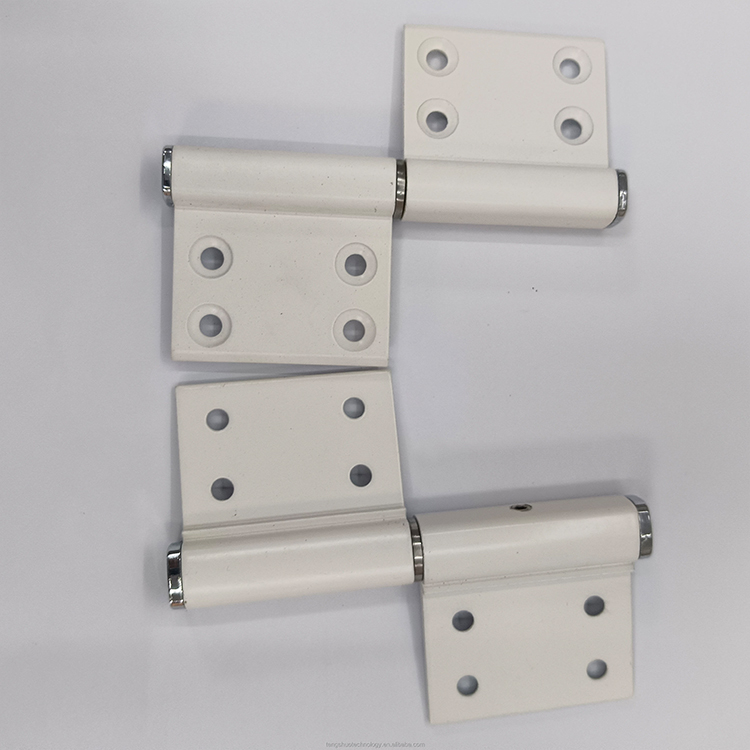
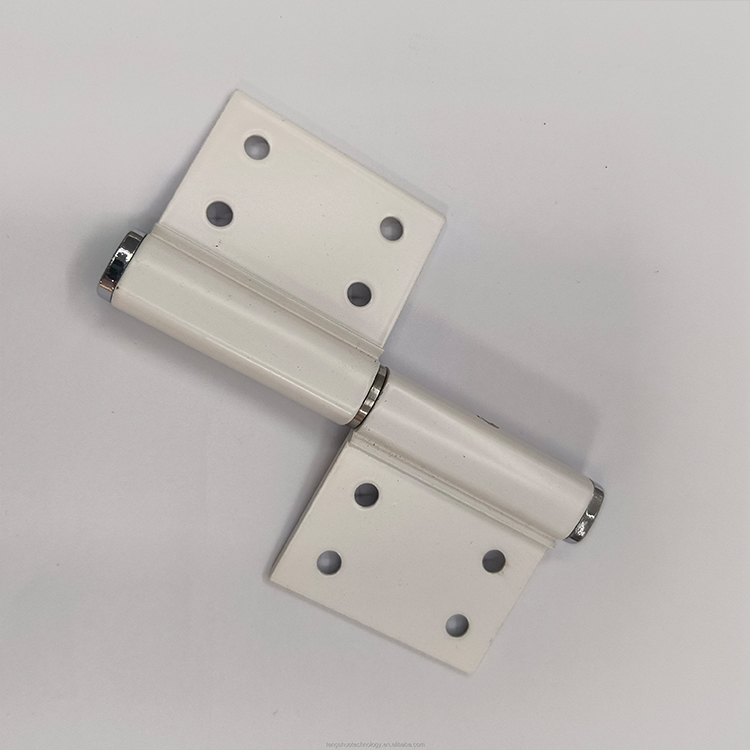
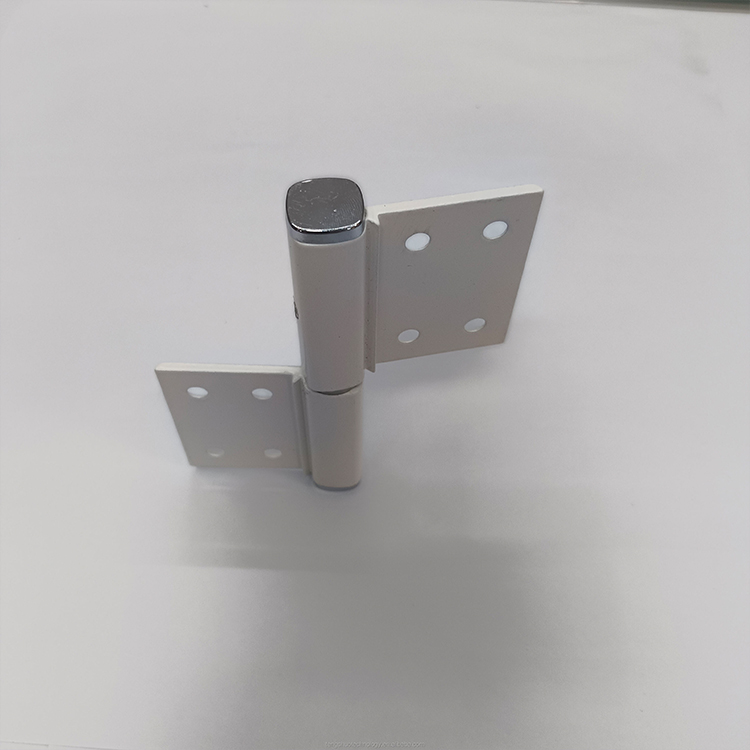
Looking for hardware solutions that meet European / American standards?
Use this guided inquiry modal to move from a generic quote form to a clearer technical conversation. Buyers can choose whether they need pricing, CAD / 3D files, or OEM / ODM support before sharing contact details.
Compatibility-first design across door / window systems
Repeatable production with clear inspection checkpoints
Documentation and change control for long-running programs
Responsive engineering support for fit and field feedback
They sit neatly on a sample board, swing smoothly during a five-minute inspection, and survive a sales presentation without complaint, yet none of that proves they can carry a fully glazed sash through thousands of cycles, coastal humidity, profile movement, rushed installation, and repeated lock engagement.
So why do buyers still approve them by appearance?
Here is my blunt view: PVC door and window hinges should be specified as structural operating hardware, not decorative accessories. A hinge carries load, controls movement, protects gasket compression, and keeps the locking system aligned. When it is wrong, the handle becomes harder to operate, the sash begins to drop, the weather seal leaks, and the gearbox absorbs forces it was never designed to carry.
That failure chain is expensive. It is also predictable.
One terminology point matters before we go further. Most rigid plastic window and door profiles are technically uPVC, meaning unplasticized polyvinyl chloride. PVC has the repeating chemical unit (C₂H₃Cl)n; “unplasticized” indicates that the rigid profile is produced without the plasticizers used to make flexible PVC. Buyers nevertheless search for both “PVC hinges” and “uPVC hinges,” so both terms remain commercially relevant.
A Hinge Is a Load Path, Not a Catalogue Accessory
The first job of PVC door and window hinges is to transfer the weight of the moving leaf or sash into the reinforced frame. That sounds obvious. In practice, it is where weak specifications begin.
A supplier may state that a hinge supports “up to 80 kg.” I do not accept that number without conditions.
Was the test performed with two hinges or three? What was the leaf width? Where was the center of gravity? Which screws were used? Was steel reinforcement installed inside the uPVC profile? What was the distance between the top and bottom hinges? Did the assembly retain alignment after cycling?
Mass alone is not enough. A wide 60 kg door can create a more demanding bending moment than a narrow 70 kg door because its center of gravity sits farther from the hinge axis. Glass thickness, reinforcement, hardware, decorative panels, and moisture can also make the finished unit heavier than the design drawing suggests.
Finished sash or door mass, including glass and all hardware
Overall width, height, and center-of-gravity offset
Opening type and maximum opening angle
Number and spacing of hinges
uPVC profile wall thickness and internal reinforcement
Screw material, diameter, length, and engagement depth
Indoor, coastal, industrial, or high-humidity exposure
Required adjustment after installation
Target cycle count and acceptable post-test movement
Safety, egress, accessibility, and restrictor requirements
Missing data is data.
When a drawing says only “three hinges, white,” the engineering work has not been completed. It has been pushed downstream to the installer, who will make the decision with a drill in one hand and a deadline in the other.
Table of Contents
PVC Hinge Types: Similar Names, Different Mechanical Jobs
There is no universal “best hinge.” There is only a hinge that fits a defined operating system.
A butt hinge, flag hinge, friction stay, concealed hinge, and tilt-turn hinge do not merely look different. They control different movements, place loads into different parts of the profile, and require different machining and reinforcement.
PVC hinge type
Typical application
Main advantage
Main specification risk
Adjustable flag hinge
uPVC entrance doors and balcony doors
Allows vertical, lateral, and compression adjustment
Buyers ignore adjustment limits, reinforcement, or cover clearance
Butt hinge
Doors and selected casement systems
Simple geometry and familiar installation
Load capacity is often assumed from appearance rather than tested data
Window friction stay
Side-hung or top-hung casement windows
Supports the sash while controlling opening resistance
Wrong stay length, handing, opening angle, stack height, or sash mass
Tilt-turn hinge set
European-style tilt-and-turn windows
Supports two opening modes within one hardware system
Components are treated as interchangeable instead of system-specific
Concealed or 3D adjustable hinge
Premium doors and minimalist systems
Hidden appearance with post-installation adjustment
Profile machining and reinforcement errors are difficult to correct
Restrictor hinge or stay
Schools, hotels, housing, and care settings
Limits opening to reduce fall risk
Restriction, emergency release, durability, and user override are not validated
uPVC Door Hinges
For many uPVC entrance doors, adjustable flag hinges are popular because they permit correction in three directions: vertical height, lateral position, and seal compression. That adjustability is useful, but it is frequently misunderstood.
Adjustment is not permission to install badly.
If the frame is twisted, reinforcement is missing, or screws barely engage the steel insert, a 3D hinge cannot create structural capacity that does not exist. It may temporarily improve the reveal while hiding a failing load path.
My rule is simple: adjustment should correct normal manufacturing and site tolerances, not rescue an unverified assembly.
uPVC Window Hinges and Friction Stays
Casement windows commonly use variable-geometry hinges or window friction stays. These multi-link assemblies support the sash and create controlled resistance as the window opens.
The numbers matter: 10-inch and 14-inch stays are not interchangeable simply because both fit inside the frame. Track length, stack height, opening geometry, arm configuration, handedness, sash dimensions, and maximum mass must all be matched.
For a practical product reference, review the construction and intended use of these SUS304 stainless window friction stays. The useful procurement questions are not “Is it stainless?” and “What is the price?” They are:
Which SUS grade applies to the track, arms, rivets, slider, and fasteners?
What sash size and mass were used during testing?
Is friction adjustable, fixed, or dependent on slider wear?
What is the opening angle?
What is the stack height?
Are right-hand and left-hand versions controlled by separate part numbers?
What happens after corrosion exposure and repeated cycling?
That last question tends to end shallow sales conversations.
Real Recall Data Shows Why Small Hinge Details Matter
On April 3, 2025, the U.S. Consumer Product Safety Commission announced the recall of approximately 200,000 Ashland two-bar casement window hinge tracks. The affected products included 10-inch and 14-inch versions with part numbers 2003558, 2003559, 2004271, and 2004272.
The reported problem was direct: the metal sliding arm could disengage from the track, allowing the window sash to fall. The component reportedly sold for about $2.
Read the CPSC Ashland hinge-track recall carefully. It is an uncomfortable procurement lesson. A two-dollar part triggered inspection and replacement activity across roughly 200,000 units.
That is leverage. Bad leverage.
Then, on February 26, 2026, the CPSC recalled approximately 91,000 Andersen 100 Series casement-window opening control devices, plus about 180 units sold in Canada. The agency reported eight instances of devices breaking, detaching, or malfunctioning. Retail values ranged from $9 for an individual kit to $220 for a factory-installed option.
The Andersen opening-control-device recall matters because it exposes a lazy industry assumption: passing an initial function check does not prove that an opening-control component will remain attached after accidental impact.
And the safety consequences are not hypothetical. A January 2026 UK government impact assessment reported that eight children under age 11 died between 2019 and 2025 after falling from windows where a restrictor was absent or broken. The same assessment used a working cost of £5 per restrictor, estimated that another 4.4 million private-rental windows could require devices, and calculated an installation cost of approximately £18.6 million.
The government’s Decent Homes Standard impact assessment makes the commercial point brutally clear: opening control, hinge integrity, and restrictor maintenance are not minor hardware issues. They can become public-safety and regulatory issues.
Material Claims Need Chemistry, Not Adjectives
“Stainless steel” is not a complete specification.
Neither is “heavy duty,” “weather resistant,” or “premium alloy.” Those phrases cost nothing to print and prove almost nothing.
For exposed window friction stays, SUS304 is widely used because it offers a practical balance of corrosion resistance, formability, availability, and cost. Type 304 stainless typically contains approximately 18% to 20% chromium and 8% to 10.5% nickel. In chloride-heavy coastal or swimming-pool environments, SUS316, which contains molybdenum, may provide better resistance to localized pitting.
But changing the main arm to 316 while leaving the rivets, pins, track, or screws as lower-grade steel creates a mixed system. Corrosion often begins at interfaces, crevices, damaged edges, and dissimilar-metal contact points.
The pin deserves special attention. It is a small wear surface carrying repeated rotation under load. For a deeper breakdown, see this analysis of hinge pin material and service life.
Salt-Spray Hours Are Commonly Misused
Buyers love one-line claims such as “passed 500 hours salt spray.” I do not.
The current ISO 9227:2022 standard describes neutral salt spray, acetic acid salt spray, and copper-accelerated acetic acid salt spray procedures. It also states an important limitation: salt-spray testing is useful for detecting coating defects and checking production quality, but it is not intended to rank unlike materials or predict long-term field life.
Whether rivets, pins, screws, and sliders were included
Whether the hinge was cycled after exposure
Laboratory name, report number, and sample identification
A clean photo after 500 hours is not enough. I want to know whether the hinge still moves, holds alignment, and retains fasteners after the corrosion test.
Service-Life Testing Must Reproduce the Installed System
A cycle number without a load condition is marketing.
A serious test report should identify the sash or door mass, dimensions, hinge quantity, mounting position, reinforcement, fixing method, opening angle, cycle rate, lubrication condition, failure criteria, and post-test measurements.
For window friction stays, BS EN 13126-6:2018 covers requirements and test methods for variable or parallel-geometry stay hinges, with or without a friction system. The standard addresses durability, strength, security, and function. Its 2018 revision also introduced new cycle grades.
The BS EN 13126-6 standard overview is a useful starting point, but buyers still need the supplier’s actual classification and test evidence.
For opening-control and fall-prevention devices in the U.S., ASTM F2090 addresses installation, performance, safety, and labeling requirements for devices used on operable windows, including windows intended for emergency escape and rescue. The standard explicitly requires a window manufacturer relying on a device supplier’s report to verify compliance on its specific window and operator type.
That is a detail worth repeating: a component report does not automatically validate every window onto which the component is installed.
See the official ASTM F2090 scope for the application requirements.
A more defensible testing sequence is:
Record baseline dimensions, operating force, play, finish condition, and fastener torque.
Install the hinge on the production-intent profile with the specified reinforcement.
Apply the maximum declared working mass and realistic center-of-gravity position.
Cycle through the full intended opening path.
Inspect at defined intervals for wear, rivet movement, pin migration, track damage, and screw loosening.
Apply overload or impact tests where the intended use requires them.
Conduct corrosion exposure on complete hardware assemblies.
Repeat functional cycling after corrosion.
Measure sash drop, lateral movement, operating force, and lock alignment.
Retain failed samples and issue a signed root-cause report.
PVC Hinge Installation Is Where Good Hardware Gets Ruined
Hardware cannot correct a bad screw path.
uPVC profiles are not solid structural blocks. They contain chambers, walls, gaskets, drainage routes, and—when properly designed—steel or composite reinforcement. A screw that passes only through a thin PVC wall may hold during assembly and loosen under repeated movement.
PVC hinge installation should therefore be planned around the reinforcement, not around the most convenient visible location.
Common failure patterns include:
Screws Missing the Reinforcement
The installer reaches PVC but not the intended steel insert. Initial torque feels acceptable, yet cyclic load slowly enlarges the hole. The hinge moves. The sash drops. Someone tightens the screw again and further strips the profile.
Incorrect Pilot Holes
An undersized pilot hole can distort the profile, damage coatings, or overload the screw during insertion. An oversized hole reduces thread engagement. Both errors can produce acceptable-looking installations that fail later.
Misaligned Hinge Axes
When multiple hinge axes do not align, the hardware binds during every movement. The user experiences stiffness, but the hidden effect is repeated side loading on leaves, pins, screws, and profile walls.
Excessive Adjustment
Installers sometimes run an adjustable hinge to the end of its range to correct a badly positioned frame. That can reduce engagement, create uneven loading, and leave no adjustment for future settlement.
Lock Alignment Used as the Only Acceptance Test
A door that locks today may still be badly installed. Installers can move keepers until the bolts engage, masking hinge-side sag or poor gasket compression. The lock then becomes a stress absorber.
I would require installers to record final reveal dimensions, operating force, gasket contact, adjustment position, and lock engagement. Photographs should show reinforcement and fixing locations before cover caps are installed.
Boring records win disputes.
How to Evaluate Replacement Hinges for PVC Doors and Windows
Replacement hinges are deceptively difficult because original products may have been discontinued, modified, rebranded, or installed without traceable part numbers.
Do not buy by photograph alone.
A replacement must reproduce the original movement and load path. Measure:
Overall hinge dimensions
Fixing-hole centers
Stack height and offset
Pin or pivot position
Handing
Opening angle
Adjustment directions and ranges
Track length for friction stays
Sash and frame rebate geometry
Maximum tested mass
Reinforcement and screw engagement
Clearance around gaskets, covers, and adjacent hardware
For window friction stays, replace the pair unless the system manufacturer explicitly permits a single-side replacement. Mixing a worn stay with a new stay can create unequal movement and uneven friction.
For doors, inspect the profile and reinforcement before installing a heavier replacement hinge. A stronger-looking hinge does not help if its hole pattern misses the reinforcement or concentrates load into damaged PVC.
And test the full opening afterward. Check handle torque, lock engagement, seal compression, drainage clearance, and sash movement—not just whether the hinge opens.
The Supplier Evidence I Would Demand Before Approval
The best hinges for uPVC doors and windows are supported by evidence that connects the component to the finished opening.
My minimum approval package would include:
Dimensioned 2D drawing with tolerances
3D file where profile processing is involved
Material certificates for leaves, arms, tracks, pins, rivets, and screws
Coating or passivation specification
Declared working load with installation conditions
Cycle-test report and failure criteria
Corrosion-test report with complete sample identification
Screw and reinforcement requirements
Handing and part-number matrix
Adjustment instructions and usable limits
Installation manual
Inspection plan for critical-to-quality dimensions
Batch traceability
Change-notification procedure
Packaging controls preventing left/right or size mixing
For customized programs, the OEM/ODM door and window hardware development process provides a practical route from profile constraints and DFM review through prototypes, verification, pilot production, traceability, and controlled mass production.
The hard truth? A supplier that cannot provide a controlled drawing, test conditions, and revision history is not selling a validated hinge. It is selling confidence by the carton.
FAQs
What are PVC door and window hinges?
PVC door and window hinges are load-bearing hardware assemblies that connect a rigid uPVC sash or door leaf to its frame, control the opening path, preserve gasket compression, and keep locks aligned; the correct type depends on opening style, verified mass, profile reinforcement, fixing geometry, corrosion exposure, and required safety performance.
Although “PVC hinges” is the common search term, most modern rigid plastic fenestration profiles are made from uPVC.
How do I choose PVC door and window hinges?
To choose PVC door and window hinges, first identify the opening system and calculate the fully glazed sash or door mass, then match the hinge’s tested capacity, fixing pattern, adjustment range, corrosion class, cycle rating, restrictor function, and compatibility with the exact uPVC profile and reinforcement—not merely its visible size or finish.
Request drawings and test reports before approving samples, and validate the hinge on a production-intent frame.
What are the best hinges for uPVC doors and windows?
The best hinges for uPVC doors and windows are not a single product category; they are the correctly tested assemblies for the application, such as adjustable flag hinges for many entrance doors, friction stays for casement windows, and system-specific tilt-turn or concealed hinges where the profile, mass, opening geometry, and safety requirements support them.
The strongest hinge on paper can still fail when its fixing pattern, reinforcement, or movement geometry does not match the opening.
How should replacement hinges for PVC doors and windows be selected?
Replacement hinges for PVC doors and windows are compatible hardware sets selected to reproduce or improve the original opening geometry, load capacity, handing, fixing centers, stack height, adjustment, and corrosion performance; a visual match alone is unsafe because two similar-looking hinges may place the sash, screws, and locking points in materially different positions.
Measure the existing hardware, inspect the profile reinforcement, and test the complete opening after replacement.
What does correct PVC hinge installation involve?
PVC hinge installation is the controlled process of positioning, reinforcing, fastening, aligning, and adjusting a hinge so the sash or door transfers its working load into the frame without distorting the uPVC profile, overloading screws, reducing weather-seal compression, or forcing handles, keepers, gearboxes, and multipoint locks to compensate for preventable misalignment.
The installer should verify screw engagement, hinge-axis alignment, reveals, operating force, gasket compression, and lock engagement before handover.
Your Next Step: Specify the Opening Before Requesting a Price
Do not send a supplier a hinge photograph and ask, “How much?”
Send the finished sash or door mass, dimensions, opening type, profile drawing, reinforcement details, fixing requirements, target market, corrosion exposure, cycle expectation, safety requirements, forecast volume, and requested documentation.
Then ask for a controlled drawing, material declaration, installed-load data, corrosion evidence, lifecycle report, and production inspection plan.
That conversation may take longer than comparing unit prices. Good. It should.
When a two-dollar hinge can trigger a 200,000-unit recall, the cheapest unanswered question is usually the one that becomes most expensive after shipment.