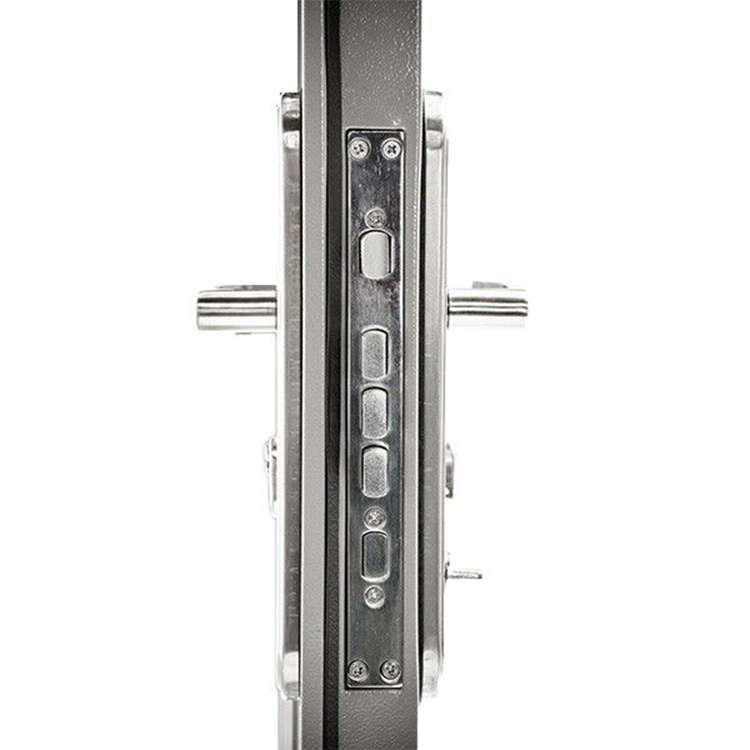
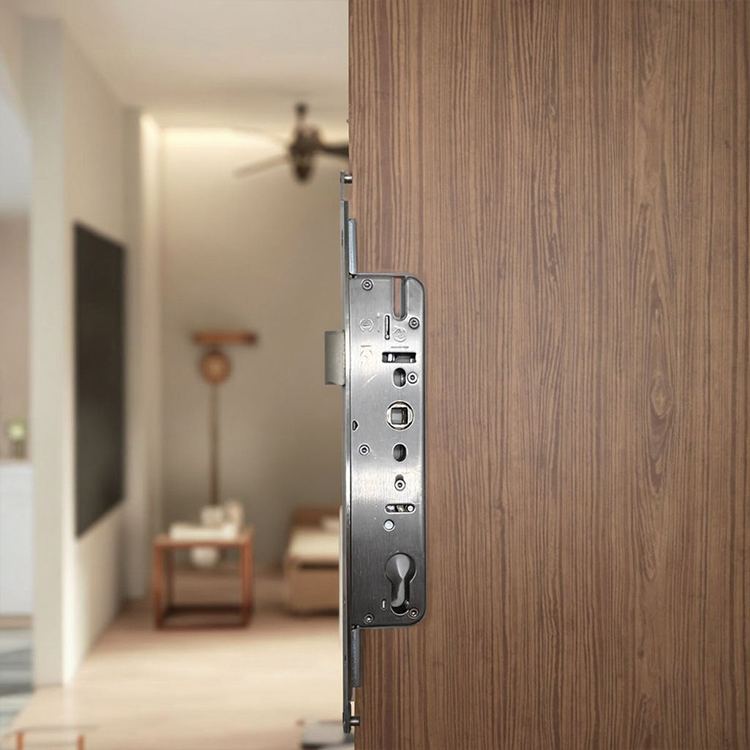
Looking for hardware solutions that meet European / American standards?
Use this guided inquiry modal to move from a generic quote form to a clearer technical conversation. Buyers can choose whether they need pricing, CAD / 3D files, or OEM / ODM support before sharing contact details.
Compatibility-first design across door / window systems
Repeatable production with clear inspection checkpoints
Documentation and change control for long-running programs
Responsive engineering support for fit and field feedback
Adjustable keeps are frame-mounted strike components that permit controlled movement of a latch, hook, roller, mushroom cam, or deadbolt receiving point. Their job is to align the locking elements, maintain suitable engagement, regulate weatherseal compression, and absorb small manufacturing or installation tolerances without making the handle or gearbox fight the frame.
Alignment beats branding.
Because every hook, roller, mushroom cam, latch, and deadbolt must enter a frame-side receiver at the correct height, depth, and pressure, a few millimetres of error can turn an expensive locking specification into a stiff, noisy, and unreliable door.
So why does the keep still get treated as a cheap accessory?
Why Multi-Point Lock System Keeps Control the Entire Door
A multi-point lock does not secure a door in isolation. It is one part of a mechanical chain:
Handle movement transfers force into the gearbox. The gearbox moves the drive strip. The strip moves hooks, rollers, bolts, or cams. Those locking points then enter the keeps fixed to the frame.
The keep is where movement becomes restraint.
When its position is correct, the locking point enters without impact, reaches its intended depth, pulls the door toward the frame, and holds the weatherseal under controlled pressure. When its position is wrong, the lock may still appear to operate, but the gearbox, handle, spindle, hinges, and fasteners are quietly absorbing loads they were not designed to carry.
That is the hard truth. A premium gearbox cannot compensate for badly positioned door lock keep plates.
It aligns the receiving aperture with the moving locking point.
It controls how far the door is pulled against the gasket.
It provides tolerance for fabrication and installation variation.
It permits limited service adjustment after the door settles or wears.
The word limited matters. Adjustable keeps are correction devices, not rescue devices.
Table of Contents
What Adjustable Strike Plates Actually Adjust
Not every adjustable strike plate moves in the same direction. The available movement depends on the lock design, frame profile, insert construction, screw slots, packers, and locking-point geometry.
Compression Adjustment
Compression adjustment changes how tightly the sash or door leaf is pulled against the weatherseal.
Moving the receiving surface toward the door generally increases pressure. Moving it away reduces pressure. But more pressure is not automatically better.
Too little compression can produce:
Air leakage
Water penetration
Door rattle
Uneven gasket contact
Reduced resistance to panel movement
Too much compression can produce:
Excessive handle force
Slow or incomplete hook engagement
Premature gasket deformation
Gearbox and spindle loading
Difficulty operating the key
User complaints that the lock is “stiff”
The objective is repeatable contact, not maximum force.
The U.S. Department of Energy notes that exterior doors can contribute significantly to air leakage when they are old, improperly installed, or poorly sealed. The keep cannot repair missing weatherstripping, but it helps the locking system hold an otherwise correct seal under consistent compression. DOE guidance on exterior doors supports treating the perimeter seal as part of the complete opening rather than as a cosmetic add-on.
Vertical Alignment
Vertical adjustment helps a hook, roller, deadbolt, or latch meet the keep aperture at the correct height.
This matters when:
A door has dropped slightly at the lock side.
Frame fabrication positions vary between production batches.
Hinge settings have changed the sash height.
The floor, threshold, or surrounding structure has moved.
Replacement hardware differs slightly from the original geometry.
But vertical keep adjustment should not become a substitute for correcting a dropped sash. If every keep must be moved in the same direction, I would inspect the hinges and door geometry before touching the lock.
Depth and Lateral Position
Depth adjustment changes the relationship between the locking point and the frame rebate.
A shallow setting may leave insufficient engagement. An aggressive setting may cause the hook, roller, or bolt to strike the keep before it can travel fully.
Some systems provide asymmetric movement. For example, the GU SECURY TE frame-side strike plate is specified with a height adjustment of +1.5 mm and −3.1 mm, showing why buyers should read the actual component drawing instead of assuming every keep offers a standard ±2 mm range. GU SECURY TE technical information confirms that adjustment ranges are product-specific.
Fixed Keeps vs. Adjustable Keeps vs. Continuous Keeps
Keep Type
Adjustment Capability
Best Application
Main Advantage
Main Risk
Fixed individual keep
Little or none
Highly controlled production with stable frame geometry
Simple construction and low component cost
Poor tolerance recovery during installation
Adjustable individual keep
Local adjustment at each locking point
Doors with hooks, rollers, or bolts requiring separate tuning
Precise correction of one problem area
Installers may create inconsistent settings between points
Adjustable centre strike plate
Latch or deadbolt compression adjustment
Main lockcase and latch zone
Improves closing feel and latch contact
Cannot correct remote hook or roller alignment
Continuous keep or strike rail
Multiple receivers integrated into one rail
Repeated OEM production and coordinated multi-point systems
Faster fitting and consistent reference geometry
Incorrect rail location affects every locking point
Profile-specific adjustable keep
Adjustment combined with dedicated packers or extrusion geometry
PVCu, aluminum, timber, or composite systems
Better support and more predictable fit
Wrong profile selection can reduce screw support or engagement
A continuous keep can reduce the number of individually positioned components, but it does not remove the need for correct datum control.
ERA’s continuous-keep documentation, for example, specifies ±2 mm of compression adjustment, compatibility with 9 mm, 13 mm, and 16 mm eurogroove positions, and configurations for systems including 2-hook/2-roller, 2-hook/4-roller, 3-hook/2-roller, and 3-hook/4-roller locks. The same document identifies BS EN 1670:2007 Grade 4 corrosion performance at 240 hours for that particular product. These figures are product data, not universal rules for every multi-point lock.
The Millimetres That Separate Smooth Operation from Failure
Hardware buyers often discuss lock length, backset, PZ centres, faceplate width, hook count, finish, and price. Then the keep drawing receives a two-minute review.
That is backwards.
ERA’s multi-point lock installation guidance provides several useful examples of the dimensional discipline required at the frame:
Individual rollers and mushroom cams should enter the keep mouth centrally.
Hooks should have a nominal 3 mm vertical clearance between the hook throat and the keep aperture when locked.
A PVCu deadbolt position is shown approximately 6 mm below the top of its keep aperture.
Linear bolts should have approximately equal clearance above and below.
Eccentric rollers may be adjusted by ±¼ turn on that system.
Keeps should be adjusted to the seal compression recommended by the profile or system manufacturer.
These are manufacturer instructions for a specific system, but the broader lesson is universal: multipoint door lock alignment must be measured at every locking point.
My rule is blunt: when an installer needs force to make the system operate, the adjustment is not finished.
A handle that must be lifted aggressively is not proof of security. A key that completes its rotation only after the user pushes the door is not “normal for multipoint locks.” And a hook that scrapes its keep on every cycle is not going to wear itself into a better fit.
It will damage something.
How to Adjust a Multipoint Door Lock Keep Correctly
Before changing any keep, identify whether the problem comes from one locking point or the entire door.
Test the Lock with the Door Open
Operate the handle and key while the door is open.
If the mechanism is still stiff, the problem may be inside the lock strip, gearbox, cylinder, handle, spindle, connecting rod, or fastening arrangement. Moving the keeps will not solve it.
If the lock operates freely while open but becomes stiff when the door is closed, investigate alignment, gasket pressure, hinge position, frame distortion, or keep placement.
Inspect Every Contact Point
Use removable marking compound, chalk, low-tack tape, or visible witness marks to identify where the locking elements contact the keeps.
Look for:
Bright rub marks on hook edges
Scratches at the top or bottom of apertures
Rollers striking instead of entering
A latch hitting the keep face
Deadbolts entering off-centre
One locking point engaging before the others
Uneven gasket compression along the lock side
Do not immediately enlarge the aperture. Removing material may hide the symptom while reducing engagement or security.
Adjust One Variable at a Time
Loosen only the screws controlling the relevant insert. Move the plate in a small increment, retighten it, and test the complete operation again.
Do not leave the screws loose and repeatedly slam the door in the hope that the keep will “find its own position.” That method can damage screw holes, distort inserts, and create a setting that is easy to close but poorly engaged.
And do not use a power driver for final tightening unless the hardware manufacturer permits it. The ERA instructions specifically call for retightening the adjustable insert with a hand screwdriver.
Verify Full Engagement
A smoother handle is not enough.
After adjustment, confirm that:
The latch enters and releases correctly.
Every hook, roller, cam, or bolt reaches its intended position.
The key completes its full movement.
The handle returns normally.
The door does not need to be pushed or pulled during locking.
Gasket compression is even.
The door opens without binding.
The keeps remain firmly fixed to structural material or reinforcement.
Then cycle the door repeatedly. A system that works once is not yet adjusted.
Know When to Stop Adjusting the Keeps
Stop and correct the door assembly when:
All keeps require movement in the same direction.
The adjustment range has been exhausted.
The latch-side gap changes substantially from top to bottom.
The door drags on the threshold.
Hinge screws or reinforcement are loose.
The door leaf is visibly bowed.
The frame is twisted or poorly anchored.
The gearbox remains stiff with the door open.
Correct seal pressure prevents full locking-point engagement.
That is not a keep problem. It is a geometry problem.
Security Depends on Engagement, Fixing, and Frame Strength
Adjustability does not automatically improve security.
A keep moved too far to make closing easier may leave a hook only partially engaged. A wide aperture may stop rubbing but increase free movement. Short screws into thin, unsupported profile walls may hold during normal operation but fail under attack.
The keep must transfer load into the frame and, where applicable, into steel or aluminum reinforcement. ERA’s installation notes state that high-security PVCu applications require adequate reinforcement accessible to screws adjacent to the locking points and at the ends of each keep.
England’s Approved Document Q, updated on November 22, 2024, addresses resistance to unauthorized access in new dwellings and calls for doors and windows to be sufficiently robust and fitted with suitable hardware. It does not certify an adjustable keep by itself. The complete doorset must deliver the required performance.
Adjustable keeps influence energy performance indirectly by controlling closure pressure.
They do not increase the insulation value of glass, improve a door panel’s U-factor, or replace weatherstripping. What they can do is help the door maintain contact with the gasket at several locations rather than relying on one centre latch.
That difference becomes more visible in tall doors, flexible profiles, heavily gasketed entrance doors, and installations exposed to temperature variation or wind pressure.
A Lawrence Berkeley National Laboratory analysis used air-leakage data from approximately 134,000 U.S. detached homes and before-and-after measurements from about 23,000 retrofit homes. The study reported normalized leakage reductions of roughly 30% for Weatherization Assistance Program homes and 20% for other energy-efficiency programs. The research is not a study of adjustable keeps, but it demonstrates the practical value of controlling unintended envelope leakage.
The keep’s role is narrower but still important: it helps the lock maintain the contact pressure that a correctly designed gasket requires.
How to Select the Best Adjustable Keeps for Multi-Point Locks
I would not approve adjustable keeps based only on material description or visible thickness. I would request evidence that the component matches the full opening.
Confirm Locking-Point Compatibility
Document:
Lock model and revision
Hook, roller, mushroom, bolt, or latch type
Locking-point centre locations
Throw and engagement direction
Faceplate and backset
Door handing
Active and passive leaf arrangement
Required keep aperture geometry
A “multipoint-compatible” keep is too vague for an OEM specification.
Match the Frame Profile
Check:
Frame material
Extrusion or profile drawing
Eurogroove position
Rebate depth
Keeper packer thickness
Screw position
Reinforcement location
Gasket line
Drainage route
Available adjustment direction
A keep designed for a 13 mm eurogroove should not be assumed to fit a 9 mm or 16 mm arrangement merely because the screw holes appear close.
A published range such as ±2 mm is useful. “Adjustable” without a dimension is sales language.
Review Fastening and Reinforcement
The keep should be supported by the frame construction, not merely by decorative profile walls.
Ask where each screw terminates. Ask what material it engages. Ask whether the assembly has been tested with the proposed profile, reinforcement, fasteners, lock, and installation gap.
Evaluate the System After Adjustment
Testing should cover more than an untouched laboratory sample. The door should be checked at the intended adjustment extremes and under realistic tolerances.
At minimum, review:
Operating force
Locking-point engagement
Gasket compression
Cycle behaviour
Fastener retention
Corrosion resistance
Door movement after installation
Compatibility with field servicing
For custom programs, the OEM multi-point locking system development process should begin with profile drawings, tolerance review, lock geometry, keep selection, sample fitment, and documented approval—not with a request for the cheapest available strike plate.
FAQs
What are adjustable keeps in multi-point lock systems?
Adjustable keeps are frame-mounted strike components that allow controlled repositioning of the latch, hook, roller, mushroom cam, or deadbolt receiving point so a multi-point lock can engage cleanly, maintain the specified gasket compression, and absorb small manufacturing or installation tolerances without forcing the gearbox or handle.
They may use slotted screw holes, movable inserts, eccentric plates, profile packers, or adjustable receiving blocks. Available movement varies by manufacturer and should always be confirmed from the component drawing.
How do I adjust a multipoint door lock keep?
You adjust a multipoint door lock keep by diagnosing the direction of error first, loosening only the relevant retaining screws, moving the insert or eccentric element in small increments, tightening it by hand, and then checking handle effort, full engagement, seal pressure, and free release with the door both open and closed.
Never adjust every keep at once. Test the mechanism with the door open first, identify contact marks, correct one locking point, and recheck the complete locking sequence after each movement.
What are the best adjustable keeps for multi-point locks?
The best adjustable keeps for multi-point locks are the profile-specific, structurally fixed receivers that match the lock’s exact hook, roller, bolt, handing, eurogroove, and frame geometry while providing enough documented adjustment to tune compression without reducing engagement depth, weakening screw purchase, or creating excessive operating force.
The best choice is therefore system-specific. A keep offering wide adjustment but poor reinforcement support is not better than a smaller-range component designed for the correct profile.
Can adjustable keeps fix multipoint door lock alignment problems?
Adjustable keeps can correct minor multipoint door lock alignment errors, but they cannot repair a dropped door, twisted frame, worn hinge, bowed slab, damaged gasket, loose reinforcement, incorrect lock strip, or failing gearbox; when the required movement exceeds the keep’s documented range, the opening itself must be corrected.
If every locking point is displaced similarly, inspect the door and hinges first. If only one point contacts incorrectly, local keep adjustment may be appropriate.
Can excessive keep pressure damage a multipoint lock?
Excessive keep pressure is a condition in which the frame-side receivers pull the door too firmly against the gasket or obstruct the locking points, increasing the force required from the handle, spindle, gearbox, key, and connecting strips while potentially preventing hooks, rollers, or bolts from reaching their complete travel.
Reduce pressure gradually and verify that the gasket still seals. Never accept heavy handle force as evidence that the door is more secure.
Specify the Keep Before the Door Reaches Production
Do not leave adjustable keeps until the final hardware order.
Send the door profile section, frame material, reinforcement position, sash dimensions, gasket details, lock-strip drawing, locking-point centres, handing, target market, test requirements, and expected annual volume before approving the hardware package.
For an OEM or project-based multi-point locking system, request a coordinated review of the lock, gearbox, keeps, fasteners, hinges, handles, and profile interface. Start your technical discussion through the Foshan Chier OEM/ODM multi-point lock program and ask for fitment validation before tooling or mass production begins.