Looking for hardware solutions that meet European / American standards?
Use this guided inquiry modal to move from a generic quote form to a clearer technical conversation. Buyers can choose whether they need pricing, CAD / 3D files, or OEM / ODM support before sharing contact details.
Compatibility-first design across door / window systems
Repeatable production with clear inspection checkpoints
Documentation and change control for long-running programs
Responsive engineering support for fit and field feedback
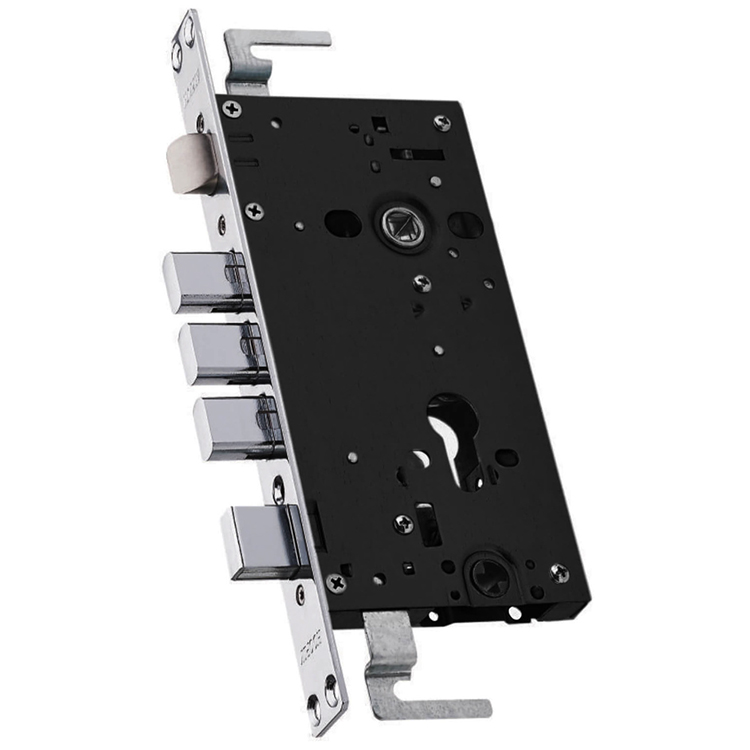
To choose multi-point locks for aluminum doors, match the lock to the exact profile cavity, backset, PZ dimension, faceplate, keeper layout, gasket compression, cylinder, handle, climate, cycle target, and compliance route. Do not choose by point count or finish alone. Validate the complete doorset under realistic operating conditions.
That sounds obvious.
Yet buyers still approve aluminum door locks from photographs, price sheets, and vague descriptions such as “three-point high-security lock.” No profile drawing. No keeper section. No operating-force target. No corrosion class. No evidence showing how the lock performs after thousands of cycles.
Then the door reaches the site.
The handle feels stiff. The top hook misses its keeper. The bottom bolt scrapes. The installer adjusts the hinges to compensate, which changes the gasket pressure, which causes the door to leak, which eventually gets blamed on the lock factory.
The lock may not be the original problem. But it becomes the most visible one.
The Hard Truth: Aluminum Profiles Punish Generic Lock Specifications
Geometry wins first.
An aluminum door has limited internal space, thin profile walls, thermal breaks, drainage channels, reinforcement zones, glazing interfaces, gaskets, fastener restrictions, and fabrication tolerances that must all coexist with the lockcase, faceplate, rods, hooks, keepers, cylinder, handle spindle, and fixing screws.
So why would one “universal” lock fit every aluminum profile?
It will not.
A multi-point locking system should be treated as part of the door structure, not as decorative hardware added after the extrusion has already been approved. The lock determines where loads enter the frame, how the panel is pulled into the weather seal, how much force the user must apply, and whether the locking points remain aligned as the door moves under temperature, wind, hinge wear, and repeated operation.
This is also why serious OEM buyers start with engineered OEM multipoint locking systems rather than isolated lock bodies. The full package may involve a custom lockcase, faceplate, hook position, keeper layout, handle interface, sampling process, and revision-controlled drawing set.
My rule is blunt: if the supplier has not requested your aluminum profile drawing, door height, opening direction, handle data, cylinder type, and frame section, the supplier is not yet selecting a lock. It is guessing.
Start With Door Geometry, Not the Number of Locking Points
The first question should not be, “Do we need three points or five?”
Start with the cavity.
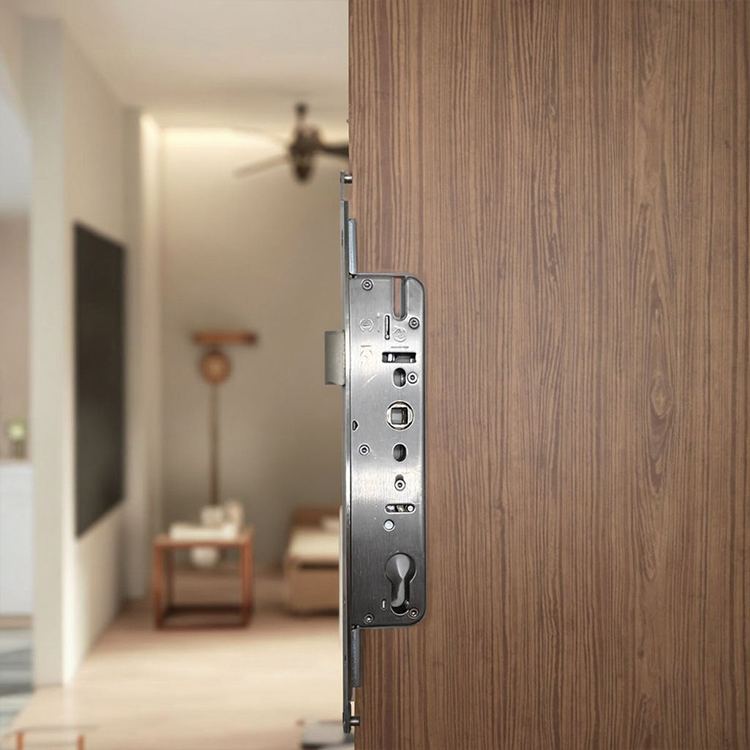
A narrow aluminum stile may require a narrow-stile mortise lock with a compact gearbox and restricted backset. A larger entrance-door profile may allow a deeper lockcase, stronger deadbolt geometry, wider fixing centers, and more substantial frame reinforcement.
The following dimensions should be frozen before tooling or volume pricing:
Lock backset
PZ dimension
Faceplate width and thickness
Lockcase depth and height
Spindle size and projection
Cylinder type and length
Handle fixing centers
Door thickness
Keeper depth
Hook, roller, or bolt positions
Top and bottom clearance
Rod travel
Handing and opening direction
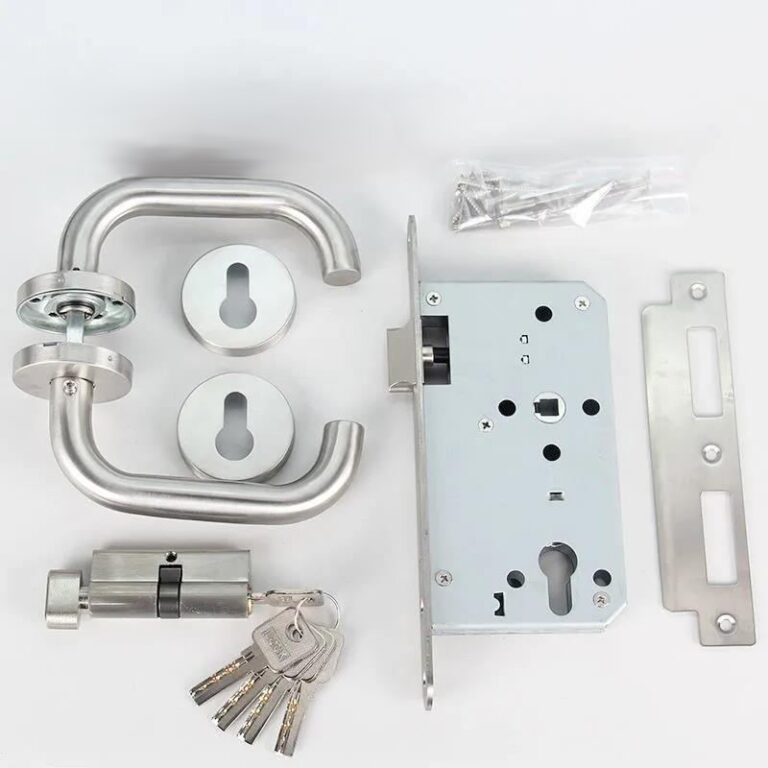
A 92 mm PZ handle does not become compatible with an 85 mm lock because the backplate looks similar. PZ is measured from the center of the handle spindle to the center of the cylinder, and even a visually small mismatch can make the hardware unusable. The same applies to spindle engagement, fixing centers, and backplate width.
Table of Contents
Aluminum Door Lock Fitment Checklist
Selection Factor
What to Verify
Common Red Flag
Likely Result
Profile cavity
Internal depth, width, thermal break and reinforcement
Supplier approves from an exterior photo
Lockcase clashes with the extrusion
Backset
Spindle center to faceplate edge
“Standard backset” without a number
Handle position or cylinder clearance fails
PZ dimension
Spindle-to-cylinder center distance
85 mm and 92 mm treated as interchangeable
Handle set cannot be installed
Faceplate
Width, thickness, edge radius and fixing pattern
Faceplate is wider than the lock channel
Poor seating or profile machining changes
Keeper layout
Position, reinforcement and adjustment range
Keeper fixed only into a thin profile wall
Pull-out or deformation under load
Gasket compression
Required pull-in at each locking point
More compression assumed to be better
Stiff operation and early gearbox wear
Door movement
Hinge drop, thermal growth and fabrication tolerance
Zero adjustment allowance
Hooks bind after installation
Service access
Gearbox and strip replacement method
Entire door must be dismantled
High warranty and maintenance cost
The lockcase and gearbox deserve special attention. The gearbox converts handle or key movement into hook, roller, bolt, or rod travel. If its internal travel does not match the locking strip, or if the handle repeatedly forces it against misaligned keepers, premature failure becomes predictable.
Not possible. Predictable.
Choose Locking Points by Failure Mode
More points look impressive in a catalog. They can also create more friction, more alignment work, more machining, more components, and more opportunities for poor installation.
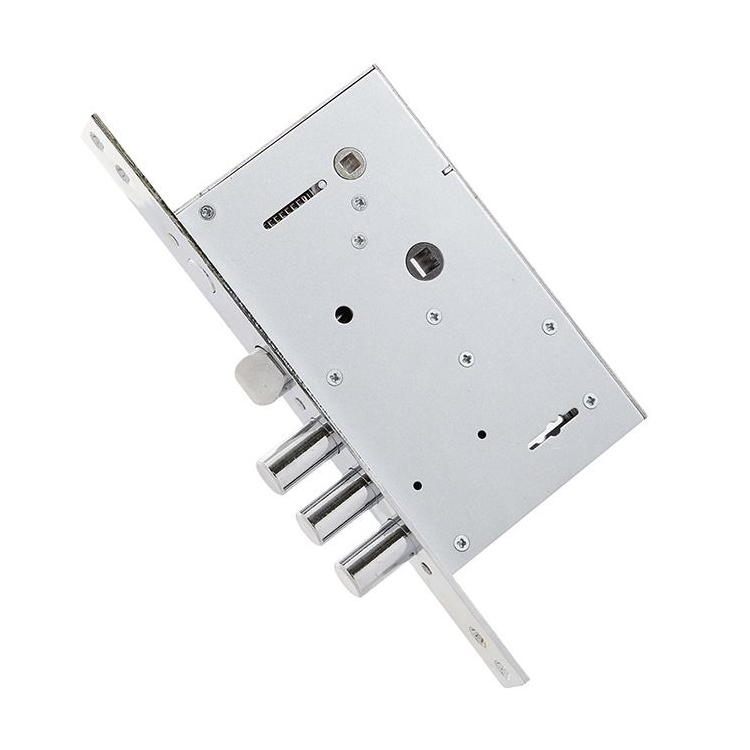
A three-point lock for an aluminum door often uses a central latch or deadbolt plus upper and lower hooks, bolts, or shoot bolts. That arrangement may provide useful edge control without creating unnecessary complexity.
But “three-point” tells us almost nothing about actual performance.
Three weak rollers attached to unreinforced keepers are not automatically safer than two well-designed hooks and a protected central deadbolt. A five-point strip that users refuse to engage because the handle is too stiff is not a five-point security system in practice. It is a single-latch door with expensive unused components.
Hook Bolts
Hooks resist separation between the door leaf and frame. They are especially useful where prying or panel spreading is a concern.
But the hook must enter deeply enough, and the keeper must transfer load into a reinforced section. A thick hook engaging a thin, poorly fixed keeper is merely moving the failure point.
Deadbolts
Deadbolts provide direct engagement and can offer strong resistance when the bolt projection, keeper depth, surrounding material, and fasteners are properly designed.
They usually demand tighter alignment than rollers. That matters on tall aluminum doors where hinge wear, thermal movement, and fabrication variation can shift the leaf over time.
Roller Cams
Roller cams are useful for controlled gasket pull-in and smooth closing. They can often be adjusted to fine-tune compression.
They should not automatically be treated as the primary forced-entry feature. Their value is frequently sealing, alignment, and operating feel rather than deep structural engagement.
Top and Bottom Shoot Bolts
Shoot bolts control the upper and lower edges of the door and can work well on tall doors, inactive leaves, and double-door arrangements.
Drainage, threshold contamination, rod alignment, and service access must be considered. A bottom bolt that enters a dirt-filled floor socket is not a maintenance-free security feature.
The right combination depends on the attack path, door height, frame stiffness, sealing requirement, user profile, and tolerance budget. The engineering logic behind a reliable multi-point lock system for aluminum doors is therefore force control and compatibility, not decorative point counting.
Security Claims Need Whole-Doorset Proof
The most misleading phrase in this market may be “high-security lock.”
High security against what?
Cylinder snapping? Hook pull-out? Frame spreading? Lockcase deformation? Drilling? Handle attack? Repeated impact? Incorrect installation? A strong lock fitted to a weak aluminum profile can still fail because the attack follows the weakest available route.
The current BS EN 15685:2024 multipoint lock standard covers product characteristics and test methods for mechanically operated multi-point locks and their locking plates. That wording matters: the lock and its locking plates are a coordinated system.
For UK residential work, Approved Document Q says accessible doors and windows in new dwellings should resist physical attack by a casual or opportunist burglar by being sufficiently robust and fitted with appropriate hardware. It does not say that buying a certified cylinder automatically certifies the door.
The same whole-assembly logic appears in Secured by Design guidance for doors, where a doorset includes the frame, leaf, hardware, and integral side panels or fanlights. PAS 24 testing is therefore about the doorset, not a loose lock displayed on a laboratory bench.
Crime statistics also require some perspective. The FBI’s preliminary 2025 data estimated that US property crime fell 12.4% from 2024 to 2025. That is positive news, but declining national crime does not remove a manufacturer’s responsibility to specify defensible entrance hardware for the actual building, occupancy, and local risk.
I would reject any security proposal that cannot identify:
The tested door and frame construction
The exact lock, keepers, cylinder, handles and fasteners
The test standard and edition
The laboratory or certification body
The approved size range and configuration
Any substitutions that invalidate the evidence
A component certificate is useful. A component certificate presented as doorset proof is not.
Balance Air Tightness Against Handle Force
Multi-point locks can improve sealing because they pull the door toward the frame at several locations instead of relying on one central latch. That helps keep the gasket compressed at the head, center, lower edge, and corners.
The US Department of Energy notes that exterior doors can contribute significantly to air leakage, particularly when they are old, improperly installed, or poorly air-sealed. Weatherstripping helps, but the door must close consistently against it.
This is where a multi-point door lock can earn its cost.
It can also create a new problem.
Too much gasket compression increases handle torque, stresses the gearbox, accelerates wear, and encourages users to slam, lift, or force the handle. The lock may work beautifully with the door open and feel terrible when the leaf is pressed against the seals.
That test tells us something.
Operate the lock with the door open. Then close the door and operate it again. If the force increases sharply only when closed, inspect keeper alignment, hinge position, door bow, threshold contact, gasket compression, and hook entry before blaming the gearbox.
For accessible projects in the United States, the US Access Board’s door guidance states that applicable door and gate hardware must operate with a maximum force of 5 lbf, or approximately 22.2 N. A security system that technically locks but requires excessive wrist force may create a compliance and usability problem.
This is why the handle cannot be selected separately. The guide to choosing door handles for multi-point lock systems explains the relationship among PZ dimension, spindle size, screw centers, backplate width, lockcase behavior, and user force.
The target is not the tightest door possible.
The target is repeatable sealing with acceptable operating force.
Corrosion Can Defeat a Good Lock Quietly
Aluminum doors often appear corrosion-resistant because the visible extrusion is anodized or powder coated. The hidden lock assembly may contain stainless steel, zinc-plated carbon steel, zinc alloy, brass, engineering polymers, springs, rivets, screws, and coated stampings.
Mixed materials change the risk.
Add moisture, salt, condensation, alkaline cleaning products, damaged coatings, blocked drainage, and electrically conductive contamination, and corrosion can develop at interfaces the buyer never inspected.
Coastal exposure deserves a separate specification. “Stainless steel” is not detailed enough. The buyer should ask for the stainless grade, coating system, neutral-salt-spray target where applicable, fastener material, plating thickness, edge protection, drainage plan, and method used to isolate incompatible metals.
For chloride-heavy environments, AISI 316 stainless components may offer better resistance than AISI 304 in many applications, but substituting one grade does not solve poor drainage, crevice corrosion, contaminated fabrication tools, or galvanic contact with aluminum.
And corrosion does not always produce dramatic red rust.
It may first appear as:
Rising handle force
Weak spring return
Rough hook travel
Plating loss at contact points
White corrosion products near zinc parts
Keeper adjustment that repeatedly drifts
Fasteners seized into the profile
A gearbox that works intermittently after rain
A lock that passes a dry sample-room inspection may still be unsuitable for a seafront apartment, swimming-pool enclosure, food facility, or frequently washed commercial entrance.
Use a Weighted Selection Scorecard
I do not recommend selecting the best multi-point locks for aluminum doors with a simple pass-or-fail checklist. Several products may fit. The better question is which one carries the lowest total program risk.
Here is the scorecard I would use for an OEM or project comparison:
Evaluation Area
Recommended Weight
What Earns a High Score
Profile and dimensional fit
25%
Verified drawing match, tolerance review and real-profile sample
Security as a doorset
20%
Relevant test evidence covering the complete configuration
Operating force and usability
15%
Smooth operation open and closed, with measured force
Cycle life and gearbox durability
15%
Documented cycle testing under representative load
Corrosion resistance
10%
Defined materials, coatings, exposure class and drainage logic
Documentation and revision control
10%
Controlled drawings, BOM, inspection plan and change history
Serviceability and spare parts
5%
Replaceable gearbox, identifiable strip and long-term parts plan
Price is not absent. It is simply not first.
A lock that saves US$3 per door but causes repeated site adjustment, handle replacement, water-leakage complaints, or a complete strip replacement is not cheaper. The invoice was smaller. The cost was not.
A Practical Workflow for Choosing Multi-Point Locks
1. Define the Door Application
Record whether the door is residential, commercial, institutional, hospitality, coastal, high-rise, accessible, fire-rated, thermally broken, inward opening, outward opening, single leaf, double leaf, swing, sliding, lift-slide, or bi-fold.
One category is not enough. “Aluminum entrance door” still leaves too many unknowns.
2. Send the Complete Profile Package
Provide the sash, frame, threshold, reinforcement, gasket, hinge and keeper sections in DWG, DXF or dimensioned PDF format.
Include the door width, height, weight, glass configuration, opening direction and target market.
3. Freeze the Mechanical Interfaces
Confirm backset, PZ dimension, faceplate, cylinder, spindle, handle fixing centers, locking-point positions, keeper depths, rod travel and machining details.
Do this before appearance samples.
4. Define the Performance Route
List the required standards, security classification, cycle target, corrosion exposure, accessibility requirement, fire or smoke limitations, air-leakage target and water-performance expectations.
Buyers supplying several countries should review the guide to choosing multi-point door locks for export markets before assuming one test report will satisfy the EU, UK, US and Middle East simultaneously.
5. Build a Functional Door Sample
A loose lock demonstration is not enough.
Install the real lock, keeps, handle, cylinder, gasket, hinges, threshold and fasteners into a production-representative door. Test it vertically, not flat on a table.
6. Measure Open-Door and Closed-Door Force
Record the force needed to operate the mechanism with the door open and closed.
A large difference usually points to alignment, compression, door movement or keeper geometry. It should not be accepted as “normal tightness.”
7. Introduce Tolerance Deliberately
Move the keepers within the expected fabrication range. Add realistic hinge drop. Test after temperature exposure where relevant. Check whether the system can be adjusted without grinding, slotting or uncontrolled site modification.
8. Audit the Supply Documentation
Demand an approved drawing, BOM, material list, inspection checkpoints, critical dimensions, packaging method, labeling rule, revision code and change-control procedure.
The supplier should be able to distinguish the approved version from a similar-looking strip.
9. Run a Pilot Before Full Production
A pilot batch exposes machining errors, keeper variation, handle mismatch, packaging damage and installer confusion before they spread across a full container or project phase.
This costs time early.
It saves money later.
FAQs
What is a multi-point lock for an aluminum door?
A multi-point lock for an aluminum door is a coordinated locking assembly that uses one handle, cylinder, or gearbox action to engage several hooks, bolts, rollers, or shoot bolts along the frame, distributing closure pressure and resistance across the door edge instead of concentrating both at one central latch.
Its performance depends on the aluminum profile, keepers, reinforcement, hinges, fasteners, handle, cylinder, gasket and installation tolerances. The lock strip alone should not be treated as a complete security system.
How do I choose a multi-point lock for an aluminum door?
Choose a multi-point lock by matching the lockcase, backset, PZ dimension, faceplate width, locking-point positions, keepers, cylinder, handle, door thickness, profile cavity, gasket compression, corrosion exposure, cycle target, accessibility rules, and market-specific test requirements to the exact aluminum door assembly before discussing finish or unit price.
The safest purchasing process includes drawing review, real-profile sampling, open- and closed-door force testing, tolerance trials, corrosion verification, complete doorset testing and controlled pilot production.
Is a 3-point lock enough for an aluminum entrance door?
A 3-point lock can be sufficient for many aluminum entrance doors when its top, center, and bottom engagement points are correctly positioned, the keepers are reinforced, the cylinder is protected, and the complete doorset passes the required security, cycle, corrosion, air-leakage, and operating-force tests for its intended market.
Adding more locking points does not automatically improve security. Extra points can add friction and alignment demands, while three properly engineered points may provide better real-world operation than five poorly supported ones.
What is the best lock for a narrow-stile aluminum door?
The best narrow-stile mortise lock is a compact multi-point locking system whose lockcase depth, backset, faceplate, cylinder position, handle interface, fixing pattern, locking-point travel, and keeper geometry fit inside the restricted aluminum profile without weakening the extrusion, obstructing the thermal break, or creating excessive operating force.
Buyers should provide a complete profile section rather than asking suppliers to select a narrow-stile lock from the external door width. The cavity and reinforcement geometry make the decision.
Why does my multi-point door lock feel stiff?
A multi-point door lock usually feels stiff because the gearbox is fighting excessive gasket compression, misaligned keepers, hinge drop, door bow, incorrect spindle engagement, contaminated locking points, corroded components, a damaged gearbox, or locking-point positions that no longer match the frame when the door is closed.
Test the mechanism with the door open. If it becomes stiff only after closing, inspect alignment and compression first. If it remains stiff while open, investigate the handle, spindle, gearbox, rods and locking strip.
Send the Door Profile Before Requesting a Price
The best multi-point locks for aluminum doors are not selected from a photograph, a finish board, or a supplier’s “popular models” list.
They are selected from data.
Send the sash and frame profiles, door dimensions, weight, opening direction, backset, PZ dimension, handle requirement, cylinder type, gasket section, keeper area, climate exposure, cycle target, destination market and applicable testing requirements.
Then ask the supplier to return a proposed lock configuration, interface drawing, tolerance assumptions, material specification, test route, sample plan and revision-controlled quotation.