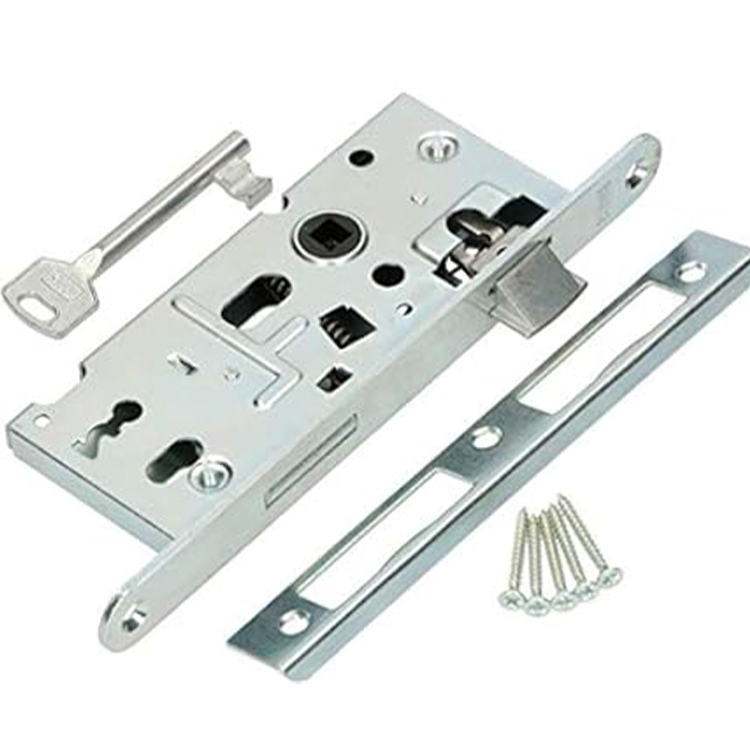
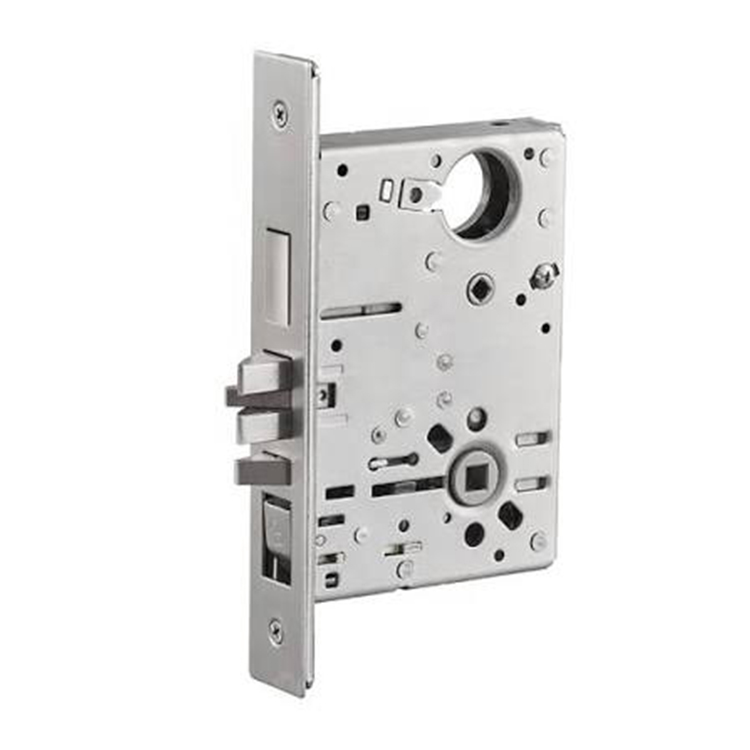
Looking for hardware solutions that meet European / American standards?
Use this guided inquiry modal to move from a generic quote form to a clearer technical conversation. Buyers can choose whether they need pricing, CAD / 3D files, or OEM / ODM support before sharing contact details.
Compatibility-first design across door / window systems
Repeatable production with clear inspection checkpoints
Documentation and change control for long-running programs
Responsive engineering support for fit and field feedback
That is the uncomfortable fact behind many multipoint lock adjustment jobs. An installer moves every roller cam toward maximum compression, the handle becomes noticeably heavier, and the customer assumes the draft problem has been solved because the door now requires two hands and a shoulder to lock.
It has not been solved. It has been disguised.
Small moves matter.
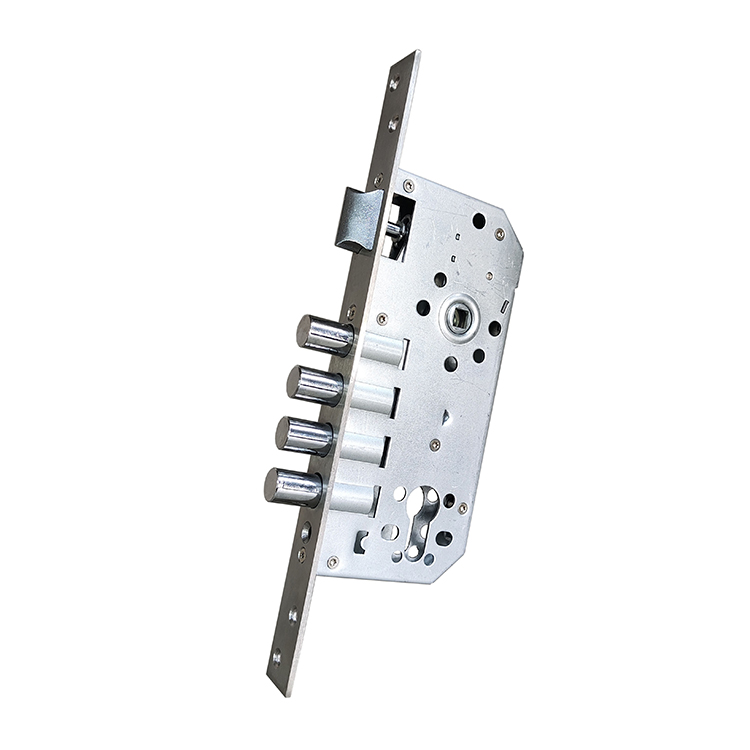
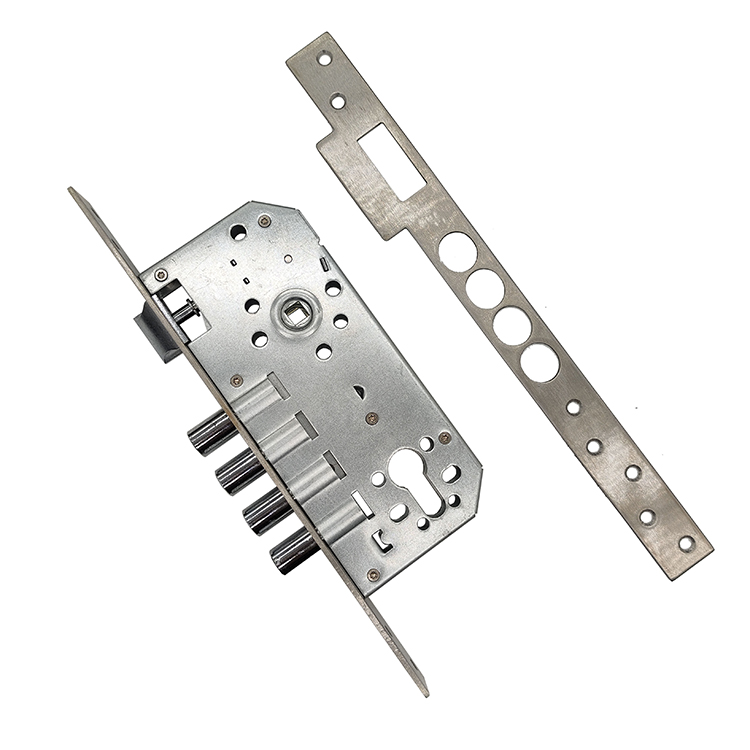
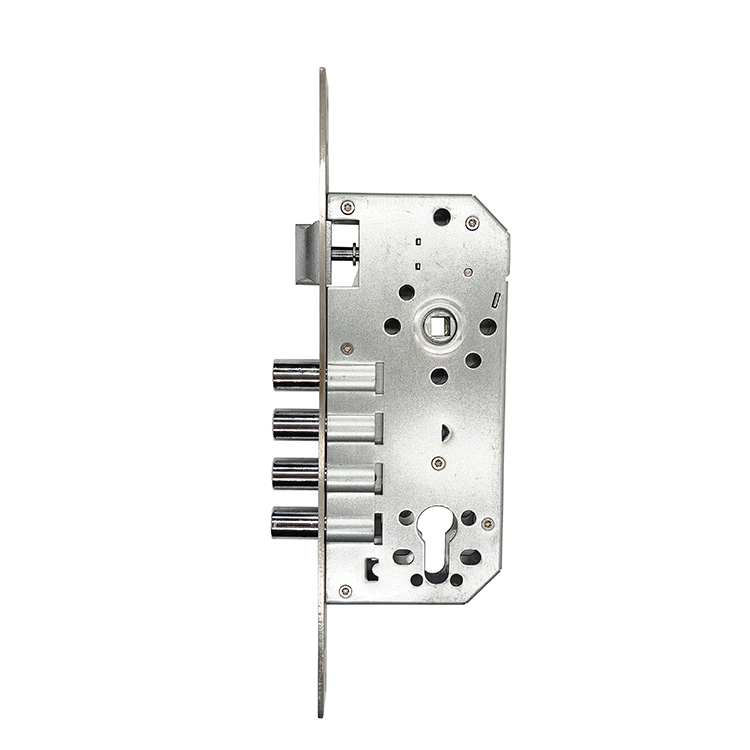
Because a multipoint locking system transfers handle input through a spindle, gearbox, faceplate, connecting strips, rollers, hooks, bolts, keeps, hinges, frame and weather seal, even a minor change at one locking point can alter operating force across the entire mechanical chain.
So why do people still treat maximum resistance as proof of a better seal?
My position is blunt: the best multipoint lock adjustment for door sealing is the lightest adjustment that creates continuous gasket contact while preserving full, smooth lock travel.
Anything beyond that is unnecessary load.
Compression Is Not Force: Know the Engineering Boundary
Multipoint lock compression adjustment is the controlled movement of roller cams, mushroom cams, locking pins or frame-mounted keeps to change how firmly the door panel presses against its weatherstripping.
The objective is even contact. Not maximum pressure.
HOPPE’s official roller multipoint adjustment instructions show how narrow the adjustment window can be. For the HLS® 9000 and HLS® 2000 Roller Multipoint systems, each eccentric roller provides only ±1 mm of adjustment and uses a 4 mm or 5/32-inch hex wrench. That is a commissioning adjustment, not permission to drag the sash several millimetres into a distorted frame.
One millimetre sounds trivial. It is not.
An eccentric roller changes both the contact point and the pull-in relationship between the door and its keeper. When several rollers are adjusted together, the cumulative increase in handle resistance can be substantial, particularly when hooks, shoot bolts or a central deadbolt must move at the same time.
The exact direction for increasing compression is model-specific. Door handing, cam orientation, positional indicators and keeper geometry matter. Never assume that “clockwise means tighter” across every product family.
Follow the hardware manufacturer’s indicator.
Air leakage is measurable, not emotional
A person standing near a door can detect a draft, but perceived tightness is not a laboratory result.
The US Environmental Protection Agency explains that an Air Leakage, or AL, rating measures cubic feet of air passing through one square foot of a fenestration product each minute. Its ENERGY STAR performance guidance states that most industry standards and building codes require an AL rating of 0.3 cfm/ft². Lower values indicate less leakage.
That number applies to tested assemblies, not isolated locks. A multipoint lock can help a door assembly maintain uniform seal contact, but it cannot compensate for:
A torn or permanently flattened EPDM gasket
A bowed door panel
A distorted frame
A leaking threshold corner
Missing sealant between the frame and rough opening
Poor drainage design
Incorrect hinge geometry
A keeper fixed into weak or moving material
This distinction matters because professionals frequently blame the lock for leakage that exists outside the lock-to-keeper interface.
The lock provides pull-in. The weatherstrip creates the seal.
Better sealing has real value, but do not invent lock-specific savings
The US Department of Energy studied a 244-unit low-rise multifamily complex in Durham, North Carolina. After comprehensive enclosure air sealing, average leakage fell from 16.4 ACH50 to 9.1 ACH50, while modeled space-conditioning energy savings ranged from 10% to 19%. The work cost approximately $0.14 per square foot of conditioned floor area.
That is strong evidence that uncontrolled air leakage matters. It is not evidence that turning a roller cam saves 19% of a building’s energy.
We need to say that plainly.
A second Department of Energy project tested aerosol envelope sealing across 34 sites and reported an average leakage reduction of 47%. Again, this was whole-envelope work, not multipoint lock adjustment, but it shows why door-edge leakage belongs in a measured air-sealing strategy rather than a vague “make it tighter” service call. The DOE project summary is available here.
Serious claims require boundaries.
Diagnose the Door Before Adjusting the Lock
Do not touch the cams first.
The fastest diagnostic is to compare lock operation with the door open and closed. CHIER’s guide to door sag versus multipoint lock failure explains why this comparison separates mechanism resistance from frame-side interference.
Test the full mechanism with the door open
Open the door fully. Operate the handle slowly while watching every roller, hook, bolt and shoot bolt.
The mechanism should move through a smooth, repeatable path. Stop when you hear grinding, sharp clicking or cracking. Do not use a longer lever. Do not jerk the handle past a hard stop.
If the handle remains stiff with the door open, the problem is unlikely to be weatherstrip compression alone. Inspect:
The handle and spindle
Handle-fixing screw pressure
The spindle follower
The gearbox
Bent faceplate sections
Seized remote locking points
Incorrectly synchronized extension strips
Debris or incompatible lubricant
But if the handle moves freely while open and becomes stiff only when the door closes, the frame-side interface is creating the resistance.
That is useful evidence.
Inspect the door reveal
Close the door gently without locking it. Compare the visible gap around the full perimeter.
Look for a narrow upper lock-side gap, threshold rubbing, a latch sitting below its keeper, fresh scrape marks, or a weather seal that is heavily compressed at one corner and barely touched at another.
Uneven gaps usually point toward sag, hinge movement, frame distortion or panel bowing. Adjusting each keep to follow a sagging door is not a repair. It is mechanical surrender.
Correct the door position first.
This is also why replacement and OEM work should begin with real dimensions. CHIER’s guide to measuring a multipoint door lock covers the backset, PZ centres, faceplate, spindle and locking-point positions needed to identify the system accurately.
Map the contact points
Use removable chalk, dry-erase marker or low-tack tape on the contact edges of rollers, hooks or bolts.
Close the door gently. Perform one controlled handle operation. Reopen the door and examine the transfer marks.
The pattern tells a story:
Contact on the same edge at several keeps suggests whole-door movement.
Contact at only one locking point suggests a local keeper problem.
Heavy gasket contact at the centre but poor contact at the corners suggests panel bowing.
Good roller engagement with a draft at the threshold suggests a seal or threshold problem, not a roller problem.
Smooth handle travel followed by a stiff key turn may indicate incomplete final lock travel.
Metal remembers abuse. Scrape marks, polished edges and elongated screw holes are records of load.
Read them.
A Controlled Multipoint Lock Compression Adjustment Procedure
The correct procedure is incremental, reversible and documented. I reject the common practice of loosening every keep, moving everything inward and testing the result by how hard the handle feels.
That is not adjustment. It is guessing with screws.
1. Record the starting condition
Before changing anything, photograph each roller indicator, cam position and keeper location.
Use a fine pencil or removable marker to trace the current keeper position on the frame. Record which area leaks, where the gasket appears loose and whether the handle is smooth with the door open.
Without a baseline, you cannot distinguish improvement from a new fault.
2. Confirm that the weatherstrip can still work
Inspect the EPDM, TPE, silicone or cellular foam seal for tearing, detachment, shrinkage, contamination and permanent compression set.
A seal that remains visibly flattened after the door has been open for several minutes may not recover enough to close the gap. Pulling the door harder into dead weatherstripping only loads the hardware.
Replace failed seals before forcing the lock to compensate.
And do not apply petroleum products, acidic cleaners or unidentified grease to an elastomer seal unless the seal manufacturer approves them. Chemical compatibility varies.
3. Start at the leaking zone
Do not automatically increase compression at every locking point.
Begin near the confirmed leakage area. Change one adjustable roller cam or one keep by the smallest available increment. On systems such as the HOPPE HLS® roller multipoints, the full available range is only ±1 mm, so partial movements matter.
Keep the original mark visible.
4. Maintain a compression gradient, not random pressure
A tall door may need slightly different settings at the top, middle and bottom because the panel, hinges, frame and gasket do not behave as perfectly rigid components.
But the transition should be controlled.
A maximum-compression top roller beside a minimum-compression centre roller can twist the panel or create local handle resistance. Avoid abrupt setting changes unless the manufacturer’s system documentation specifically calls for them.
Think in patterns, not isolated points.
5. Retest after every change
Close the door normally. Do not slam it.
Check:
Latch engagement
Handle-lift effort
Full roller, hook and bolt travel
Key rotation
Handle return
Door opening effort
Weatherstrip contact
Threshold clearance
The handle should not require body weight, repeated pumping or shoulder pressure.
A lock that seals only when abused is not properly adjusted.
6. Use a paper test carefully
Place a strip of ordinary paper between the weatherstrip and door at several points, then close and lock the door.
Moderate, reasonably consistent resistance when pulling the paper can help identify uneven contact. But this is a comparative field check, not a calibrated air-leakage test.
Paper thickness, seal profile and surface friction alter the result.
For performance verification, use smoke tracing, pressure testing, a blower door, or the applicable fenestration test method. ENERGY STAR defines a blower door test as a method used to measure building airtightness and locate leakage paths.
7. Verify repeated operation
Cycle the door at least several times after the adjustment.
Open it fully. Close it gently. Lock it. Unlock it. Operate the key. Repeat.
A setting that works once after you push the door into position may fail during normal use. Temperature, hinge movement and gasket recovery also affect the result, so high-value projects should be checked again after the assembly has experienced normal environmental conditions.
For system-level design and component interaction, CHIER’s Multi-Point Lock Systems Engineering section provides additional guidance on gearboxes, faceplates, backsets and locking interfaces.
Symptom Table: Compression Problem or Something Else?
Observed symptom
Most likely issue
What to check first
Correct response
Draft at one roller location
Insufficient local gasket contact or keeper offset
Seal condition and contact marks
Make one small local adjustment
Draft along most of the lock side
Door bow, frame distortion or widespread low compression
Reveal, hinges and panel straightness
Correct geometry before adjusting every cam
Handle is smooth open but stiff closed
Keeper interference, excessive compression or sag
Open-versus-closed operation
Find the contact point and correct alignment
Handle is stiff with door open
Gearbox, spindle or linked mechanism fault
Full locking-point movement
Stop compression adjustment and inspect the mechanism
Key binds only when door is closed
Incomplete handle travel or deadbolt misalignment
Roller and hook engagement
Restore full travel before replacing the cylinder
Door springs outward when unlocked
Excessive weatherstrip compression
Seal profile and cam settings
Reduce pull-in gradually
Good side seal but draft at threshold
Threshold, corner pad or bottom seal defect
Sill and lower corners
Repair the sealing component
One roller is heavily marked
Local keeper conflict
Roller-to-keeper position
Adjust only the affected interface
Several points strike the same edge
Door sag or panel movement
Hinges and perimeter gaps
Realign the door first
Improvement lasts only during cold or hot weather
Thermal movement or gasket stiffness change
Seasonal clearances
Establish a safe operating range
The hard truth is that “tighter” often produces a temporary emotional result and a worse mechanical result.
The customer feels resistance. The installer feels finished. The gearbox receives the bill later.
How Overcompression Damages the System
Overcompression does not always cause immediate failure. That is what makes it dangerous.
The door may operate for weeks or months while the user gradually adapts by lifting the handle harder. Each cycle transfers additional load through the spindle follower, gearbox cams, connecting strips and remote locking points.
Then one morning the handle no longer lifts.
The gearbox absorbs accumulated resistance
A multipoint gearbox is a transmission, not a winch.
Its job is to coordinate the movement of several locking points. It should not have to pull a sagging door upward, straighten a bowed panel and crush an over-thick seal at the same time.
When adjustment pushes the system beyond its intended geometry, common outcomes include:
Worn spindle followers
Bent connecting strips
Damaged gear teeth
Broken return springs
Loose handle fixings
Distorted keeps
Elongated screw holes
Incomplete hook engagement
A key that cannot complete deadbolt travel
More force does not create more security when the locking points fail to reach their final positions.
The seal can also suffer
Weatherstripping needs controlled deformation and recovery.
Continuous overcompression can accelerate permanent set, particularly where one roller creates a concentrated high-pressure zone. Once the material loses recovery, the installer may tighten the lock again to hide the new gap.
That creates a destructive loop:
More compression. More seal damage. More adjustment. More operating force.
Stop the loop early.
The frame fixings are part of the load path
Moving a keep inward increases the reaction force at its screws and frame substrate.
A thick steel keep attached with short screws into a weak or unreinforced profile is still a weak connection. The keep may shift, the screw holes may elongate, or the frame wall may deform.
This is why system manufacturers should define the keeper, reinforcement, screw diameter, screw length, edge distance and substrate—not merely the visible lock strip.
For new product programs, CHIER’s OEM/ODM hardware development process treats backset, centres, faceplate, locking points and gearbox interface as one complete door-system specification rather than unrelated catalogue selections.
Hard Rules for Better Door Seal Compression Adjustment
I would apply five non-negotiable rules.
First, never use compression adjustment to correct visible sag.
Second, never move every keep before identifying the actual contact pattern.
Third, never judge success solely by handle resistance.
Fourth, never quote generic gasket compression percentages without the seal profile supplier’s data. A hollow EPDM bulb, a co-extruded TPE lip and an adhesive cellular foam strip do not behave the same way.
Fifth, verify complete locking travel after every adjustment.
Simple rules. Frequently ignored.
A properly adjusted multipoint lock should pull the door into consistent seal contact, operate through its full travel and release without the panel springing violently away from the frame.
It should feel controlled.
Not dramatic.
FAQs
What is multipoint lock compression adjustment?
Multipoint lock compression adjustment is the controlled repositioning of eccentric roller cams, mushroom cams or frame-mounted keeps so the door panel contacts its weatherstripping evenly along the perimeter while the handle, gearbox, hooks, bolts and cylinder still complete their designed travel without excessive operating force.
The adjustment should correct minor contact differences only. Door sag, frame distortion, damaged weatherstripping and threshold leakage require separate repairs.
How do I adjust a multipoint door lock for a better seal?
The safest way to adjust a multipoint door lock for a better seal is to verify smooth open-door operation, correct sag and frame interference, mark every starting position, then change one adjustable cam or keep in the smallest manufacturer-approved increment before retesting closure, handle effort, key operation and gasket contact.
Do not begin by moving all rollers to maximum compression. That approach hides the source of the leak and can overload the gearbox.
How tight should multipoint lock roller cams be?
Roller cams should be tightened only enough to create continuous, even gasket contact while allowing the handle and key to complete their full travel smoothly; there is no universal maximum setting because door material, gasket profile, EPDM hardness, keeper geometry, hinge position, climate and lock model all change the required pull-in.
Some HOPPE HLS® roller systems provide only ±1 mm of adjustment, demonstrating how small the intended correction may be.
Why is my door handle hard to lift after compression adjustment?
A handle becomes hard to lift after compression adjustment when one or more locking points must climb, scrape or force the sash too deeply into the weatherstrip, transferring extra resistance through the faceplate into the spindle follower and gearbox instead of allowing the hooks, rollers, bolts or cams to enter their keeps cleanly.
Reduce the last adjustment, inspect the contact marks and compare open-door with closed-door operation. Persistent stiffness with the door open points toward a mechanism fault.
Can multipoint lock compression adjustment stop door drafts?
Compression adjustment can stop a door draft only when the leakage comes from insufficient or uneven contact between a sound door panel and serviceable weatherstripping; it cannot repair a torn gasket, bowed sash, loose threshold, distorted frame, failed corner seal, incorrect drainage path or an air leak between the frame and wall opening.
Use smoke tracing, paper comparisons or pressure testing to locate the actual leakage path before changing the hardware.
Should I adjust the roller cams or the keeps?
Roller cams or keeps should be adjusted according to the lock manufacturer’s intended method, available adjustment range and observed contact pattern, because changing either component alters engagement geometry, gasket pull-in and operating resistance, while moving both at the same time removes the original reference and makes accurate diagnosis far more difficult.
Mark the starting positions and adjust one interface at a time. Do not enlarge keeper holes or grind components simply to obtain more movement.
Commission the Whole Door, Not Just the Lock
Better sealing does not come from maximum compression. It comes from controlled geometry.
Test the lock with the door open. Inspect the reveal. Map every contact point. Check the weatherstrip. Correct sag and frame interference. Then make the smallest reversible adjustment that produces continuous contact without increasing handle force unnecessarily.
And document it.
For door manufacturers, hardware brands, distributors and project buyers, send the profile section, lock dimensions, keeper arrangement, gasket drawing, photographs and observed failure pattern through CHIER’s technical compatibility and quotation request. The team can review multipoint lock specifications, drawings, mating hardware and OEM/ODM requirements before sampling or production.
Do not approve a setting because the door feels tight.
Approve it because the seal is continuous, the locking points engage fully and the gearbox is not being asked to correct the entire door assembly.