Looking for hardware solutions that meet European / American standards?
Use this guided inquiry modal to move from a generic quote form to a clearer technical conversation. Buyers can choose whether they need pricing, CAD / 3D files, or OEM / ODM support before sharing contact details.
Compatibility-first design across door / window systems
Repeatable production with clear inspection checkpoints
Documentation and change control for long-running programs
Responsive engineering support for fit and field feedback
That is the tidy sales answer, yet it ignores the cylinder, keepers, frame reinforcement, hinge condition, installation tolerance, exit requirements, gasket geometry, replacement parts, and the very real possibility that a cheap gearbox turns three locking points into one expensive service call.
So, does “more” automatically mean better?
No.
My verdict is blunt: a multipoint door lock is usually the stronger choice for tall exterior doors, premium entrance systems, coastal projects, exposed openings, and doors that need consistent weatherseal compression. A single-point lock remains the smarter choice for simpler doors where low cost, easy installation, familiar servicing, and readily available replacement parts matter more than distributed locking pressure.
The lock count is not the decision. The complete door system is.
The Fast Verdict: Multipoint Wins Only When the Door Deserves It
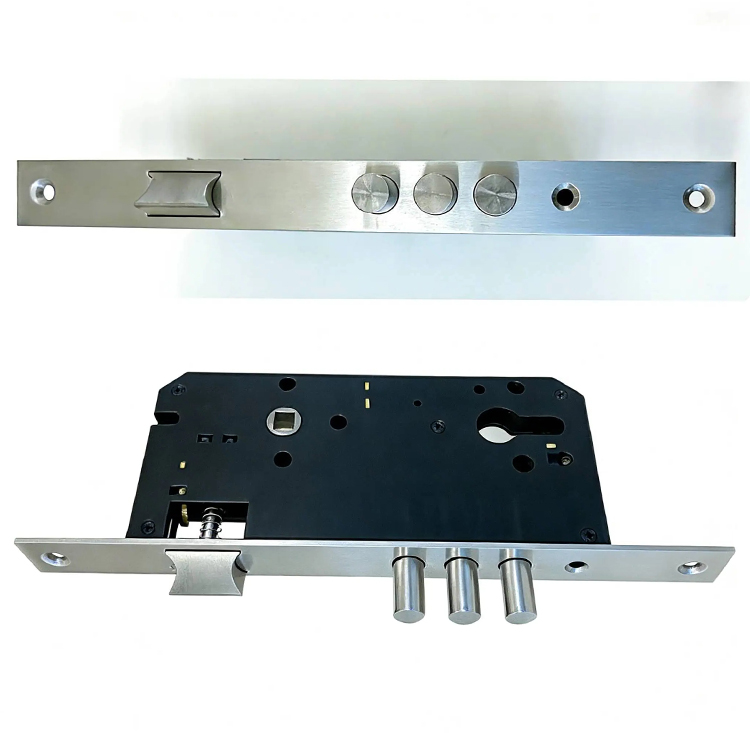
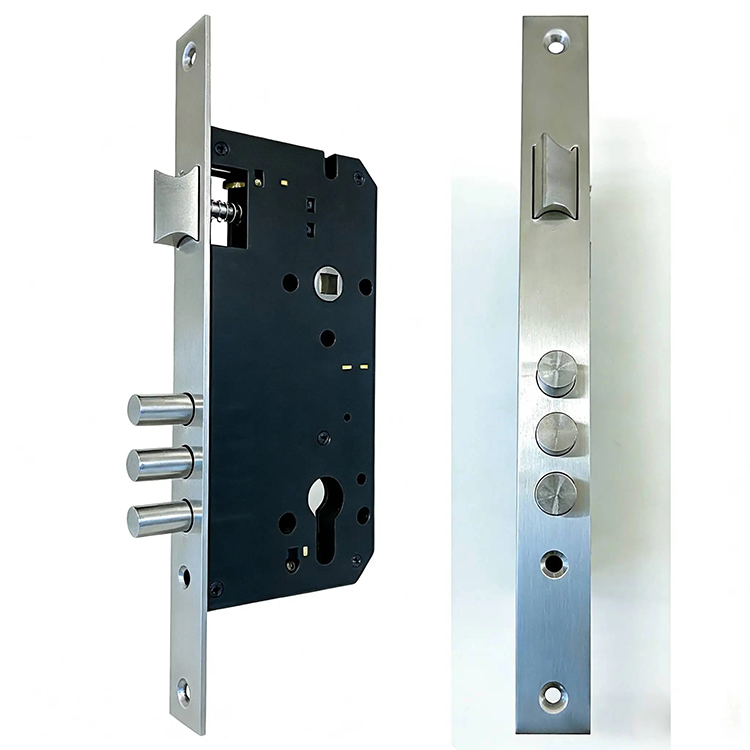
A multipoint locking system secures a door at two or more positions along the opening edge. Depending on the design, those points may be hooks, rollers, deadbolts, round bolts, tongues, top shoot bolts, bottom shoot bolts, or a mixture of several elements.
A single-point door lock secures the door at one primary location, normally through a latch, deadbolt, mortise bolt, or cylindrical lock near handle height.
Here is the practical decision:
Choose a multipoint door lock when the door is tall, wide, heavy, exposed to wind-driven rain, expected to compress a perimeter gasket, or sold as part of a premium entrance system.
Choose a single-point lock when the door is relatively small, well supported, lightly exposed, price-sensitive, and expected to be repaired by almost any local locksmith.
Reject either option when the supplier cannot provide dimensional drawings, keeper details, operating-force targets, cycle-test criteria, or replacement-part information.
That last point matters.
A weak three-point locking system is not automatically safer than a strong Grade 1 deadbolt installed with a reinforced strike, suitable screws, a stable frame, and competent workmanship. More locking points distribute force. They do not erase poor engineering.
How the Two Door Lock Systems Actually Work
What Happens Inside a Multipoint Locking System
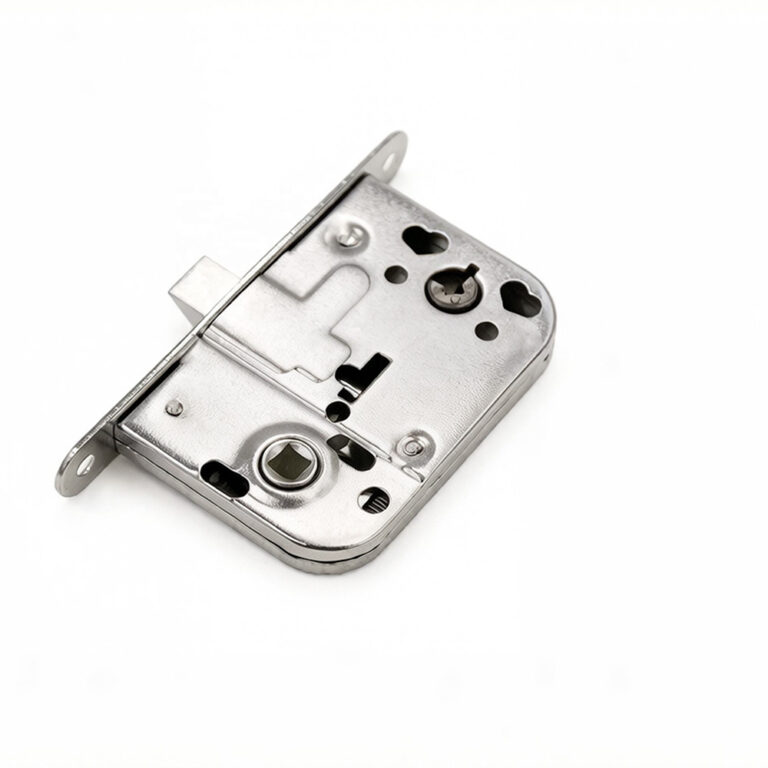
A multipoint system normally uses a central lockcase or gearbox to convert handle or key movement into travel along an extended faceplate. Connecting rods, rack mechanisms, drive bars, or linked components then move the upper and lower locking elements.
One action. Several points.
The advantage is distribution. Instead of asking one central bolt to restrain the entire door edge, the system engages the frame at several locations. This can reduce local movement, make prying more difficult at one isolated point, and pull more of the panel toward the weatherseal.
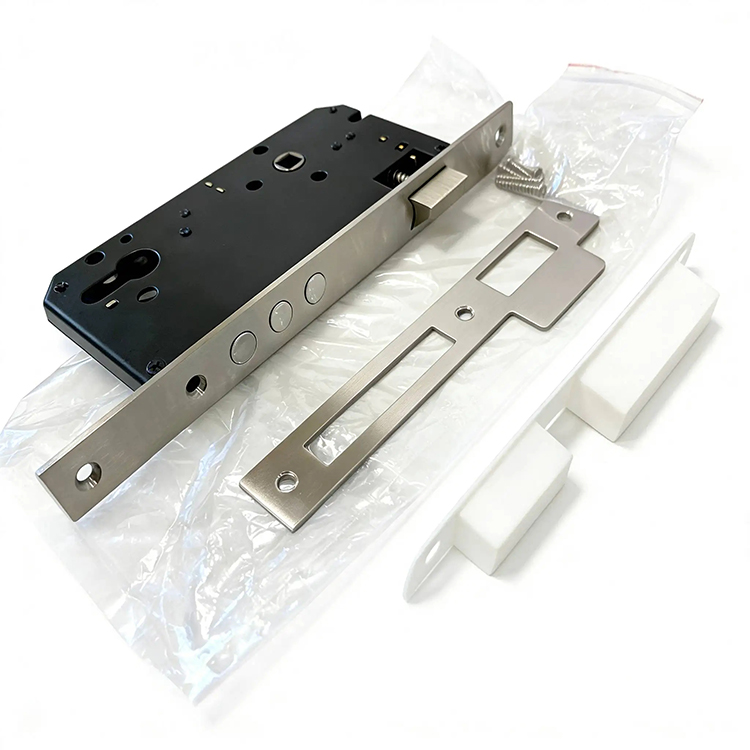
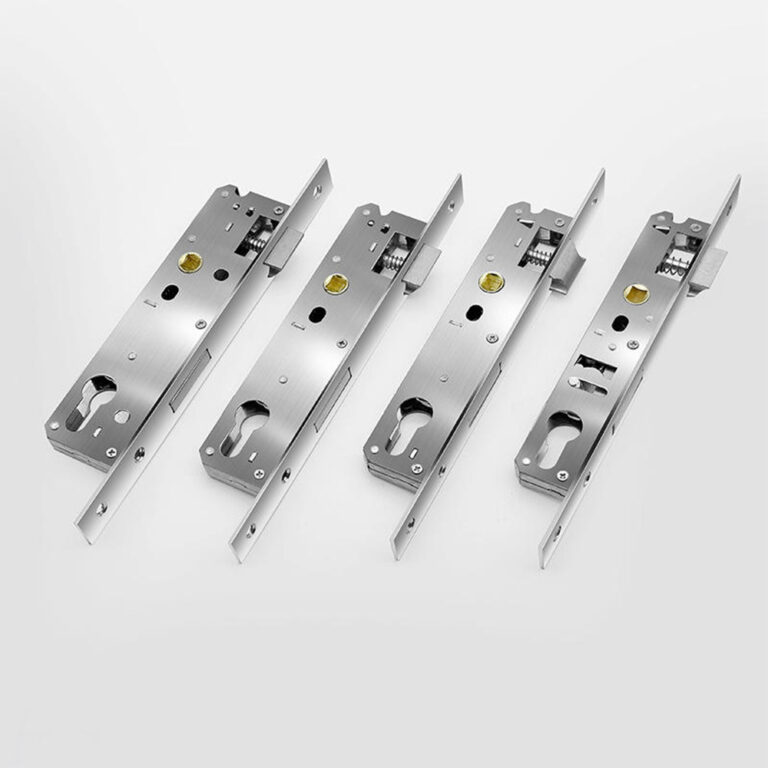
But compatibility is unforgiving. Backset, handle-to-cylinder distance, spindle size, faceplate width, door height, handing, hook direction, bolt position, keeper geometry, cylinder projection, and operating travel all have to match. The current CHIER multipoint door lock range reflects this system-based approach by separating products according to gearbox, faceplate, locking-point, and keeper configuration.
What Happens Inside a Single-Point Lock
A single-point lock is mechanically simpler. Turning the key, thumb turn, or lever retracts or projects one main locking element.
That simplicity has real value.
There are fewer linked parts, fewer alignment locations, fewer keepers to position, and fewer components that can bind when the door drops on its hinges. Replacement is usually quicker. Local locksmith familiarity is generally better. Inventory is easier to manage.
But the holding force stays concentrated near the lockset. On a tall door, the upper and lower corners may still move away from the frame under gasket pressure, thermal movement, wind load, or panel distortion.
A deadbolt can hold the middle while the corners misbehave.
That is the sealing problem most lock advertisements avoid.
Security: More Locking Points Help, but They Do Not Fix a Weak Door
The FBI’s preliminary 2025 figures reported a 12.4% decrease in property crime from 2024 to 2025, based on submissions from more than 17,000 agencies covering 96% of the U.S. population. That is encouraging, but national crime movement does not tell a door manufacturer which lock will resist a local forced-entry method. It certainly does not validate an untested product claim. Read the FBI’s preliminary 2025 crime release.
Where a Multipoint Door Lock Has a Mechanical Advantage
A properly designed multipoint door lock can make localized prying harder because an attacker must create enough deformation or component failure to release several engagement points rather than one.
It may also reduce door-edge flex between the latch area and the corners. Hook bolts can resist separation in a different manner from straight bolts. Top and bottom shoot bolts can restrain vertical movement where the frame and threshold are designed to receive them.
But here is the hard truth: three bolts do not provide three times the security.
Security still depends on:
The strength and throw of each locking element
Keeper material and fastener embedment
Frame reinforcement
Cylinder attack resistance
Gearbox construction
Door-panel stiffness
Hinge-side protection
Installation tolerances
Whether every point actually engages fully
A three-point lock with three thin keepers is still a weak system.
The Florida Approval That Shows What Real Evidence Looks Like
On September 11, 2025, Florida approved the Securitech Trident TEL-100/200 multipoint lock under product approval FL14075-R5. The record identifies the component as impact resistant, suitable for Florida’s High-Velocity Hurricane Zone, and rated at a design pressure of +100/-100 under the listed approval conditions. See the Florida Building Code product approval.
That is meaningful evidence.
It is also frequently misused.
The approval supports a named product, defined installation, referenced test route, and stated limits of use. It does not prove that every multipoint lock can survive impact or ±100 design pressure. A look-alike mechanism with thinner steel, different fasteners, altered keepers, or an unverified gearbox does not inherit another manufacturer’s approval.
I would trust a modest lock with traceable test evidence before I trusted a “premium security” lock backed only by a glossy rendering.
Sealing: This Is Where Multipoint Locks Often Earn Their Cost
Security attracts attention. Sealing pays the quieter bills.
A single-point lock pulls the door toward the frame at one main height. If the panel, frame, hinges, gasket, and threshold are already straight and stable, that may be enough.
On a tall exterior door, it often is not.
A multipoint locking system can apply closing pressure at upper, middle, and lower positions. That distributed pull-in can help compress weatherstripping more evenly, limit corner movement, and reduce gaps caused by moderate panel bowing or uneven gasket resistance.
The effect is mechanical, not magical.
The lock does not add insulation to the door core. It does not repair a twisted frame. It does not revive hardened EPDM, TPE, silicone, or PVC weatherseals. It cannot compensate for a badly set threshold or loose hinge fasteners.
It can only help a well-designed assembly close consistently.
The U.S. Department of Energy states that air sealing reduces unwanted air movement and can lower heating and cooling costs. Its guidance also says caulking and weatherstripping often pay for themselves in one year or less, while identifying weatherstripping as the method used on moving components such as doors and operable windows. Review the Department of Energy’s air-sealing guidance.
That does not mean fitting a multipoint lock guarantees a one-year payback. It means perimeter leakage has real economic consequences, and hardware that controls gasket compression deserves more attention than buyers usually give it.
Why Single-Point Doors Develop Corner Gaps
Consider a 2.4-meter entrance door with a central deadbolt.
The lock pulls at roughly handle height. The hinges control the opposite edge. The top and bottom corners remain dependent on slab stiffness, frame alignment, seal resistance, and hinge condition.
Now add heat, moisture, wind pressure, installation drift, or hinge wear.
The central bolt may still engage perfectly while the upper corner begins to whistle in cold weather. The homeowner blames the gasket. The installer adds a thicker seal. Handle force rises. Then the latch starts sticking.
This failure chain is common because teams treat the lock, hinge, gasket, and frame as separate purchases. They are not.
They are one closing system.
Cost: The Cheap Lock Can Create the Expensive Door
A single-point lock normally wins the first-cost comparison. The mechanism is smaller, installation is familiar, preparation is simpler, and replacement stock is widely available.
A multipoint door lock costs more because the buyer is purchasing more than extra bolts. The system may include:
A central gearbox
A long faceplate
Upper and lower locking elements
Extension pieces or shoot bolts
Multiple keepers
A compatible lever handle
A compatible cylinder
Additional machining
More installation and adjustment time
More model-specific replacement inventory
Current U.S. retail listings illustrate the scale of the difference. In July 2026, All About Doors & Windows listed several Trilennium and Pella/G-U multipoint assemblies between $456.98 and $628.90. A Home Depot listing showed a three-pack of heavy-duty single-cylinder deadbolts at $224.22, equal to $74.74 per lock. These are retail replacement examples—not equivalent OEM quotations—but they expose the cost gap buyers should expect.
The mistake is comparing only those purchase prices.
A cheaper lock can become expensive when it contributes to air-leakage complaints, door-corner movement, repeat adjustments, field drilling, mismatched replacement hardware, warranty visits, or complete door replacement.
And a multipoint lock can become equally expensive when the supplier changes the gearbox or keeper geometry without controlled approval.
For OEM buyers, the real comparison is total installed and serviced cost, not lock price.
Multipoint Door Lock vs Single-Point Lock Comparison
Decision Factor
Multipoint Door Lock
Single-Point Lock
My Verdict
Locking locations
Two or more hooks, bolts, rollers, tongues, or shoot bolts
One primary latch or deadbolt location
Multipoint distributes restraint more evenly
Forced-entry resistance
Can resist localized separation better when every point and keeper is properly engineered
Depends heavily on one bolt, strike, frame, and fastener group
Tested assembly performance matters more than point count
Weatherseal compression
Pulls the panel toward the seal at several heights
Concentrates pull-in near the central lock
Multipoint normally has the sealing advantage
Installation
Requires accurate routing, keeper placement, alignment, and adjustment
Familiar preparation and simpler alignment
Single-point is easier and cheaper to install
Door movement tolerance
Can bind when the door drops or keepers drift
Fewer engagement points to misalign
Single-point is more forgiving
Maintenance
Gearbox, rods, bolts, keeps, handle, cylinder, and hinges must remain synchronized
Fewer components and easier diagnosis
Single-point wins on service simplicity
Replacement availability
Often model-, dimension-, and handing-specific
Widely stocked by locksmiths and retailers
Confirm spare-part support before buying multipoint
Current retail hardware example
Approximately $456.98–$628.90 for selected replacement assemblies
Approximately $74.74 for one listed heavy-duty deadbolt
Gearbox wear, partial engagement, keeper misalignment, excessive operating force
Weak strike, short screws, frame splitting, corner leakage
Neither system forgives poor installation
The Hidden Compliance Question: Can Everyone Operate the Lock?
A lock that resists entry but blocks lawful users is not a successful specification.
Under the 2010 ADA Standards, operable parts must work with one hand, must not require tight grasping, pinching, or wrist twisting, and must require no more than 5 pounds or 22.2 newtons of activation force. Door and gate hardware must also generally be mounted between 34 and 48 inches above the finished floor where those provisions apply. Read the 2010 ADA Standards for Accessible Design.
This matters because some lift-to-lock multipoint mechanisms demand substantial handle movement and force, especially when the gasket is over-compressed or the keepers are poorly aligned.
The lock may function.
The user may struggle.
And enforcement is not theoretical. In the federal Rosa Mexicano consent decree, the defendants were required to install door hardware operable with one hand without tight grasping, pinching, or twisting. The wider decree also imposed a $30,000 civil penalty for the broader ADA case. Read the Rosa Mexicano consent decree.
For commercial and public-facing projects, match the lock to suitable lever door handle configurations and test the complete installed assembly. Do not approve the handle from one catalog and the gearbox from another, then assume the operating force will somehow work itself out.
How to Choose the Best Door Lock for Security
Start with the opening. Not the brochure.
1. Define the Door and Frame
Record:
Door material
Door thickness
Door height and width
Panel weight
Frame material
Inward or outward swing
Left- or right-hand operation
Hinge type and quantity
Threshold design
Gasket type and compression target
Exposure to rain, wind, salt, dust, heat, or freezing temperatures
A lock selected without this information is a guess.
2. Define the Exact Lock Geometry
For a multipoint system, confirm:
Backset
Handle-to-cylinder center distance
Faceplate width and thickness
Spindle dimension
Cylinder type
Locking-point type
Locking-point height
Keeper dimensions
Shoot-bolt travel
Handle rotation
Key-above or key-below configuration
Split-spindle or solid-spindle arrangement
Door handing
Required operating sequence
The CHIER technical download center provides the right direction for this process: begin with catalogs and model information, then request dimension drawings, interface details, CAD files, installation data, and current document revisions for the selected hardware.
3. Ask for Tests That Match the Claim
If the supplier claims security, request forced-entry or structural evidence relevant to the target market.
If the supplier claims durability, define cycle count, operating load, inspection intervals, sample quantity, and failure criteria.
If the supplier claims corrosion resistance, define the substrate, coating, sample condition, exposure method, duration, and acceptance criteria.
If the supplier claims better sealing, test the complete door assembly before and after cycling—not a loose lock mechanism on a bench.
CHIER’s hardware quality-control and testing process correctly separates dimensional verification, operating torque, strength, cycle life, corrosion exposure, traceability, and change control. One generic test statement should never be accepted for every lock, handle, hinge, and application.
4. Price the Failure, Not Just the Hardware
Ask what happens when the gearbox fails after five years.
Can the central lockcase be replaced without removing the entire strip? Are extension rods still available? Are keepers model-specific? Will the original cylinder and handle remain compatible? Is the faceplate dimension controlled for repeat orders?
This is where OEM and ODM multipoint hardware development can be more valuable than buying a generic catalog mechanism. A controlled program should define interfaces, drawings, revisions, inspection points, packaging, replacement parts, and ownership of future changes before production starts.
5. Make the Final Decision
Choose a multipoint door lock when:
The opening needs distributed resistance
The door is tall, wide, heavy, or exposed
Perimeter gasket compression matters
The system can be tested as a complete assembly
Correct installation and adjustment are available
Replacement components will remain supported
Choose a single-point lock when:
The opening is simple and stable
Exposure is limited
Initial cost is the dominant constraint
Easy field repair matters
Local locksmith support is important
Additional locking locations provide little measurable value
My strongest opinion is also the simplest: never pay for extra locking points that the supplier cannot prove are engaging, contributing, and serviceable.
Decorative complexity is still complexity.
FAQs
Is a multipoint lock better than a single-point lock?
A multipoint door lock is better than a single-point lock when the door is tall, wide, exposed to wind or rain, or expected to maintain even gasket compression, because one operation engages several points along the frame instead of concentrating holding force at a single latch or deadbolt.
For small, stable, lightly exposed doors, a high-quality single-point deadbolt may provide the better balance of security, price, installation simplicity, and repair availability.
What is a multipoint locking system?
A multipoint locking system is a door-lock mechanism that uses one handle, cylinder, or gearbox to engage two or more hooks, bolts, rollers, or shoot bolts along the door edge, distributing restraint and closing pressure across several frame locations rather than relying on one central locking point.
A three-point locking system is one common version, but some designs use two, four, five, or more engagement locations.
Does a multipoint door lock improve sealing?
A multipoint door lock can improve sealing by pulling the door panel against the weatherstripping at several heights, which can reduce local gaps caused by bowing or uneven compression; however, it cannot repair a warped slab, damaged gasket, loose hinge, poor threshold, or badly installed frame.
The full door should be tested for air and water performance in the intended configuration rather than assuming the lock alone will deliver a specific result.
How much does a multipoint door lock cost?
Multipoint door lock cost is the combined price of the long faceplate, gearbox, locking elements, keepers, compatible handle and cylinder, installation labor, adjustment time, and future replacement parts, so the real budget is normally much higher than the shelf price of a basic single-point deadbolt.
Current replacement-market examples can exceed $450 for the lock assembly alone, while common single-point deadbolts may cost below $100 before installation.
What is the best door lock for security?
The best door lock for security is the lock that has verified performance as part of the exact door, frame, strike, fastener, hinge, cylinder, and installation configuration, because a high-grade deadbolt or three-point locking system can still fail when the surrounding assembly is weak or incorrectly fitted.
Ask for applicable test evidence, installation instructions, keeper details, operating-force limits, replacement-part support, and traceable production controls.
Can a multipoint door lock comply with ADA requirements?
A multipoint door lock can be ADA-compatible when its lever, cylinder, latch, and related operable parts work with one hand, avoid tight grasping, pinching, or wrist twisting, and meet the applicable force and mounting requirements, but compliance must be checked on the complete installed door rather than the lock catalog alone.
Gasket pressure, keeper alignment, handle geometry, door closers, hinges, and installation tolerances can all change the force experienced by the user.
Your Next Step: Specify the Whole Door System
Do not request a quote using only the words “three-point lock.”
Send the door profile, slab dimensions, material, handing, backset, handle-to-cylinder centers, faceplate dimensions, keeper layout, gasket details, target market, expected cycle life, corrosion environment, packaging requirements, and any applicable test standard.
Then ask one direct question:
What evidence proves this exact configuration will remain secure, sealed, operable, and replaceable after production begins?
For a technical review, drawing check, OEM proposal, or project quotation, contact CHIER with your door and hardware requirements. The right multipoint door lock should be selected around the opening—not forced into it after the door has already been designed.