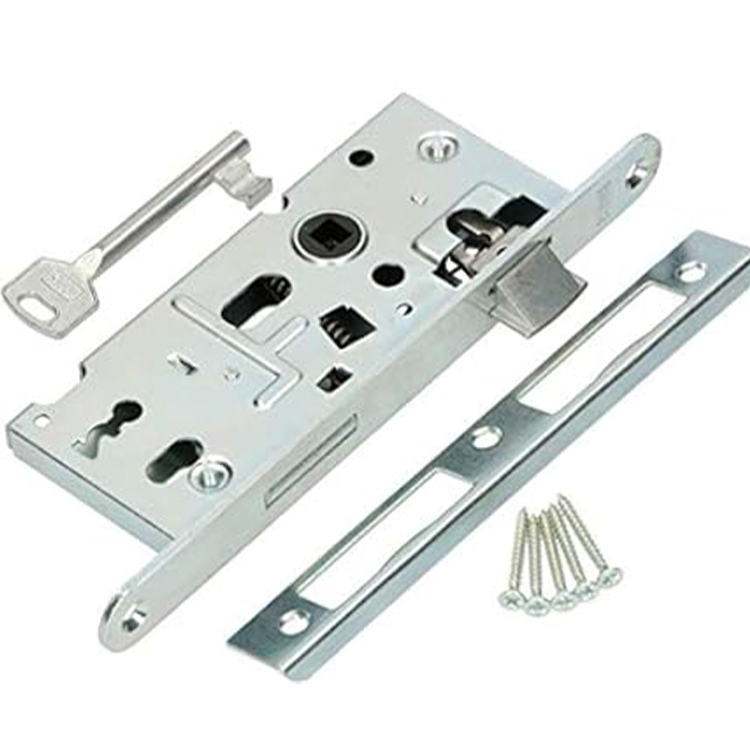
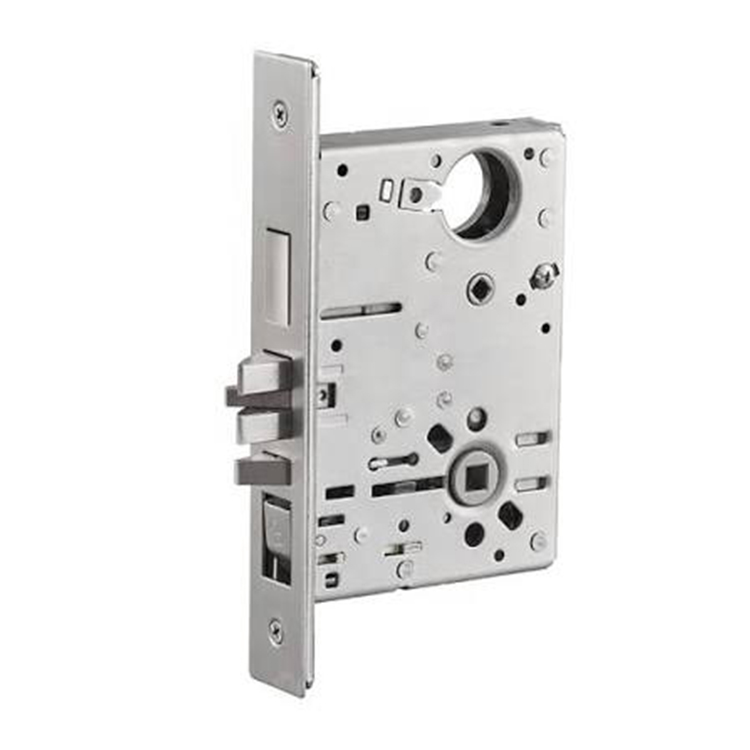
Looking for hardware solutions that meet European / American standards?
Use this guided inquiry modal to move from a generic quote form to a clearer technical conversation. Buyers can choose whether they need pricing, CAD / 3D files, or OEM / ODM support before sharing contact details.
Compatibility-first design across door / window systems
Repeatable production with clear inspection checkpoints
Documentation and change control for long-running programs
Responsive engineering support for fit and field feedback
A mislabeled opening can send the wrong lever, latch, lock case, strike, cylinder or complete door set to a project, where installers discover that the handle points into the frame, the latch bevel faces backward or the escape-side hardware cannot operate correctly.
So why do purchase orders still say “left door” without showing where the observer is standing?
Door handing describes two separate facts: which side carries the hinges and which way the door swings. Reversible hardware introduces a third question—whether the handle or lock can be changed from one hand to the other after manufacturing.
Mix those questions together and mistakes follow.
My rule is blunt: never approve a handed door or handle from an abbreviation alone. Record the viewing side, hinge position, swing direction and lever orientation. A 15-second sketch can prevent a 15,000-unit argument.
Door Handing in Plain English
Door handing is a standardized way to describe the orientation of a hinged door and its operating hardware. In North American commercial terminology, we normally stand on the secure side, also called the exterior, outside or key side, and face the closed door.
From that position:
Look for the hinges.
Decide whether they are on the left or right.
Open the door.
Note whether it moves away from you or toward you.
That produces four common designations:
Door handing
Hinge position from secure side
Door movement from secure side
Common description
Typical ordering risk
Left Hand, LH
Left
Swings away
Left-hand inswing
Lever, latch or mortise trim ordered RH
Right Hand, RH
Right
Swings away
Right-hand inswing
Handle curve points toward frame
Left Hand Reverse, LHR
Left
Swings toward you
Left-hand outswing
Exit hardware or latch bevel configured incorrectly
Right Hand Reverse, RHR
Right
Swings toward you
Right-hand outswing
Wrong trim, cylinder orientation or active-leaf designation
That table is simple. Reality isn’t.
Residential suppliers, door manufacturers, locksmiths and European hardware companies do not always use identical reference conventions. Schlage also warns that handing a lever or lock is not always the same exercise as handing a door for carpentry purposes. Some passage, privacy and keyed levers can be flipped, while curved dummy levers and certain handlesets require a specified hand. Review the manufacturer’s door handing explanation before assuming one convention applies to every product.
Pictures beat abbreviations.
For international orders, I would put a plan-view sketch on the drawing showing the secure side, escape side, hinge edge, latch edge, opening arc and the words PUSH or PULL. “LH” alone is not enough when two teams use two definitions.
How to Determine Door Handing Without Guessing
Step 1: Establish the reference side
Stand on the secure, keyed or exterior side of the opening and face the closed door.
For an exterior entrance, this is usually outside the building. For a locked office, it is generally the corridor side where a user inserts the key. For an unlocked closet or passage door, the project team must define a consistent reference side rather than improvising from room to room.
Do not skip this step.
“Left” has no useful meaning until everyone knows where the viewer is standing.
Step 2: Locate the hinges
If the hinges appear on your left, begin with left hand.
If the hinges appear on your right, begin with right hand.
The hinge position establishes the hand. It does not, by itself, tell you whether the door is standard or reverse.
Step 3: Watch the door swing direction
If the door swings away from you, it is normally LH or RH.
If it swings toward you, it is normally LHR or RHR.
This is the cleanest answer to the common “left hand vs right hand door” question. But installers should still verify the terminology used by the exact door, frame and hardware supplier.
Step 4: Record more than the code
A professional door schedule should include:
LH, RH, LHR or RHR
Secure or key side
Inward or outward opening
Push or pull side
Active leaf on paired doors
Latch-bevel direction
Lever orientation
Door and frame material
Lock and cylinder function
Closer, panic hardware or access-control requirements
The useful internal reference here is the door handle and lock compatibility checklist, because handing is only one interface among the spindle, follower, PZ distance, fixing centres, backset, faceplate, keeper and frame clearance. A correctly handed handle can still be completely incompatible with the lock.
Left, Right, Inward, Outward and Reversible Are Different Questions
Left hand vs right hand door
Left hand and right hand identify the hinge side from the agreed viewing position.
They do not automatically tell you whether the door opens into or out of a room. That information comes from the swing direction and, in commercial terminology, may add the word reverse.
Inswing vs outswing door
An inswing door opens into the building, room or protected space. An outswing door opens toward the exterior, corridor or exit-travel side.
But those words are location-dependent.
A door between two interior rooms can be described as swinging “out” of one room and “into” the other. That is why I prefer the more precise language: “swings toward the corridor,” “swings into Room 204,” or “swings in the direction of egress.”
No ambiguity.
Left hand reverse door
A left hand reverse door has hinges on the left when viewed from the secure side and swings toward the viewer.
In many commercial applications, this corresponds to a left-hinged door that opens outward from the protected space.
Right hand reverse door
A right hand reverse door has hinges on the right when viewed from the secure side and swings toward the viewer.
LHR and RHR matter when specifying mortise locks, exit devices, some closers, electrified hardware, latch orientation and handed decorative trim. They are not decorative labels.
Reversible door handle
A reversible door handle is designed so the installer or manufacturer can change its left-right orientation. Depending on the product, this may involve swapping levers, rotating the latch bolt 180 degrees, repositioning a handing screw, reversing a spring cassette or changing the cylinder and cam orientation.
And here is the hard truth: reversible does not mean universally compatible.
A handle may be reversible but still require an 8 mm spindle, a 92 mm PZ centre, a specific fixing pattern, a narrow backplate, a particular lock follower or a limited door-thickness range. Buyers should compare those details across the available door and window handle range rather than treating “reversible” as a complete specification.
Which Door Handles Are Actually Reversible?
Many modern residential passage, privacy and keyed levers are field-reversible. Straight lever designs are especially easy to use on either hand because their visual orientation changes little.
Curved levers are different.
A curved lever installed on the wrong side may point upward, interfere visually with the frame or place the return end in an awkward position. Dummy levers, entrance handlesets, mortise trim, electronic locks and multipoint door handles may therefore require a defined hand or a product-specific rehanding procedure.
I would classify the common options like this:
Hardware type
Usually reversible?
What must still be checked
Straight passage lever
Often
Latch bevel, spindle, screw orientation
Privacy lever
Often
Emergency release and interior/exterior trim
Keyed cylindrical lever
Often
Cylinder position, chassis and latch direction
Curved dummy lever
Frequently handed
Lever curve and mounting side
Entrance handleset
Model-dependent
Interior lever hand and exterior grip layout
Mortise lock trim
Model-dependent
Lock function, hub direction, latch and handing screw
Multipoint door handle
Sometimes
PZ, spindle, lift direction, gearbox and lock case
Exit device trim
Frequently application-specific
LHR/RHR, active leaf, fire rating and cylinder function
Electronic lock
Model-dependent
Cable routing, cam position, handing plate and software setup
The best reversible door handles are not the products carrying the biggest “universal” label. They are the products with clear rehanding instructions, controlled dimensions, compatible lock interfaces and a completed functional test on the intended door.
For multipoint assemblies, also verify whether the handle contains its own return spring or depends on the lock case. The distinction between sprung and unsprung door handles can determine whether the lever returns to horizontal or slowly droops after installation.
Door Swing Direction Is a Safety Decision
Handing is not paperwork trivia.
Under OSHA regulation 29 CFR 1910.36, a door connecting a room to an exit route must swing in the direction of exit travel when the room is designed for more than 50 occupants or is a high-hazard area. Employees must also be able to open an exit-route door from inside without keys, tools or special knowledge.
Why outward?
Because a crowd pressing toward an exit should not have to move backward to create the space needed for an inward-swinging leaf. That principle does not mean every residential door should open outward. It means occupancy, hazard level, local code and egress design control the decision.
The consequences of bad egress design are documented. During the February 20, 2003 Station nightclub fire in Rhode Island, approximately two-thirds of occupants tried to leave through the main entrance. A crowd crush developed before 90 seconds, nearly stopping movement through the front exit. One hundred people died, and NIST reported that 95 fatalities involved occupants being unable to evacuate before conditions along the egress path became untenable. The NIST investigation did not reduce the disaster to one incorrectly handed door; it showed how entrance geometry, merging traffic and exit arrangements become life-safety systems under pressure.
That distinction matters. Sensational claims help nobody. Correct system design does.
Accessibility Changes the Handing Conversation
Door swing direction determines where a person must position a wheelchair, walker or mobility aid to reach the handle and clear the moving leaf.
The 2010 ADA Standards for Accessible Design require door hardware operable parts to sit between 34 and 48 inches—865 and 1,220 mm—above the finished floor. Operable parts must work with one hand, without tight grasping, pinching or wrist twisting, and the activation-force limit is 5 pounds, or 22.2 N.
Handing also changes maneuvering clearance. For a front approach to the pull side of a manual swinging door, the ADA table specifies 60 inches perpendicular to the doorway and 18 inches beyond the latch side. A basic front push approach requires 48 inches perpendicular, with another 12 inches beyond the latch side when both a closer and latch are installed.
Those are not theoretical drawing-room numbers.
In a U.S. Department of Justice agreement involving AmericInn by Wyndham, investigators documented doors requiring 7, 9, 10, 12, 14 and 15 pounds of opening force where the referenced maximum was 5 pounds. They also identified obstructed latch-side clearances and door security hardware mounted at 54 inches, above the 48-inch maximum. Read the DOJ accessibility findings.
A door can have the correct hand and still fail the user.
The Procurement Risks Hidden Behind “Universal”
The latch may be reversible while the trim is not
Many tubular latches allow the beveled latch bolt to rotate 180 degrees. That does not prove the exterior trim, curved lever, cylinder or privacy release can also be reversed.
The handle may reverse while the lock case cannot
Mortise and multipoint lock cases can contain asymmetric components, split followers, automatic locking mechanisms, panic functions or handed auxiliary bolts. Check the exact model drawing.
The lever may fit but hit the frame
Changing the hand can place a curved lever, thumbturn or return end closer to the stop, rebate, gasket or glazing bead. Verify clearance at 0 degrees, during rotation and with the door opened to its intended maximum angle.
The hinge choice may change the whole result
Door weight, hinge projection, pivot geometry and frame construction affect sag, closing force and latch alignment. Coordinate the handle specification with the selected commercial door hinge solutions rather than approving hinges and locks as unrelated components.
A recall can begin with a small internal failure
In 2006, the U.S. Consumer Product Safety Commission announced a recall of 25,000 Stanley Keyed 5K Series door handle locks after three failure reports. The products had sold for approximately $65 to $115, and the stated risk was entrapment during an emergency. The CPSC Stanley recall is a useful reminder that a handle must be tested as an escape mechanism, not merely admired as trim.
CPSC issued another recall on August 11, 2021, covering about 2,400 dormakaba DE8310 delayed-egress locksets that could fail to open. The DE8310 recall notice identified an emergency-entrapment risk.
Established brand. Serious failure.
That is why I reject the idea that handing and operation can be approved from one glossy sample.
The Door Handing Specification I Would Approve
Before ordering, put the following data on one controlled drawing:
Opening ID and room numbers
Observer or secure-side position
LH, RH, LHR or RHR designation
Plan-view opening arc
Inward or outward direction
Push side and pull side
Hinge type and hinge edge
Active and inactive leaves
Door and frame material
Finished door thickness
Backset
PZ or handle-to-cylinder centres
Spindle size and engagement
Fixing centres
Latch-bevel direction
Lock and cylinder function
Lever shape and return direction
Closer or spring-hinge requirement
Exit, fire, accessibility or access-control classification
Product model and drawing revision
Then ask for the model-specific hardware drawings, catalogues and technical files. CHIER’s download workflow specifically asks buyers to identify the application, opening type, mounting centres, spindle or fork interface, lock interface and current document revision before tooling or profile machining.
And test the assembly.
Operate it from both sides. Lock it. Unlock it. Lift the multipoint mechanism. Release it. Let the lever return. Push against the seals. Check the strike. Test the minimum and maximum door thickness. Confirm the escape function with the door open before testing it closed.
Measure first.
FAQs
What is door handing?
Door handing is the standardized description of a hinged door’s hinge position and swing direction, viewed from an agreed reference side—normally the secure, exterior or key side—so manufacturers, specifiers, installers and buyers can order the correct door leaf, lock, latch, lever, closer and exit hardware.
The four common North American commercial designations are LH, RH, LHR and RHR. Always include a diagram because regional and manufacturer terminology can vary.
How do I determine door handing?
To determine door handing, stand on the secure or key side facing the closed door, identify whether the hinges are on your left or right, then note whether the leaf swings away from you or toward you before recording LH, RH, LHR or RHR.
Hinges left plus swing away equals LH. Hinges right plus swing away equals RH. Hinges left plus swing toward you equals LHR. Hinges right plus swing toward you equals RHR.
What is the difference between a left hand reverse and right hand reverse door?
A left hand reverse door has hinges on the left and swings toward the observer standing on the secure side, while a right hand reverse door has hinges on the right and also swings toward that observer; both are commonly associated with outward-opening doors in North American commercial schedules.
Reverse handing often matters for panic hardware, mortise locks, electrified trim, latch orientation and paired-door active-leaf designations.
What is a reversible door handle?
A reversible door handle is hardware designed so its lever, latch, cylinder or internal orientation can be changed for left- or right-hand installation without buying a separate factory-handed model, although the precise field-rehanding steps and permitted door functions still depend on the manufacturer and product series.
Check whether “reversible” applies to the entire lockset or only one component. A reversible latch does not automatically make curved trim, dummy levers, cylinders or electronic components reversible.
Are reversible door handles better?
The best reversible door handles are products that support both left- and right-hand installation while retaining correct latch movement, lever return, cylinder operation, frame clearance and emergency function, supported by clear instructions and model-specific drawings rather than a vague claim that the product is universal.
Reversibility can reduce inventory SKUs, but it does not replace compatibility checks for spindle size, PZ centres, fixing centres, backset, door thickness and lock function.
What is the difference between an inswing and outswing door?
An inswing door opens into the room or protected interior, while an outswing door opens toward the exterior, corridor or exit-travel side; the better choice depends on egress rules, weather exposure, security, floor area, accessibility clearance, adjacent traffic and the complete frame-and-hardware design.
For U.S. workplaces, OSHA requires outward swing in the direction of exit travel for rooms designed for more than 50 occupants and for high-hazard areas.
Send the Handing Diagram Before Ordering
Do not send a supplier the words “left door” and hope everyone imagines the same opening.
Photograph the door from the secure side. Add a plan-view sketch. Mark the hinges, swing arc, push side, pull side, active leaf, lock function, spindle, PZ centres, fixing centres and finished door thickness.