Looking for hardware solutions that meet European / American standards?
Use this guided inquiry modal to move from a generic quote form to a clearer technical conversation. Buyers can choose whether they need pricing, CAD / 3D files, or OEM / ODM support before sharing contact details.
Compatibility-first design across door / window systems
Repeatable production with clear inspection checkpoints
Documentation and change control for long-running programs
Responsive engineering support for fit and field feedback
Window lock names are used loosely, and that causes expensive ordering mistakes. A buyer who asks for a “sash lock” may mean a surface-mounted fastener on the meeting rails of a double-hung window. A “cam lock” may be a casement handle driving an adjustable cam, and an “espagnolette” may be a full-height rod system hidden in the sash. The terms overlap because they describe different things: where the lock sits, how it engages, the shape of the engaging part, and how many points it secures.
This guide separates those layers, compares the five lock families, and sets out the specification points that decide whether a lock fits a given profile and keeps working after installation.
Why These Five Names Overlap
The five names answer four different questions:
Where does the lock sit? A sash lock is fitted between two sashes, usually on the meeting rails.
How does it engage? A cam lock uses a rotating, often eccentric profile that catches or pulls against a keeper.
What shape is the engaging part? A crescent lock takes its name from its crescent-shaped sweep or cam.
How is the sash secured around its perimeter? Espagnolette and multipoint systems use a handle, gearbox or rod to move several locking elements at once.
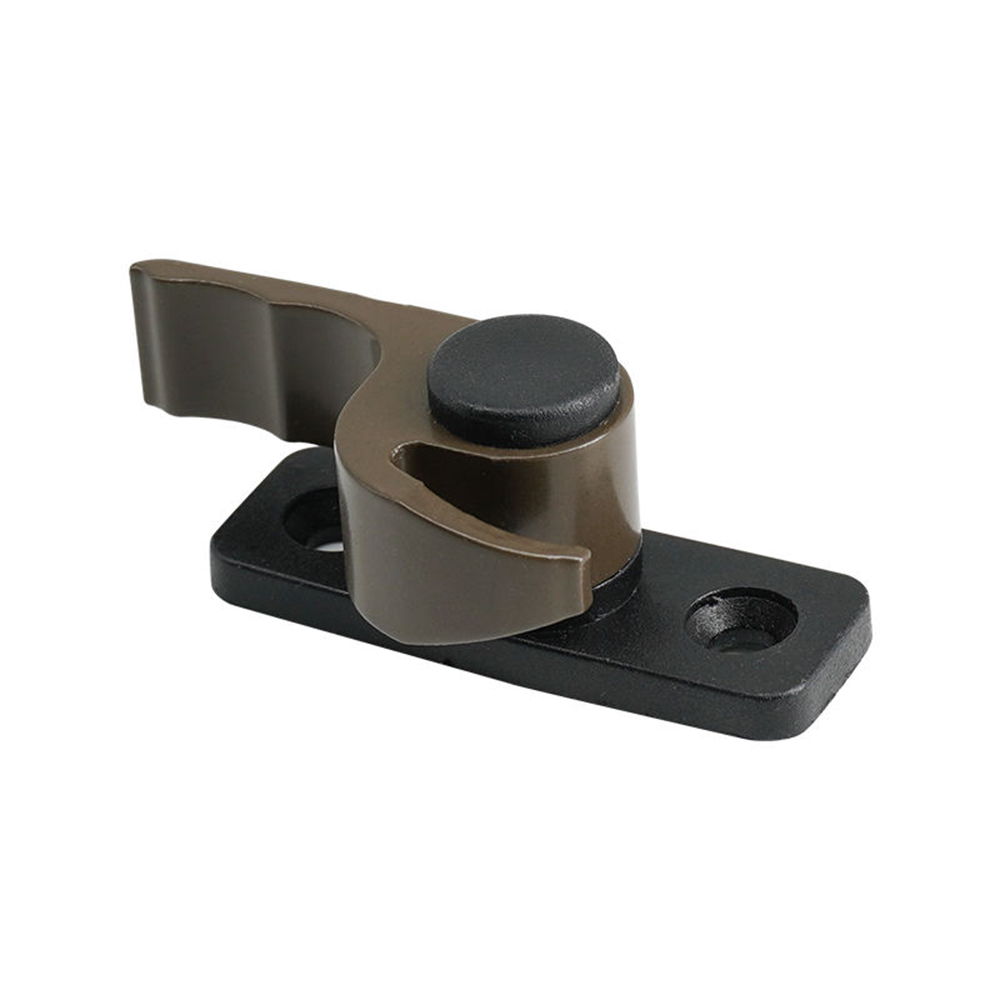
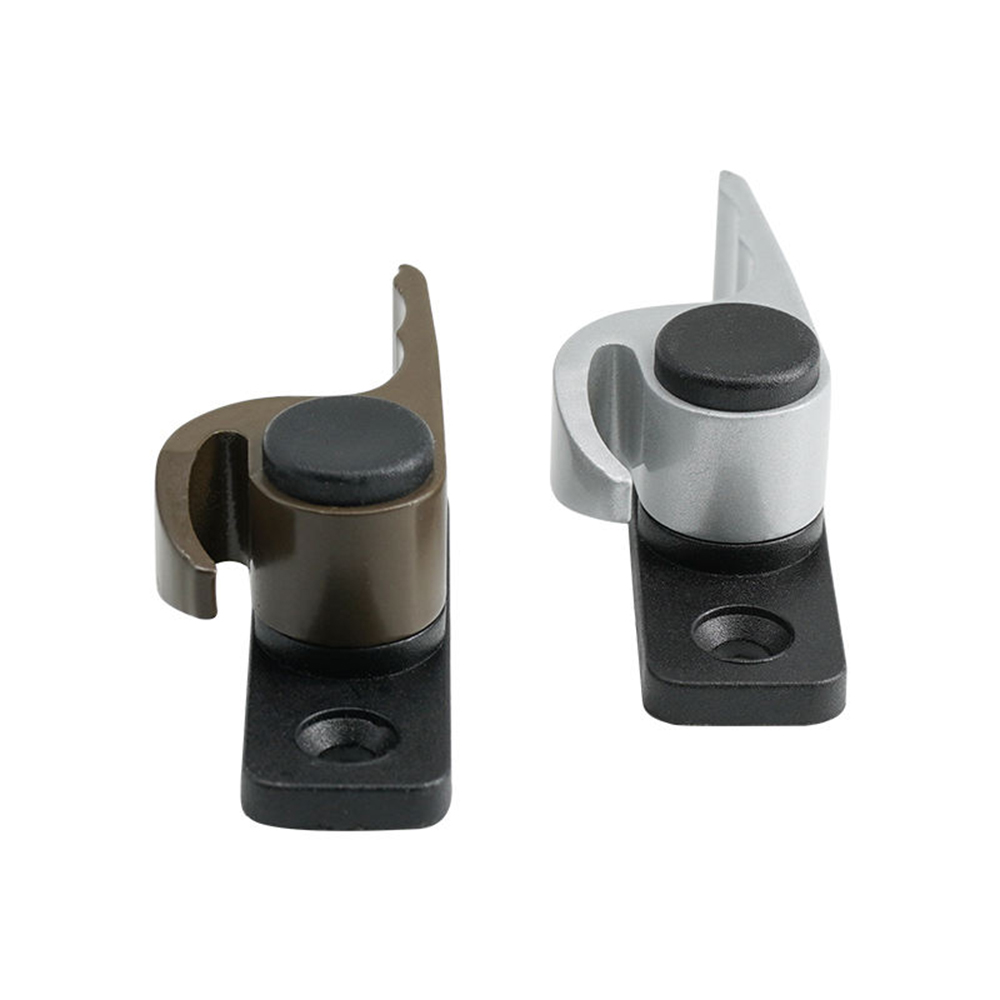
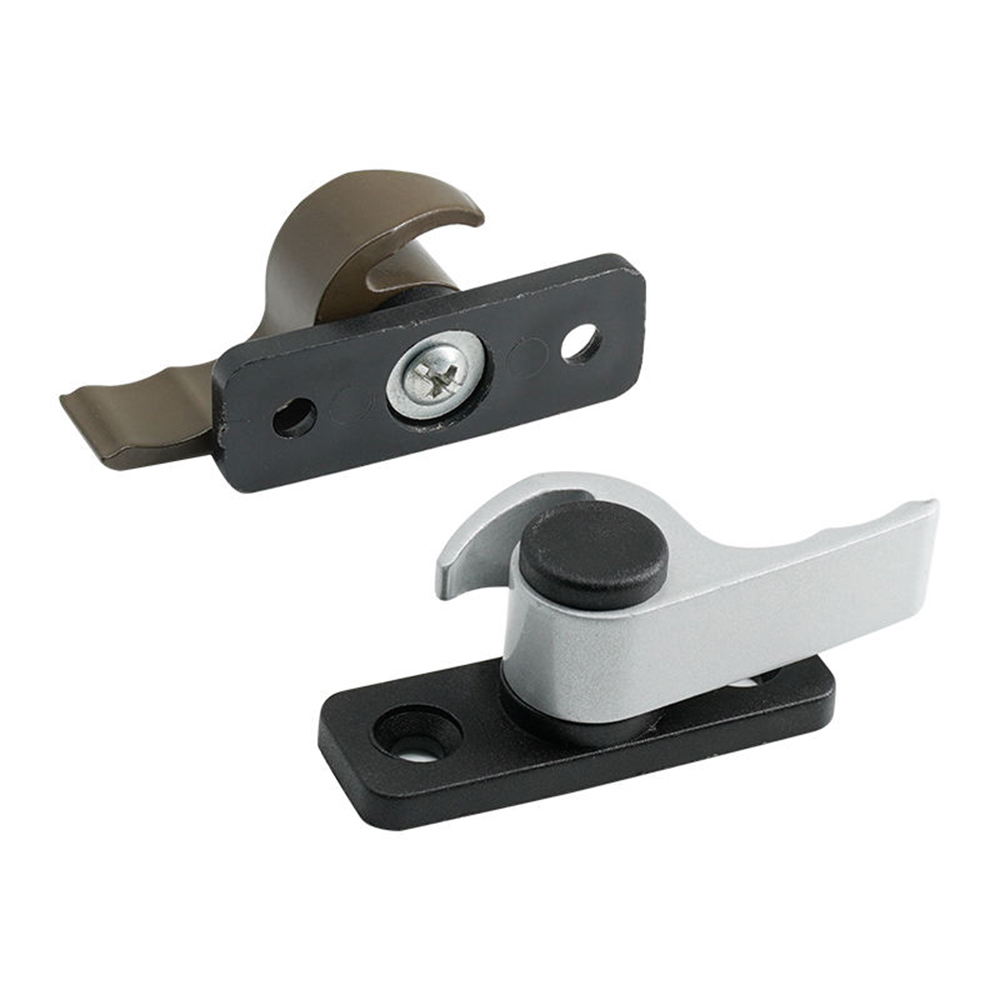
Because the questions differ, one product can carry two names. CHIER’s lever-operated sash lock series with a crescent cam is a sash lock by position and a crescent lock by cam shape. The product page describes an exposed crescent cam and several surface-mount base profiles for sash-to-keeper locking.
In practice the five names fall into two groups. Sash, cam and crescent locks are usually single-point devices fitted on the surface. Espagnolette and multipoint locks are rod-driven systems that engage the frame at two or more points.
Sash Locks: Pulling Two Sashes Together
A sash lock has a body on one meeting rail and a keeper on the opposing rail or frame. A sweep rotates into or around the keeper. The last part of that rotation should pull the rails together, which reduces sash rattle and loads the weatherstrip.
The pull-in action is the part buyers tend to overlook. A lock that only touches its keeper may block casual movement while doing little else. CHIER’s guide on how to measure a window sash lock and keeper for replacement warns that a keeper sitting only 2 mm too low can look correct in a light sample test and still fail to draw the rails together once coating thickness, seals and frame movement are added. That warning comes from the supplier’s own technical material, not an independent test, but it matches how a lock-and-keeper pair works as one mechanical interface.
Best suited to: double-hung, single-hung and similar sash windows where two sashes meet.
Trade-offs: Sash locks are inexpensive and simple to retrofit. They secure one point, so their performance depends on keeper height, sash overlap and what the screws bite into.
Verify with the supplier: fixing-hole centers, base dimensions, keeper engagement height, sweep reach, handing and lever clearance.
Cam Locks: Adjustable Pull-In on Casement and Sliding Sashes
A cam lock engages a keeper with a rotating cam. The cam profile and its rotation angle decide how far the sash is drawn toward the frame. Casement handles with adjustable cams are common, and multipoint systems often use roller or mushroom cams for the same purpose.
Naming varies by catalog. Some suppliers use “cam lock” for a casement handle with a cam, while others use it for a keyed cylinder with a small rotating cam. Ask for a drawing instead of relying on the label.
Cam geometry controls seal compression. CHIER’s article on why window locks become hard to operate explains that too much gasket compression raises handle torque and loads the gearbox, keepers and fasteners, and that setting every cam to its maximum is not a good practice. Adjustable cams give a fabricator room to tune the closing force on site, but they do not fix a sash that has dropped.
Best suited to: casement and awning windows, and some sliding windows.
Trade-offs: More adjustability helps with production tolerances. It also gives installers more ways to set the closing force incorrectly.
Verify with the supplier: cam reach, rotation angle, adjustment range, keeper profile and the locked and unlocked handle positions.
Crescent Locks: The Common Choice for Sliding Sashes
A crescent lock rotates a crescent-shaped cam so that it hooks behind a keeper on the adjoining sash or frame. It is common on sliding windows. CHIER’s opening-type checklist lists a crescent or cam latch as part of the core hardware for sliding windows, with an anti-lift block as a conditional addition.
That second item is easy to miss. A crescent latch holds the sashes together, but it is not by itself an anti-lift device, and a sliding sash that can be lifted out of its track is a separate weakness.
Two lever-operated options illustrate the form factor. The long-curved lever sash lock with crescent cam is described as having a narrow, rounded backplate and an exposed crescent cam for manual engagement with a matching keeper. The lever-operated series linked above offers several base profiles. Both pages describe the form, so overlap, keeper position and mounting dimensions still need to be confirmed from drawings or samples.
Best suited to: sliding windows and sash windows with enough overlap for a hook-type keeper.
Trade-offs: Crescent locks are compact and easy to operate with one hand. Their security depends on keeper position, and they do not replace anti-lift or restrictor hardware.
Verify with the supplier: sweep radius, keeper style, sash overlap, base footprint and fixing centers.
Espagnolette Locks: Rod-Driven Closing Along the Sash
An espagnolette is a locking mechanism in which a handle turns a rod fixed along the sash. As Wikipedia’s entry on the espagnolette describes it, the rod carries hooks at each end that engage sockets at the head and sill, which allows a tall sash to be secured at both ends from one handle.
Modern window hardware usually conceals this architecture in the sash groove. A concealed system can include a gearbox, faceplate, rods, roller cams, mushroom cams, corner drives and several keepers, as CHIER’s hard-to-operate guide notes. The same guide says that a 7 mm square spindle and 43 mm fixing centers are common conventions, not universal rules, so spindle depth, backset, cam travel and keeper height still need verification.
There is a published performance benchmark for this family. iTeh’s summary of EN 13126-4:2022 describes the standard as covering requirements and test methods for espagnolettes and their striker plates, with handle movement normally limited to 90°. It lists durability grades H1, H2 and H3, corresponding to 5,000, 10,000 and 20,000 test cycles, plus corrosion resistance and function requirements. This is a third-party summary, so buyers should confirm the classification from the supplier’s test report instead of relying on a claim of “EN 13126 compliant”.
Best suited to: casement windows, door-height windows and tall sashes where a single point cannot hold the sash.
Trade-offs: Rod systems spread the locking load, but they depend on correct rod length, gearbox position and keeper alignment.
Verify with the supplier: the tested durability and corrosion classes, spindle size, backset, faceplate dimensions, rod cropping range and handing.
Multipoint Window Locks: More Locking Points, More Variables
A multipoint window lock uses a gearbox and linked rods to move several locking elements, such as rollers, mushroom cams, hooks or shootbolts, when the handle turns. In the window trade, “espagnolette” and “multipoint” often describe the same rod-driven architecture. “Espagnolette” emphasizes the rod-and-hook heritage, while “multipoint” emphasizes the number of engagement points. Treat this as common usage, not a formal definition, and ask suppliers to specify the locking-point layout.
The standards route also differs between windows and doors. The iTeh summary above lists multipoint locks under prEN 15685 as outside the scope of EN 13126-4, which indicates that door-oriented multipoint locks with a lockcase are evaluated separately. When a supplier offers a “multipoint lock,” confirm whether it is a window system or a door lockcase, and which standard its test report refers to.
Buyers sourcing across casement, sash, sliding and multipoint formats can compare these families within CHIER’s window and door locks range, which also includes lock boxes, touch locks and sliding locks.
Are More Locking Points Always Better?
No. More locking points distribute load around a large or tall sash and can pull the sash against the seal more evenly. They also add keepers to align, rods that can bend, and tolerances that accumulate across the whole perimeter.
Take a small, lightweight sash. A well-aligned single-point lock can close it reliably, while a five-point system adds cost and alignment risk with no practical gain. On a tall, heavy casement, the balance reverses.
Security evidence points the same way. Titon, a hardware manufacturer, explains in its guide to hardware and PAS 24 compliance that PAS 24:2022 is published by BSI and applies to complete window and door assemblies. Titon also says that mixing components that have not been tested together, installation inaccuracies and substandard fixings in lock keeps can all cause failures. So the useful question is not how many points a lock has. It is whether the whole assembly, including keeper reinforcement and fixings, has been tested for the intended duty.
Window Lock Types Compared
Lock type
How it engages
Typical opening
Main advantage
Main limitation
Verify first
Sash lock
Sweep rotates into a keeper on the opposing rail
Double-hung, single-hung
Simple, low-cost retrofit
Single point; depends on keeper height and fixing substrate
The table shows qualitative trade-offs for comparison only. It does not rank products, and none of the entries is a measured specification.
How to Match a Lock Type to the Opening
Start with the opening and its movement, then pick the hardware. CHIER’s door and window hardware checklist by opening type takes the same approach and lists sash weight, sash overlap, keeper position and handed operation among the checks for each opening type.
These pairings are typical rather than fixed:
Single- or double-hung windows: sash lock, with tilt latches or an opening control device where needed.
Sliding windows: crescent or cam latch, plus an anti-lift block or opening stop if the design calls for it.
Small casement or awning windows: cam handle or a short rod system.
Large or tall casement windows: espagnolette or multipoint hardware, matched to sash weight and profile reinforcement.
Gather the profile section, sash dimensions and weight, opening direction, seal type and target market before narrowing the list. The same lock can behave very differently in a timber sash, an aluminum profile and a uPVC profile with steel reinforcement.
Locks, Child Safety and Emergency Egress
A security lock is not a fall-prevention device. The U.S. Consumer Product Safety Commission’s window safety release reports an estimated 5,600 emergency-department visits in 2024 for children aged 12 and under who fell from windows. It recommends window guards, window stops that limit opening to four inches, and warns against relying on screens. For windows on the 6th floor and below, it advises guards that adults and older children can open easily in a fire.
For buyers, the point is practical. Do not market a standard sash or crescent lock as child protection, and check local building and fire rules before specifying a keyed lock on a bedroom or other required egress window.
Specification Details That Decide Fit
Keeper geometry and pull-in
The lock and keeper form one interface, so keeper height, engagement depth and sash overlap matter as much as the lock body. Buyers should ask for keeper drawings, confirm engagement height rather than total keeper height, and test one sample on the real profile with seals and finish applied. A sample that closes in a showroom does not prove the same result at production tolerances.
Mounting interface and handing
Fixing centers, backset, spindle size, faceplate dimensions and handing decide whether a lock drops into an existing profile or needs a new keeper pattern. Common values such as a 7 mm spindle can speed up matching but should be confirmed against the profile drawing. A handed lever that rotates the wrong way can collide with the rail.
Substrate, finish and durability
Screw pull-out strength depends on what the screws engage: timber, a thin aluminum wall, a uPVC chamber, steel reinforcement or a threaded insert. Finish and corrosion class matter more near coasts, in humid regions and on projects with long warranty periods. Ask for the cycle-test and corrosion-test reports that apply, and check which component or assembly was tested.
If a lock becomes stiff in service, keeper alignment, sash position and gasket compression usually deserve inspection before the lock is replaced. The earlier-linked hard-to-operate guide covers that diagnostic sequence.
What Should Buyers Specify Before Requesting a Quote?
An accurate RFQ for window locks removes guesswork about fit, testing and delivery. Prepare these items:
Opening type and sash data: type, dimensions, weight and profile cross-section.
Lock family and function: sash, cam, crescent, espagnolette or multipoint, plus any keyed or non-keyed requirement.
Samples: whether you need drawings, pre-production samples or fitment validation on your own profile.
Send drawings or physical samples when possible, because photographs rarely show keeper height or cam reach. For custom handing, finishes or keeper shapes, ask the supplier to confirm feasibility in writing before tooling or production begins.
Frequently Asked Questions
What are the main types of window locks?
The main types are sash locks, cam locks, crescent locks, espagnolette locks and multipoint locks. The first three are usually single-point surface locks. The last two are rod-driven systems that secure the sash at several points.
What is the difference between a sash lock and a cam lock?
A sash lock is defined by its position between two sashes. A cam lock is defined by its engaging mechanism. One product can be both, because a sash lock often uses a cam or sweep that engages the keeper.
Is a crescent lock the same as a sash lock?
Not always. “Crescent” describes the shape of the sweep, while “sash lock” describes where the lock is fitted. A crescent sweep often appears in sash locks and sliding-window latches, so the names frequently overlap.
What is the difference between an espagnolette and a multipoint lock?
Both are usually rod-driven systems. “Espagnolette” refers to the handle-and-rod design with hooks or cams at the ends. “Multipoint” focuses on the number of locking points. Confirm the actual locking-point layout with the supplier.
Which window lock is best for casement windows?
It depends on sash size, weight and profile. Small casements often work with a cam handle, while tall or heavy sashes benefit from espagnolette or multipoint hardware. Test fit and alignment on the actual profile.
Does a window lock prevent children from falling out?
No. A standard lock secures the sash but is not designed as a fall-prevention device. The CPSC recommends window guards and window stops that limit opening to four inches, and warns that screens do not prevent falls.