Looking for hardware solutions that meet European / American standards?
Use this guided inquiry modal to move from a generic quote form to a clearer technical conversation. Buyers can choose whether they need pricing, CAD / 3D files, or OEM / ODM support before sharing contact details.
Compatibility-first design across door / window systems
Repeatable production with clear inspection checkpoints
Documentation and change control for long-running programs
Responsive engineering support for fit and field feedback
The four main types of window hinges are friction stays, butt hinges, pivot hinges and concealed hinges. They are not interchangeable grades of the same part. Each moves the sash differently and carries its weight differently. Each also needs a different profile interface: a track, a rebate fixing, a bearing axis or a machined groove. For a manufacturer or buyer, the hinge type decides how the window opens, what clear opening it gives and how it looks when closed. It also decides what the sash and frame must be built to accept.
This guide compares the four types by mechanism, typical application, limits and the data a supplier needs for an accurate quotation.
What Are the Main Types of Window Hinges?
A window hinge connects the sash to the frame, supports the sash weight and guides the sash through its opening path. The four types differ in the movement they allow:
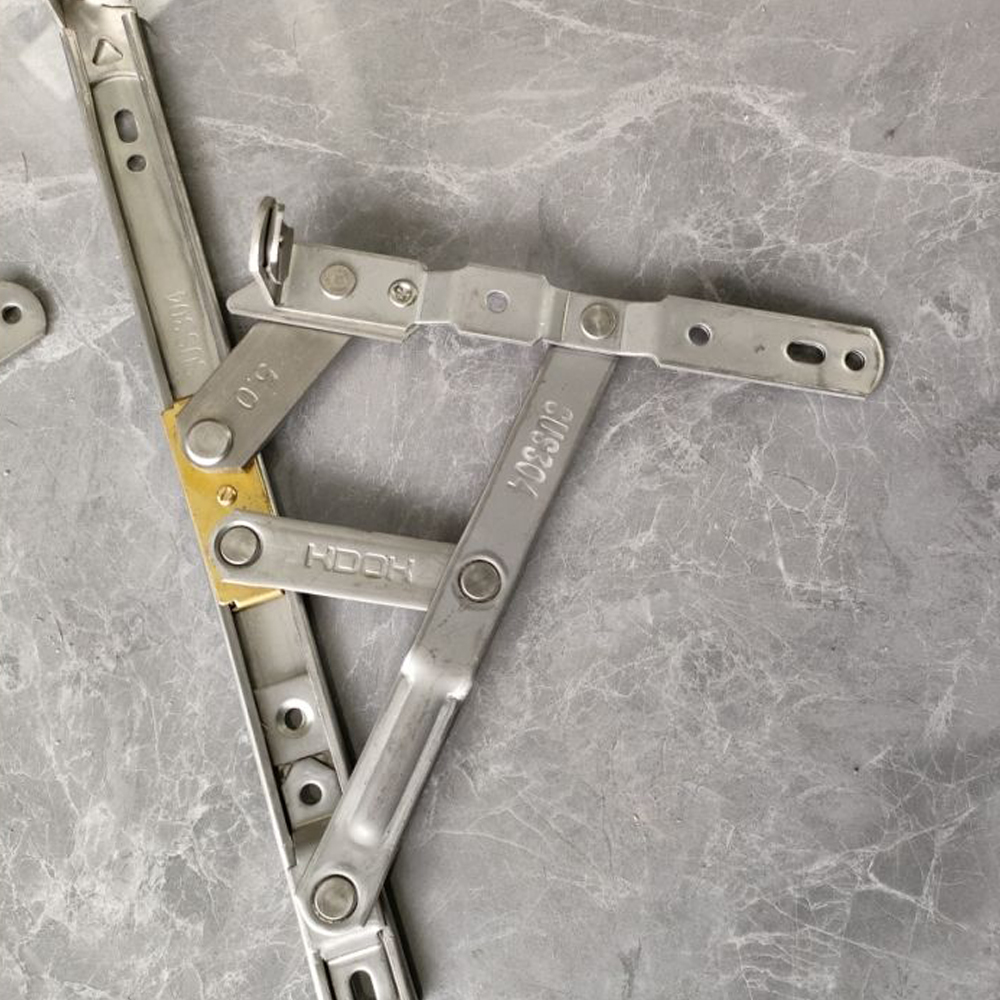
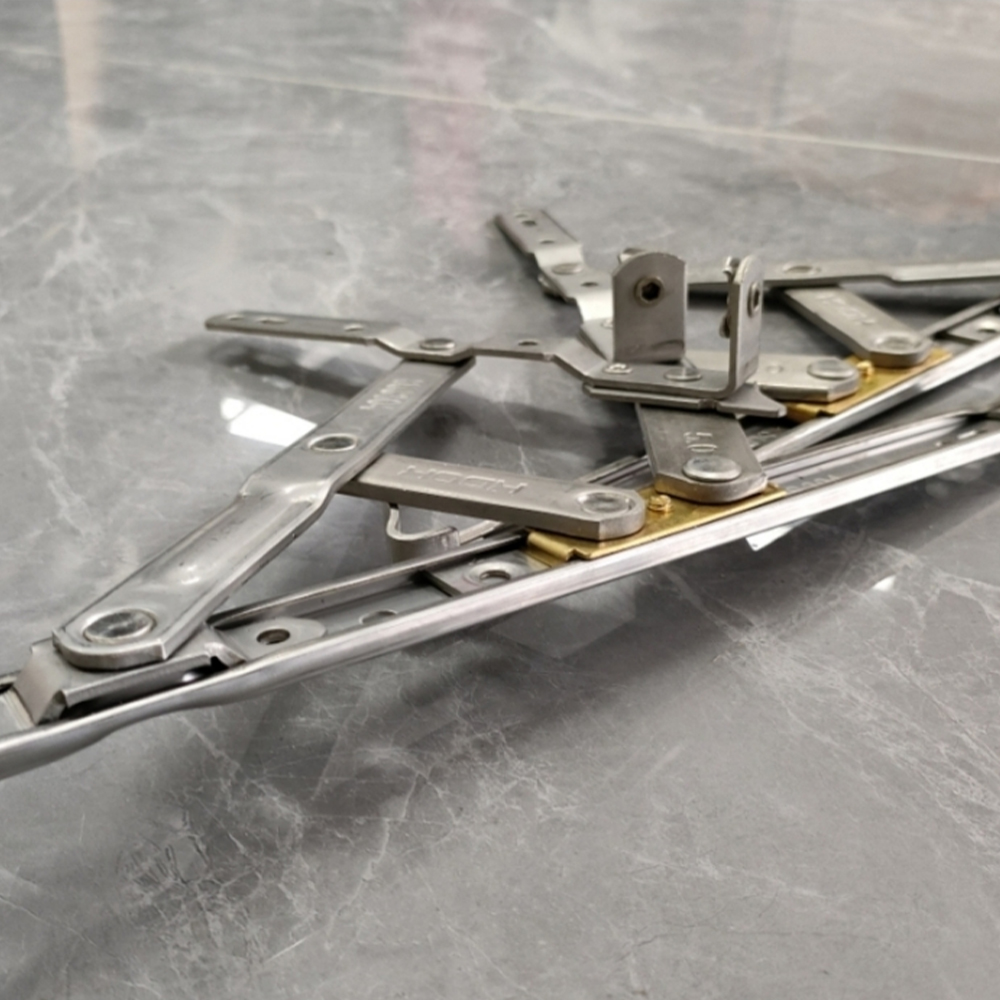
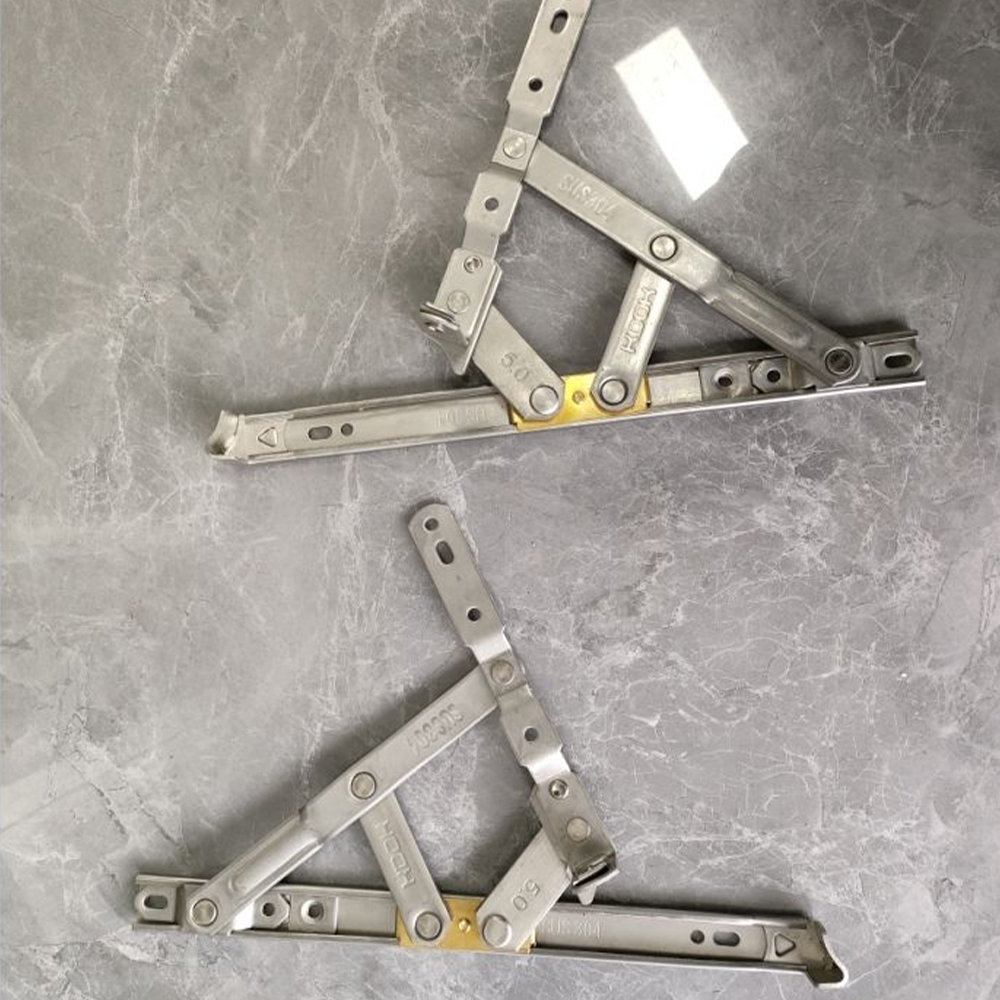
Friction stay hinges use a multi-link arm and slider track. They move the sash outward and hold it at the chosen angle by friction.
Butt hinges are two-leaf hinges with a single pin. The sash swings on a fixed axis at its hinged edge.
Pivot hinges let the sash rotate about a horizontal or vertical axis, often near the middle of the sash.
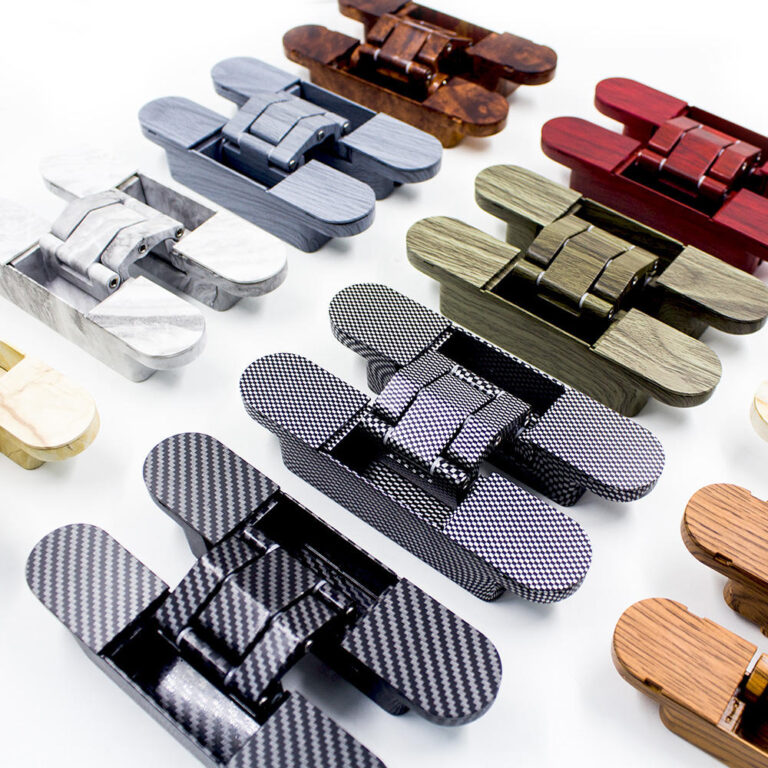
Concealed hinges sit inside the sash and frame, so they are hidden when the window is closed. They are usually part of a complete hardware system.
The table below compares them. The entries describe typical designs. Exact behavior depends on the product family and the window system.
Hinge type
How the sash moves
Typical window
Visible when closed?
Main limitation
Verify before ordering
Friction stay
Arms slide along a track; the sash projects outward and holds at an angle
Top-hung and side-hung casements
Mostly folded into the sash-frame gap; the track edge may show
Rating applies to the exact model, orientation and sash size
Track length, stack height, handing, opening angle, test report
Butt hinge
Sash swings on a fixed pin axis at the hinged edge
Side-hung timber and some metal casements
Yes, the barrel is normally visible
No friction control; a separate stay or limiter is needed
Leaf size, screw pattern, fixing strength, lift-off or fixed pin
Pivot hinge
Sash rotates around a horizontal or vertical axis
Tall narrow openings, high vents, reversible or cleaning-friendly sashes
Depends on design
Clear opening and screen fitting are harder to plan
Axis position, bearing type, limiters, net clear opening
Concealed hinge
Hidden multi-link or pivot mechanism, often in tilt-and-turn systems
Minimal-frame and system windows
No
Needs a compatible profile groove and a matching hardware system
Groove or rebate dimensions, adjustment range, sash weight limit
Friction Stay Hinges: Controlled Projecting Movement
A friction stay is a multi-link window hinge. A slider with an adjustable friction block runs in a base track, and the arms carry the sash as it moves. It combines the hinge and the opening stay in one component. That is why it is common on top-hung and side-hung casement windows in aluminium and uPVC systems.
CHIER’s window hinge range lists several friction stay geometries. The product pages give no load ratings or dimensions. They do show how the geometry differs, and each page tells buyers to confirm track length, stack height, opening direction and load target before selection:
Friction stays that look alike can differ in linkage geometry, fixing-hole positions and folded thickness. Nominal length describes the track. It does not describe a load class.
One manufacturer’s example shows the point. ERA’s standard friction stay technical sheet lists 13 mm and 16.5 mm stack heights. It states the stay was tested to BS EN 13126-6 and 25,000 opening cycles. It also offers two stainless grades: 430, which meets BS EN 1670 Grade 4 (240 hours), and 304, which meets Grade 5 (480 hours). Those figures belong to that product. They are not industry defaults. They do show what a supplier’s test claim should look like: standard, cycle count, material grade and corrosion class, all tied to a specific model.
Before approving a friction stay, check these items:
Opening type. Top-hung and side-hung sashes load the linkage differently, so the same nominal length can carry different limits.
Stack height. This is the folded thickness. A mismatch can affect gasket compression and lock engagement.
Function. Standard, restricted, egress and easy-clean variants are different products. A friction stay supports and controls movement. It is not automatically a fall-prevention device or an escape-window solution.
Butt Hinges on Windows: Simple, Familiar, Limited
A butt hinge has two leaves joined by a pin. The sash swings around that pin at the hinged edge, as a door does. Butt hinges are most often seen on side-hung timber casements. Flag-style versions with a lift-off pin let the sash be removed for glazing or cleaning.
The advantages are simplicity, a familiar fixing method and, usually, a low unit cost. The limitations matter for specification:
No friction control. A butt hinge does not hold the sash at an angle. A separate stay, limiter or friction device does that. The quote must price that component too.
Concentrated load. The sash weight passes through a small number of leaf fixings. Fixing strength and screw engagement in the profile or timber often decide durability more than the hinge body does.
Visible barrel. Butt hinges are less suited to flush or minimal-frame designs.
Screw pattern mismatch. Hole spacing, screw diameter and thread type vary by market and profile. A mismatch can stop a production line.
For a butt hinge, ask the supplier for leaf dimensions, hole pattern, pin type, material and finish. Also ask what fixing method and sash weight the rating assumes.
Pivot Hinges: Rotating the Sash on an Axis
A pivot window rotates on an axis rather than swinging from its edge. According to one pivot window guide from Windows of Harrisonburg, the axis can be horizontal or vertical and centered or offset. The same guide notes that a centered pivot gives a clear opening of roughly half the frame size, because half the sash swings in and half swings out. An offset axis shifts that balance.
These design choices affect the buying decision:
Axis position changes the effort to move the sash and the space inside and outside that the sash sweeps.
Limiters and cleaning latches control how far the sash rotates and whether it can turn farther for cleaning.
Net clear opening needs checking when the window is intended as an escape route.
Screens, blinds and sealing are harder to fit on a sash that projects inward.
Pivot hardware has its own test part. BSI lists Part 9 of the BS EN 13126 series as covering hardware for horizontal and vertical pivot windows. Ask which part applies and whether the report covers the exact hinge and sash configuration you plan to buy.
Concealed Hinges: Hidden Hardware Needs a Matching Profile
A concealed hinge sits inside the sash and frame, so the closed window shows clean sightlines. In practice, concealed hinges are usually one part of a hardware system, most often tilt-and-turn. They are not a swap-in alternative to a friction stay.
Siegenia’s TITAN axxent 24+ documentation shows what this implies. For that product, Siegenia states a load capacity up to a 150 kg sash weight without additional parts. It also describes 3D adjustment with continuous pressure adjustment on the top and bottom pivots. It lists use in timber and timber-aluminium profiles with at least a 24 mm rebate width, and in uPVC and aluminium systems with a 16 mm groove. That is one product line. The takeaways for any concealed hinge are:
The profile must accept the hinge. Groove or rebate dimensions, wall thickness and reinforcement all matter.
Adjustment range matters. The hinge sets sash alignment and gasket compression, so check how it is adjusted after installation.
The hinge belongs to a tested system. For tilt-and-turn, BSI lists Part 8 of the BS EN 13126 series as covering tilt and turn, tilt-first and turn-only hardware.
Serviceability can be harder. Replacing a hidden hinge usually means removing the sash and handling the hardware system, not just a single stay.
Choose by Window Movement First, Not by “Premium” Appearance
A common assumption is that hinge types form a ladder. On that view, butt is basic, friction stay is mid-range and concealed is premium. That is misleading.
The types solve different movement problems. A projecting top-hung vent needs the geometry of a friction stay. A concealed hinge cannot replace it unless the whole window design changes. A tall narrow opening may suit a pivot axis better than any edge-hung hinge. A timber casement with a simple swing may work well with butt hinges and a separate stay.
The same applies to ratings. A higher rating does not fix a profile that cannot carry the load. A heavier hinge can move the weak point to the fixing screws, the profile wall, the corner joint or the sash stiffness. A better question than “which hinge is strongest?” is “which hinge matches this opening type, this profile, this sash weight and this safety function?”
This view holds when the window design is already fixed. It is weaker at the concept stage. A brand developing a new minimal-frame product may reasonably start with the concealed system and design the profile around it.
Cost and Manufacturing Drivers Behind Hinge Quotations
Unit price comparisons between types are unreliable because the scope differs. Compare quotations on the same basis. The main cost and quality drivers are:
Material grade and corrosion class. The ERA example shows stainless 430 and 304 with different corrosion test classes. Coastal or humid projects need the grade and test result written into the specification.
Rivets and pivots. Linkage hinges depend on riveted joints. Ask what the rivet material is and how the joint is tested.
Profile-specific tooling. Fixing patterns, track widths and stack heights can require dedicated tooling for OEM programs.
Handing. Left and right versions double the SKU count for handed products.
Finish and packaging. Finish matching, packing and labeling affect cost and consistency on repeat orders.
Test evidence. Cycle, corrosion and load reports applied to the exact SKU cost time. They also reduce field risk.
For safety-related functions, BSI lists Part 5 of the BS EN 13126 series as covering devices that restrict window opening, and Part 6 as covering variable geometry stay hinges, with or without a friction stay. Keep these claims separate in the quote: support, opening restriction, escape function and security are different performance claims.
How to Choose the Right Window Hinge Type
Work through these steps in order:
Define the opening type. Is the sash top-hung, side-hung, pivoting or tilt-and-turn? Say where the hinged edge is, and record handing.
Confirm the profile interface. Is it a surface track, a leaf fixing into a rebate, a pivot bearing or a groove? The hinge type has to fit what the profile provides.
Calculate the finished sash mass. Include glass, profile, reinforcement, beads, seals and accessories. Also record sash width and height.
Set the opening requirement. Define the required angle, clear opening, ventilation position and cleaning access. Add any restriction or escape function.
Set the environment and life target. Specify corrosion class, cycle count and wind exposure.
Check evidence. Ask for the standard, test report and model code for the product you will actually receive.
What Should Buyers Specify Before Requesting a Quote?
A quotation request should let the supplier reject the wrong hinge. A photograph and the words “same as this” do not do that. Include:
Opening type, handing and the required hinge function.
Dimensioned drawings of the sash and frame profiles, including groove, rebate or track space.
Finished sash weight and the dimensions it is based on.
Required opening angle or clear opening.
Material, finish and corrosion requirement.
Fixing pattern, screw type and engagement depth.
Applicable test standard and report requirements.
Annual volume, sample quantity, packaging and delivery schedule.
For friction stays, CHIER’s guide to measuring a friction stay explains how to record track length, folded stack height and opening type. Whatever the hinge type, a supplier can quote accurately only when the profile drawing and sash data come with the request. For butt, pivot or concealed requirements, ask any supplier whether it can develop to your drawing before assuming it can.
Frequently Asked Questions
What are the main types of window hinges?
The main types are friction stays, butt hinges, pivot hinges and concealed hinges. Friction stays guide a projecting sash along a track. Butt hinges swing the sash on a pin. Pivot hinges rotate it on an axis. Concealed hinges hide inside the sash and frame.
What is the difference between a friction stay and a butt hinge on a window?
A friction stay carries the sash through an articulated arm and slider, and holds it open by friction. A butt hinge only provides a fixed pin axis, so a separate stay or limiter must control and hold the sash position.
Are concealed window hinges better than friction stays?
Not automatically. Concealed hinges give cleaner sightlines but need a compatible groove or rebate and usually a matching hardware system. Friction stays suit projecting top-hung and side-hung casements. The better choice depends on opening type, profile and performance requirement.
When is a pivot hinge used on a window?
Pivot hinges suit sashes that rotate on a horizontal or vertical axis, such as tall narrow openings or sashes that turn for cleaning. Check the axis position, limiters and net clear opening, because a pivoting sash projects both inside and outside.
Which standard covers window friction stay hinges?
In Europe, BS EN 13126-6 covers variable geometry stay hinges, with or without a friction stay. It is one part of the multi-part EN 13126 series. Ask suppliers for a test report that applies to the exact model, orientation and sash size.
What information does a supplier need to quote window hinges?
Provide opening type, handing, sash dimensions and finished weight, profile drawings, required opening angle or clear opening, material and corrosion needs, fixing pattern, test requirements and annual volume. Photographs help, but dimensioned drawings are what identify the right hinge.