Looking for hardware solutions that meet European / American standards?
Use this guided inquiry modal to move from a generic quote form to a clearer technical conversation. Buyers can choose whether they need pricing, CAD / 3D files, or OEM / ODM support before sharing contact details.
Compatibility-first design across door / window systems
Repeatable production with clear inspection checkpoints
Documentation and change control for long-running programs
Responsive engineering support for fit and field feedback
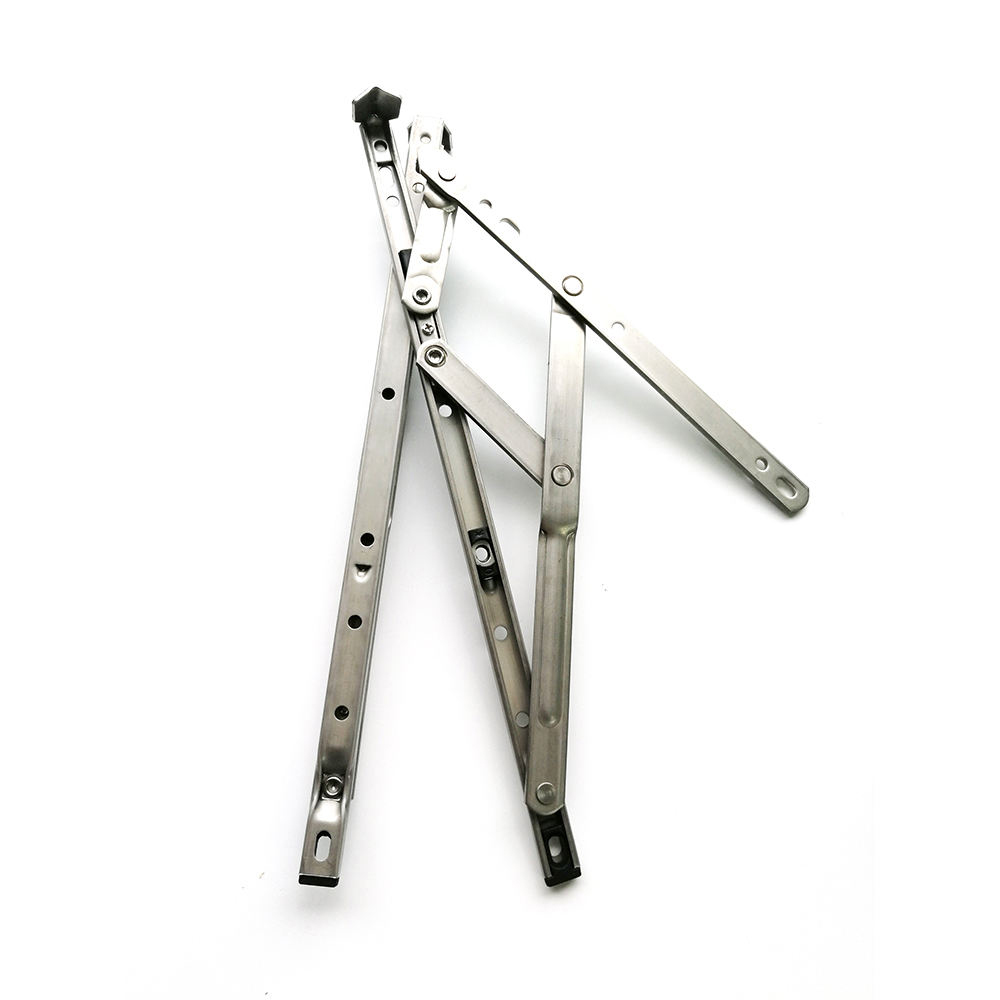
A four-bar hinge is a track-mounted linkage. It carries a window sash outward on articulated arms instead of swinging it around a single fixed pin. On casement and awning windows, that motion lets the sash clear the frame overlap and hold a ventilation angle through friction. Some variants also open wide enough for cleaning or escape. The geometry is specific, though. Track length, folded stack height, arm layout, mounting offset and opening angle all interact. Two hinges that look alike can behave very differently on the same profile. This guide explains the geometry that matters, how sash orientation changes the requirements, and what to confirm before you order samples or request a quotation.
How a Four-Bar Hinge Moves the Sash
A four-bar hinge is a linkage, not a pin. In the simplified model, the track fixed to the frame is the stationary link. Two arms are the moving links, and the bar fixed to the sash is the coupler that joins them. The arms swing through different arcs, so the sash does not rotate about one fixed axis. It moves outward and rotates at the same time. One manufacturer’s 4-bar hinge selection guide says the design projects the sash out as it pivots, which avoids interference between frame and sash.
Most commercial versions add a sliding shoe in the track, which carries the friction adjustment. Strictly, that makes them a linkage with a slider. The trade still calls the whole family “four-bar”.
Terminology varies by region. Supplier pages such as Amesbury Truth and CR Laurence use “4-bar hinge”. UK and European literature, such as ERA’s technical sheet, uses “friction stay”. BSI’s standard for this product class is titled BS EN 13126-6:2018, variable geometry stay hinges (with or without a friction stay). Its abstract covers durability, strength, security and functionality of mechanically operated variable or parallel geometry stay hinges. Put both terms in your RFQ so a supplier does not map your request to the wrong product family.
Nominal length describes the base track. It is not a load class and it does not predict opening angle. ERA’s standard friction stay technical sheet (version 5.0, February 2026) shows this clearly for that one product. Its top-hung 16-inch model lists an approximate opening angle of 87°. The 20-inch lists 43° and the 24-inch lists 39°. At the same time, the permitted sash height rises from 750 mm to 1,000 mm to 1,200 mm. Longer tracks supported taller sashes but opened less in that range. Those figures belong to ERA’s product and do not transfer to other suppliers.
Compact layouts raise a different question. CHIER’s compact four-bar window friction stay uses a narrow channel track, a long upper arm, two short lower links and a black end stop. That suits a narrow hardware channel. The product page gives no ratings or dimensions, so track length, mounting dimensions and load target must be confirmed with the supplier.
Stack height
Stack height is the total folded thickness of the hinge. It sets how far the sash sits into the frame, so it affects gasket compression and lock engagement. ERA lists 13 mm and 16.5 mm options for its standard stay. Do not assume those are the only values, because cavity depths vary by system. Record the hinge stack and any separate packer as two figures. CHIER’s guide to measuring a friction stay for length, stack height and opening type explains how to do this with a calliper.
Mounting offset and sash overlap
When the sash projects, its overlap onto the frame must clear the frame edge. Amesbury Truth’s awning four-bar tips and specs sheet gives a worked example. It says hinges should generally be mounted within about 0.250 in (6.3 mm) of the outside edge of the frame, depending on overlap. That position allows clearance for a system with roughly 0.312 in (7.9 mm) of sash overlap. If the sash and frame interfere, the hinge must move further outboard or the overlap must shrink.
Treat this as one manufacturer’s example, not a universal dimension. It shows why a hinge drawing must include your sash and frame sections. A hinge that fits the screw holes can still foul the overlap.
Opening angle and holding behaviour
A projecting sash hangs from its linkage. In a simplified top-hung model, the holding moment is the sash weight multiplied by the horizontal distance from the effective pivot to the centre of gravity. That distance grows as the sash opens. Take an illustrative 10 kg sash, 0.6 m tall, with its centre of gravity at mid-height. At 30° of opening the moment is about 14.7 N·m. At 60° it is about 25.5 N·m. Real hinges shift the effective pivot as the arms move, so this is a trend and not a prediction. It still explains why friction demand rises with angle.
For proper balancing, Amesbury Truth recommends a hinge that opens no more than 60° in projected and awning applications. A wider angle is not an upgrade on an awning vent. It can leave the sash dependent on friction alone, which makes wind and drift more likely.
Projection, clear opening and washability
Egress hardware is a separate question from ventilation. The Amesbury Truth guide defines egress as the clear opening left between frame and sash with the window fully open. Local rules set the target. Oldham Council’s fire escape window guidance for England gives an unobstructed openable area of at least 0.33 m² with no dimension under 450 mm. This is one English council’s guidance, and other markets use different dimensions. Measure the clear opening on an installed sample, after the sash edge, handle and hinge arms are in place. A hinge’s printed opening angle does not guarantee a compliant clear opening.
Casement vs Awning: How Orientation Changes the Requirements
The same four-bar linkage family serves both orientations, but the loads and risks differ.
Factor
Awning (top-hung)
Casement (side-hung)
Track position
Along the two vertical sash sides
Across the upper and lower sash edges
Typical movement goal
Controlled ventilation vent
Wider swing; sometimes cleaning or egress
Main geometry concern
Holding angle against moment and wind
Clearance on the hinge side, sag, clear opening
Function variants
Usually standard
Standard, restricted, egress, easy-clean
Rating check
Top-hung limits for the exact model
Side-hung limits for the exact model
The track positions come from CHIER’s measuring guide. The remaining rows are qualitative guidance, not measured data. The ERA sheet shows why the rating check matters. It publishes separate top-hung and side-hung limits even when the nominal length is the same. For example, its 16-inch top-hung model lists 25 kg and 750 mm maximum height, and its 16-inch side-hung model lists 28 kg and 1,250 mm. Weight alone never answers the question, so use CHIER’s guide to selecting friction stays by sash size and weight to build the finished sash load.
Handed or Non-Handed? Pairs and Mirror Sets
Amesbury Truth describes its standard 4-bar hinges as non-handed. Restricted, egress and easy-clean variants are often handed, according to CHIER’s measuring guide. A handed hinge needs a left and a right version, so SKU count and carton labelling change.
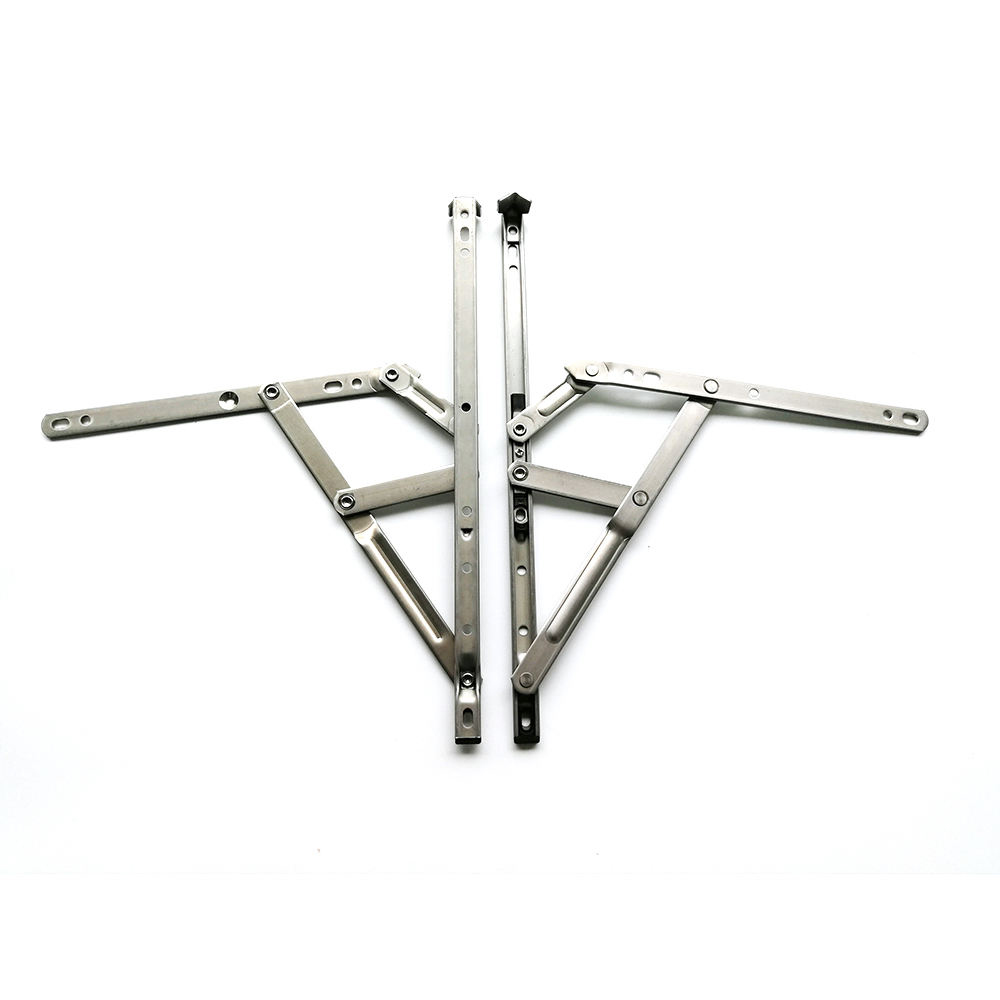
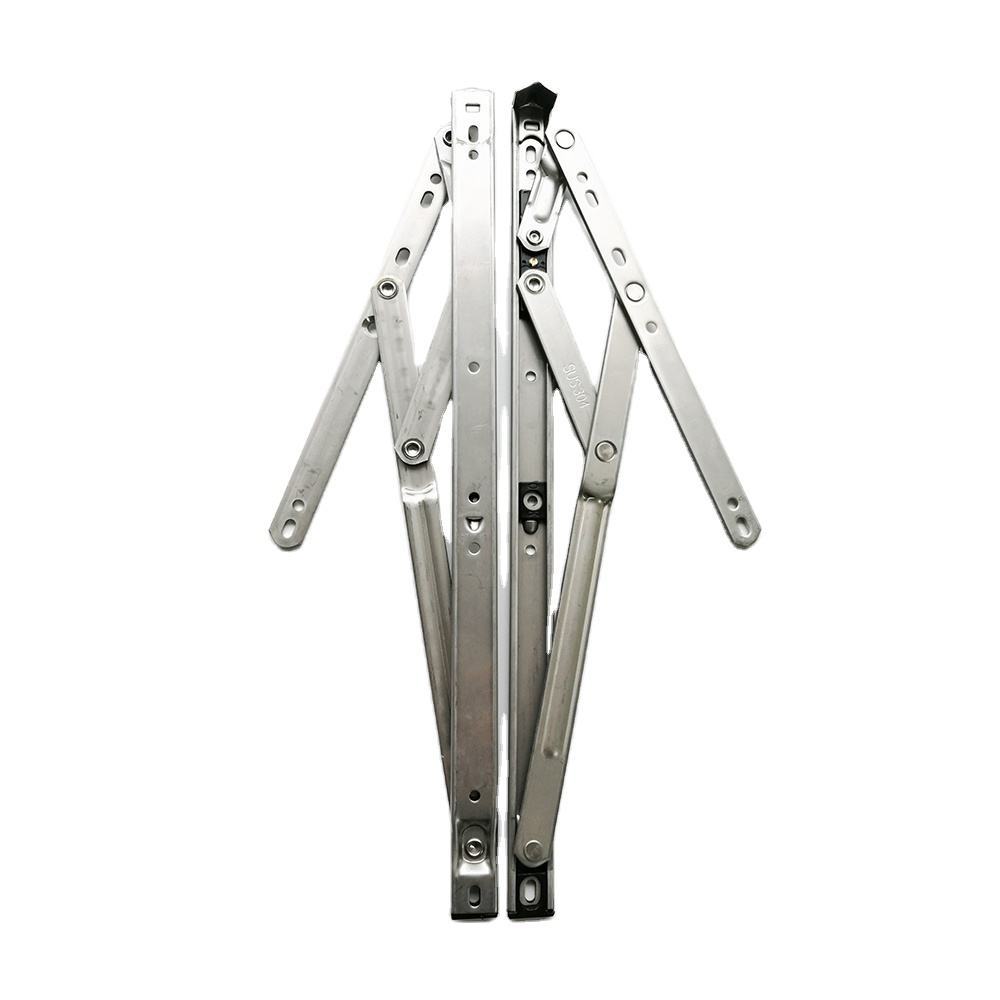
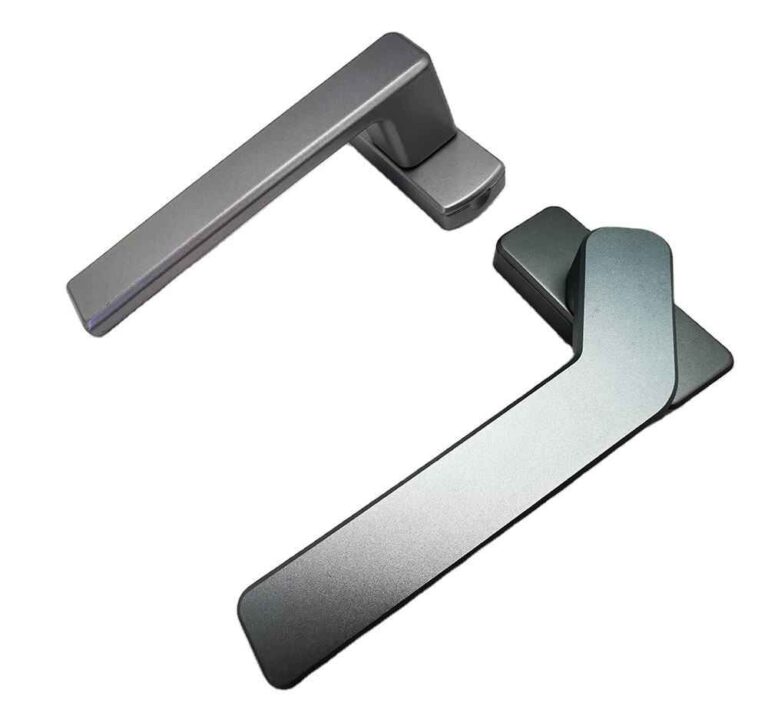
CHIER’s paired four-bar window friction stay with ribbed link arms is supplied as a mirrored pair. Its pressed ribs run along the diagonal arms, and the track and linkage carry round and elongated fixing holes. The page gives no load rating, so the ribs should not be read as a capacity claim. Do not infer handing from the room side alone. Record which sash edge is hinged and which way the handle side travels. Photograph the installed hinge from inside and outside.
Why a Heavier Four-Bar Hinge Does Not Automatically Fix a Heavy Sash
A common assumption is that a larger or more heavily built hinge solves a heavy-sash problem. That holds only up to the point where the hinge stops being the weak link.
Amesbury Truth notes that four-bar hinges tend to be more susceptible to sash sag than standard two-bar hinges. They cantilever the sash outside the frame, so the support arms carry the entire sash weight. A stronger hinge moves the weak point elsewhere: fixing screws, profile wall, reinforcement, the corner joint or sash stiffness. Under load, the four-bar geometry exposes those parts first.
This applies when the sash is near the published limit or the hinge is fixed into thin profile sections. It does not apply when the sash is well inside the rating and the fixings are into proper reinforcement. In a borderline case, reducing sash mass (for example, a different glass build-up) can work better than a bigger hinge. Moving a heavy sash to a different hinge family can also work better. Pair any hinge with fixing details and a tested sample.
Failure Modes to Catch at Sampling
These are checks to build into sample approval. They are not claims about how often problems occur.
Sash sag or racking. Weigh the finished sash and check the gap at the closing edge after repeated cycling.
Overlap interference. Open the sash fully and look for contact between sash lip and frame edge.
Gasket compression and lock engagement. A wrong stack height shows up as uneven compression or a stiff handle.
Friction drift. Open the sash to the target angle and check whether it holds under light wind or hand pressure.
Wrong handing or orientation. Confirm every pair against the drawing before release.
Corrosion and wear. Ask for the material grade and corrosion evidence for the exact SKU. ERA’s sheet, for example, ties 430 and 304 stainless to BS EN 1670 Grades 4 and 5 and states 25,000 opening cycles per BS EN 13126-1:2006. Those figures describe ERA’s product, but they show the form a supplier’s test claim should take.
What Should Buyers Specify Before Requesting a Quote?
A quotation request should let the supplier reject a wrong hinge. Include:
Window type, hinged edge and handing (top-hung awning or side-hung casement).
Dimensioned sash and frame profile sections, including channel width and hinge position.
Required track length, folded stack height and any separate packer.
Finished sash width, height and weight, with the glazing build-up.
Target opening angle or clear opening, plus any restricted, egress or easy-clean function.
Material, finish and corrosion requirement.
Fixing pattern, screw type and reinforcement.
Test evidence required for the exact SKU, such as BS EN 13126-6 reports, cycle count and corrosion class.
Annual volume, sample quantity, packaging and delivery schedule.
For custom profiles or private-label programmes, ask whether the supplier can develop to your drawing before assuming it can. Buyers who want to see the available projecting-hinge options can review CHIER’s window hinge range and then send the data above for model-level verification.
Frequently Asked Questions
What is a four-bar hinge on a casement or awning window?
A four-bar hinge is a track-mounted linkage that moves the sash outward on articulated arms as it opens. This lets the sash clear the frame overlap. Friction in the slider holds the sash at the chosen angle. In the UK and Europe, it is usually called a friction stay.
Is a four-bar hinge the same as a friction stay?
In practice, yes. North American suppliers say “4-bar hinge” and UK or European suppliers say “friction stay” for the same linkage family. BS EN 13126-6 calls the product class variable geometry stay hinges. Use both terms in an RFQ.
Does a longer four-bar hinge open wider?
Not necessarily. A longer track usually supports a taller sash, but the opening angle depends on link geometry. In ERA’s top-hung data, the 16-inch model lists about 87° and the 24-inch lists about 39°. Check the angle for the exact model.
What opening angle is best for an awning window?
Amesbury Truth recommends no more than 60° for proper balance on projected and awning hinges. Wider angles increase the holding demand on the friction. The right angle also depends on sash height, weight and wind exposure, so confirm it on a fitted sample.
What is the difference between an egress hinge and a standard four-bar hinge?
An egress hinge moves a side-hung sash farther clear of the frame to enlarge the clear opening. A standard hinge prioritises support and friction. An egress label does not prove compliance, so measure the unobstructed opening on the installed window against local rules.
What information does a supplier need to quote four-bar window hinges?
Provide hinged edge, handing, sash dimensions and finished weight, profile drawings, track length, stack height and target opening angle. Add function (standard, restricted, egress), material and corrosion needs, fixing pattern, test requirements and annual volume. Photos alone are not enough.