Looking for hardware solutions that meet European / American standards?
Use this guided inquiry modal to move from a generic quote form to a clearer technical conversation. Buyers can choose whether they need pricing, CAD / 3D files, or OEM / ODM support before sharing contact details.
Compatibility-first design across door / window systems
Repeatable production with clear inspection checkpoints
Documentation and change control for long-running programs
Responsive engineering support for fit and field feedback
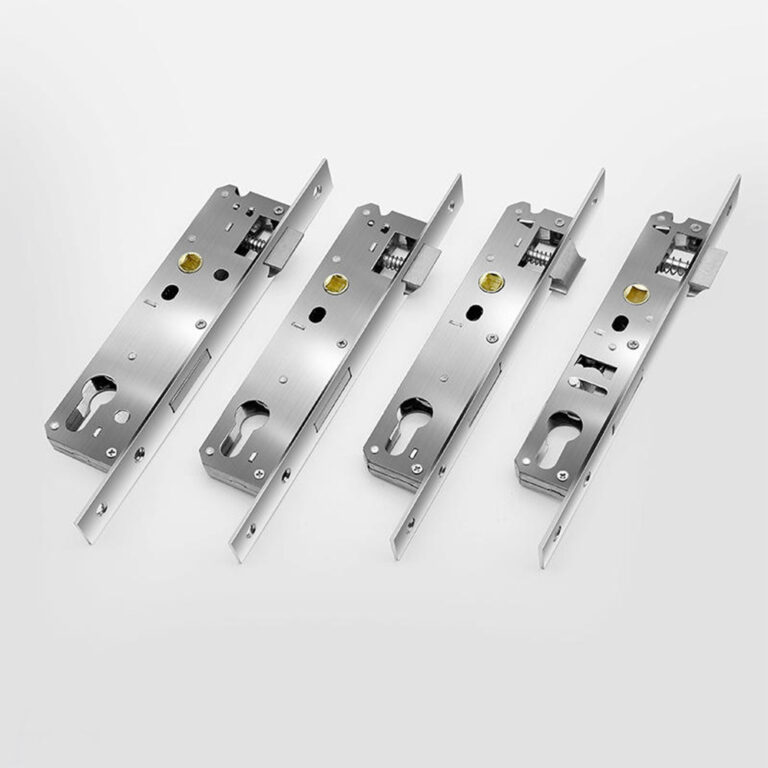
A multipoint lock can match on backset and PZ and still be the wrong part, because the faceplate was never specified. In practice, multipoint lock faceplate types fall into three groups: flat plates, U-rail (channel) plates, and profile-specific plates built around one door system’s routing and keeps. Each group changes how the strip seats in the door edge, where the fixing screws land, and how the gearbox and locking points are referenced. For distributors, door fabricators and OEM buyers, the faceplate is a functional interface, not trim. This guide explains how the three types differ, which dimensions identify them, where each tends to fit, and what to send a supplier so the quotation covers the right part the first time.
What the Faceplate Does in a Multipoint Lock
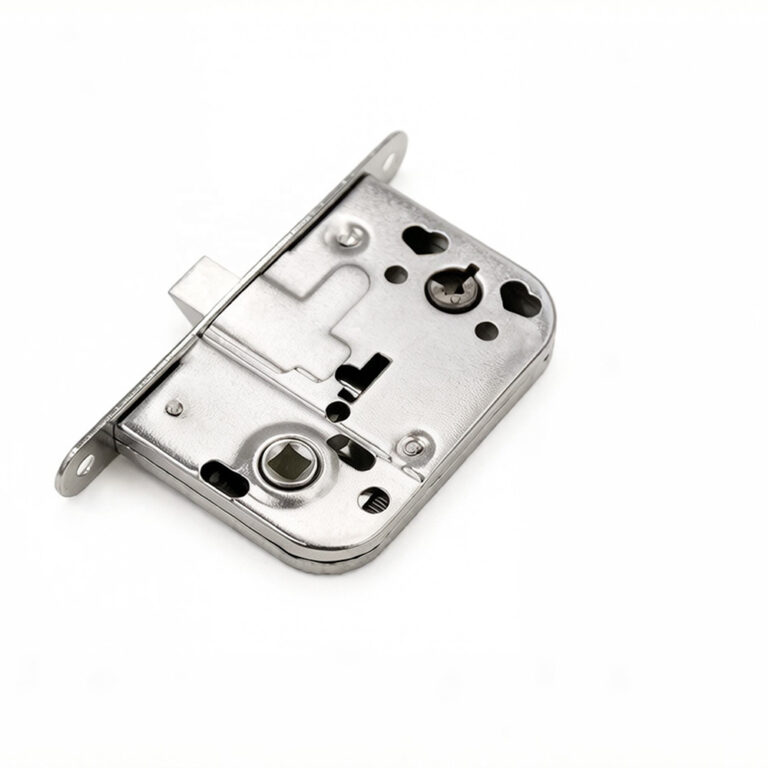
The faceplate is the long metal strip visible along the door edge. It carries the central gearbox, guides the remote locking elements, provides the fixing positions and sets where every component sits relative to the door profile. CHIER’s overview of how multipoint door locks work, from gearbox and faceplate to locking points and keepers treats the faceplate as part of the same door-edge system as the other components.
Seating depth shows why the plate matters mechanically. A faceplate that sits proud of the door edge can scrape the frame. One that sits too deep can stop hooks or bolts from reaching their keepers. Loose screws let the strip move, and overtightened screws can distort a thin plate or pull it into an uneven routed channel. None of these faults appears on a dimension sheet that lists only backset and PZ.
Multipoint Lock Faceplate Types at a Glance
The table compares the three groups on the points that affect an order. It is a qualitative guide. Exact dimensions vary by manufacturer and product family, so treat every number on a supplier drawing as the controlling value.
Faceplate type
How to recognise it
Typical use
Variables to record
Main risk
Ask the supplier for
Flat, square-ended
Flat strip with square corners at each end
Widely stocked general-purpose format
Width, thickness, length, screw spacing, countersink position
Square corners in a pocket routed with round corners, or the reverse
Dimensioned drawing with end form shown
Flat, radius- or round-ended
Flat strip with rounded corners
Doors routed with rounded pockets
Corner radius, width, length, thickness
Gaps or poor seating if the end shape differs from the pocket
End radius on the drawing
U-rail (U-track)
Channel-shaped section with returns on both sides
Profiles or routed channels built to accept a channel
Front width, return depth, material thickness, fixing pattern
Looks like a flat plate in a front photograph, so it is ordered as one
Cross-section drawing, not just a front view
Profile-specific
Stepped, offset or otherwise non-standard section
Door systems whose routing, gearbox space and keeps are designed together
Full section, datum to each locking point, case offset, keep geometry
Near-match plate fits visually but fouls the profile or keeps
Section drawing plus fit confirmation against the profile
Flat Faceplates: Width, Thickness and End Form
A flat faceplate is a plain strip, and it is the baseline format. A UK trade supplier’s faceplate guide describes a flat, square-ended plate as the most common style, with radius-ended and U-track plates as alternatives. It also says faceplates come in varying widths and styles to suit different door profiles. The same page’s filter lists flat plates at 16, 20, 25 and 44 mm and U-rail plates at 20, 22, 24 and 44 mm. That shows which options exist in that catalogue. It does not show market share or prove interchangeability.
Four details decide whether a flat plate fits:
Width. A 16 mm plate and a 20 mm plate need different pocket widths. Measure across the front face with calipers.
End form. Square and radius ends are separate specifications. Routed pockets typically have rounded corners unless they are squared out by hand, so a square-ended plate in a radius-routed pocket may not seat flush. Check the existing preparation before choosing an end form.
Thickness. Plate thickness affects both pocket depth and screw-head clearance.
Screw pattern. Countersink positions and spacing must match the preparation, or the plate will stay loose at one end or sit off-line.
Flat plates suit buyers who stock a general range, since one flat width can serve several doors. They are the wrong choice when the door edge is prepared for a channel or a system-specific section.
U-Rail Faceplates: What the Channel Changes
A U-rail faceplate has a channel-shaped section, with the sides turned back from the front face. Matrix Hardware’s identification guide lists flat square-ended, radius-ended and U-rail styles. It warns that a front-on photograph alone may not show the difference clearly. That matters for remote buying, because a supplier who receives only a front view can easily quote a flat plate against a U-rail original.
A U-rail plate adds at least two things a flat plate does not have: the depth of the returns, and the way the channel sits in the door-edge preparation. One entry in the trade listing above is described as “U-Rail 24 x 5mm”. That suggests the front width and a second section dimension are quoted separately, although the page does not define the second figure. Ask any supplier to define it on a drawing.
Do not assume a U-rail plate is stronger or more secure. Section shape alone says nothing about security, which depends on the tested doorset, the keeps and the frame. The practical point is narrower: U-rail and flat plates need different door-edge preparation, so a swap between them usually means changing the routing, not just the lock.
Profile-Specific Faceplates: When the Door System Sets the Rules
A profile-specific faceplate has a section, offset or fixing pattern designed for one door system. Aluminium is the clearest case. Winkhaus UK’s sales director wrote in a Glass Times article published in 2019 that the company’s locks and keeps with U-rail and flat plate profiles are designed to suit major aluminium system applications. He added that the range can be fitted and interchanged within one initial routing preparation. Treat this as a manufacturer’s statement about its own range. It describes one family designed to share a preparation. It is not a rule that all flat and U-rail plates interchange.
The broader pattern is that door material and profile constrain the lock envelope. CHIER’s article on multipoint locks for aluminum, uPVC and timber doors and their interface differences explains how cavity size, reinforcement, fixing zones and keeper geometry differ between those materials. A faceplate that works in a timber edge, where a router can adjust the pocket, may not work in an extrusion whose cavity is fixed.
For profile-specific plates, the profile drawing is the specification. Send the door and frame sections with the request, and ask the supplier to confirm fit against them rather than against a catalogue category.
Which Faceplate Type Should You Specify?
Specify the type that matches the existing or planned door-edge preparation. Do not choose by price, width or appearance.
A common assumption is that matching width, backset and PZ is enough to identify a lock. That holds only when the section is also the same. A 20 mm flat plate and a 20 mm U-rail plate can carry similar gearboxes yet need different preparation. Equally, “profile-specific” does not mean “better”. It reduces fit risk inside the system it was designed for, but it adds SKUs and makes stock harder to pool. That can be a poor trade for a distributor serving mixed doors. Flat plates concentrate stock but leave more fit checking to the installer.
These rules of thumb follow from that reasoning:
Replacing a lock on an existing door: match the existing section exactly. The preparation is already cut.
Supplying a fabricator with a defined profile: ask for a profile-specific or system-approved option, and get fit confirmed against the section drawing.
Stocking for mixed repair demand: carry the flat widths your customers actually need, and record every plate section sold so U-rail and special sections are not substituted by accident.
Planning a new OEM or ODM design: fix the faceplate geometry early, because the pocket, the keeps and the gearbox space depend on it.
An illustrative example, not a customer case: a distributor receives a request for “a 20 mm faceplate lock, 35 mm backset, 92 PZ” with one front photograph. A flat plate is quoted and shipped. The original had a channel section, so the plate does not seat in the existing preparation. The fix is a return, not an adjustment. A cross-section photograph or drawing at quotation stage would have caught it.
Return depth and material thickness, if the section is channel-shaped.
Overall length, from the physical top end to the physical bottom end, not to the last screw or locking point.
End form, square or radius, with the radius value if rounded.
Fixing pattern, including countersink positions, spacing, and any lock-case fastening or adjustment-access openings.
Datum to each locking point, measured from one fixed reference such as the spindle centre.
Whether the strip can be cropped. Cutting through a linkage channel or guide can ruin a mechanism, so do not assume a long strip can be shortened.
Backset needs care too. Check where backset is measured from on the manufacturer’s drawing, especially with channel sections, because the reference face may differ between product families. Ask the supplier to state the reference point.
Faceplate Type and Replacement Decisions
Faceplate type also affects repair choices. Replacing only the gearbox keeps the existing strip, so the faceplate section stays the same. That depends on the strip being straight and the replacement case matching the interfaces. CHIER’s comparison of replacing only the gearbox versus the complete multipoint lock strip notes that flat, U-rail and profile-specific lock strips are not interchangeable simply because they fit approximately inside the door edge.
A full strip replacement lets a buyer change faceplate type only if the preparation changes too. If the existing plate is damaged, obsolete or unidentified, record the section before disposal. Otherwise the same identification problem returns on the next order.
Strip Length and Gearbox Format
Faceplate geometry interacts with the overall lock layout. CHIER’s narrow-faceplate multipoint gearbox with latch and deadbolt is described as a mortise gearbox with a spring latch, a separate deadbolt, a square spindle follower and a euro-profile cylinder opening. Its listing tells buyers to confirm backset, handle-to-cylinder centre distance, faceplate width and length, lock-case depth, handing and the positions of any multipoint connections. The listing does not state a faceplate cross-section, so confirm that against the drawing for your door.
The extended-strip multipoint lock with a central gearbox adds upper and lower extension sections on the same narrow faceplate. Its listing says routing must leave space for the central case and both extension sections. Longer strips add more positions that must line up with the keeps, so datum accuracy matters more as strip length grows.
Finish and Corrosion: Specify the Test, Not Just the Claim
Faceplates are visible, exposed at the door edge and often finished separately from the gearbox. A supplier’s statement that a part is salt-spray tested should name the method. ISO 9227:2022 specifies the neutral salt spray, acetic acid salt spray and copper-accelerated acetic acid salt spray tests. It states that it does not specify specimen types, exposure periods or how to interpret results. It also says the methods are not intended to rank materials or predict long-term corrosion performance.
So ask for the test method, the specimen, the exposure period, the acceptance criterion and the finish tested. Confirm the report covers the model and finish you are buying.
What Should Buyers Specify Before Requesting a Quote?
Send the following so the supplier can quote the correct faceplate and flag conflicts early:
Door material and profile system, with door and frame section drawings.
Faceplate type (flat, U-rail or profile-specific), with a cross-section view.
Front width, return depth, thickness, overall length and end form.
Backset, PZ, spindle follower size and handing.
Locking-point types and distances from a stated datum.
Keep arrangement and frame section.
Finish, exposure environment and the test evidence you expect.
Quantity, target market and any compliance route, such as PAS 24 where the project requires it.
A physical sample or clear photographs, including one of the plate edge-on.
CHIER’s product inquiry forms include a file-upload field for technical requirements and extrusion details, so section drawings and profile files can go in with the first enquiry. Sending the cross-section at that stage is the cheapest way to avoid a wrong-part return.
Frequently Asked Questions
What are the main multipoint lock faceplate types?
The main types are flat faceplates with square or radius ends, U-rail (channel) faceplates, and profile-specific faceplates designed for one door system. Flat is the common baseline. U-rail and profile-specific plates need matching door-edge preparation and a section drawing to identify reliably.
What is a U-rail faceplate on a multipoint lock?
A U-rail, or U-track, faceplate has a channel-shaped section with returns along both sides instead of a plain flat strip. It needs a matching door-edge preparation, and a front-on photograph may not reveal it, so check the cross-section before ordering.
Can I replace a flat faceplate lock with a U-rail lock?
Only if the door-edge preparation suits the new section. The two sections generally need different routing, so a swap often means modifying the door. A manufacturer may design one range to share a preparation, but confirm that in writing against drawings.
How do I measure a multipoint lock faceplate?
With the lock removed and laid flat, measure front width with calipers. Then measure return depth and thickness for channel sections, overall length end to end, end form, fixing pattern, and the distance from the spindle centre to each locking point. Photograph the plate edge-on as well.
Does faceplate width alone identify a replacement multipoint lock?
No. The same width can be a flat, radius-ended or U-rail plate, and gearboxes with identical backset and PZ can differ in connection positions, travel and handing. Combine width with section, end form, length, locking-point positions and photographs.
Is a U-rail faceplate more secure than a flat faceplate?
Not by section shape alone. Security depends on the tested doorset, the keeps and the frame, not the faceplate profile. Ask for test evidence for the complete assembly, such as PAS 24 where your project requires it, instead of inferring security from plate type.
What should an RFQ include for a custom faceplate?
Include a section drawing, width, return depth, thickness, length, end form, fixing pattern, locking-point datum distances, door and frame profile sections, finish and test evidence, quantity and a sample. Custom sections may need new tooling, so ask the supplier to confirm tooling and lead time.