Looking for hardware solutions that meet European / American standards?
Use this guided inquiry modal to move from a generic quote form to a clearer technical conversation. Buyers can choose whether they need pricing, CAD / 3D files, or OEM / ODM support before sharing contact details.
Compatibility-first design across door / window systems
Repeatable production with clear inspection checkpoints
Documentation and change control for long-running programs
Responsive engineering support for fit and field feedback
Most buyers compare multipoint door locks by counting hooks, checking the faceplate finish, and asking for a cycle-test number.
They are starting in the wrong place.
The first decision should be operating logic: does the user deliberately engage the locking points, or does the door engage them automatically when it closes?
That changes everything.
Because the operating logic controls user behavior, handle movement, cylinder function, keeper loading, access-control compatibility, emergency egress, installation tolerance, servicing procedures, and the probability that the door will actually be secured on an ordinary Tuesday afternoon.
So why is it routinely treated as a minor product option?
My position is blunt: an automatic multipoint door lock is usually the stronger choice when consistent locking matters more than initial cost, while a manual multipoint door lock remains the better choice when simplicity, deliberate control, easy diagnosis, and low system complexity dominate the specification.
But neither is automatically “best.”
The Real Difference Is Human Dependence
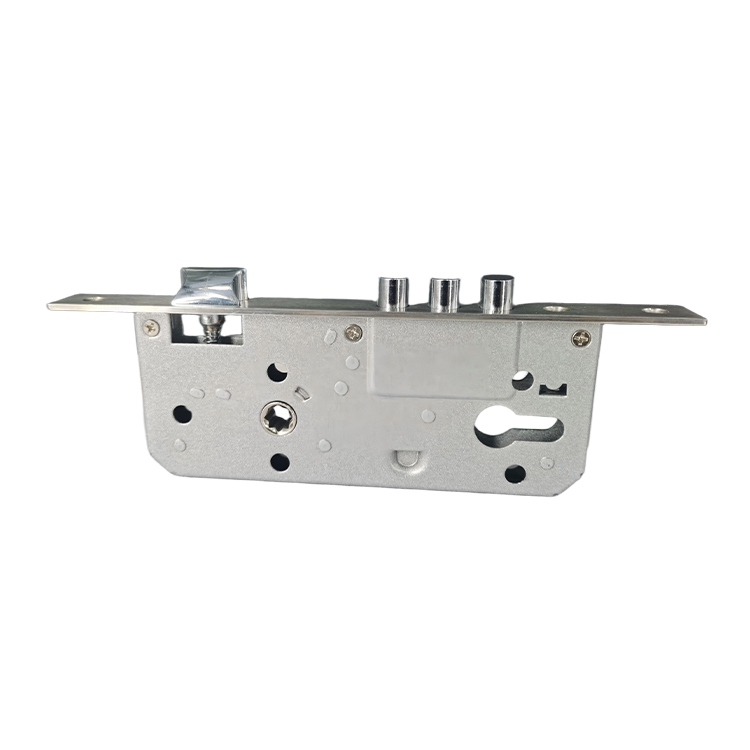
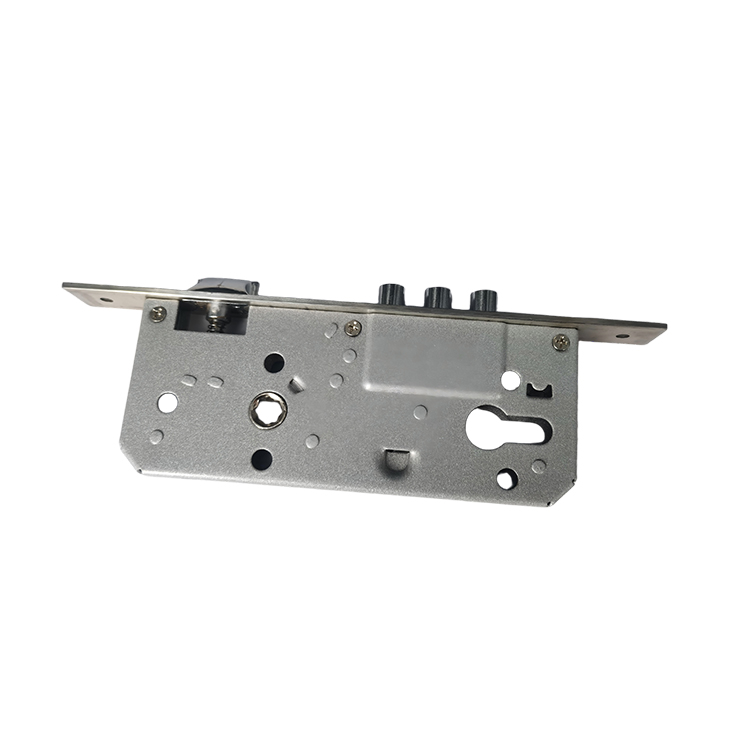
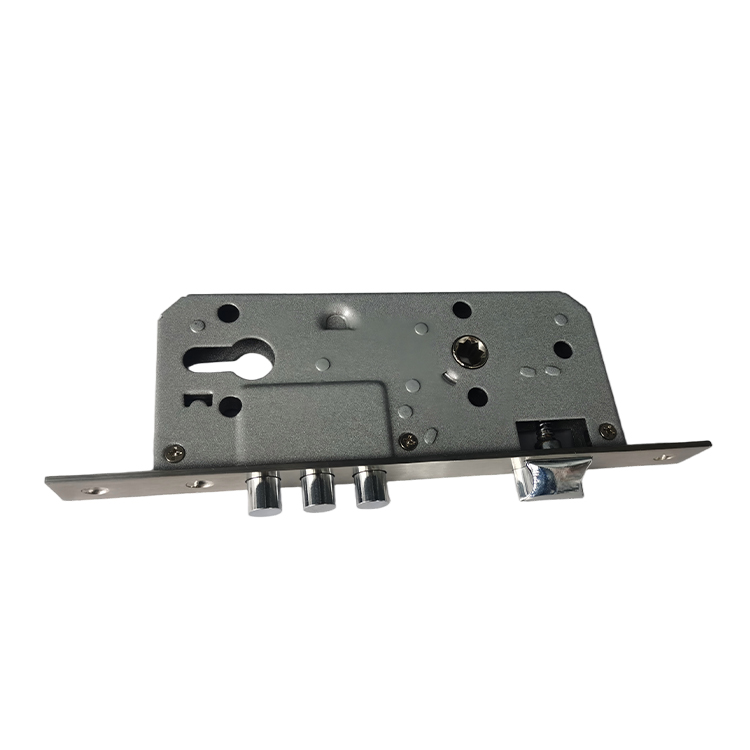
A multipoint locking system secures a door at several positions through one operating input. Hooks, round bolts, rollers, pins, latches, or shootbolts move through a central gearbox and connecting strip into frame-mounted keepers.
FSCHIER’s guide to how multipoint door locks work explains the full chain: handle or cylinder input enters the gearbox, the gearbox moves the strip, and the remote locking points engage their matching keepers. Every stage depends on alignment.
The automatic-versus-manual argument is therefore not really about the number of locking points. It is about who—or what—initiates that chain.
How a Manual Multipoint Door Lock Operates
A typical manual, lift-lever multipoint lock follows this sequence:
The user closes the door.
The central latch holds the door against the frame.
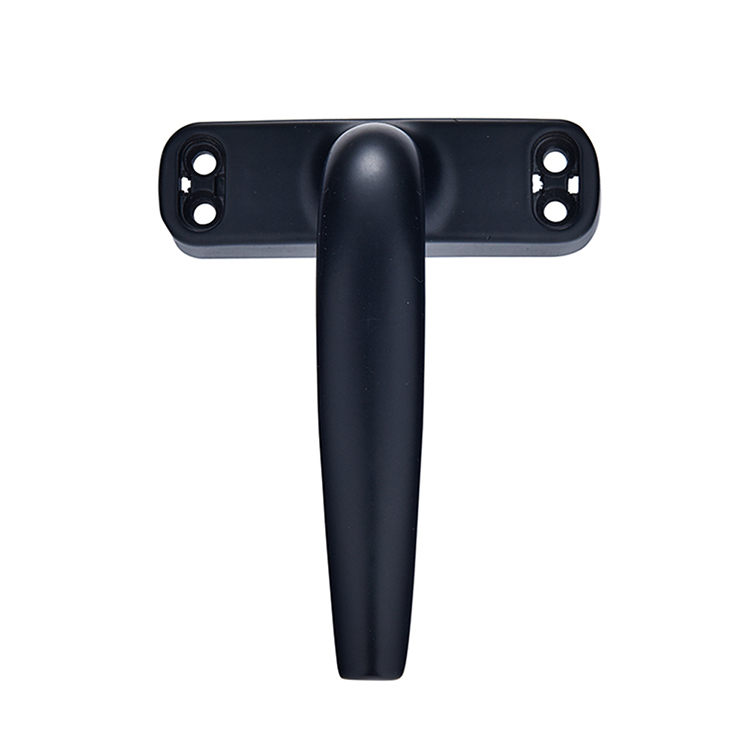
The user lifts the handle, often through approximately 30 to 45 degrees.
An 8 mm spindle rotates the gearbox follower.
Hooks, rollers, or bolts move into their keepers.
The user turns the key or thumbturn to block the mechanism.
This arrangement is familiar on uPVC, composite, timber, and aluminium entrance doors. It is mechanically understandable and usually straightforward to diagnose.
But it has a weak point.
The user.
A closed manual multipoint door may be latched without being fully locked. The hooks can remain retracted, the compression points can remain disengaged, and the cylinder can remain unturned. From across the room, the door still looks closed.
That is not a mechanical failure. It is an operating failure.
How an Automatic Multipoint Door Lock Operates
An automatic multipoint door lock uses a mechanical trigger, magnetic trigger, auxiliary latch, or powered mechanism to deploy its locking points when the door reaches the closed position.
Winkhaus describes its autoLock AV3 as a system that automatically locks when the door closes, while the AV4D uses a central magnetic trigger to engage the multipoint mechanism after the leaf is pulled shut. ASSA ABLOY’s mechanical 319NE uses self-locking double-action latch technology with a stated 20 mm bolt throw. These are concrete examples of automatic operating logic, not vague “smart door” marketing. Review the Winkhaus automatic locking systems and the ASSA ABLOY 319NE specification.
The practical sequence is shorter:
The user closes the door.
A trigger confirms contact with the frame.
Hooks, bolts, or locking elements deploy.
The door reaches its designed locked state without a separate handle-lifting step.
That consistency is the automatic system’s main advantage.
Not magic. Consistency.
Mechanical Automatic and Motorized Are Not the Same
This distinction gets mangled in sales literature.
A mechanical automatic multipoint lock uses stored spring energy and a physical trigger. It does not necessarily require electricity.
A motorized multipoint lock uses an electric motor or actuator to retract, deploy, or manage the locking points. It may connect to a fingerprint reader, keypad, intercom, building-management system, door controller, or mobile application.
Some products combine both ideas: the door mechanically locks when it closes, while a motor provides powered release after an authorized signal.
That hybrid approach is often sensible. It preserves a secure closed state during power loss while supporting controlled entry. But the exact fail-safe or fail-secure behavior must be documented rather than assumed.
Automatic vs Manual Multipoint Lock Comparison
Decision Factor
Automatic Multipoint Door Lock
Manual Multipoint Door Lock
Locking action
Locking points deploy when the door closes
User lifts the handle, turns the key, or performs both actions
Human dependence
Low
High
Risk of a closed-but-not-fully-locked door
Lower
Higher
Typical user effort
Close the door; release method varies
Close, lift, and usually turn a key or thumbturn
Initial hardware cost
Usually higher
Usually lower
Mechanism complexity
Moderate to high
Low to moderate
Alignment sensitivity
High because triggers and points must engage correctly
High, but resistance is immediately felt by the user
Access-control integration
Strong on motorized or powered-release models
Possible, but often requires additional hardware
Power requirement
None for mechanical automatic; required for motorized functions
Normally none
Maintenance diagnosis
More sequence-dependent
Usually easier to isolate manually
Lockout risk
Higher if the door locks immediately and credentials are forgotten
Trigger, keeper, access-control, egress, and commissioning mismatch
Users failing to complete the locking sequence
The table exposes an uncomfortable fact: automatic locks solve a behavioral problem by adding mechanical or electromechanical demands.
That is a fair trade in many projects.
Not every project.
Where Automatic Multipoint Door Locks Earn Their Cost
High-Traffic Residential Entrances
Apartment entrances, senior housing, short-term rentals, and multi-user homes create inconsistent locking behavior. One person lifts the handle. Another only pulls the door shut. A third assumes the latch means the door is secure.
Automatic locking removes that variation.
The benefit is not that the mechanism has suddenly become stronger. The benefit is that its available security is deployed more consistently.
UK police guidance notes that burglars frequently exploit doors and windows that are open, unlocked, or easy to force. A premium multipoint system provides little practical value when its hooks remain parked inside the door edge. Police.uk’s residential burglary guidance makes the user-behavior problem difficult to ignore.
Doors Requiring Reliable Perimeter Compression
Multipoint door locks do more than resist separation. Correctly positioned rollers, hooks, or bolts can pull the leaf toward the frame and distribute pressure along the weather seals.
An automatic system can restore the designed compression whenever the door closes, rather than waiting for someone to remember the handle sequence. That matters on tall entrance doors, exposed façades, thermally broken aluminium systems, and doors with compression gaskets.
But automatic engagement does not repair a warped leaf.
Read that twice.
If the door has sagged 3 mm, the keepers are incorrectly positioned, or the gasket load exceeds the mechanism’s design range, automatic deployment may produce incomplete travel, trigger bounce, excessive force, or repeated component stress.
Managed Access-Control Projects
Motorized automatic locks make sense when a project requires credentials, remote release, intercom entry, audit events, or time-controlled access.
Yet I would reject any specification that simply says “smart-lock compatible.”
Compatible how?
The schedule should state the release voltage, current draw, duty cycle, cable route, controller interface, door-position monitoring, locked-position monitoring, emergency-release behavior, power-loss state, manual override, and authorized egress method.
A lock that accepts an electrical signal is not automatically a complete access-control solution.
Applications Where Users May Have Limited Hand Strength
Manual lift-lever systems can impose noticeable operating force when several points pull against compressed seals. Poor alignment makes that force worse.
Under applicable U.S. accessibility provisions, operable door hardware must work with one hand without tight grasping, pinching, or wrist twisting. The U.S. Access Board identifies a maximum operating force of 5 lbf, or 22.2 N, for covered operable parts, while hardware is generally positioned between 34 and 48 inches—865 to 1,220 mm—above the finished floor. Exterior hinged-door opening force has separate treatment, but the hardware itself still requires careful evaluation. Review the U.S. Access Board door guidance.
This is not theoretical paperwork. In an August 6, 2015 settlement, the U.S. Department of Justice required the City of Quincy, Massachusetts, to replace entrance knob hardware with hardware operable by one hand without tight grasping, pinching, or wrist twisting. Another DOJ settlement identified a hotel connecting-door deadbolt that required tight pinching and twisting. Read the Quincy settlement.
Automatic operating logic can reduce user effort, but only when the release method is equally usable.
Where Manual Multipoint Door Locks Remain the Better Choice
Cost-Sensitive, Mechanically Simple Doors
Manual multipoint locks generally use fewer triggers, motors, sensors, cables, and control interfaces. That means fewer components to specify and fewer failure branches to investigate.
For projects with stable users, familiar operating habits, and no access-control requirement, that simplicity has real value.
I would rather approve a well-aligned manual three-point lock with reinforced keepers than a badly integrated automatic five-point system carrying an impressive brochure.
More parts do not create discipline.
Markets Familiar With Lift-to-Lock Operation
User expectation matters.
In markets where occupants already understand that the handle must be lifted before the key turns, a manual system may produce few complaints. Changing the operating logic can create confusion, accidental lockouts, and service calls that have nothing to do with product quality.
The buyer should ask what users already know, not what the sales team finds more modern.
Remote or Hard-to-Service Installations
A mechanical manual lock is often easier to inspect with the door open. A technician can move the handle, watch the strip, check hook travel, test the cylinder, and compare open-door operation with closed-door operation.
Automatic systems add trigger timing and sequencing. Motorized versions add wiring, controllers, sensors, and power conditions.
On a remote project, every extra failure branch matters.
Doors That Must Not Lock Immediately
Automatic locking can become a liability on utility rooms, delivery entrances, internal circulation doors, workshops, or residential doors where users regularly step outside without a key or credential.
Immediate locking changes behavior.
Sometimes that is the point. Sometimes it creates a queue of avoidable lockouts.
Day-latch functions, hold-back settings, controlled passage modes, or internal release hardware may solve the issue, but they must be selected deliberately.
Security Claims Need Doorset Evidence
The FBI’s May 13, 2026 preliminary release estimated that U.S. property crime fell 12.4% from 2024 to 2025. That is useful national context, but it does not prove that any individual lock, keeper, cylinder, or doorset will resist attack. Read the FBI’s preliminary 2025 crime release.
Security remains an assembly result.
England’s Approved Document Q says new dwelling doors and windows must make reasonable provision against unauthorized access, with doors required to be sufficiently robust and fitted with appropriate hardware. The wording matters: robust door plus appropriate hardware. Not an isolated lock with a security adjective printed on its box. Review Approved Document Q on GOV.UK.
Automatic locking may improve the probability that every point is engaged. Manual locking may provide the same physical restraint after the user completes the sequence.
Neither compensates for:
Weak keeper screws
Thin or unreinforced frame sections
Exposed or vulnerable cylinders
Excessive door sag
Incorrect hinge capacity
Poor glazing retention
Incomplete bolt projection
Incompatible faceplate routing
Unverified panic or emergency-exit functions
The hard truth is simple: the best multipoint door lock is the one that works as part of the tested door assembly.
Egress Logic Can Overrule Security Logic
Security teams tend to ask, “Can the door stay locked?”
Fire and safety teams ask, “Can people get out?”
Both questions matter.
OSHA regulation 29 CFR 1910.36(d)(1) requires employees to be able to open an exit-route door from the inside without keys, tools, or special knowledge. OSHA enforcement records include facilities cited where locked doors exposed employees to entrapment during a fire or emergency. Read OSHA’s exit-door requirements.
This has direct consequences for multipoint door lock mechanisms.
An automatic system that secures several points on closing must still provide the required release behavior from the egress side. Depending on the building and jurisdiction, that may involve a single-action lever, panic hardware, an escape function, an approved thumbturn, powered release, or another code-compliant arrangement.
Do not let the access-control vendor answer this alone.
And do not let the lock supplier answer it alone.
The architect, fire consultant, hardware consultant, door manufacturer, installer, controller supplier, and authority having jurisdiction need the same operating sequence on paper.
How I Would Specify the Operating Logic
Before requesting samples, I would force the project team to answer these questions:
1. What must happen when the door closes?
State whether the door should merely latch, mechanically self-lock, motor-lock, remain in passage mode, or wait for a user command.
“Automatic” is not specific enough.
2. What action opens the door from each side?
Document the key, lever, thumbturn, panic bar, fingerprint reader, keypad, intercom release, electric strike, motor, or mechanical escape function.
Inside and outside may require different logic.
3. What happens during power failure?
For a motorized system, define whether the door remains locked, releases, provides mechanical egress, or changes mode through backup power.
Do not confuse fail-safe access-control hardware with safe emergency egress.
4. What dimensions control compatibility?
Record the backset, PZ centres, spindle size, case depth, faceplate profile, locking-point coordinates, projection, keeper depth, door handing, and extension-strip geometry.
Common residential dimensions such as an 8 mm spindle, 92 mm PZ centres, or 35, 45, and 55 mm backsets are reference points—not proof of interchangeability. FSCHIER’s guide on measuring backset, PZ, faceplate, and centres provides the measurement framework buyers should complete before approving a replacement or OEM sample.
5. What alignment tolerance will the assembly survive?
Test the door at nominal alignment and at realistic installation limits.
Consider hinge settlement, gasket compression, thermal movement, frame distortion, coating thickness, debris, and repeated cycling. A lock that works only on a perfectly adjusted laboratory door is unfinished engineering.
6. What evidence will be supplied?
Request drawings, operation diagrams, cycle-test conditions, torque or force measurements, corrosion-test details, wiring data, certification scope, change-control records, and inspection criteria.
FSCHIER’s quality-control and hardware-testing process treats dimensions, operation, mating components, test conditions, cycle targets, and acceptance criteria as product-specific requirements. That is the correct approach. A generic certificate is not enough.
Manual systems should have an alignment procedure.
Both should have controlled drawing revisions.
For new programs, use an OEM multipoint locking system development process that reviews the lockcase, faceplate, gearbox, locking points, keepers, handles, and door profile as one operating system. Technical teams can also request model-specific drawings and documentation through the CHIER hardware download centre.
My Verdict: Which Multipoint Door Lock Is Better?
Choose an automatic multipoint door lock when the project needs repeatable security after every closing cycle, reduced dependence on occupant behavior, strong perimeter compression, premium entrance-door operation, or integration with managed access control.
Choose a manual multipoint door lock when the project favors lower cost, simpler mechanics, familiar lift-lever operation, easy field diagnosis, deliberate locking, or reduced dependence on electrical and trigger components.
For apartment entrances and high-value residential doors, I lean automatic.
For cost-controlled housing and mechanically simple doors, I often lean manual.
For commercial exits, healthcare, education, hospitality, and public buildings, I refuse to choose until the egress and accessibility functions are written down.
That is the honest answer.
FAQs
What is an automatic multipoint door lock?
An automatic multipoint door lock is a self-locking door-edge mechanism that deploys multiple hooks, bolts, rollers, or latches when the door closes, reducing dependence on the user to lift a handle or turn a key before the door reaches its intended locked condition.
Mechanical automatic models use triggers and spring energy, while motorized models may also support powered release, access-control credentials, monitoring, or remote operation.
What is a manual multipoint door lock?
A manual multipoint door lock is a handle-operated or key-operated system that requires the user to deliberately engage the remote locking points, commonly by lifting the lever and then turning a key or thumbturn to block the gearbox and hold the hooks or bolts in position.
It is generally simpler to operate during testing, easier to diagnose, and less expensive than an equivalent automatic or motorized system.
Are automatic multipoint locks more secure than manual locks?
Automatic multipoint locks are not inherently more secure than manual multipoint locks; they are more consistent because they remove one human step, while actual resistance still depends on the tested doorset, keeper reinforcement, cylinder protection, frame stiffness, hinge stability, alignment, and full locking-point engagement.
A fully engaged manual lock can provide strong protection. Its weakness is the possibility that the user closes the door without deploying the remote locking points.
What is the best multipoint door lock?
The best multipoint door lock is the system whose operating logic, backset, PZ centres, spindle, faceplate, locking-point geometry, keepers, handle force, egress function, corrosion exposure, duty cycle, and service plan match the complete door assembly and the requirements of its target market.
No model is universally best. A technically simpler manual system can outperform an expensive automatic system when the latter is poorly aligned or incorrectly integrated.
Can an automatic multipoint lock work with smart access control?
Automatic multipoint locks can work with smart access control when the lock is designed for motorized release or powered retraction, but a basic mechanical self-locking model may still need a key, thumbturn, lever, electric strike, or approved actuator to release the door safely from the required side.
Confirm the controller interface, voltage, current, monitoring contacts, power-loss behavior, mechanical override, credential method, and emergency-egress sequence before approving the system.
Define Your Door Logic Before Ordering Hardware
Do not begin your next multipoint door lock project with a product photograph or bolt count.
Begin with the operating sequence.
Document what happens when the door closes, how it opens from each side, how occupants escape, what happens during power loss, and which dimensional and performance limits the complete assembly must meet.
Then test that sequence on the real door profile with the real handle, cylinder, keepers, seals, hinges, wiring, and controller.